 Skaityti daugiau


 Dėl meno kūrinių ar reprodukcijų, kurių bet kuri pusė yra didesnė nei 105 cm (apie 41 inch), rėmas bus siunčiamas kaip išskaidytas surinkimo rinkinys. Šis metodas užtikrina saugų pristatymą ir apsaugo nuo transportavimo metu galimos žalos.


Daugiau informacijos apie šį paveikslą
Teksto dydis

() ·
Jūsų paties, rankumių darbas
Rankų darbo aliejinės reprodukcijos
Rankiniu būdu tapytas aliejus ant droblio jūsų pageidaujamame dydį ir rėmuose – tai mūsų menininkų pagal užsakymą sukurtas darbas. ( Perjungti į spausdinamus版作品 Perejti prie skaitmeninių vaizdų)
Autoriaus biografija
Discover François de Nomé's surrealist landscapes & bizarre cityscapes! French Baroque painter known for nightmarish ruins, Venetian capriccios, & unique artistic vision.
nuo ·
1 skyrius
Kokio dydžio turėtų būti?
Slinkite, kad pakeistumėte dydį; kairėje pusėje esančiame paveikslėlyje rodomas tikrasis rėmo plotis. Originalios proporcijų išlaikomos.
Standartinis dydis
pagal užsakymą
CM
INCH
Pasirinkite iš mūsų nustatytų dydžių, atitinkančių originalaus meno kūrinio proporcijas.
Kraunami dydžiai...

plotis
aukštis
Įveskite jums reikiamą plotį ir aukštį, kad paveikslas atitiktų jūsų rėmą ar sieną. Kadangi šis darbas yra rankinio darbo, siekiant išgauti kitokios formos dydį, paveikslas gali būti šiek tiek didesnis (nuo kraštų bus palikta daugiau erdvės) arba mažesnis – pasirinkite jums patogiausią variantą. Prieš pradedant tapyti, atsiųsime jums skaitmeninį maketą patvirtinimui. Šioje puslapio nuotraukoje matomas vaizdas nėra galutinis rezultatas – jį parodys tik sukurtas maketas.
2 skyrius
Kokia būda yra siunčiamas?
Pasirinkite ištempto drobės kraštus
Pasirinkite rėmelį

Baltas apasutojimas €1

Išblėstantis šonas €1

Išplėstinis €1

P118B €10

P118H €10

P118W €10

P438Z €10

P508JH €12

P508YH €12

P805H €10

P805Z €10

P919BZ €10

P919G €10

P919XJ €10

P959ZH €10

P968JZ €12

W106C €8

W218G €10

W218JH €8

W218Y €10

W307PJ €10

W316G €10

W316PJ €8

W316Y €10

W398PJ €8

W4111J €10

W500HY €15

W500JH €15

W692G €12

W849H €8

W940BG €15

W953PJ €8

H24-GOLD €30

H24-SILVER €30

H36-GOLD €45

H36-SILVER €45
Įrėmintas
Rėmo apvadas: . Bendras dydis su rėmu: .
3 skyrius
Kas jį vaizduoja ir ar turėtų kažkas pasikeisti?
Pavyzdžiai, ką galima pakeisti: pakeisti veidą nuotrauka su klientu; pridėti augintinį (pvz., pakeisti kucingą šuniu); įtraukti paslaptingą žinutę fone; pakeisti fono kraštotvę ar elementus.
Gavus užsakymą, OriginalUniqueArt.com komanda susisieks su klientu el. paštu dėl nurodymų ir pateiks preliminarią maketą.
Gavus užsakymą, OriginalUniqueArt.com komanda susisieks su klientu el. paštu dėl nurodymų ir pateiks preliminarią maketą.
Pristatymas visame pasaulyje () per 3–4 savaites, o ne įprastai – per 5 savaites. (10 lapkritis). Kokybė lieka nepakeičiama.
4 skyrius
Paskutinės detalės
Pavadinimo plokštelė, kaip muziejuje?
Išgraviruotos bronzinės plokštelės detalės
This elegant plaque features the artist's name and the title of the artwork, finely engraved for a timeless presentation.
It is made from bronze with a refined, elegant finish. The text is precisely laser-engraved for a sharp and permanent result. Measuring 9x2 cm, the plaque is compact yet easy to read. It's built to be durable and scratch-resistant, offering a professional, museum-quality look. Mounting is simple thanks to the included adhesive backing.
Skaidrios akrilo plokštelės informacija
The plaque includes essential engraved details such as the artist's name, the title of the artwork, the date it was created, the type of media used-like oil on canvas or watercolor-a brief description of the piece, and a QR code that links to the complete artwork information.
It is crafted from clear acrylic, offering a sleek, modern appearance. The text is UV-engraved in black to ensure strong visual contrast. With a size of 10x15 cm, it ensures optimal readability. It comes equipped with two metal hooks for secure wall mounting. The plaque is designed to be weather-resistant, making it suitable for various environments, and it includes interactive features that work seamlessly with smartphone scanning.
Juodos akrilo plokštelės informacija
This elegant plaque includes engraved information such as the artist's name, the title of the artwork, the date it was created, the type of media used (like oil on canvas or watercolor), a short description of the artwork, and a QR code for quick access to more information.
The plaque itself is made from refined black acrylic with a premium finish. The text is laser-engraved in white for high contrast and readability. Its size is 10x15 cm, designed to be easy to read. It comes with two metal hooks for professional mounting. The design is sleek and fits any interior style. It is also weather-resistant and durable, with built-in digital integration for mobile compatibility.
Apsauginis lakas?
Kada jums reikia?
5 skyrius
Jūsų paveikslas, tiksliai taip, kaip užsakėte
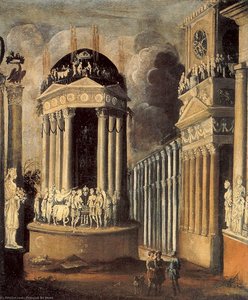
Architectural Capriccio
Reprodukcijos technika
Reprodukcijos matmenys
-
Aukščiausios klasės meistras
Daugiau detalių, meistriškumo ir papildomo gamybos laiko
-
Reprodukcijos rėmėjimo parinktys
-
-
Dėl meno kūrinių ar reprodukcijų, kurių bet kuri pusė yra didesnė nei 105 cm (apie 41 inch), rėmas bus siunčiamas kaip išskaidytas surinkimo rinkinys. Šis metodas užtikrina saugų pristatymą ir apsaugo nuo transportavimo metu galimos žalos.
Reikalingas profesionalus surinkimas – tai nėra „pasidaryk pats“ (DIY) produktas.
Rinkinys turi būti surinktas, o drobė išplėsta naudojant patyrį profesionalų rėmininką, medžio klijus (nėra įtraukti į rinkinį), drobės plėšimo kleslę bei presas, kad rėmo rėžiai išliktų tiesūs, kol klijai išdžiūvus. Netinkamas surinkimas arba netolydus drobės įtampa gali negrįžtamai sugadinti meno kūrinį, todėl šie atvejai nėra užtraukiami mūsų garantijos.
Į komplektą įeina visi vientisos medienos elementai, tiksliai išpjauti pagal dydį.
Surmontinama naudojant pridėtus varžtus bei papildomai reikalingą medžio kliją kampų jungtims, kuris nėra pridėtas ir turi būti parinktas rėmininkui.
Reikalingi profesionalūs įrankiai, kurie nėra įtraukti į rinkinį: drobės kėlimo plytelės (stiprintuvai) ir klemiai, laikantys rėmo strygius tiesiu kampu, kol džiūsta lipas.
Svarbu:
Kampų jungtims reikalingi medžio klijai, barams reikia laikyti naudojant presas, kol klijai visiškai išdžiūvės, o surinktam rėmui įtempiamai privilgti būtinos drobės įtempimo plytযুক্ত. Šios priemonės į rinkinį neįtrauktos. Prieš užsakydami šio dydžio rinkinį, rekomenduojame pasimalkoti patyrusiu rėmų meistru.
Pavadinimo lentelė
-
-
Apsauginis lakas
Blizgus lakas (ryškina spalvas, saugo nuo šviesos ir drėgmės)
-
Personalizuoti kūrinį
Ką galima pakeisti (pavyzdžiui): pakeisti veidą klientui skirta nuotrauka; pridėti augintinį (pvz., katę pakeisti šuniu); įtraukti paslėptą žinutę fone; pakeisti fono kraštovaizdį ar elementus.
-
Skubiai
Pristatymas visame pasaulyje () per 3–4 savaites, o ne įprastai – per 5 savaites. (10 lapkritis). Kokybė lieka nepakeičiama.
-
Skubus pristatymas
Pristatymas visame pasaulyje () per 5 weeks. (17 lapkritis).
Įskaičiuota
Bendroji kaina
€ 269
Stiklo variantas prieinamas tik pasirinkus dydį iki 110 cm
Pridedama prie kiekvieno užsakymo
- Nemokamas greitasis pristatymas visame pasaulyje
- Aukštos kokybės lininis drobė
- Pilnas siuntimo draudimas
- Muitinės mokesčių grąžinimo garantija
- Tikro spalvų atitikimo garantija
- 100 dienų grąžinimo politika (tik esant įtaigoms)
- 100% pinigų grąžinimo garantija
- Nuolaida dideliems užsakymams
 Peržiūrėti realaus dydžio版
 Pasidalinti
 Dalintis
 Išsamiau
 Vadovas

 Atsisiųsti
 Panašūs eksponatai
 Rentgeno spindulių nuotrauka
 Automatinė diorama
 问答
问答 Statistika
Skaičiais
- 1622metai, kai buvo nupiežta
- 29pasirinkimo rėmai
- standartinės dydžio, savo proporcijomis
- 5savaitės sugryžti ir pristatyti
Apie originalą

- 96.0 x 80.0 cm


François De Nomé
1593 - 1623, France
Trumpa informacija apie François De Nomé
- Artistic Movement Or Style: Baroque
- Artists Or Movements Influenced By This Artist:
- Salvatore Rosa
- Piranesi
- Artists Who Influenced This Artist:
- Alessandro Magnasco
- Michelangelo Cerquozzi
- Belisario Corenzio
- Date Of Birth: 1593
- Date Of Death: 1623
- Full Name: François de Nomé
- Nationality: French
- Notable Artworks:
- Fantastic Ruins with Saint Augustine and the Child
- The Tomb of Solomon
- The Martyrdom of a female Saint
- Place Of Birth: Metz, France
Autoriaus biografija
The Enigmatic Visionary of Decay
François de Nomé remains one of the most captivating enigmas in the annals of Baroque art history, a painter whose very identity was once lost within the shadows of a collective pseudonym. Born in 1593 in the quiet region of Metz, Lorraine, his early life set the stage for a journey that would lead him from the workshops of Rome to the vibrant, dramatic atmosphere of Naples. Around 1602, de Nomé entered the Roman art scene, immersing himself in the studio of the Flemish landscape painter Balthasar Lauwers. It was during this formative period that he began to hone a technical mastery over light and perspective, yet his true artistic soul would only reveal itself through a fascination with the ephemeral and the broken.
For centuries, the works attributed to de Nomé were shrouded in mystery, mistakenly credited to a single mysterious figure known as Monsù Desiderio. It was not until recent scholarly investigations that art historians untangled this web of attribution, discovering that what was once thought to be the output of one man was actually the collaborative brilliance of at least three distinct artists, including de Nomé and Didier Barra. This revelation has transformed our understanding of his legacy, transforming him from a mere footnote in a collective identity into a singular, visionary voice capable of conjuring worlds that feel both ancient and hauntingly prophetic.
A Landscape of Ruin and Surrealism
The oeuvre of François de Nomé is defined by an unsettling, almost post-apocalyptic aesthetic that defies the idealized beauty typical of his contemporaries. Rather than seeking out lush, verdant vistas, de Nomé turned his gaze toward decrepit ruins, crumbling architectures, and desolate, barren landscapes. His canvases often feature massive, decaying structures silhouetted against heavy, overcast skies, creating a sense of profound isolation. Within these vast, skeletal remains, tiny, almost microscopic figures—often saints or biblical protagonists—wander through the debris, their smallness emphasizing the overwhelming scale of time and decay.
His technique is masterfully atmospheric, utilizing oil on canvas to create indistinct edges and a muted, earthy palette that evokes a sense of dust and antiquity. There is a palpable psychological drama in his work; he does not merely paint buildings, but rather the anxiety of collapse. By employing an illusionistic depth and a soft, hazy perspective, he invites the viewer into a dreamlike state where reality and nightmare blur. This approach predates modern surrealism by centuries, as he utilized the architectural capriccio—a whimsical architectural fantasy—to explore themes of memory, loss, and the inevitable triumph of nature over man-made grandeur.
Legacy and Artistic Significance
While de Nomé’s specific style did not become a dominant trend for Italian landscape painters in the following century, his contribution to the emotional depth of the Baroque period is undeniable. His most celebrated achievement lies in his ability to manipulate architectural reality to serve a higher, more symbolic purpose. A prime example is his depiction of the Venetian Piazza San Marco; while he meticulously recreates the essential structures of the piazza, he imbues them with an eerie stillness and invented details that transform a real location into a haunting, imaginary space.
The historical significance of de Nomé lies in his rejection of the conventional. In an era often preoccupied with the glorification of power and divine order, he chose to find beauty in the fractured and the forgotten. His work serves as a bridge between the classical fascination with antiquity and a much more modern, visceral reaction to the fragility of civilization. Today, de Nomé is celebrated not just as a painter of ruins, but as a master of the sublime, an artist who captured the haunting beauty of a world in transition.