

 Peržiūrėti realaus dydžio版
 Pasidalinti
 Dalintis
 Išsamiau
 Vadovas

 Atsisiųsti
 Panašūs eksponatai
 Rentgeno spindulių nuotrauka
 Automatinė diorama
 Statistika
Švietimo angelus
 Akrilas ant drobės
- Sieninis menas
- Renaissance Revival
 1466
1466 139.0 x 42.0 cm
 Castello Sforzesco
 Skaityti daugiau
Giclée / Meno spausdinimas
Muziejų lygio „giclée“ arba drobos spausdinimas: greita gamyba ir lankstios apdailos parinktys. ( Pirkti rankų darbo tapybą Perejti prie skaitmeninių vaizdų)




P118B €10

P118H €10

P118W €10

P438Z €10

P508JH €12

P508YH €12

P805H €10

P805Z €10

P919BZ €10

P919G €10

P919XJ €10

P959ZH €10

P968JZ €12

W106C €8

W218G €10

W218JH €8

W218Y €10

W307PJ €10

W316G €10

W316PJ €8

W316Y €10

W398PJ €8

W4111J €10

W500HY €15

W500JH €15

W692G €12

W849H €8

W940BG €15

W953PJ €8




Pasirinkite iš mūsų nustatytų dydžių, atitinkančių originalaus meno kūrinio proporcijas.

Įveskite jums reikiamą plotį ir aukštį, kad atvaizdas derėtų prie jūsų rėmo ar sienos. Spausdiną galima tik sumažinti, bet nepadidinti virš originalaus paveikslėlio dydžio, todėl keičiant proporcijas, dalis vaizdo prarandama. Prieš spausdinimą atsiųsime jums skaitmeninį maketą patvirtinimui. Šioje puslapio nuotraukoje matomas pjūvis nėra tikslus – jį rodo tik maketas.
Pristatymas visame pasaulyje () per 2 weeks, o ne įprastas 4/5 savaičių laikotarpis. (28 spalis)

Nemokamas greitasis pristatymas visame pasaulyje

Aukštos kokybės lininis drobė

Pilnas siuntimo draudimas

Muitinės mokesčių grąžinimo garantija

Tikro spalvų atitikimo garantija

100 dienų grąžinimo politika (tik esant įtaigoms)

100% pinigų grąžinimo garantija

Nuolaida dideliems užsakymams
 Stiklo variantas prieinamas tik pasirinkus dydį iki 110 cm

Švietimo angelus
Giclée / Meno spausdinimas
Reprodukcijos matmenys
-


Bendroji kaina
€ 70
Francesco Solari ir „Šviestų angelų“ iš Ka’ Granda Šventyros
Šviestų angelų ciklas yra vienas iš Žan Baptisto Mongeau žymiausių darbų, kuriuos sukėlė Italijos meno istorija paskutinėmis XIX amžiaus metais. Štai kaip Francesco Solari įvykdyta šio monumento rekonstrukcija įgauna reikšmę ir kontekstą. Šviestų angelai iš Ka’ Granda Šventyros yra ne tik puikus estetinis objektas, bet ir simbolinė deklaracija apie Italijos kultūrą tuo laikotarpiu. Mongeau pasirinko labai svarbų istorinį kontekstą – Romos Respubliką, kuri jau buvo įpusėjęs savo paskutinius metus prieš Napoleono puolimą. Štai kaip šis kontekstas įtakojo kūrėjo pasaulėjūtį ir jo darbą. Mongeau buvo įtakingas artistas, kuris ne tik mokėjo meistriškai naudoti techniką – naudojant išskirtinį marmuravimo būdą – bet ir gebėjo perteikti emocijas. Šviestų angelai yra puikus pavyzdys kaip Italijos meno kūrėjai tuo metu mėgino įrašyti savo laikmetį į istoriją. Marmuro šlifavimas buvo labai sudėtingas procesas, kuriame naudojosi aukščiausios kvalifikacijos meistrai. Štai kaip Mongeau įvykdė šį darbą ir kokius rezultatus išėjo į pasaulį. Šviestų angelai simbolizuoja Italijos religinį gyvenimą paskutinėmis metais prieš Napoleono okupaciją. Šviestų šviesos simbolizuojamas tikėjimas Kristu ir Dievu, kuriuos Mongeau įvykdė naudojantis išskirtinę techniką. Šviestų angelai yra puikus pavyzdys kaip Italijos meno kūrėjai tuo metu mėgėjo perteikti religinius temas į šiuolaikinę estetikai. Šviestų angelai iš Ka’ Granda Šventyros yra nepriekšėjęs meistras savo žanrui ir iki šiol įkvepia artistas visame pasaulyje.- Šviestų angelų ciklas buvo sukurtas Žan Baptisto Mongeau pagal Italijos istoriją.
- Mongeau naudojo išskirtinį marmuravimo būdą, kurią įvykdė aukščiausios kvalifikacijos meistrai.
- Šviestų angelai simbolizuoja Italijos religinį gyvenimą paskutinėmis metais prieš Napoleono okupaciją.
Klausimai ir atsakymai
Kokios temos atsispindi kūrynioje „Švietimo angelus“ – Francesco Solari?
„Švietimo angelus“ – Francesco Solari vaizdeletas: religious symbolism, medieval art, angel sculpture, renaissance style, italian renaissance, spedale ca' granda, torchbearer figure.
Kaip kūrinys „Švietimo angelus“ dera su Francesco Solari temomis ir stiliumi?
„Švietimo angelus“ kartu su kitais Francesco Solari kūriniais pasižymi Renaissance Revival stiliumi ir tamsiomis temomis: symbolic christian imagery, medieval tradition revival, milanese artistic legacy, spedale ca' granda monument, mongeau's spiritual vision.
Ar „Švietimo angelus“ – Francesco Solari yra portretinė, peisžinio tipo ar kvadratinė kompozicija?
„Švietimo angelus“ – Francesco Solari kūrinio formatas yra Ilgas. Formatas aprašo kompozicijos proporcijas.
Autoriaus biografija
The Shadowed Canvas: Exploring the Life and Art of Jean-Baptiste Mongeau
Jean-Baptiste Mongeau, a name perhaps less familiar than his contemporaries, nevertheless stands as a pivotal figure in the late 18th and early 19th French art scene. Born in Lyon in 1785 – a city renowned for its silk weaving and burgeoning artistic community – Mongeau’s life was inextricably linked to the revolutionary fervor sweeping through France. While his contemporaries, like David and Géricault, grappled with grand historical narratives, Mongeau found his voice in the intimate portrayal of everyday life, particularly within the confines of domestic interiors and the quiet contemplation of rural landscapes. His work, characterized by a subtle yet profound use of light and shadow, offers a poignant glimpse into a world on the cusp of dramatic change. Mongeau’s early artistic training was somewhat unconventional. He apprenticed not with a formal academy, but under his father, a skilled cabinet maker and miniature painter. This early exposure to meticulous craftsmanship instilled in him an appreciation for detail and a deep understanding of materials – qualities that would later inform his distinctive style. However, it was the vibrant salon culture of Lyon, filled with discussions of Neoclassicism, Romanticism, and the burgeoning ideals of the Enlightenment, that truly ignited his artistic passion. He initially experimented with historical subjects, producing several small-scale portraits reflecting the aristocratic clientele of the region, but quickly found himself drawn to a more personal and observational approach. A defining moment in Mongeau’s career came during the tumultuous years of the French Revolution and its immediate aftermath. Witnessing firsthand the social upheaval and the subsequent rise of Napoleon, he began to incorporate themes of loss, memory, and the fragility of human existence into his work. This shift is particularly evident in his series of “Intérieurs” – interior scenes depicting ordinary families engaged in their daily routines. These paintings are not grand historical statements; rather, they offer a quiet meditation on the rhythms of domestic life, capturing fleeting moments of tenderness, sorrow, and contemplation. The use of muted colors, often dominated by browns, grays, and ochres, creates an atmosphere of melancholy and introspection – a deliberate departure from the brighter palettes favored by many of his contemporaries. Mongeau’s artistic influences were diverse and complex. While he admired the technical mastery of Jacques-Louis David, he rejected his overtly heroic style, preferring to explore more subtle emotional resonances. He was also deeply affected by the Romantic movement, particularly the emphasis on subjective experience and the power of nature – though he tempered this influence with a distinctly French sensibility. The works of Jean-François Millet, known for his depictions of rural life, served as an important model, demonstrating the potential to find beauty and dignity in the lives of ordinary people. Furthermore, the meticulous detail evident in his work echoes the traditions of Flemish painting, particularly the genre of “tronies” – intimate portraits capturing a single moment of emotion. Despite facing periods of financial hardship and struggling for recognition during his lifetime, Mongeau’s influence on subsequent generations of French artists is undeniable. His emphasis on realism, psychological depth, and the exploration of everyday subjects paved the way for later Impressionist painters like Renoir and Monet. His “Intérieurs” series, in particular, anticipated the focus on domestic interiors that would become a hallmark of 19th-century art. Mongeau’s work was exhibited sporadically throughout his career, primarily at smaller salons and private collections. He died in Lyon in 1847, leaving behind a modest but significant body of paintings – a testament to the quiet power of observation and the enduring beauty of the human experience.Key Works
- La Famille au Repas (1815) - A quintessential “Intérieur” depicting a family gathered around a simple meal, capturing a moment of shared intimacy.
- Le Jardinier Solitaire (1820) – A study in solitude and the beauty of the natural world, showcasing Mongeau’s ability to evoke atmosphere through subtle color variations.
- Portrait de Madame Dubois (1830) - A remarkably intimate portrait capturing a moment of quiet contemplation by a woman reading.
- Le Choeur du Village (1835) – A depiction of villagers gathered for a religious service, highlighting the importance of community and faith in rural France.
Legacy and Historical Context
Mongeau’s art is inextricably linked to the broader historical context of post-revolutionary France. The period following the Napoleonic Wars was marked by social unrest, economic hardship, and a growing sense of disillusionment with grand political narratives. Mongeau's focus on the lives of ordinary people reflected this shift in sensibility – a move away from heroic ideals towards a more grounded and humanistic perspective. His work can be seen as a subtle critique of the excesses of the aristocracy and a celebration of the resilience and dignity of the common man. Furthermore, his exploration of memory and loss resonated with the collective trauma experienced by France following decades of war and upheaval. While not widely celebrated during his lifetime, Mongeau’s quiet yet profound contributions to French art continue to be recognized today as a vital expression of the era's complex social and emotional landscape.
Francesco Solari
1469 , Italy
Trumpa informacija
- Date Of Death: 1469
- Place Of Birth: Milan, Italy
- Notable Artworks: ['Various works featured in The EY Exhibition']
- Artistic Movement Or Style: World Goes Pop
Susiję straipsniai

Bronze Sculptures That Defined Art History | OriginalUniqueArt
Journey through art history with our Top 10 bronze sculptures! Explore masterpieces by Rodin, Michelangelo & more. Discover stories behind iconic statues and find museum-quality reproductions for your home decor at OriginalUniqueArt.com.

Bronze Age to Modern Masters: 10 Sculptures That Redefined Art | OriginalUniqueArt
Journey through art history with 10 legendary bronze sculptures – from Michelangelo's David to Rodin’s Thinker. Explore the stories, techniques & timeless beauty of these masterpieces. Find museum-quality reproductions & elevate your home decor on OriginalUniqueArt.com.

The Enduring Form: Sculpture Across History, Technique & Emotional Resonance
Explore the rich history of sculpture with OriginalUniqueArt. Discover key techniques, influential artists & investment potential for discerning collectors. Expert insights into valuing and collecting timeless masterpieces.

The Enduring Form: Exploring Themes & Techniques in Sculpture Across Historical Periods
Explore the rich history of sculpture from ancient masterpieces to contemporary innovations. Discover key techniques, influential artists & investment potential for discerning art collectors.
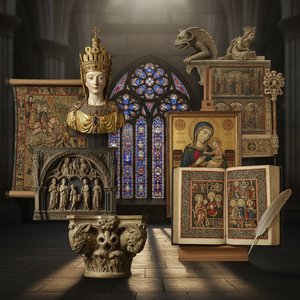
High Medieval Art: 10 Masterpieces That Shaped an Era | OriginalUniqueArt
Journey through High Medieval Art! Explore 10 iconic masterpieces – from Giotto's frescoes to stunning Gothic cathedrals. Discover the stories behind these timeless paintings, sculptures & illuminated manuscripts. Find museum-quality art reproductions at OriginalUniqueArt.com.


