
 Peržiūrėti realaus dydžio版
 Pasidalinti
 Dalintis
 Išsamiau
 Vadovas

 Atsisiųsti
 Panašūs eksponatai
 Rentgeno spindulių nuotrauka
 Automatinė diorama
 Q&A
Q&A Statistika
Bistro

- 38.0 x 46.0 cm


 Skaityti daugiau
Šiame puslapyje rodomas meno kūrinys yra saugomas autorių teisių įstatymais, todėl neturime teisės legaliai kurti ar parduoti jo identiškos reprodukcijos. Ši apsauga užtikrinama remiantis tokiais tarptautiniais susitarimais kaip Bernės konvencija ir pagal nacionalines įstatymų nuostatas, įskaitant tas, kurias nurodo JAV autoriškos teisės įstatymas – 17-asis skyrius.
Šis metodas visiškai atitinka autorių teises, nes jame nėra saugomo kūrinio kopijavimo ar dubliavimo. Tai yra kūrybinė reinterpretacija – naujas paveikslas, kurį įkvėpė originalas, tačiau kuris nėra jo identiškas.
Giclée / Meno spausdinimas
Muziejų lygio „giclée“ arba drobos spausdinimas: greita gamyba ir lankstios apdailos parinktys. ( Pirkti rankų darbo tapybą Perejti prie skaitmeninių vaizdų)




P118B €10

P118H €10

P118W €10

P438Z €10

P508JH €12

P508YH €12

P805H €10

P805Z €10

P919BZ €10

P919G €10

P919XJ €10

P959ZH €10

P968JZ €12

W106C €8

W218G €10

W218JH €8

W218Y €10

W307PJ €10

W316G €10

W316PJ €8

W316Y €10

W398PJ €8

W4111J €10

W500HY €15

W500JH €15

W692G €12

W849H €8

W940BG €15

W953PJ €8




Pasirinkite iš mūsų nustatytų dydžių, atitinkančių originalaus meno kūrinio proporcijas.

Įveskite jums reikiamą plotį ir aukštį, kad atvaizdas derėtų prie jūsų rėmo ar sienos. Spausdiną galima tik sumažinti, bet nepadidinti virš originalaus paveikslėlio dydžio, todėl keičiant proporcijas, dalis vaizdo prarandama. Prieš spausdinimą atsiųsime jums skaitmeninį maketą patvirtinimui. Šioje puslapio nuotraukoje matomas pjūvis nėra tikslus – jį rodo tik maketas.
Pristatymas visame pasaulyje () per 2 weeks, o ne įprastas 4/5 savaičių laikotarpis. (2 lapkritis)

Nemokamas greitasis pristatymas visame pasaulyje

Aukštos kokybės lininis drobė

Pilnas siuntimo draudimas

Muitinės mokesčių grąžinimo garantija

Tikro spalvų atitikimo garantija

100 dienų grąžinimo politika (tik esant įtaigoms)

100% pinigų grąžinimo garantija

Nuolaida dideliems užsakymams
 Stiklo variantas prieinamas tik pasirinkus dydį iki 110 cm

Bistro
Giclée / Meno spausdinimas
Reprodukcijos matmenys
-


Bendroji kaina
€ 71
A Vibrant Symphony of Parisian Life
In the evocative masterpiece Bistro, created in 1952, the Turkish avant-garde master Fikret Muallâ Saygı invites us into a world where color and movement dance together on the canvas. The painting serves as a window into a lively social gathering, capturing the quintessential essence of a bustling café or bistro setting. Through his expressive brushwork, Muallively reconstructs a scene of communal joy, where figures are gathered around a table laden with the humble artifacts of daily life—cups, bowls, and bottles that suggest a shared moment of respite. The composition is not merely a depiction of a meal, but a rhythmic arrangement of souls, where the presence of individuals in ties hints at the sophisticated yet casual atmosphere of mid-century European social life.
The technique employed in this work is a breathtaking testament to the influence of Fauvism and Expressionism. Muallâ does not seek to replicate reality with photographic precision; instead, he utilizes a bold, saturated palette to convey the emotional temperature of the room. The greenery of potted plants provides a refreshing organic contrast to the structured social interaction, while the figures on the periphery add depth and a sense of an unfolding narrative that extends beyond the frame. Each stroke feels deliberate yet spontaneous, contributing to an overall atmosphere that is both energetic and deeply nostalgic, making it a captivating centerpiece for any collection focused on the emotive power of color.
The Soul Behind the Canvas
To truly appreciate Bistro, one must understand the poignant duality of Fikret Muallâ’s life. Born in Kadıköy, Istanbul, his journey was marked by profound personal tragedy and a subsequent migration to the heart of the art world: Paris. The shadows of his early life—marked by physical injury and the loss of his mother—often haunted his psyche, yet they also fueled his ability to find beauty in the transient moments of street life and social gatherings. This painting represents the triumph of light over shadow; it is an exploration of the "joie de vivre" that Muallâ sought to capture amidst his own internal emotional turmoil. The lively, social atmosphere of the bistro serves as a sanctuary of connection, a stark and beautiful contrast to the artist's often solitary struggles.
For the discerning collector or interior designer, this reproduction offers more than just aesthetic appeal; it offers a piece of art history that resonates with emotional depth. The work’s ability to anchor a room with its warm tones and dynamic energy makes it an ideal choice for sophisticated living spaces, boutique hotels, or curated galleries. It is a conversation starter that bridges the gap between the historical significance of the Turkish avant-garde and the timeless allure of Parisian cafe culture. Owning a piece of Muallâ’s vision is to possess a fragment of a world where every color tells a story of resilience, community, and the enduring beauty of the human spirit.
Klausimai ir atsakymai
Kokia technika panaudota kūriniui „Bistro"]?
Fikretas Muallâ Saygı kūriniui „Bistro“ panaudojo Oil On Board techniką. Ši technika apibrėžė originalaus kūrinio medžiaginę prigimtį.
Iš kokios šalies kilęs Expressionism kūrinys „Bistro“?
„Bistro“ kūrybinę vadovavo Fikretas Muallâ Saygı, gimęs/usi Turkija, remiantis Expressionism stiliaus tendencijomis. Kūrėjo kilmė sujungia šį kūrinį su Expressionism kryptimi, kurios atstovai iš Turkija taip pat laikosi.
Kokią vietą meno istorijoje užima „Bistro“ – Fikretas Muallâ Saygı?
Istoriškai „Bistro“ yra šio platesnio Modern laikotarpio Expressionism stiliaus kūrinys.
Autoriaus biografija
ankstyvasis gyvenimas ir sunkumai
Fikretas Muallâ Saygı, XX amžiaus avangardinio stiliaus paveikslėjas iš Turkijos kilmės, gimė 1903 m. liepos 20 d. Kadıköy, Istanbule, Osmanų imperijoje. Jo gyvenimą pažymėjo ankstyva tragedija – būdos 12 metų patirtas nelaimingas atsitikimas, palikęs neįgalėtumą dega Lietuvos koją, bei netolygiai po to nukentėjusi motina, mirusi nuo gripertinės epidemijos. Šie įvykiai kručiamai paveikė jo psichologinę būseną ir asmenybę.meninė kelionė
Muallâ Saygı meninė kelionė prasidėjo po ekspresionizmo ir fauvizmo įtampą, orientuojantis į Paryžiaus gatvių gyvenimą, socialinius susibūrimus bei tokias temas kaip kafenės ir cirkai. Jo kūrybai būdingas emocinis gylis ir subjektyvus interpretavimas, atspindintis jo asmeninę kovą su psichinėmis ligomis bei vidine emocine turbulencija.- Paris, Sacré-Cœur (35 x 28 cm, aliejus ant lentos, Sakıp Sabancı muziejus, Stambulas, Turkija) puikiai iliustruoja jo susižavėjimą miesto gyvenimo ritmu.
- Jo darbas Cannes (37 x 50 cm, aliejus ant drobės, Sakıp Sabancı muziejus, Stambulas, Turkija) parodo gebėjimą įčiupti socialinių susibūrimų esmę.
- Bistro (38 x 46 cm, mišri technika, Sakıp Sabancı muziejus, Stambulas, Turkija) dar vieną kartą demonstruoja jo meistriškumą vaizduojant miesto gyvenimą per unikalią perspektyvą.
iššūkiai ir globėjai
Muallâ Saygı gyvenimą šešėliuos priklausomybė alkoholiui, psichinis atyingimas ir kognityvinis disonansas. Tačiau jis rado guosą savo mene bei gavo tokių globėjų kaip Madame Angles paramą, kuri leido jam išlaikyti save iš savo kūrybos.paliktis ir svarbios detalės
- Jis draugavo su garsiaisytais menininkais, įskaitant Pablo Picasso, ir net pasi লেনkavo su parašytu Picassio nuotrauka už butelį vyno.
- Jo antžioji paroda pažymėjo pradžią jo atpažinimo kaip paveikslėtojo, nepaisant jo prigimtinės reputacijos kaip girtaujančio ir bepro žmogaus.
- Galiausiai Muallâ Saygı sveikata silpsta, kas lėmė paralizį 1962 m. ir mirtį 1967 m. liepos 20 d. Reillanne, Prancūzijoje.
prisiminti Fikretą Muallâ Saygį
Muallâ Saygı laikomas vienu XX amžiaus Turkijos meno atstovų kartu su Abidin Dino. Jo paliktis toliau įkvepia tiek menininkus, tiek meno entuziastus, o jo kūriniai yra įrodymas apie meninės išraiškos galią susiduriant su sunkiausia kliūtimi.- Daugiau Fikretas Muallâ Saygı kūrybos galite rasti svetainėje OriginalUniqueArt.com
- Tyrinėkite ekspresionizmo ir fauvizmo pasaulį per 5 garsiausius visų laikų ekspresionizmo menininkus

Fikretas Muallâ Saygı
1903 - 1967 , Turkija
Trumpa informacija
- Artistic Movement Or Style:
- Postimpresionizmas
- Simbolizmas
- Artists Or Movements Influenced By This Artist:
- Paul Cézanne
- Fauvizmas
- Artists Who Influenced This Artist:
- Camille Pissarro
- Vincent van Gogh
- Date Of Birth: 1903
- Date Of Death: 1967
- Full Name: Eugène Henri Paul Gauguin
- Nationality: Prancūzų
- Notable Artworks:
- Pamokos vizija
- Iahona ir jos sūnus
- Place Of Birth: Kadıköy, Turkija
Susiję straipsniai
Cultivating Ambiance: The Strategic Role of Art in Shaping Guest Experience within Restaurant & Dining Environments
Discover how strategic art selection & design elevate the restaurant experience. Expert insights on color psychology, acoustics, layout & commissioning artwork to create lasting impressions and boost your brand.

Atmospheric Resonance: Art as Narrative Catalyst in Contemporary Restaurant Design
Elevate your restaurant's atmosphere & brand with strategic art integration. Discover how curated artwork transforms dining experiences, enhances guest perception, and drives revenue. Expert insights for luxury hospitality.
The Gastronomic Stage: Interior Design as Narrative Framework in the Contemporary Restaurant Experience
Transform your restaurant into an unforgettable experience! Explore expert insights on interior design, art integration & creating immersive dining environments. Elevate your brand and captivate guests.
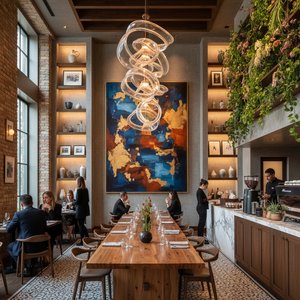
Restoranų Atmosferos Kūrimas: Meno Svarba Valgymo Patirtyje ir Interjero Dizaine
Sukurkite nepakartojamą restoranų atmosferą! Meno kūrinių pasirinkimas ir interjero dizaino konsultacijos iš OriginalUniqueArt ekspertų. Individualūs užsakymai, paveikslų reprodukcijos ir investicijos į meno vertę.
From Canvas to Cuisine: The Strategic Role of Murals in Restaurant Branding and Experiential Identity Formation
Elevate your restaurant's brand with strategic mural design! Discover how custom artwork transforms spaces, engages customers & drives success. Expert advice & inspiration inside.