

 Peržiūrėti realaus dydžio版
 Siųsti
 Dalintis
 Išsamiau
 Vadovas

 Atsisiųsti
 Panašūs eksponatai
 Rentgeno spindulių nuotrauka
 Diaporama
 Statistika
The flower that walks


 Rodyti daugiau
Giclée / Meno spausdinimas
Muziejų lygio „giclée“ arba drobos spausdinimas: greita gamyba ir lankstios apdailos parinktys. ( Pirkti rankomis tapytą reprodukciją Perejti prie skaitmeninių vaizdų)




P118B €10

P118H €10

P118W €10

P438Z €10

P508JH €12

P508YH €12

P805H €10

P805Z €10

P919BZ €10

P919G €10

P919XJ €10

P959ZH €10

P968JZ €12

W106C €8

W218G €10

W218JH €8

W218Y €10

W307PJ €10

W316G €10

W316PJ €8

W316Y €10

W398PJ €8

W4111J €10

W500HY €15

W500JH €15

W692G €12

W849H €8

W940BG €15

W953PJ €8




Pasirinkite iš mūsų nustatytų dydžių, atitinkančių originalaus meno kūrinio proporcijas.

Įveskite jums reikiamą plotį ir aukštį, kad atvaizdas derėtų prie jūsų rėmo ar sienos. Spausdiną galima tik sumažinti, bet nepadidinti virš originalaus paveikslėlio dydžio, todėl keičiant proporcijas, dalis vaizdo prarandama. Prieš spausdinimą atsiųsime jums skaitmeninį maketą patvirtinimui. Šioje puslapio nuotraukoje matomas pjūvis nėra tikslus – jį rodo tik maketas.
Pristatymas visame pasaulyje () per 2 weeks, o ne įprastas 4/5 savaičių laikotarpis. (22 spalis)

Nemokamas greitasis pristatymas visame pasaulyje

Aukštos kokybės lininis drobė

Pilnas siuntimo draudimas

Muitinės mokesčių grąžinimo garantija

Tikro spalvų atitikimo garantija

100 dienų grąžinimo politika (tik esant įtaigoms)

100% pinigų grąžinimo garantija

Nuolaida dideliems užsakymams
 Stiklo variantas prieinamas tik pasirinkus dydį iki 110 cm

The flower that walks
Giclée / Meno spausdinimas
Reprodukcijos dydis
-


Visų pasirinktų variantų kaina
€ 70
Fernand Léger’s “The Flower That Walks”: A Modernist Dance of Form and Color
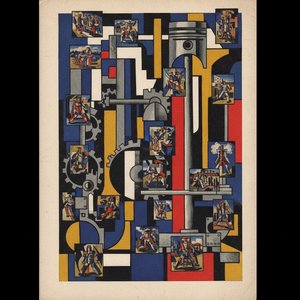
Fernand Léger's "The Flower That Walks," painted in 1953, isn’t merely a depiction of a flower; it’s an embodiment of the burgeoning modernist spirit grappling with the dynamism of the machine age. This vibrant canvas, brimming with bold geometric shapes and a playful energy, captures a pivotal moment in Léger's artistic evolution – his conscious effort to integrate the visual language of industry and technology into a distinctly personal aesthetic. Initially trained as an architect, Léger’s path shifted dramatically towards painting after arriving in Paris, drawn by the revolutionary currents swirling through the city’s avant-garde circles. Unlike many of his contemporaries who sought refuge in abstraction as a purely intellectual exercise, Léger embraced it as a means to represent the very essence of modern life – its rhythms, its structures, and its inherent movement.
The painting immediately commands attention with its audacious color palette: a joyous explosion of red, white, green, yellow, and orange. These aren’t delicate pastels; they're assertive, almost industrial hues, reminiscent of factory machinery and the vibrant signage that dominated the urban landscape of 1950s Paris. Léger deliberately avoided subtle gradations, favoring sharp contrasts and simplified forms. This stylistic choice reflects his fascination with the mechanics of the world around him – the precise angles of gears, the repetitive patterns of assembly lines, and the bold, unyielding structures of modern buildings. The central blue circle acts as a grounding element, a visual anchor amidst the swirling energy of the flower’s form.
Cubism and the “Tubist” Aesthetic
“The Flower That Walks” is deeply rooted in the principles of Cubism, a movement that Léger championed alongside Pablo Picasso and Georges Braque. However, Léger pushed beyond the purely analytical deconstruction of traditional forms characteristic of early Cubism. Instead, he sought to synthesize fragmented perspectives into a new, unified visual experience – a concept he termed “Tubism.” This approach involved reducing objects to their essential geometric components, often depicting them as if viewed from multiple angles simultaneously. The flower itself is rendered through this lens: its petals are not smoothly curved but rather broken down into angular planes, suggesting both the organic and the mechanical.
Léger’s interest in machinery profoundly influenced his artistic vision. He saw a beauty in the precision and efficiency of industrial design, and he sought to capture that same sense of order and dynamism in his paintings. The flower's stylized form, with its simplified shapes and bold colors, echoes the aesthetic of early 20th-century automobiles and airplanes – symbols of technological progress and modernity. The suggestion of movement is particularly striking; the flower appears to be actively “walking,” a deliberate gesture that imbues the painting with a sense of life and vitality.
Symbolism and the Human Form
While Léger’s work is often associated with industrial imagery, it's crucial to recognize the underlying human element. The "flower" isn't simply an abstract form; it subtly evokes the human figure, particularly the torso and limbs. The petals can be interpreted as arms reaching out, while the central circle represents a head or chest. This deliberate ambiguity invites viewers to project their own interpretations onto the painting, fostering a sense of personal connection.
Furthermore, the flower’s “walking” action carries symbolic weight. It suggests a journey, a progression, and perhaps even a striving for something beyond the confines of its immediate surroundings. Léger himself described his work as an attempt to capture "the spirit of the machine age," but also to express a sense of optimism about the future – a belief that technology could be harnessed to create a more beautiful and fulfilling world. “The Flower That Walks” is, therefore, not just a depiction of a flower; it’s a visual manifesto for a new era.
A Reproduction Worth Admiring
OriginalUniqueArt offers meticulously crafted hand-painted reproductions of Fernand Léger's "The Flower That Walks," allowing you to bring this iconic modernist masterpiece into your home or office. Our skilled artists replicate the painting’s vibrant colors, bold forms, and dynamic energy with exceptional attention to detail. Whether you are an art collector, interior designer, or simply someone who appreciates beautiful artwork, a OriginalUniqueArt reproduction of “The Flower That Walks” is a stunning addition to any space – a testament to Léger's genius and a celebration of the spirit of modernism.
问答 (or more naturally for a website heading): Klausimai ir atsakymai
Kokia „The flower that walks“ populiarumas Cubism kontekste?
Cubism kryptėje kūrinys „The flower that walks“ pasižymi Recognized populiarumumo lygio.
Kokią emociją perteikia Cubism stiliaus kūrinys „The flower that walks“?
„The flower that walks“ Playful emocija akompaniuoja jo Cubism stiliui.
Į kokį kambarį rekomenduojamas „The flower that walks“, autorius – Fernanas Ležė?
„The flower that walks“ reprodukcija puikiai tinka į Living Room.
Autoriaus biografija
Fernand Léger: Mašinos Amžius Ant Drobelės
Josefas Fernanas Anri Ležė, gimęs 1881 m. vasario 4 d. nuošaliame Argentano miestelyje Normandijoje, Prancūzijoje, buvo menininkas, kurio kūryba atspindi ir apibūdina modernumo erą – mechanizacijos, industrializacijos ir naujų technologijų triumfo laikotarpį. Jo kelionė nuo kaimo vaikystės iki Paryžiaus avangardo sūnaus yra įkvepiantis pasakojimas apie meninę viziją ir neprilygstančią norą užfiksuoti šiuolaikinio pasaulio esmę. Skirtingai nuo daugelio savo to laikmečio kolegų, kurie abstrakciją suprato kaip pabėgimą nuo realybės, Ležė siekė integruoti modernumą – jo dinamiką, mechaninius motyvus ir pačią širdį – į naują vizualinę kalbą, kuri būtų kartu stipriai abstrakti ir giliai įsišakniusi pastebimame pasaulyje. Jo ankstyvieji metai, praleisti dirbant ūkininkų darbus, suteikė jam tvirtą pagrindą, kontrastuodami su industrializuota ateitimi, kurią jis taip aistringai vaizdavo. Ležės ankstyvoji karjera buvo pažymėta tradiciniu akademiniu lavinimu, tačiau tik susidūrus su Paulio Sezano darbais prasidėjo tikras transformacijos procesas. Sezanas išlaisvino Ležę nuo įprastos reprezentacijos ir paskatino jį labiau geometriniu ir struktūriniu požiūriu. Jis pradėjo demontuoti formas, analizuodamas jų vidinę struktūrą ir vėliau jas atstatydamas ant drobės su nauja dėmesio tvirtumui ir tūriui. Šis tyrimas greitai įtraukė jį į kubizmo orbitą, tačiau Ležė nenusprendė tiesiog kopijuoti Pikaso ar Brako stilių. Jis sukūrė savo unikalų stiliumi – asmeninę kubizmo formą, kurią kritikai juokais pavadino „tubizmu“. Pasižymintis cilindrinėmis formomis, plokščiais paviršiais ir ryškiais spalvų kontrastais, tubizmas šventė mechanikos estetiką dar prieš tai tapus plačiai paplitusia menine tendencija. Tai buvo meno kūrimas, įkvėptas besivystančio pramoninio pasaulio, atrandantis grožį jo funkcinėse formose ir mechaniniuose ritmuose. Šis laikotarpis parodė Ležės aktyvų dalyvavimą avangardinėje scenoje, susijungiant su tokiais menininkais kaip Žanas Metzingeris, Enri Le Fokonjė, Fransua Pikabija ir Marcelis Diušanas Puteaux grupėje, žinomą kaip Aukso skyrius. Grupė tyrė matematikos harmonijos ir proporcijų principus, siekdama įkvėpti savo menui tvarkos ir racionalumo jausmą.Pasaulinis Karas, Mechanizmas ir Nauja Estetika
Pasaulio Pirmojo karo protrūkis giliai paveikė Ležės gyvenimą ir kūrybą. Tarnybos fronte nuo 1914 iki 1916 metų atvėrė jam brutalios modernaus karo realybės – artilerijos apšaudų, oro mūšių ir mechanizuoto konflikto dezumanizavimo – akis. Ši patirtis nevedė prie nusivylimo ar atsisakymo nuo modernumo; priešingai, ji sustiprino jo susidomėjimą mašinomis ir jų galia. Egzaminai, sukaupti tarnybos metu, dokumentavo šiuolaikinės technologijos lakonišką grožį, paversdami sunaikinimo prietaisus meninės kontempliacijos objektais. Grįžęs į civilinę gyvybę, Ležės estetika patyrė dar vieną evoliuciją. Jo paveikslai pradėjo atspindėti srautines mechanines nuotaikas, švenčiant pramoninio pasaulio dinamiką ir efektyvumą. *Karas su rūku* (1916) puikiai iliustruoja šį poslinkį, parodydamas supaprastintas formas ir ryškias spalvas, kurios sukelia mechaninės tikslumo jausmą. Tai nebuvo tiesiog estetinio pasirinkimo klausimas; tai buvo filosofinis pareiškimas – patvirtinimas modernumo potencialo progresui ir atsinaujinimui net po žiaurios konfrontacijos.Palikimas ir Pastovi Poveikis
Vėlesniais metais Ležė toliau tyrė meno ir pramonės sankirtą, sukūręs darbus, kurie šventė modernų gyvenimą su unikalus abstrakcijos ir figūratyvumo derinimu. Jo *Animuoti kraštovaizdyčiai* (1921) serijoje figūrėlės ir gyvūnai sklandžiai integruojami į srautines kompozicijas, sutepdamos ribas tarp organinių ir neorganinių formų. Jis taip pat eksperimentavo su skulptūra ir kino kūrimu, išplėsdamas savo meninę praktiką už tradicinio tapymo ribų. Ležės poveikis paskesnėms kartoms menininkų yra neatsiejamas. Jo ryški formų supaprastinimas, pramoninių vaizdų priėmimas ir populiariosios kultūros šventimas anksčiau nei kiti numatė Pop Art atsiradimą dešimtmečius vėliau. Tokie menininkai kaip Roy Lichtenstein ir Andy Warhol aiškiai skolingis Ležės pionieriškam darbui. Jis užpildė tarpą tarp abstraktaus meno ir figūratyvios reprezentacijos, parodydamas, kad galima sukurti darbus, kurie yra tiek intelektualiai griežti, tiek vizualiai patrauklūs. Šiandien Ležės paveikslai saugomi didžiausiuose muziejuose visame pasaulyje, įskaitant Musée d'Art et d'Histoire Prancūzijoje ir Musée National Fernand Léger, skirtą tik jo darbams. Jis išlieka 20-ojo amžiaus meno titanu – vizionieriumi, kuris drįso rasti grožį mašinos amžiuje ir perkelti jo energiją ant drobės nepriekaištingu ryžtu ir originalumu. Jo palikimas yra ne tik kaip tapytojo, bet ir modernumo pranašo. Tiesą sakant, pionierius, kurio darbai iki šiol sužadina auditoriją visame pasaulyje.
Fernanas Ležė
1881 - 1955 , Prancūzija
Trumpa informacija apie kūrėją
- Gimimo Data: 1881 m. vasario 4 d.
- Gimimo Vieta: Argentan, Prancūzija
- Meninis Stilius: Kubizmas, Tubizmas
- Mirties Data: 1955 m. rugpjūčio 17 d.
- Pilnas Vardas: Fernand Léger
- Poveikį Darė: ['Paul Cézanne']
- Tautybė: Prancūzas
- Įtaką Patyrė: ['Pop Art']
- Žymūs Kūriniai:
- Trys moterys
- Didžioji paradas
Susiję straipsniai

Bronze Age to Modern Masters: 10 Sculptures That Redefined Art | OriginalUniqueArt
Journey through art history with 10 legendary bronze sculptures – from Michelangelo's David to Rodin’s Thinker. Explore the stories, techniques & timeless beauty of these masterpieces. Find museum-quality reproductions & elevate your home decor on OriginalUniqueArt.com.

The Enduring Form: Sculpture Across History, Technique & Emotional Resonance
Explore the rich history of sculpture with OriginalUniqueArt. Discover key techniques, influential artists & investment potential for discerning collectors. Expert insights into valuing and collecting timeless masterpieces.
Fernand Léger: 25 Šedevrai, Apibrėžę Moderniąją Meninę Viziją | OriginalUniqueArt
Atraskite 25 įspūdingiausius Fernand Léger šedevrus! Kubizmo meistro paveikslai, atspindintys pramonės amžių ir modernaus meno spalvas. Meno reprodukcijos interjerui – OriginalUniqueArt.com

Bronze Sculptures That Defined Art History | OriginalUniqueArt
Journey through art history with our Top 10 bronze sculptures! Explore masterpieces by Rodin, Michelangelo & more. Discover stories behind iconic statues and find museum-quality reproductions for your home decor at OriginalUniqueArt.com.

The Enduring Form: Exploring Themes & Techniques in Sculpture Across Historical Periods
Explore the rich history of sculpture from ancient masterpieces to contemporary innovations. Discover key techniques, influential artists & investment potential for discerning art collectors.


