Ecsalių versija
 Viskas apie The dance1







































 Dėl meno kūrinių ar reprodukcijų, kurių bet kuri pusė yra didesnė nei 105 cm (apie 41 inch), rėmas bus siunčiamas kaip išskaidytas surinkimo rinkinys. Šis metodas užtikrina saugų pristatymą ir apsaugo nuo transportavimo metu galimos žalos.


A Celebration of Modernity: Fernand Léger’s “The Dance”
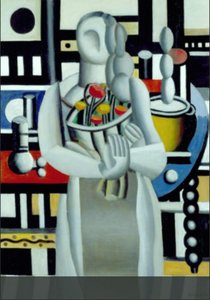
Fernand Léger's "The Dance" is a captivating example of his distinctive style, often referred to as ‘Tubism,’ a unique offshoot of Cubism. This painting presents two nude female figures engaged in what appears to be a choreographed movement or pose, rendered with the artist’s signature emphasis on cylindrical forms and simplified shapes. The composition isn't about realistic representation; instead, Léger prioritizes the *structure* of form and color, creating a dynamic interplay between figure and ground.Stylistic Innovation & Technique
Léger moved beyond traditional perspective, breaking down the human form into geometric components. This approach isn’t cold or clinical, however. The figures retain a sense of vitality through their poses and the bold application of color. Notice how Léger uses blocks of color to define musculature and create volume – a departure from the subtle shading of earlier artistic movements. The painting's surface is likely built up with layers of paint, contributing to its textural richness, though specific details about the technique used in this particular work are currently unknown. The inclusion of potted plants adds an unexpected element, grounding the abstract figures within a domestic or studio setting.Historical Context & Artistic Development
Born in 1881, Fernand Léger witnessed and actively participated in the radical artistic shifts of the early 20th century. Initially influenced by Impressionism – as seen in works like “My Mother’s Garden” (1905) – he quickly embraced Cubism, developing his own distinct vocabulary. Léger's work reflects a fascination with modernity, machinery, and the energy of urban life. He sought to create an art that was accessible and relevant to the industrial age, moving away from purely representational forms. His association with the Puteaux Group further cemented his position as a leading figure in avant-garde painting.Symbolism & Interpretation
While not overtly symbolic, “The Dance” can be interpreted as an exploration of the human form within a modern context. The simplified figures suggest a move away from traditional notions of beauty and towards a celebration of strength and dynamism. The potted plants might represent a connection to nature amidst the increasing industrialization of society, or simply serve as compositional elements that add depth and visual interest. The act of dancing itself can be seen as symbolic of freedom, joy, and the vitality of life.Emotional Impact & Aesthetic Appeal
“The Dance” evokes a sense of energy and movement despite its static nature. The bold colors and geometric forms create a visually stimulating experience. It’s an artwork that invites contemplation – not necessarily about narrative content, but about the fundamental elements of form, color, and composition. Its aesthetic appeal lies in its balance between abstraction and figuration, making it suitable for both modern and contemporary interiors. The painting's vibrant energy would be a striking focal point in a living space or office environment, offering a sophisticated touch of artistic innovation.Klausimai ir atsakymai
Ar šis kūrinys The dance1 yra sukeitintas rankiniu būdu ar atspausdintas?
Ranko darbas: profesionalus pavežėjas rankiniu būdu nukopijuoja The dance1 aliejuje ant lino drobės.
Kokią dydį turėčiau pasirinkti darbui The dance1?
Dydviai svyra nuo 39.0 x 25.7 cm (€178) iki 248.5 x 163.7 cm (€1353); šioje pusėje pateiktoje lentelėje nurodyti pagrindiniai etapai ir jų kainos.
Kiek trunka pristatymas?
Pristatymas užtruks nuo 4 iki 5 savaičių, naudojant nemokamą ekspresinį siuntimą visame pasaulyje; šioje pusėje taip pat galite rinktis skubios gamybos variantą. Jūs galite grąžinti prekę per 100 dienų ir gauti visą sumokėtą sumą atgal, nepriklausomai nuo bet kokių sąlygų.
Kokia technika buvo naudojama kūriniui The dance1 autoriu Fernand Léger?
Acrylic On Canvas
 Peržiūrėti realaus dydžio版

 Pasidalinti
 Dalintis
 Išsamiau
 Informacinė l lapelė


 Atsisiųsti
 Panašūs eksponatai
 Rentgeno spindulių nuotrauka
 Automatinė diorama
 问答

 Statistika