Cubist Style
Mechanical Elements (Fernand Léger)
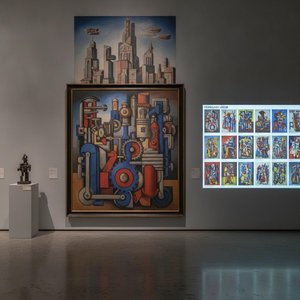
Fernand Léger (1881–1955) sukūrė Mechanical Elements. Šis kūrinys priklaulo Cubist Style kieruliui. Pagaminta naudojant Oil On Canvas. Eksponatas saugomas Metropolitano meno muziejus Niujorkas, JAV.
- Oil On Canvas
- Metropolitano meno muziejus, Niujorkas

 Peržiūrėti realaus dydžio版

 Rankinio darbo aliejinės imitacijos paveikslas
 Pasidalinti
 Dalintis
 Informacinė l lapelė


 Atsisiųsti
 Panašūs eksponatai
 Rentgeno spindulių nuotrauka
 Automatinė diorama
 问答

 Statistika
Mechanical Elements, trumpai
- Pavadinimas
- Mechanical Elements
- Autorius
- Fernand Léger (1881–1955)
- Dizainere/is gimęs
- Argentan, Prancūzija
- Mediumas
- Oil On Canvas
- Kur galima pamatyti
- Metropolitano meno muziejus, Niujorkas, JAV
- Judėjimas
- Cubist Style
- Laikotarpis
- Modern
- Tema
- mechanical elements, cubism, geometry, industrial design, abstraction, assemblage
Ką vaizduoja Mechanical Elements?
A Vision of Industrial Harmony
Fernand Léger’s “Mechanical Elements,” painted in 1924, stands as a striking testament to the burgeoning fascination with technology during the interwar period. More than just a depiction of gears and pipes—though undeniably prominent—the artwork embodies Léger's ambitious goal: to synthesize Cubist fragmentation with the dynamism of the machine age, creating an aesthetic that simultaneously challenged artistic conventions and reflected the transformative realities of modern life.
Born Joseph Fernand Henri Léger in Argentan, Normandy, 1881, Léger embarked on a journey from rural landscapes to the epicenter of Parisian avant-garde. Initially drawn to architecture, his artistic path swiftly pivoted toward painting after arriving in Paris around 1900, fueled by an unwavering conviction that art could engage with the complexities of its time.
Cubism Revisited: Geometric Precision
Léger’s stylistic evolution is inextricably linked to Cubism. Influenced profoundly by Picasso and Braque, he adopted the fractured perspective and simultaneous viewpoints characteristic of this revolutionary movement—a deliberate rejection of traditional representation in favor of exploring spatial relationships through geometric forms. However, Léger didn't simply replicate Cubist principles; he pushed them further, distilling them into a simplified vocabulary of circles, squares, and lines.
“Mechanical Elements” exemplifies this approach brilliantly. The canvas is dominated by interlocking geometric shapes—primarily circles and squares—arranged in a rhythmic pattern that evokes the precision and repetition found in industrial machinery. These forms aren’t merely decorative; they actively contribute to conveying a sense of movement and energy, mirroring the ceaseless pace of urban life.
Symbolism Beyond Mechanism
While the artwork's visual language speaks directly to the influence of technology, Léger imbued “Mechanical Elements” with deeper symbolic resonance. The repetition of geometric shapes isn’t merely a stylistic device; it represents an attempt to capture the impersonal logic and order inherent in industrial processes—a deliberate contrast to the organic forms favored by Impressionism and Post-Impressionism.
Furthermore, Léger's use of color – predominantly shades of gray punctuated by vibrant accents – underscores this thematic preoccupation. Gray symbolizes the materiality of metal and concrete, while bursts of color represent human vitality and creativity—a harmonious blend reflecting Léger’s belief that art could coexist with technological advancement without sacrificing beauty or emotional depth.
A Legacy of Innovation
"Mechanical Elements" cemented Léger's position as a pioneer of Tubism – a variant of Cubism developed by Léger himself—characterized by the use of tubular forms to represent objects and figures. This innovative technique anticipated developments in Pop Art decades later, demonstrating Léger’s enduring influence on subsequent generations of artists.
Today, reproductions of “Mechanical Elements” continue to captivate audiences with their bold aesthetic and intellectual ambition. They serve as a powerful reminder that art can not only reflect the spirit of its time but also actively shape our understanding of it—a timeless masterpiece celebrating both geometric precision and human resilience.
Kuriame muziejuje eksponuojamas karya Mechanical Elements?
Metropolitano meno muziejus
Niujorkas, JAV
Metropolitano meno muziejaus kilmė ir istorija Metropolitano meno muziejus gimė iš vizijos, kurią dalijosi verslininkai, finansininkai bei išckiausi menininkai ir mąlotojai. Įsilaužus institucijai 1870 metais, ji pradėjo ieškoti nuolatinės vietos savo augančiai kolekcijai. Prieš įsikurę dabartinėje vietoje, muziejus trumpam apsenė vone West 14th gatvėje esančiame Douglas Mansion dvoriuose.


Mechanical Elements dididraudžios kokybės vaizdai

Viešoji domenė: suregalis mirė 1955 m.
Kiti dydžiai, iškarai ir citavimo informacija →Fernand Léger, Mechanical Elements, Metropolitano meno muziejus. Viešoji domenė.
Spalvos suderintos su originalu skaitmeninio eksperto, failas kruopščiai retušuotas ir tiksliai atitinkantis autoriaus brushwork stilių.
Atsisiųskite aukštos iš}|$resolution iš høj-resolution failoAtsakimai į klausimus apie Mechanical Elements
Kuriam muziejui priklauso originalus „Mechanical Elements“?
Originalus „Mechanical Elements“ – Fernand Léger saugomas Metropolitano meno muziejus, Niujorkas, JAV. Kopija leidžia šį kūrinį eksponuoti namuose.
Kokia technika sukurta „Mechanical Elements“ – Fernand Léger?
„Mechanical Elements“ – Fernand Léger technika – Oil On Canvas. Kopijos siekia atkartoti šios technikos vaizdą.
Kokios temos atsispindi kūrynioje „Mechanical Elements“ – Fernand Léger?
„Mechanical Elements“ – Fernand Léger vaizdeletas: mechanical elements, cubism, geometry, industrial design, abstraction, assemblage, modern art.
Ar „Mechanical Elements“ – Fernand Léger vaizdą galima laisvai reprodukcijaoti?
Autorių teisių statusas kūriniui „Mechanical Elements“ – Fernand Léger: kūrinys priklauso yra viešosios erdvės dalis – jo autorinė teisė pasibaigusi. Tai nulemia, ar galima laisvai reprodukciuoti šį vaizdą.
Kas yra „Mechanical Elements“ kūrybos autorius?
„Mechanical Elements“ kūrybinį darbą sukūrė Fernand Léger. Šioje puslapio informacijoje aprašomas Fernand Léger originalus kūrinys.
Kokio meno kryžmės dalis yra „Mechanical Elements“ – Fernand Léger?
„Mechanical Elements“ – Fernand Léger priklauso Cubist Style stiliui. Ši dailės kryptis suteikia kūriniui stilistinį kontekstą.
Kokio Fernand Léger kūrybos laikotarpio priklauso „Mechanical Elements“?
„Mechanical Elements“ priklauso Fernand Léger kūrybos karjeros Mechanical Period etapui. Ši klasifikacija atspindi kūrinio ryšį su menininko evoliucija.
Kokia yra autorinės teisės situacijos priežastis kūriniam darbui „Mechanical Elements“ – Fernand Léger?
Autorinės teisės statusas kūriniui „Mechanical Elements“ – yra viešosios erdvės dalis – jo autorinė teisė pasibaigusi – nustatomas remiantis to, kad menininkas mirė 1955 m.
Ar kūrinys „Mechanical Elements“ – Fernand Léger saugomas originalaus paveikslautojo valstybėje?
Ne – kūrinys saugomas užsienyje. kūrinys „Mechanical Elements“ saugomas JAV, o Fernand Léger gimė Prancūzija.
Apie šį menininką, Fernand Léger

1881–1955, Prancūzija
Fernand Léger
Fernand Léger: Mašinos Amžius Ant Drobelės Josefas Fernanas Anri Ležė, gimęs 1881 m. vasario 4 d. nuošaliame Argentano miestelyje Normandijoje, Prancūzijoje, buvo menininkas, kurio kūryba atspindi ir apibūdina modernumo erą – mechanizacijos, industrializacijos ir naujų technologijų triumfo laikotarpį. Jo kelionė nuo kaimo vaikystės iki Paryžiaus avangardo sūnaus yra įkvepiantis pasakojimas apie meninę viziją ir neprilygstančią norą užfiksuoti šiuolaikinio pasaulio esmę.
Taip pat Fernand Léger darbai
 Miestas1919
 Mechanikas1920
 Tris Vyrai1921
 Žmogės miške1910

Esdai apie Mechanical Elements
 Cubism Unveiled: How Picasso and Braque Redefined Modern Art through Geometric RevolutionExplore the revolutionary world of Cubism. Discover how Pablo Picasso and Georges Braque dismantled perspective to redefine modern art thro…
 Mastering the Machine Age: The 25 Best Artworks by Fernand LégerImmerse yourself in the vibrant world of Fernand Léger. Explore 25 iconic masterpieces of Cubism and Tubism, from bold geometric forms to m…
 Industrial Revolution on Canvas: 10 Artworks That Define a Modern AestheticExplore 10 iconic artworks capturing the Industrial Revolution’s grit & beauty. From Monet to Manet, discover realism, impressionism & powe…