 Ecsalių versija
 Viskas apie Spring







































 Dėl meno kūrinių ar reprodukcijų, kurių bet kuri pusė yra didesnė nei 105 cm (apie 41 inch), rėmas bus siunčiamas kaip išskaidytas surinkimo rinkinys. Šis metodas užtikrina saugų pristatymą ir apsaugo nuo transportavimo metu galimos žalos.


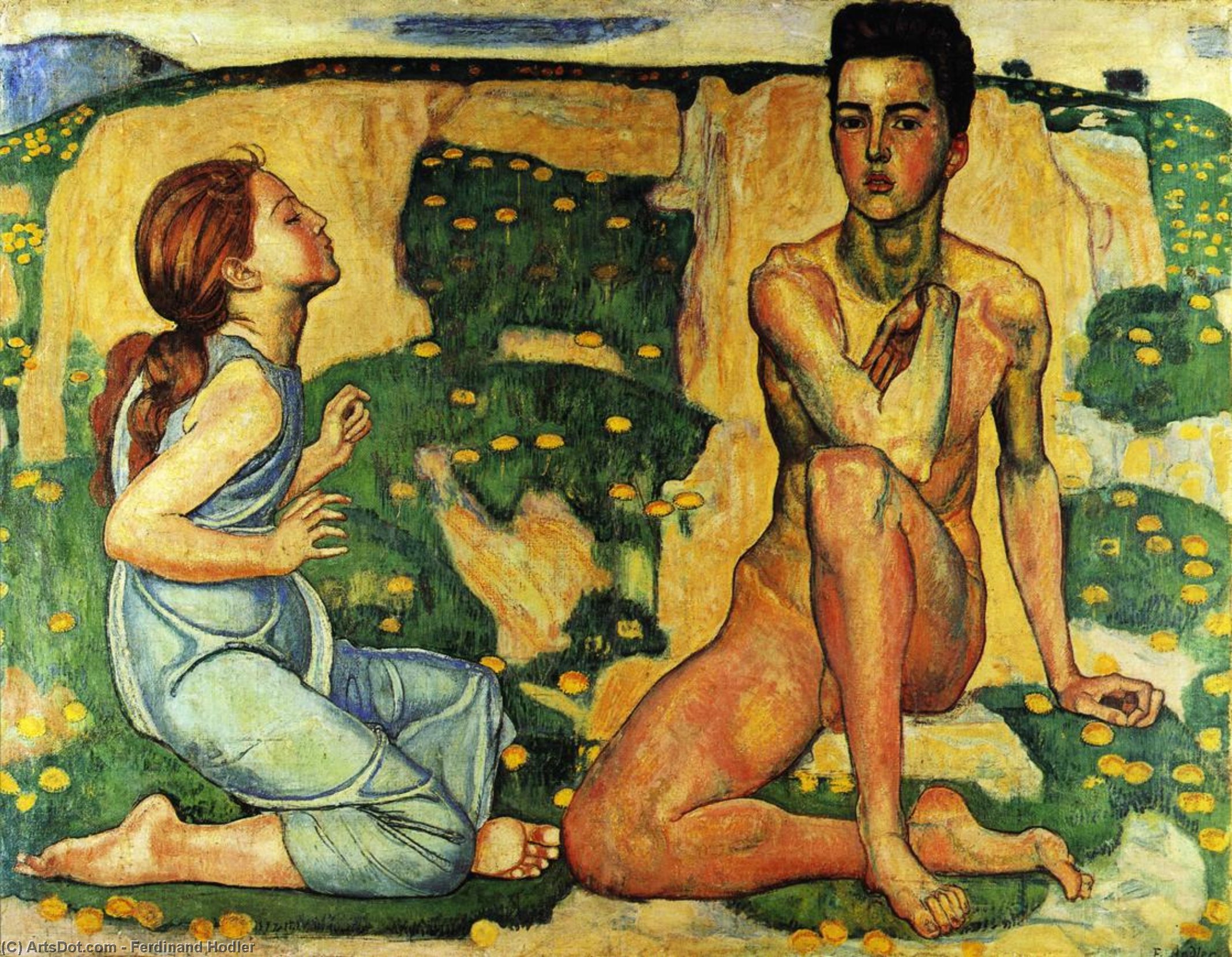
A Vision of Ephemeral Beauty: Exploring Ferdinand Hodler's "Spring"
To gaze upon Ferdinand Hodler’s Spring is to step directly into a moment suspended between dreams and reality. This painting, executed in 1901, is not merely a depiction of nature reviving; it is an eloquent meditation on cyclical life, renewal, and the delicate interplay between humanity and the burgeoning world. The scene unfolds in a sun-drenched field, carpeted with vibrant yellow blossoms that seem to hum with captured sunlight. At its heart are two figures—one seated in quiet contemplation upon the earth, the other standing watchfulness behind them. Their near-nudity strips away artifice, presenting the human form in a state of elemental grace, making the viewer feel an immediate, intimate connection to their vulnerability and repose.
Symbolism and the Cycle of Life
Hodler, deeply influenced by Symbolist currents, imbued his work with profound meaning. The very title, Spring, speaks volumes about rebirth. In art history, spring is rarely just a season; it represents potentiality, the overcoming of winter’s dormancy, and the promise of life renewed. The flowers are not simply decorative accents; they are emblems of fleeting joy and natural abundance. Furthermore, the pairing of the two figures suggests themes of companionship, transition, or perhaps even the soul's journey through time. Hodler often explored mortality in his work, making this depiction of vibrant, almost breathless vitality feel both utterly alive and profoundly transient—a beautiful reminder that all perfect moments must eventually yield to change.
Technique and Luminous Atmosphere
The technical mastery evident in this piece is breathtaking. While the subject matter feels spontaneous and pastoral, the execution speaks to a highly controlled hand. Hodler utilized color with an almost luminous quality; the yellows of the flowers pop against the deeper tones of the earth and the expansive sky, creating a palpable sense of depth. The handling of light seems integral to the composition itself, suggesting that the illumination is not just from the sun, but perhaps from the very spirit of renewal captured on canvas. For those considering a reproduction, one must appreciate how this technique translates—the goal being to capture that ethereal glow and the soft blending of tones that give the scene its dreamlike quality.
An Emotional Resonance for Modern Spaces
For the collector or designer seeking an anchor piece imbued with narrative depth, Spring offers unparalleled emotional resonance. It possesses a serene power—a quiet majesty that can transform any room from mundane to muse-filled. It speaks to the human desire for beauty, connection, and the enduring promise of hope after hardship. Imagine this painting gracing a gallery wall or serving as the focal point in a sunlit drawing-room; it invites pause, contemplation, and a deep breath. It is an artwork that does not shout its message but whispers it gently across centuries, inviting the viewer to reconnect with nature's most enduring magic.
Klausimai ir atsakymai
Ar šis kūrinys Spring yra sukeitintas rankiniu būdu ar atspausdintas?
Ranko darbas: profesionalus pavežėjas rankiniu būdu nukopijuoja Spring aliejuje ant lino drobės.
Kokią dydį turėčiau pasirinkti darbui Spring?
Originalo matmenys yra 102 x 129 cm. Dydviai svyra nuo 27.9 x 35.9 cm (€179) iki 193.8 x 249.4 cm (€1588); šioje pusėje pateiktoje lentelėje nurodyti pagrindiniai etapai ir jų kainos.
Kiek trunka pristatymas?
Pristatymas užtruks nuo 4 iki 5 savaičių, naudojant nemokamą ekspresinį siuntimą visame pasaulyje; šioje pusėje taip pat galite rinktis skubios gamybos variantą. Jūs galite grąžinti prekę per 100 dienų ir gauti visą sumokėtą sumą atgal, nepriklausomai nuo bet kokių sąlygų.
Kokia technika buvo naudojama kūriniui Spring autoriu Ferdinand Hodler?
Oil On Canvas
 Peržiūrėti realaus dydžio版

 Pasidalinti
 Dalintis
 Išsamiau
 Informacinė l lapelė


 Atsisiųsti
 Panašūs eksponatai
 Rentgeno spindulių nuotrauka
 Automatinė diorama
 问答

 Statistika