

 Peržiūrėti realaus dydžio版
 Siųsti
 Dalintis
 Išsamiau
 Vadovas

 Atsisiųsti
 Panašūs eksponatai
 Rentgeno spindulių nuotrauka
 Diaporama
 Statistika
Still Life


 Rodyti daugiau
Giclée / Meno spausdinimas
Muziejų lygio „giclée“ arba drobos spausdinimas: greita gamyba ir lankstios apdailos parinktys. ( Pirkti rankomis tapytą reprodukciją Perejti prie skaitmeninių vaizdų)




P118B €10

P118H €10

P118W €10

P438Z €10

P508JH €12

P508YH €12

P805H €10

P805Z €10

P919BZ €10

P919G €10

P919XJ €10

P959ZH €10

P968JZ €12

W106C €8

W218G €10

W218JH €8

W218Y €10

W307PJ €10

W316G €10

W316PJ €8

W316Y €10

W398PJ €8

W4111J €10

W500HY €15

W500JH €15

W692G €12

W849H €8

W940BG €15

W953PJ €8




Pasirinkite iš mūsų nustatytų dydžių, atitinkančių originalaus meno kūrinio proporcijas.

Įveskite jums reikiamą plotį ir aukštį, kad atvaizdas derėtų prie jūsų rėmo ar sienos. Spausdiną galima tik sumažinti, bet nepadidinti virš originalaus paveikslėlio dydžio, todėl keičiant proporcijas, dalis vaizdo prarandama. Prieš spausdinimą atsiųsime jums skaitmeninį maketą patvirtinimui. Šioje puslapio nuotraukoje matomas pjūvis nėra tikslus – jį rodo tik maketas.
Pristatymas visame pasaulyje () per 2 weeks, o ne įprastas 4/5 savaičių laikotarpis. (22 spalis)

Nemokamas greitasis pristatymas visame pasaulyje

Aukštos kokybės lininis drobė

Pilnas siuntimo draudimas

Muitinės mokesčių grąžinimo garantija

Tikro spalvų atitikimo garantija

100 dienų grąžinimo politika (tik esant įtaigoms)

100% pinigų grąžinimo garantija

Nuolaida dideliems užsakymams
 Stiklo variantas prieinamas tik pasirinkus dydį iki 110 cm

Still Life
Giclée / Meno spausdinimas
Reprodukcijos dydis
-


Visų pasirinktų variantų kaina
€ 70
A Moment Frozen in Time: Ferdinand Guillaimin’s “Still Life”
Ferdinand Guillaimin's "Still Life," painted in 1872, isn’t merely a depiction of objects arranged on a table; it’s a carefully constructed tableau brimming with quiet observation and subtle symbolism. This work, rendered in the heart of the Impressionist movement, captures a fleeting moment of domestic tranquility – a scene both familiar and imbued with an understated elegance. The painting immediately draws the eye to the central arrangement: a vase overflowing with vibrant red and yellow flowers, their petals seemingly caught mid-bloom, radiating warmth against the cooler tones that dominate the rest of the composition. Beside them rests a worn book, its pages hinting at untold stories and intellectual pursuits, while a simple bowl holds what appears to be fruit – perhaps apples or pears – adding another layer of earthly abundance.
Guillaimin’s technique is distinctly Impressionistic, prioritizing capturing the *impression* of light and color rather than precise detail. Loose brushstrokes dance across the canvas, creating an atmospheric haze that softens the edges of each object. He masterfully employs broken color – applying small dabs of paint side-by-side to build up hues and create a shimmering effect, particularly noticeable in the reflections on the table’s surface. The dark background serves not as mere backdrop but as a crucial element, intensifying the luminosity of the floral arrangement and lending the scene a sense of intimacy and depth. The artist's focus is less on photographic realism and more on conveying the *feeling* of being present within this quiet space.
The Context of Parisian Impressionism
To fully appreciate “Still Life,” it’s essential to understand the artistic climate in which Guillaimin was working. The 1870s were a period of profound change and experimentation for French art, marked by the rise of Impressionism. Artists like Monet, Renoir, and Pissarro sought to break free from the rigid conventions of academic painting, embracing plein air (outdoor) painting and capturing the ephemeral qualities of light and atmosphere. Guillaimin’s work reflects this spirit of innovation, moving away from traditional subject matter and exploring new ways of representing the world around him.
Guillaimin's connection to Pissarro is particularly noteworthy. The artist spent a significant period painting alongside Pissarro in Pontoise, a suburb of Paris, where he found inspiration in the everyday life of the region. This proximity fostered a collaborative environment, allowing Guillaimin to refine his style and develop his unique approach to capturing light and color. The Impressionists were not simply interested in depicting what they *saw*; they were driven by a desire to express their subjective experience of the world.
Symbolism and the Language of Objects
Beyond its aesthetic qualities, “Still Life” is rich with symbolic meaning. The flowers themselves represent beauty, fragility, and the fleeting nature of life – themes frequently explored in Impressionist art. The book suggests knowledge, contemplation, and a connection to the past. The bowl of fruit symbolizes abundance, nourishment, and the pleasures of earthly existence. Even the dark background can be interpreted as representing mortality or the unknown.
Guillaimin’s use of these objects is deliberate and carefully considered, inviting the viewer to engage in a process of interpretation. He doesn't offer explicit explanations; instead, he presents a series of interconnected symbols that resonate with universal themes of beauty, life, and death. The arrangement feels deliberately balanced, creating a harmonious composition that evokes a sense of peace and serenity.
A Legacy of Delicate Beauty
Ferdinand Guillaimin’s “Still Life” stands as a testament to the power of observation and the enduring appeal of simple subjects rendered with exquisite sensitivity. It's a painting that rewards close attention, revealing layers of meaning and emotional depth with each viewing. Reproductions capture much of the original atmosphere, but nothing quite replicates the subtle nuances of light and color that define Guillaimin’s masterful technique.
Today, this work is celebrated for its evocative beauty and its contribution to the development of Impressionism. It remains a poignant reminder of the quiet moments of everyday life – a timeless meditation on beauty, mortality, and the enduring power of art.
问答 (or more naturally for a website heading): Klausimai ir atsakymai
Kokias spalvas naudoja „Still Life“?
„Still Life“, autorius – Ferdinandas Guijomenas kūryboje naudojama Earthy spalvų paletė. Ši paletė apibūdina bendrą viso kūrinio spalvų charakterį.
Ar yra panašių darbų kaip „Still Life“?
Puslapio Panašūs kūriniai skiltyje, skirtoje kūriniam darbui „Still Life“, autorius – Ferdinandas Guijomenas, pateikiami panašūs meno kūriniai.
Kas sukūrė „Still Life“ ir kada?
„Still Life“ autorius yra Ferdinandas Guijomenas, o kūrinys datuojamas 1872 m.
Autoriaus biografija
Ankstyvas gyvenimas ir karjeros pradžia
Ferdinandas Guillaumin, prancūzų impresionistų tapytojas ir litografas, gimė 1841 metų vasario 16 dieną Paryžiuje. Jo meninis kelias prasidėjo XIX amžiaus viduryje, kai Prancūzijoje įsibėgėjo impresionizmo judėjimas. Nors Guillaumin nebuvo vienas iš pirmųjų šio stiliaus pradininkų, jis greitai tapo svarbiu jo dalyviu, prisidėdamas prie naujų vizualios kalbos kūrimo ir populiarinimo.
Indėlis į impresionizmą
Guillaumin’s darbai turėjo reikšmingos įtakos impresionizmo plėtrai – judėjimas, siekusiame užfiksuoti trumpalaikius šviesos ir spalvos įspūdžius gamtos pasaulyje. Kaip aktyvus šios grupės narys, jis dalyvavo keliose parodose, demonstruodamas savo unikalų stilių. Jo paveikslai dažnai vaizdavo svajingus, minkštus peizažus, kurie atspindėjo impresionizmo dvasią. Guillaumin’s spalvų naudojimas ir laisvas teptuko braižas papildė judėjimo būdingą spontaniškumą.
Meninis brendimas ir įtakos
Guillaumin nebuvo izoliuotas menininkas; jo kūrybai didelę įtaką darė bendravimas su kitais impresionistais. Ypač artimi ryšiai susiklostė su Claude Monet, su kuriuo abu dažnai eksponavo savo darbus kartu. Tačiau Guillaumin’s meninis horizontas neapsiribojo vien impresionizmu. Jo kūriniuose galima aptikti simbolizmo įtakų – judėjimo, pabrėžusio sapnų ir mistikos pasaulį. Tai pasireiškia ryškiomis spalvomis ir emocingais motyvais.
Svarbiausi darbai ir asociacijos
Nors Guillaumin’s vardas galbūt nėra toks žinomas kaip Monet ar Renoir, jo kūryba yra vertinga impresionizmo paveldo dalis. Mount Holyoke College Art Museum, kuriame saugoma įspūdinga meno kolekcija, įskaitant Guillaumin’s darbus, yra svarbi institucija, prisidėjusi prie jo palikimo išsaugojimo. Jo paveikslai dažnai atspindi ramius kaimo peizažus, kuriuose šviesa ir spalva susilieja į harmoningą visumą. Guillaumin’s tapyba – tai subtilus gamtos grožio ir emocijų pasaulis.
Palikimas ir atmintis
Ferdinandas Guillaumin mirė 1927 metų birželio 26 dieną, tačiau jo indėlis į impresionizmą išlieka neįkainojamas. Jo darbai galima rasti įvairiuose muziejuose ir kolekcijose, įskaitant Mount Holyoke College Art Museum (Jungtinės Valstijos). Guillaumin’s kūryba primena apie impresionizmo judėjimo grožį, spontaniškumą ir šviesos magiją. Jo paveikslai kviečia mus sustoti ir įvertinti gamtos grožį bei emocijų gilumą.

Ferdinandas Guijomenas
1841 - 1927 , Prancūzija
Trumpa informacija apie kūrėją
- Gimimo Data: 1841 vasario 16 d.
- Gimimo Vieta: Paryžius, Prancūzija
- Meninis Stilius: Impresionizmas
- Mirties Data: 1927 birželio 26 d.
- Pilnas Vardas: Jean Baptiste Armand Guillaumin
- Tautybė: Prancūzas
- Turėjo Įtakos:
- Vincent van Gogh
- Paul Cézanne
- Camille Pissarro
- Įtakojo: ['Claude Monet']
- Žymiausi Darbai:
- Sodas Janville'e birželį
- Upės vaizdas
- Puy de Dôme vaizdas
Susiję straipsniai

Blossoms of Time: A Historical Journey Through Flower Painting
Explore the captivating history of flower painting! Discover Dutch masters, symbolic meanings, & botanical art. Expert insights & high-quality reproductions at OriginalUniqueArt.
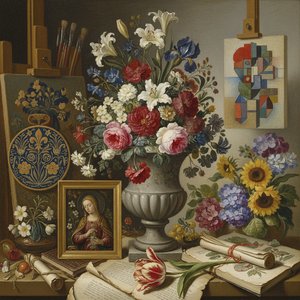
Blossoming Symbolism: A Historical Journey Through Flowers in Western Painting
Explore the rich history of flower symbolism in Western painting! Discover how artists from the Renaissance to Modernism used blossoms to convey meaning, emotion & beauty. Learn about iconic artworks and movements.

Impressionism's Masterpieces: 10 Paintings That Defined a Movement | OriginalUniqueArt
Journey through Impressionism's heart with 10 iconic paintings by Monet, Renoir & Degas. Explore light, color & the stories behind these masterpieces. Find museum-quality art reproductions and elevate your home decor on OriginalUniqueArt.com.

Silent Narratives: Exploring the Enduring Appeal of Still Life Painting Across Centuries
Explore the rich history of still life painting with OriginalUniqueArt. Discover Dutch Masters, decode vanitas symbolism & learn about collecting timeless art. Expert insights and museum-quality reproductions.

Paul Cézanne: 25 Šedevrai, Keičiantys Meno Pasaulį | OriginalUniqueArt.lt
Atraskite 25 Paul Cézanno šedevrus! Išsami analizė, istorijos ir įkvėpimas interjero dekorui. Modernus menas, impresionizmas, natiurmortai – viskas OriginalUniqueArt.com. Explore the full collection online!