

 Peržiūrėti realybėje
 Pasidalinti
 Dalintis
 Išsamiau

 Atsisiųsti
 Panašūs eksponatai
 Rentgeno nuotrauka
 Automatinė diorama
 Statistika
Pierrot the Photographer


 Skaityti daugiau
Rankų darbo aliejinės reprodukcijos
Rankiniu būdu tapytas aliejus ant droblio jūsų pageidaujamame dydį ir rėmuose – mūsų menininkų darbas pagal užsakymą. ( Perejti prie spausdinimo Perejti prie skaitmeninio vaizdo)




P118B $10

P118H $10

P118W $10

P438Z $10

P508JH $12

P508YH $12

P805H $10

P805Z $10

P919BZ $10

P919G $10

P919XJ $10

P959ZH $10

P968JZ $12

W106C $8

W218G $10

W218JH $8

W218Y $10

W307PJ $10

W316G $10

W316PJ $8

W316Y $10

W398PJ $8

W4111J $10

W500HY $15

W500JH $15

W692G $12

W849H $8

W940BG $15

W953PJ $8




Pasirinkite iš mūsų nustatytų dydžių, atitinkančių originalaus meno kūrinio proporcijas.

Galite įvesti savo matmenis, kad jie atitiktų konkretų rėmą ar erdvę. Jei pasirinktas dydis neatitinka originalaus paveikslėlio proporcijų, mes arba apkropsime meno kūrinį, arba papildysime tapybą rankomis dažytい elementais. Prieš pradėdami gamybą, jūsų patvirtinimui atsiųsime skaitmeninį maketą.
Atkreipkite dėmesį, kad ekrane rodomas vaizdas neatspindi tikrojo apkarpymo ar papildymo. Tik maketas tiksliai parodys galutinę kompoziciją.
Nors galima rinktis ir individualius dydžius, rekomenduojame pasirinkti matmenis iš nustatytos sąrašo, kad būtų išlaikytos originalios proporcijos.
Gavus užsakymą, OriginalUniqueArt.com komanda susisieks su klientu el. paštu dėl instrukcijų ir pateiks maketo pavyzdį.
Pristatymas visame pasaulyje () per 3–4 savaites, o ne įprastai – per 5 savaites. (18 rugsėjis). Kokybė lieka nepakeičiama.

Nemokamas greitasis pristatymas visame pasaulyje

Aukštos kokybės lininis drobė

Pilnas siuntimo draudimas

Muitinės mokesčių grąžinimo garantija

Tikro spalvų atitikimo garantija

100 dienų grąžinimo politika (tik esant įtaigoms)

100% pinigų grąžinimo garantija

Nuolaida už kelias reprodukcijas
 Stiklo variantas prieinamas tik pasirinkus dydį iki 110 cm

Pierrot the Photographer
Reprodukcijos technika
Reprodukcijos matmenys
-


Galutinė kaina
$ 300
The Enigmatic Figure: Unveiling “Pierrot the Photographer”
Félix Nadar’s “Pierrot the Photographer,” created in 1854, isn't merely a portrait; it’s a meticulously constructed tableau vivant—a staged scene brimming with quiet observation and subtle commentary on the burgeoning world of photography. The image immediately draws the eye to Pierrot, a figure both familiar and unsettlingly modern, holding a camera poised as if capturing not just a likeness but an essence. He embodies the nascent spirit of the photographer himself – a blend of artist, observer, and documentarian, all wrapped in the playful guise of a traditional clown. The photograph’s power lies not simply in its technical execution, but in the carefully orchestrated narrative it presents, inviting us to contemplate the very nature of representation and identity.
The work's historical context is crucial to understanding its significance. Nadar was a pioneer, pushing against the conventions of portraiture prevalent during the mid-19th century. He rejected the opulent backdrops and theatrical poses favored by his contemporaries, instead opting for natural light and an intimate approach that prioritized capturing the sitter’s personality. “Pierrot the Photographer” exemplifies this shift—a deliberate departure from traditional formality, suggesting a new era of visual storytelling.
A Dance of Light and Shadow: Technical Details & Artistic Choices
Examining the photographic process reveals layers of artistry. “Pierrot the Photographer” was undoubtedly produced using one of the early wet collodion techniques, a demanding method requiring immediate development after exposure. This explains the image’s distinctive grainy texture—a hallmark of photographs from this period—and the subtle variations in tone that contribute to its aged and evocative quality. The careful control of light is particularly noteworthy; diffused illumination creates a soft, almost melancholic atmosphere, highlighting the textures of Pierrot's costume and casting gentle shadows that add depth and dimension.
Nadar’s compositional choices further enhance the photograph’s impact. The tripod, a stark vertical element, anchors the scene while simultaneously creating a sense of formality and precision. Pierrot’s slight tilt of his head—a subtle gesture of engagement—draws us into the frame, inviting us to share in his moment of observation. The two indistinct figures in the background offer a hint of context without disrupting the central focus, suggesting a studio setting and hinting at the collaborative nature of photographic production.
Symbolism & Emotional Resonance: Beyond the Surface
“Pierrot the Photographer” is rich with symbolic meaning. The clown costume itself—a traditional symbol of playfulness and theatricality—contrasts sharply with the seriousness of the act of photography, creating a fascinating tension. The camera becomes an extension of Pierrot’s personality, transforming him into both subject and observer. The image speaks to the evolving role of the photographer in society – moving from mere recorder of reality to active participant in shaping it.
Furthermore, the photograph evokes a sense of nostalgia and timelessness. Its aged appearance—the subtle imperfections and tonal variations—suggests that it has witnessed countless moments, carrying with it the weight of history. “Pierrot the Photographer” is not simply a portrait; it’s a meditation on memory, identity, and the enduring power of visual representation.
A Legacy in Reproduction: Bringing Nadar's Vision to Life
Reproductions of “Pierrot the Photographer” offer a unique opportunity to experience the artistry of Félix Nadar firsthand. The meticulous detail captured in this early photograph—the textures of the costume, the subtle nuances of light and shadow—are faithfully reproduced in high-quality prints, allowing viewers to appreciate the depth and complexity of Nadar’s vision. Whether displayed as a statement piece in a contemporary interior or studied as an historical artifact, this iconic image continues to captivate and inspire.
Autoriaus biografija
Félix Nadar: Fotografijos pionierius
Pradiniai metai ir pradžia
- Gimė: Gaspard-Félix Tournachon 1820 m. balandžio 5 d. Paryzuje (nors kai kurie šaltiniai nurodo Lioną).
- Jo tėvas, Victor Tournachon, buvo spausdinimo srities specialistas ir knygyninkas.
- Pradinai studijavo mediciną, tačiau po tėvo mirties buvo priverstas ją palikti dėl finansinių sunkumų.
- Nadar, kaip jis tapo žinomas, savo karjerą pradėjo kaip karikatūristas ir romanistas, dirbdamas įvairiuose laikrašniuose.
Nuo karikatūros iki fotografijos
- Fotografijos eksperimentus pradėjo apie 1853 m.
- Savo pirmąjį fotografijos studiją atidarė 1854 m. adresu 113 rue St. Lazare, o 1860 m. persikėlė į 35 Boulevard des Capucines.
- Greitai pelnė pripažinimą dėl savo intriguojančių ir psichologiškai gilių portretų.
- Tradicijų atmetimas: Nadar vengė prabangaus fono, būdingo tuometinei portretų menui, teikdamas pirmenybę natūraliam šviesos naudojimui ir dėmesiui į modelio asmenybę.
Aviacijos fotografijos pionierius
- 1858 m. Nadar tapo pirmąoju žmogumi, padaryjusiu nuotraukas iš oro naudojant aerostatus.
- Jis įveikė technines iššūkius, susijusius su fotografinių plokščių iškėlimu didelėje aukštėje, išradęs dujomis atsparią medvilninę dangtį savo aerostato krepšiams.
- Taip pat buvo dirbtinio apšvietimo fotografe pionierius, ypač naudojdamas jį Paryžiaus katakombose.
- Le Géant: 1863 m. užsakė milžiniško aerostato „Le Géant“ (Gigantas) statymą, kuris įkvėpė Žilui Verne romanui *„Penkios savaitės aerostate“*.
Didieji pasiekimai ir įtaka
- Portretų menas: Fotografavo daugybę iškilmingų asmenų, įskaitant Victor Hugo, Charles Baudelaire, Sarah Bernhardt ir Gustave Courbet.
- Parisių belekryžėje (1870–71 m.) naudojdamas aerostatus įkurė pirmąjį pasaulinio oro pašto tarnybą.
- Savo studijoje 1874 m. surengė pirmąją impresionistų parodą, suteikdami kritiškai svarbią platformą pradedantiems menininkams.
- 1886 m. išleido tai, kas laikoma pirmąoju fotointerviu, kuriame dalyvavo chemikas Michel Eugène Chevreul.
Vėlesnieji metai ir palikimas
- Nuo 1895 m. iki 1909 m. savo studiją perkėlė į Marselį.
- Mirus 1910 m. kovo 20 d. Paryzuje, jis yra palaidotas Père Lachaise kapinėje.
- Po jo mirties studijos veiklos tęsė jo sūnus, Paul Nadar.
- Quand j’étais photographe: Išleido memuarus, kuriuose apžvelgė savo gyvenimą ir darbą, suteikdami vertingų įžvalgų apie XIX amžiaus fotografiją.
- Istorinė reikšmė: Nadaro inovatyvios technikos ir meninė vizija kruopščiai paveikė fotografijos vystymąsį kaip meno formą. Jo portretai išlieka ikoninės Paryžiaus intelektualų ir menininkų apygardų atvaizdai.
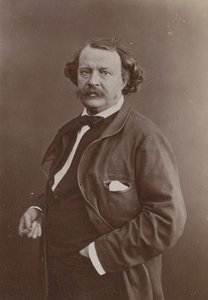
Félix Nadar
1820 - 1910
Trumpa informacija
- Birth Date: 1820 m. balandžio 5 d.
- Death Date: 1910 m. kovo 20 d.
- Influenced: ['Žilio Verno']
- Influenced By: Nėra
- Movement:
- Fotografija
- Karikatūra
- Impresionizmas (susijęs)
- Name: Félix Nadar
- Nationality: Prancūzų
- Notable Works:
- Baudelaire, Hugo, Delacroix portretai
- Orų fotografija
- Fotinterviu su Chevreul
Susiję straipsniai

Beyond the Lens: Photography's Enduring Influence on Modern & Contemporary Art
Explore photography's pivotal role in shaping modern & contemporary art. Discover key movements, influential artists like Stieglitz, and expert collecting advice from OriginalUniqueArt.
Beyond Color: The Timeless Power and Artistry of Black and White Photography
Explore the profound artistry of black and white photography. From the chemistry of gelatin silver to the chiaroscuro of the Old Masters, discover how monochrome captures the eternal essence of light, form, and emotion for the discerning art collector.
Timeless Shadows: The Artistry, History, and Emotional Resonance of Black and White Photography
Explore the profound artistry of black and white photography. From historical mastery to the interplay of light and shadow, discover how monochrome captures timeless emotion and form through a sophisticated lens of art history.

Beyond the Portrait: Félix Nadar & the Psychological Depths of 19th-Century Photography
Explore the revolutionary photography of Félix Nadar – pioneer of portraiture, aerial imaging & psychological depth. Discover his iconic portraits of Baudelaire, Hugo & more. A deep dive into 19th-century art history.

Monochrome Visions: Exploring the Aesthetic & Historical Significance of Black & White Photography
Explore the rich history & artistic power of black and white photography. From early techniques to iconic masters like Ansel Adams, discover why monochrome continues to captivate art lovers today. Expert insights for collectors.