

 Peržiūrėti realybėje
 Pasidalinti
 Dalintis
 Išsamiau

 Atsisiųsti
 Panašūs eksponatai
 Rentgeno nuotrauka
 Automatinė diorama
Arabs Crossing a Ford
 1873
1873 51.0 x 62.0 cm
 Skaityti daugiau
Įsigykite aukštos skiriamosios raiškos, patobulintą skaitmeninį vaizdą, gerokai pranašesnį už internetinę peržiūrą.
Kiekvieną failą mūsų specialistai kruopščiai paruošia naudojant pažangias technologijas ir profesionalų rankinį retušavimą. Užtikriname, kad kiekvienas vaizdas pasižymėtų išskirtiniu aiškumu, tikslia spalvų atspalviu ir smulkiomis detalėmis.
Baigiamas failas el. paštu pristatomas per 72 valandas; jis optimizuotas nedelsiant naudojimui profesionalioje, redakcinėje ir spausdinimo aplinkoje. Tai ta pati kokybė, kuria pasitiki aukščiausios klasės dizaino studijos, leidyklos ir galerijos.
Skaitmeninis vaizdas
Atsisiųskite didelės raiškos failą asmeniniam naudojimui, spausdinimui ir kūrybiniams projektams. ( Pirkti spaudinį Pirkti rankomis tapytą paveikslą)
Kiekvieną skaitinio vaizdo užsakymą papildė
Profesionalus skaitmeninis pristatymas, garantuotas
Pasirinkę OriginalUniqueArt.com, jūs ne tik gaunate paveikslėlį – jūs gaunate profesionaliai patobudintą skaitmeninį kūrinį, sukurtą itin tikniai ir užtikrinantį pasitenkinimą. Štai viską, kas automatiškai pritékia jūsų užsakymui:

Greitas siuntimas el. paštu
Jūsų aukštos raiškos skaitmeninis vaizdo failas bus išsiųstas jums el. paštu per 72 valaudas nuo užsakymo – paruoštas naudojimui be jokių papildomų veiksmų.

Skaitmeninis failas su dirbtiniu intelektu
Jūsų meno kūrinys profesionaliai optimizuojamas naudojant pažangius dirbtinio intelekto įrankius ir rankinį redagavimą, užtikrinant maksimalią detalę, aiškumą ir spalvų tikslumą.

Nemokamas visam laikui pakartotinis siuntimas
Atsitiktinai ištrytikote ar praradote savo failą? Nebijokite – bet kuriuo metu atsiųsime jį jums vėl nemokamai.

Jokio importo mokesčio – niekada
Mėgaukitės savo meno kūriniu akimirka – skaitiniai failai visada yra neapmokestinami, todėl nereikės mokėti muitinės, mokesčių ar pristatymo mokesčių.

Spalvų tikslumo garantija
Naudodami profesionalią įrangą ir spalvų valdymo sistemas, užtikriname, kad jūsų skaitmeninis vaizdas kuo tiksliau atspindėtų originalias spalvas.

60 dienų pasitenkinimo garantija
Jei nebuvate patenkinti savo skaitinio vaizdo, per 60 dienų jį pertaisysime arba grąkinsime 100% sumą – be jokių klausimų.

100% pinigų grąžinimo garantija
Nepat 만족inti? Gaukite visą sumokėtą sumą per 60 dienų nuo skaitmeninio failo gavimo – be jokių papildomų klausimų.

Nuolaidos dideliems užsakymams
Pirkti 3 nuotraukas – pasiūla 10% - Pirkti 5 – pasiūla 15% - Pirkti 10 ir daugiau – pasiūla 20%. Puikiai tinka kūrybiniams projektams, galerijoms bei agentūroms.
Autoriaus biografija
The Visionary of the Sahara: The Life and Legacy of Eugène Fromentin
Eugène Fromentin stands as a pivotal figure in French Orientalist painting, yet his legacy extends far beyond mere visual representation. Born in La Rochelle, France, in 1820, he embarked on an artistic journey marked by early exposure to landscape painting under the guidance of Louis Cabat. This foundational training propelled him toward a profound engagement with the vibrant culture of Algeria—a fascination that would define both his oeuvre and his intellectual pursuits. More than just capturing picturesque vistas, Fromentin sought to distill the essence of Algerian life, blending meticulous observation with expressive brushstrokes to create images imbued with a palpable, breathing atmosphere.
Fromentin’s artistic breakthrough arrived in 1847 with “Les gorges de la Chiffa,” a monumental canvas that immediately garnered acclaim at the Paris Salon and established him as one of the foremost interpreters of Algeria's dramatic topography. His connection to North Africa was not merely academic; through travels such as his 1852 mission accompanying an archaeological expedition, he achieved an intimate knowledge of the land. This firsthand experience allowed him to capture the rugged beauty of the Sahara Desert with remarkable accuracy, documenting its flora, fauna, and the nuanced habits of its people. His work often serves as a window into a world of light and shadow, where the heat of the desert and the resilience of human life are rendered with striking realism.
Mastery of Light and Orientalist Realism
The brilliance of Fromentin’s technique lies in his ability to blend elements of Orientalism and Romanticism. His paintings, such as “The Arab Falconer” and “Arabs Crossing a Ford,” exemplify a distinctive style characterized by luminous color palettes and dynamic compositions. Influenced deeply by the Romantic fervor of Eugène Delacroix, Fromentin utilized light to create depth and dimensionality, making the arid landscapes feel almost tactile. His use of vibrant colors was never merely decorative; it served to heighten the drama and tension inherent in scenes of survival and daily existence.
One of his most poignant works, “The Land of Thirst,” painted in 1869, showcases his mastery of narrative through landscape. In this piece, the artist depicts a dramatic scene of people struggling to survive within a harsh desert environment. Through intricate details and a powerful sense of atmosphere, he captures the essence of human resilience in the face of adversity. This ability to infuse realistic depictions with profound emotional weight is what separates Fromentin from many of his contemporaries who focused solely on the exoticism of the Orient.
The Scholar-Painter: Art Criticism and Literary Eminence
However, Fromentin's contribution to art history transcends purely visual aesthetics. He emerged as a pioneering art critic and writer, possessing a unique perspective that combined the eye of a practitioner with the soul of a philosopher. His seminal work, “Les maîtres d’autrefois” (The Masters of Past Time), published in 1876, remains an influential piece of art literature. In this ambitious undertaking, he provided a comprehensive analysis of early Netherlandish painting and the Northern Baroque masters, including legends such as Rubens and Rembrandt.
What made his criticism so revolutionary was his personal approach; he did not merely offer scholarly exposition but shared deeply personal reflections on artistic achievement. He viewed the Old Masters through the lens of an artist, considering their emotions and the social, political, and economic contexts in which they created their masterpieces. His insights were so profound that even the renowned critic Bernhard Berenson spoke of the necessity of reading Fromentin to truly understand the pictures he criticized. Through his dual identity as a painter and a man of letters, Eugène Fromentin left an indelible mark on the nineteenth-century intellectual landscape, bridging the gap between the seen world of the desert and the profound history of European art.
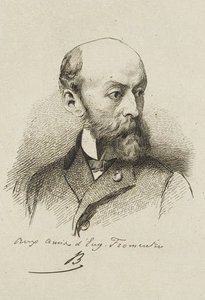
eugène samuel auguste fromentin
1820 - 1876
Trumpai apie šį kūrėją
- Artistic Movement Or Style: Orientalism
- Artists Or Movements Influenced By This Artist: ['Delacroix']
- Artists Who Influenced This Artist: ['Louis Cabat']
- Date Of Birth: October 24, 1820
- Date Of Death: August 27, 1876
- Full Name: Eugène Samuel Auguste Fromentin
- Nationality: French
- Notable Artworks:
- The Land of Thirst
- The Arab Falconer
- Arabs Crossing a Ford
- Place Of Birth: La Rochelle, France

