

 Peržiūrėti realaus dydžio版
 Siųsti
 Dalintis
 Išsamiau
 Vadovas

 Atsisiųsti
 Panašūs eksponatai
 Rentgeno spindulių nuotrauka
 Diaporama
 Statistika
Lighthouse on Fehmarn


 Rodyti daugiau
Rankų darbo aliejinės reprodukcijos
Rankiniu būdu tapytas aliejus ant droblio jūsų pageidaujamame dydį ir rėmuose – mūsų menininkų darbas pagal užsakymą. ( Perjungti į spausdinimą Perejti prie skaitmeninių vaizdų)




P118B €10

P118H €10

P118W €10

P438Z €10

P508JH €12

P508YH €12

P805H €10

P805Z €10

P919BZ €10

P919G €10

P919XJ €10

P959ZH €10

P968JZ €12

W106C €8

W218G €10

W218JH €8

W218Y €10

W307PJ €10

W316G €10

W316PJ €8

W316Y €10

W398PJ €8

W4111J €10

W500HY €15

W500JH €15

W692G €12

W849H €8

W940BG €15

W953PJ €8




Pasirinkite iš mūsų nustatytų dydžių, atitinkančių originalaus meno kūrinio proporcijas.

Įveskite jums reikiamą plotį ir aukštį, kad paveikslas atitiktų jūsų rėmą ar sieną. Kadangi šis darbas yra rankinio darbo, siekiant išgauti kitokio formos dydį, paveikslas gali būti šiek tiek didesnis (nuo kraštų bus palikta daugiau erdvės) arba mažesnis – pasirinkite jums patogiausią variantą. Prieš pradedant tapyti, atsiųsime jums skaitmeninį maketą patvirtinimui. Šioje puslapio nuotraukoje matomas vaizdas nėra galutinis rezultatas – jį parodys tik sukurtas maketas.
Gavus užsakymą, OriginalUniqueArt.com komanda susisieks su klientu el. paštu dėl instrukcijų ir pateiks maketo pavyzdį
Pristatymas visame pasaulyje () per 3–4 savaites, o ne įprastai – per 5 savaites. (22 spalis). Kokybė lieka nepakeičiama.

Nemokamas greitasis pristatymas visame pasaulyje

Aukštos kokybės lininis drobė

Pilnas siuntimo draudimas

Muitinės mokesčių grąžinimo garantija

Tikro spalvų atitikimo garantija

100 dienų grąžinimo politika (tik esant įtaigoms)

100% pinigų grąžinimo garantija

Nuolaida dideliems užsakymams
 Stiklo variantas prieinamas tik pasirinkus dydį iki 110 cm

Lighthouse on Fehmarn
Reprodukcijos technika
Reprodukcijos dydis
-


Visų pasirinktų variantų kaina
€ 263
A Coastal Reverie: Exploring Kirchner’s Fehmarn Lighthouse
Ernst Ludwig Kirchner's "Lighthouse on Fehmarn," painted in 1912, isn’t merely a depiction of a coastal landmark; it’s a carefully constructed tableau of memory, melancholy, and the quiet yearning for stability amidst the turbulent currents of early 20th-century Germany. Kirchner, a pivotal figure within the Expressionist movement, wasn't interested in simply recording a scene; he sought to distill feeling, to translate the emotional landscape onto canvas with an intensity rarely seen before. This particular work offers a poignant glimpse into his personal journey – a retreat to the island of Fehmarn, a place that would soon become inextricably linked with both solace and the looming anxieties of a world on the brink.
The painting immediately draws the eye to the lighthouse itself, a robust sentinel rising from the rolling Baltic waters. Kirchner’s technique is deliberately rough-hewn, employing bold, visible brushstrokes that convey a sense of immediacy and unrest. The ochre and green hues of the landscape – the weathered cliffs, the dense foliage clinging to the shoreline – are applied with an almost frantic energy, suggesting both the beauty and the inherent wildness of the environment. The water, rendered in shimmering blues and greens, isn’t a serene reflection but rather a dynamic force, subtly hinting at the power beneath the surface. The arched horizon line, a key element of Kirchner's style, serves to compress the space, drawing the viewer into the scene and intensifying the feeling of being enveloped by the landscape.
A Figure in Transition: Erna Schilling and the Echoes of Berlin
Dominating the foreground is a woman, clad in dark clothing, her posture suggesting a contemplative walk. While her identity remains somewhat ambiguous – often interpreted as Kirchner’s companion, Erna Schilling – she embodies a crucial shift within the artist's life. Having recently departed from the vibrant, chaotic energy of Berlin, Kirchner sought refuge on Fehmarn, a deliberate move away from the city’s relentless pace and the emotional complexities he had experienced there. The woman’s presence isn’t one of active engagement; rather, she represents a quiet acceptance, a step towards a more subdued existence – a stark contrast to the passionate, often turbulent relationships depicted in his earlier Berlin works. Her hand outstretched, grasping that of a child, subtly evokes themes of protection and legacy, hinting at Kirchner's desire for stability and perhaps even a new beginning.
The Language of Expressionism: Symbolism and Emotional Resonance
Kirchner’s use of color is profoundly symbolic. The dark clothing of the woman contrasts sharply with the brighter tones of the landscape, creating a visual tension that mirrors the emotional shift occurring within Kirchner himself. The small sailboats dotting the horizon represent fleeting moments of pleasure amidst an underlying sense of unease – a reminder of the world beyond Fehmarn, yet one he’s consciously choosing to distance himself from. The lighthouse, traditionally a symbol of guidance and safety, here takes on a slightly melancholic quality; it stands as a solitary beacon in a vast, uncertain expanse, reflecting Kirchner's own feelings of isolation and introspection. The painting is not simply about depicting a physical location but rather conveying the complex emotional state of an artist grappling with personal change.
A Legacy Preserved: Reproduction and Artistic Appreciation
Reproductions of “Lighthouse on Fehmarn” offer a remarkable opportunity to experience Kirchner’s evocative style firsthand. The meticulous detail captured in each brushstroke, the raw emotional intensity conveyed through color and composition – these elements are faithfully reproduced in high-quality prints, allowing art lovers and collectors alike to appreciate the depth and complexity of this iconic work. Beyond its aesthetic appeal, “Lighthouse on Fehmarn” serves as a powerful reminder of Kirchner’s artistic journey—a testament to his ability to transform personal experience into enduring works of art that continue to resonate with viewers today. It's a piece that invites contemplation, prompting us to consider the interplay between memory, emotion, and the search for meaning in a rapidly changing world.
问答 (or more naturally for a website heading): Klausimai ir atsakymai
Kokio dydžio „Lighthouse on Fehmarn“ spausdinimas tiktų mano kambariui?
Living Room erdvėje „Lighthouse on Fehmarn“ siūloma spausdinti Medium dydžiu.
Ar „Lighthouse on Fehmarn“, autorius – Ernstas Ludvigas Kiršianas yra žinomas kūrinys?
Įrašytas „Lighthouse on Fehmarn“, autorius – Ernstas Ludvigas Kiršianas populiarumumo lygis yra Recognized.
Kokia spalva labiausiai išsiskiria kūryniame „Lighthouse on Fehmarn“?
Dominiruojanti „Lighthouse on Fehmarn“ spalva yra Phthalo Green (#203e2a). Pagrindinė spalva yra naudinga pritaikant kūrinį interjerui.
Autoriaus biografija
Ernst Ludwig Kirchner (1880–1938): A Life Forged in Expression
Ernst Ludwig Kirchner, a name inextricably linked to the visceral heart of German Expressionism, wasn’t merely an artist; he was a conduit for anxieties simmering beneath the surface of early 20th-century Europe. Born into Bavaria's Aschaffenburg in 1880, his formative years were shaped by familial mobility – a constant shifting of landscapes dictated by his father’s profession as a paper scientist – fostering within him an inherent sense of displacement that would become a defining characteristic of his oeuvre. From Frankfurt to Perlen and finally settling in Chemnitz, Kirchner absorbed the palpable unease of a nation undergoing rapid modernization, imbibing influences from both philosophical currents and artistic precedents. Initially pursuing architecture at Dresden’s Königliche Technische Hochschule, he swiftly recognized painting as his true vocation—a path illuminated by admiration for masters like Albrecht Dürer and fueled by a resolute rejection of academic formalism. He found solace and camaraderie amongst fellow rebels – Fritz Bleyl, Karl Schmidt-Rottluff, Erich Heckel – forging bonds that would irrevocably alter the trajectory of twentieth-century art history.The Genesis of Expression: Early Influences & Artistic Formation
Kirchner’s artistic journey began with a profound engagement with nature and observation—a habit instilled by his childhood spent amidst Bavaria's rolling hills. His father’s profession provided him with invaluable insight into the industrial landscape, shaping his worldview and informing his artistic sensibility. He honed his skills at Dresden’s Hochschule für Grafik und Buchdruckschule (School of Graphic Arts), immersing himself in draughtsmanship and perspective drawing—disciplines that would serve as foundational tools for his subsequent explorations. Crucially, Kirchner encountered kindred spirits who shared a fervent belief in the transformative power of art—particularly Fritz Bleyl, Karl Schmidt-Rottluff and Erich Heckel—who would become instrumental in establishing *Die Brücke*, an artistic collective dedicated to shattering conventional aesthetic boundaries. This formative encounter ignited his passion for experimentation and cemented his commitment to confronting societal anxieties through visual language. The influence of Dürer’s meticulous detail and compositional rigor, alongside the expressive dynamism of Vincent van Gogh's brushstrokes—particularly in his depiction of swirling skies—provided Kirchner with invaluable stylistic models.Die Brücke: A Revolt Against Tradition
In 1905, Kirchner joined *Die Brücke* (“The Bridge”), a revolutionary artistic alliance that fundamentally challenged the prevailing aesthetic norms of German art. Alongside Bleyl, Schmidt-Rottluff and Heckel, Kirchner sought inspiration from sources deemed unacceptable by the established art world—primitive art from Africa and Oceania, mirroring the stylistic impulses of Edvard Munch—and championed bold color palettes and distorted forms as vehicles for conveying psychological turmoil. Rejecting idealized beauty, *Die Brücke* artists embraced dissonance and fragmentation to capture the anxieties inherent in modern urban life. Their manifesto declared a rejection of academic conventions and an affirmation of subjective experience—a stance that resonated deeply with Kirchner’s own worldview. The group's exploration of themes like loneliness, alienation and psychological instability reflected the broader cultural anxieties of the era. Notable works from this period include *The Street* (1908), which powerfully portrays the oppressive atmosphere of Berlin’s urban sprawl and captures the emotional detachment experienced by its inhabitants—a testament to Kirchner’s ability to distill complex psychological states into striking visual imagery.Exploring Form & Emotion: Kirchner's Distinctive Style
Kirchner’s artistic style is instantly recognizable for its distinctive characteristics—primarily his masterful manipulation of color and brushstroke. He eschewed naturalistic representation, prioritizing emotional impact over accurate depiction—a deliberate rejection of Impressionist ideals. His palette employed vibrant hues that pulsed with intensity, mirroring the turbulent inner landscape he sought to convey. Kirchner’s brushstrokes were energetic and visible, contributing to a palpable sense of immediacy and dynamism—a technique honed through meticulous observation and experimentation. Figures and objects were frequently distorted or elongated, reflecting a subjective rather than objective reality—a stylistic choice that underscored his belief in portraying psychological truths. He drew inspiration from Henri Matisse's use of flattened planes of color and simplified forms, mirroring the stylistic impulses of Fauvism. Furthermore, Kirchner’s fascination with primitive art—particularly sculptures from Africa and Oceania—influenced his approach to form and texture—demonstrating a desire to reconnect with primal energies and reject academic conventions.Legacy & Recognition: A Lasting Influence
Kirchner's artistic legacy extends far beyond the confines of Expressionism, influencing subsequent generations of artists who embraced bold experimentation and psychological depth. His unflinching portrayal of human experience—characterized by vulnerability, anxiety and a yearning for authenticity—continues to resonate powerfully with contemporary audiences. Despite facing persecution during the Nazi regime—where over 600 of his works were confiscated and deemed “degenerate”—Kirchner’s uncompromising artistic vision endured, securing him a prominent place in art history. His enduring influence can be seen in the work of artists across diverse mediums—from painting to sculpture to printmaking—solidifying his position as one of Germany's most significant modernist figures. Ernst Ludwig Kirchner died tragically in Davos, Switzerland, in 1938—a poignant reminder of the devastating consequences of artistic repression and a testament to the enduring power of art to confront societal injustices.
Ernstas Ludvigas Kiršianas
1880 - 1938 , Գերմանիա
Trumpa informacija apie kūrėją
- Artistic Movement Or Style: Expressionism
- Artists Who Influenced This Artist:
- Albrecht Dürer
- Vincent van Gogh
- Edvard Munch
- Date Of Birth: 6 Mai 1880
- Date Of Death: 15 Gruodžio 1938
- Full Name: Ernst Ludwig Kirchner
- Nationality: Germania
- Notable Artworks:
- The Street (1908)
- Leaping Dancer (1912)
- Self-Portrait (1910)
- Place Of Birth: Aschaffenburg, Germania
Susiję straipsniai

German Expressionism's 10 Defining Masterpieces | Art for Your Home
Explore 10 defining German Expressionism masterpieces – from Munch's 'The Scream' to Kandinsky’s abstracts. Discover the artists, stories & bold colors behind this powerful art movement. Find museum-quality reproductions at OriginalUniqueArt.com.

10 Romantinių Peizažų Simbolių: Tapybos Majestatės Viršūnės
Atraskite 10 legendinių romantinio peizažo kūrinių! Pasinerkite į Claude Lorrain, Caspar David Friedrich ir J.M.W. Turner genijaus pasaulį. Išmokite apie tapybos meistriškumą bei gamtos grožį. Aukščiausios kokybės meno reprodukcijos – OriginalUniqueArt.com. Tyrinėkite kolekciją!

Džono Konsteblio Šedevrai: 25 Išskirtiniai Darbai Jūsų Interjerui | OriginalUniqueArt
Atraskite 25 įspūdingiausius Džono Konsteblio paveikslus! Romantizmo meistro gamtos vaizdai, Dedham Vale peizažai ir meno istorijos šedevrai. Meno reprodukcijos jūsų interjerui – OriginalUniqueArt.com
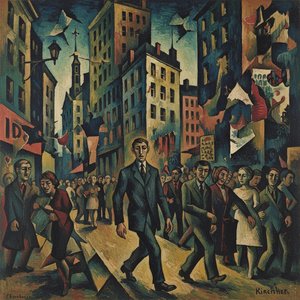
Ernst Ludwig Kirchner: Expressionism's Urban Anxiety & the Fragmentation of Modern Identity
Explore the powerful world of Ernst Ludwig Kirchner and German Expressionism. Discover his iconic paintings, Die Brücke group, and the movement's exploration of urban anxiety & modern identity. Expert analysis for collectors & enthusiasts.

Evocations of Place: A Historical Journey Through Landscape Art
Explore the rich history of landscape art with OriginalUniqueArt. Discover renowned artists, movements like Impressionism & Romanticism, and expert guidance for collecting timeless pieces. Find your perfect serene escape today!


