German Expressionism
Doris standing (Ernst Ludwig Kirchner)
Ernst Ludwig Kirchner (1880–1938) sukūrė Doris standing. Šis kūrinys priklaulo German Expressionism kieruliui. Pagaminta naudojant Acrylic On Canvas.
- Acrylic On Canvas

 Peržiūrėti realaus dydžio版

 Rankinio darbo aliejinės imitacijos paveikslas
 Pasidalinti
 Dalintis
 Informacinė l lapelė


 Atsisiųsti
 Panašūs eksponatai
 Rentgeno spindulių nuotrauka
 Automatinė diorama
 问答

 Statistika
Doris standing, trumpai
- Pavadinimas
- Doris standing
- Autorius
- Ernst Ludwig Kirchner (1880–1938)
- Dizainere/is gimęs
- Ašafenburgas, Vokietija
- Mediumas
- Acrylic On Canvas
- Judėjimas
- German Expressionism
- Tema
- woman, interior, texture, color palette, bold brushstrokes, urban landscape
Ką vaizduoja Doris standing?
Doris Standing: A Study in Expressionist Tension
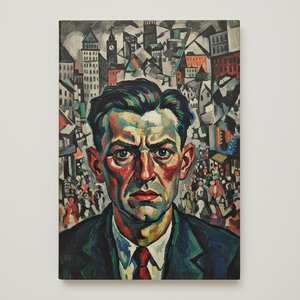
Ernst Ludwig Kirchner’s “Doris Standing” is more than just a portrait; it's a distillation of the anxieties and emotional complexities characteristic of German Expressionism. Painted circa 1923, this artwork captures a moment frozen in time—a woman posed formally against a backdrop that pulsates with restless energy.
- Subject Matter: The painting depicts Doris Speed, an English actress known for her role in “Coronation Street,” presenting her as a figure of quiet contemplation amidst the vibrant chaos of modern life.
- Style & Technique: Kirchner’s signature Expressionist style is evident in every brushstroke. Thick impasto—a technique where paint is applied thickly onto the canvas—dominates the composition, creating palpable texture and conveying an immediacy that transcends mere representation. Bold colors – deep blues and purples for Doris' dress juxtaposed with yellows and greens in the background – heighten the emotional impact.
- Composition: The portrait adheres to a vertical format, emphasizing Doris’ posture and attire. Her hands clasped before her contribute to a sense of stillness despite the dynamic environment behind her. Lines are employed expressively rather than realistically; short, choppy brushstrokes generate movement and texture throughout the painting.
Historical Context: The Brücke Movement
Kirchner’s work emerged from “Die Brücke,” a pivotal artistic group that challenged academic conventions and sought to depict the psychological realities of the era. Founded in Dresden in 1909, Die Brücke aimed to express inner turmoil and disillusionment—themes powerfully reflected in Kirchner's oeuvre. The movement reacted against the prevailing optimism of bourgeois society, embracing distortion and fragmentation as tools for conveying emotional truth.
- Influence: Kirchner’s exploration of psychological depth aligns with broader artistic currents of his time, reflecting a desire to confront uncomfortable realities and explore the darker side of human experience.
- Symbolism: The vibrant background—particularly the reds—symbolizes the turbulent energy of urban life, contrasting sharply with Doris' serene expression. This juxtaposition underscores the tension between inner stillness and external pressures.
Emotional Resonance
"Doris Standing" evokes feelings of melancholy and restraint. Kirchner’s deliberate use of muted colors and simplified forms contributes to a mood of introspection—a quiet contemplation that invites viewers to consider themes of isolation and vulnerability. The painting's textured surface encourages tactile engagement, mirroring the emotional intensity conveyed through its visual elements.
- Artist’s Intent: Kirchner sought to capture not just an image but also a feeling—a profound awareness of human condition amidst the uncertainties of modernity.
- Interior Design Inspiration: The artwork's palette and textural qualities could inspire designers seeking to create spaces that convey understated elegance and emotional depth.
Material & Reproduction Considerations
Executed in oil paint on canvas, “Doris Standing” exemplifies the meticulous craftsmanship of Expressionist artists. Reproductions aim to faithfully recreate the original’s textural richness and color vibrancy using high-quality printing techniques. Careful attention to detail ensures that the artwork's emotive power is preserved in a durable and aesthetically pleasing format.
Doris standing dididraudžios kokybės vaizdai
Viešoji domenė: suregalis mirė 1938 m.
Ernst Ludwig Kirchner, Doris standing. Viešoji domenė.
Atsakimai į klausimus apie Doris standing
Kokia technika buvo panaudota kūriniam darbui „Doris standing“ – Ernst Ludwig Kirchner?
„Doris standing“ – Ernst Ludwig Kirchner technika – Acrylic On Canvas. Kopijos siekia atkartoti šios technikos vaizdą.
Kokios temos atsispindi kūrynioje „Doris standing“ – Ernst Ludwig Kirchner?
„Doris standing“ – Ernst Ludwig Kirchner temos apima woman, interior, texture, color palette, bold brushstrokes, urban landscape, emotion. Kartu jie apibendrina šio kūrinio tematiką.
Ar „Doris standing“ – Ernst Ludwig Kirchner vaizdą galima laisvai reprodukcijaoti?
„Doris standing“ – Ernst Ludwig Kirchner yra yra viešosios erdvės dalis – jo autorinė teisė pasibaigusi. Šis statusas nustato, kaip galima reprodukcijaus šio kūrinio vaizdą.
Kas sukūrė „Doris standing“?
„Doris standing“ kūrybinį darbą sukūrė Ernst Ludwig Kirchner. Šioje puslapio informacijoje aprašomas Ernst Ludwig Kirchner originalus kūrinys.
Kokiam meno stiliui priklauso „Doris standing“ – Ernst Ludwig Kirchner?
„Doris standing“ yra German Expressionism stiliaus kūrinys. Šis dailos kryptis nurodo meninę tradiciją, kurios šis darbas yra dalis.
Kokio Ernst Ludwig Kirchner kūrybos etapo dalis yra „Doris standing“?
„Doris standing“ atspindi Ernst Ludwig Kirchner kūrybinį laikotarpį Berlin Period.
Kodėl „Doris standing“ autoriškos teisės statusas yra toks, koks yra?
Autorinės teisės statusas kūriniui „Doris standing“ – yra viešosios erdvės dalis – jo autorinė teisė pasibaigusi – nustatomas remiantis to, kad menininkas mirė 1938 m.
Ką „Doris standing“ turi bendro su visa Ernst Ludwig Kirchner kūryba?
„Doris standing“ priklauso Ernst Ludwig Kirchner German Expressionism kūrybai, kurios įrašytoms temoms priskiriamas dürer inspiration, modern anxiety, social critique, expressionist legacy, psychological depth.
Kokią vietą Ernst Ludwig Kirchner pasikartojančių temų tarėje užima „Doris standing“?
„Doris standing“ vaizduoja woman, interior, texture, color palette, bold brushstrokes, urban landscape, emotion, o įrašytos Ernst Ludwig Kirchner temos yra dürer inspiration, modern anxiety, social critique, expressionist legacy, psychological depth. Šių dviejų lyginimas parodo, kaip šis kūrinys susijęs su įprastais šio kūrybinio veiksmo objektais.
Apie šį menininką, Ernst Ludwig Kirchner

1880–1938, Vokietija
Ernst Ludwig Kirchner
Ernst Ludwig Kirchner (1880–1938): A Life Forged in Expression Ernst Ludwig Kirchner, a name inextricably linked to the visceral heart of German Expressionism, wasn’t merely an artist; he was a conduit for anxieties simmering beneath the surface of early 20th-century Europe. Born into Bavaria's Aschaffenburg in 1880, his formative years were shaped by familial mobility – a constant shifting of landscapes dictated by his father’s profession as a paper scientist – fostering within him an inherent sense of displacement that would become a defining characteristic of his oeuvre. From Frankfurt to Perlen and finally settling in Chemnitz, Kirchner absorbed the palpable unease of a nation undergoing rapid modernization, imbibing influences from both philosophical currents and artistic precedents. Initially pursuing architecture at Dresden’s Königliche Technische Hochschule, he swiftly recognized painting as his true vocation—a path illuminated by admiration for masters like Albrecht Dürer and fueled by a resolute rejection of academic formalism.
Apie Ernst Ludwig Kirchner Žinomiausi Ernst Ludwig Kirchner darbai
Taip pat Ernst Ludwig Kirchner darbai
 Džudgmento Paryžas
 Kąsininkai Moritzburgas1909
 Berlino gatvė
 Fränzi vor geschnitztem Stuhl1910
Esdai apie Doris standing
 25 Masterpieces by Ernst Ludwig Kirchner: The Soul of German ExpressionismImmerse yourself in the raw emotion of German Expressionism. Explore 25 iconic masterpieces by Ernst Ludwig Kirchner, from bold urban scene…
 The Vibrant World of Ernst Ludwig Kirchner: A Definitive Guide to German ExpressionismExplore the raw emotion of German Expressionism through a definitive guide to Ernst Ludwig Kirchner. Discover how his bold colors and disto…
 Comparing Der Blaue Reiter and Die Brücke: Two Paths of German ExpressionismMaster the differences between Die Brücke and Der Blaue Reiter. Explore the roots of German Expressionism now.