

 Peržiūrėti realaus dydžio版
 Siųsti
 Dalintis
 Išsamiau
 Vadovas

 Atsisiųsti
 Panašūs eksponatai
 Rentgeno spindulių nuotrauka
 Diaporama
 Statistika
before Sunrise


 Rodyti daugiau
Giclée / Meno spausdinimas
Muziejų lygio „giclée“ arba drobos spausdinimas: greita gamyba ir lankstios apdailos parinktys. ( Pirkti rankomis tapytą reprodukciją Perejti prie skaitmeninių vaizdų)




P118B €10

P118H €10

P118W €10

P438Z €10

P508JH €12

P508YH €12

P805H €10

P805Z €10

P919BZ €10

P919G €10

P919XJ €10

P959ZH €10

P968JZ €12

W106C €8

W218G €10

W218JH €8

W218Y €10

W307PJ €10

W316G €10

W316PJ €8

W316Y €10

W398PJ €8

W4111J €10

W500HY €15

W500JH €15

W692G €12

W849H €8

W940BG €15

W953PJ €8




Pasirinkite iš mūsų nustatytų dydžių, atitinkančių originalaus meno kūrinio proporcijas.

Įveskite jums reikiamą plotį ir aukštį, kad atvaizdas derėtų prie jūsų rėmo ar sienos. Spausdiną galima tik sumažinti, bet nepadidinti virš originalaus paveikslėlio dydžio, todėl keičiant proporcijas, dalis vaizdo prarandama. Prieš spausdinimą atsiųsime jums skaitmeninį maketą patvirtinimui. Šioje puslapio nuotraukoje matomas pjūvis nėra tikslus – jį rodo tik maketas.
Pristatymas visame pasaulyje () per 2 weeks, o ne įprastas 4/5 savaičių laikotarpis. (22 spalis)

Nemokamas greitasis pristatymas visame pasaulyje

Aukštos kokybės lininis drobė

Pilnas siuntimo draudimas

Muitinės mokesčių grąžinimo garantija

Tikro spalvų atitikimo garantija

100 dienų grąžinimo politika (tik esant įtaigoms)

100% pinigų grąžinimo garantija

Nuolaida dideliems užsakymams
 Stiklo variantas prieinamas tik pasirinkus dydį iki 110 cm

before Sunrise
Giclée / Meno spausdinimas
Reprodukcijos dydis
-


Visų pasirinktų variantų kaina
€ 70
A Fragmented Dawn: Unpacking Ernst Ludwig Kirchner's "Before Sunrise"
Ernst Ludwig Kirchner’s “Before Sunrise,” painted in 1924-26, isn’t a straightforward depiction of a landscape or a portrait; it’s an intensely felt moment captured on canvas – a distillation of anxiety, alienation, and the unsettling beauty of urban isolation. The painting immediately commands attention with its jarring color palette: vibrant reds clash with deep blues and greens, punctuated by flashes of purple, creating a world that feels both alluring and profoundly disquieting. This isn’t an attempt at realistic representation; Kirchner deliberately abandons naturalism in favor of expressing raw emotion, a hallmark of the Die Brücke group to which he belonged.
The composition itself is subtly unsettling. Two women stand before a building – a structure that feels more like a barrier than a backdrop – while a dark, amorphous shape dominates the lower portion of the canvas, obscuring part of the scene and hinting at an unseen threat or oppressive force. The figures are rendered with elongated limbs and faces, distorted in a way that amplifies their vulnerability and adds to the painting’s overall sense of unease. Kirchner's use of bold outlines around the figures further emphasizes this feeling of detachment, as if they exist within a dreamscape rather than a tangible reality. The flattened perspective contributes to a claustrophobic atmosphere, drawing the viewer into the scene’s psychological drama.
Echoes of Expressionism: Kirchner and the Die Brücke
To fully appreciate “Before Sunrise,” it's crucial to understand its roots within German Expressionism. Kirchner, along with fellow artists like Erich Heckel and Karl Schmidt-Rottluff, formed the Die Brücke (The Bridge) group in 1905, rejecting the conservative artistic conventions of the time. They sought to capture the anxieties and uncertainties of a rapidly changing Germany – a nation grappling with industrialization, urbanization, and social upheaval. Kirchner’s work, particularly during this period, is characterized by its intense emotionality, distorted forms, and jarring color combinations. He was deeply influenced by artists like Dürer and Cranach, but he deliberately pushed beyond academic tradition to create something entirely new – a visual language of raw feeling.
The painting’s creation coincided with a period of significant social and political unrest in Germany. The rise of nationalism and the impending threat of war cast a long shadow over the country, and Kirchner's art reflects this atmosphere of anxiety and uncertainty. His use of dark colors and distorted figures can be interpreted as a symbolic representation of the psychological toll that these events were taking on individuals.
Symbolism and Emotional Resonance
The painting’s symbolism is layered and open to interpretation, but several elements stand out. The building in the foreground could represent societal constraints or the barriers that separate people from one another. The dark shape at the bottom of the canvas – often interpreted as a looming threat – adds to this sense of unease and suggests an unseen force pressing down on the figures. The two women themselves are enigmatic, their faces obscured by bold outlines, making them feel like archetypes rather than fully realized individuals. They embody a shared experience of isolation and vulnerability.
“Before Sunrise” isn’t simply a depiction of a scene; it's an exploration of the human condition – a meditation on anxiety, alienation, and the search for connection in a fragmented world. Kirchner masterfully employs color, line, and form to evoke these complex emotions, creating a work that continues to resonate with viewers today. The painting’s power lies not in its realism but in its ability to tap into our deepest fears and anxieties.
A Reproduction Worth Admiring
OriginalUniqueArt offers meticulously crafted hand-painted reproductions of Ernst Ludwig Kirchner's “Before Sunrise,” allowing you to bring this iconic work of Expressionism into your home or office. Our skilled artists replicate the painting’s bold brushstrokes, vibrant colors, and distinctive style with exceptional accuracy. We offer a range of sizes and framing options to suit your individual preferences. Investing in a OriginalUniqueArt reproduction is not just acquiring a beautiful piece of art; it's owning a tangible connection to one of the most significant figures in 20th-century art history.
问答 (or more naturally for a website heading): Klausimai ir atsakymai
Kokiam meno stiliui priklauso „before Sunrise“, autorius – Ernstas Ludvigas Kiršianas?
Kūrinio „before Sunrise“, autorius – Ernstas Ludvigas Kiršianas stilius – Expressionism. Ši klasifikacija leidžia šį darbą įtraukti į bendrą susijusių menininkų ir kūrinių kontekstą.
Ar „before Sunrise“ spalvos atrodo ryškios ar švelnios?
„before Sunrise“ spalvų intensyvumas yra Balanced. Intensyvumas apibūdina, koks spalvų ryškumas yra suvokiamas.
Ar „before Sunrise“, autorius – Ernstas Ludvigas Kiršianas spalvos yra ryškios ar išblukusios?
„before Sunrise“ spalvos nasyginimas yra Clear Color Presence, o intensyvumas – Balanced.
Autoriaus biografija
Ernst Ludwig Kirchner (1880–1938): A Life Forged in Expression
Ernst Ludwig Kirchner, a name inextricably linked to the visceral heart of German Expressionism, wasn’t merely an artist; he was a conduit for anxieties simmering beneath the surface of early 20th-century Europe. Born into Bavaria's Aschaffenburg in 1880, his formative years were shaped by familial mobility – a constant shifting of landscapes dictated by his father’s profession as a paper scientist – fostering within him an inherent sense of displacement that would become a defining characteristic of his oeuvre. From Frankfurt to Perlen and finally settling in Chemnitz, Kirchner absorbed the palpable unease of a nation undergoing rapid modernization, imbibing influences from both philosophical currents and artistic precedents. Initially pursuing architecture at Dresden’s Königliche Technische Hochschule, he swiftly recognized painting as his true vocation—a path illuminated by admiration for masters like Albrecht Dürer and fueled by a resolute rejection of academic formalism. He found solace and camaraderie amongst fellow rebels – Fritz Bleyl, Karl Schmidt-Rottluff, Erich Heckel – forging bonds that would irrevocably alter the trajectory of twentieth-century art history.The Genesis of Expression: Early Influences & Artistic Formation
Kirchner’s artistic journey began with a profound engagement with nature and observation—a habit instilled by his childhood spent amidst Bavaria's rolling hills. His father’s profession provided him with invaluable insight into the industrial landscape, shaping his worldview and informing his artistic sensibility. He honed his skills at Dresden’s Hochschule für Grafik und Buchdruckschule (School of Graphic Arts), immersing himself in draughtsmanship and perspective drawing—disciplines that would serve as foundational tools for his subsequent explorations. Crucially, Kirchner encountered kindred spirits who shared a fervent belief in the transformative power of art—particularly Fritz Bleyl, Karl Schmidt-Rottluff and Erich Heckel—who would become instrumental in establishing *Die Brücke*, an artistic collective dedicated to shattering conventional aesthetic boundaries. This formative encounter ignited his passion for experimentation and cemented his commitment to confronting societal anxieties through visual language. The influence of Dürer’s meticulous detail and compositional rigor, alongside the expressive dynamism of Vincent van Gogh's brushstrokes—particularly in his depiction of swirling skies—provided Kirchner with invaluable stylistic models.Die Brücke: A Revolt Against Tradition
In 1905, Kirchner joined *Die Brücke* (“The Bridge”), a revolutionary artistic alliance that fundamentally challenged the prevailing aesthetic norms of German art. Alongside Bleyl, Schmidt-Rottluff and Heckel, Kirchner sought inspiration from sources deemed unacceptable by the established art world—primitive art from Africa and Oceania, mirroring the stylistic impulses of Edvard Munch—and championed bold color palettes and distorted forms as vehicles for conveying psychological turmoil. Rejecting idealized beauty, *Die Brücke* artists embraced dissonance and fragmentation to capture the anxieties inherent in modern urban life. Their manifesto declared a rejection of academic conventions and an affirmation of subjective experience—a stance that resonated deeply with Kirchner’s own worldview. The group's exploration of themes like loneliness, alienation and psychological instability reflected the broader cultural anxieties of the era. Notable works from this period include *The Street* (1908), which powerfully portrays the oppressive atmosphere of Berlin’s urban sprawl and captures the emotional detachment experienced by its inhabitants—a testament to Kirchner’s ability to distill complex psychological states into striking visual imagery.Exploring Form & Emotion: Kirchner's Distinctive Style
Kirchner’s artistic style is instantly recognizable for its distinctive characteristics—primarily his masterful manipulation of color and brushstroke. He eschewed naturalistic representation, prioritizing emotional impact over accurate depiction—a deliberate rejection of Impressionist ideals. His palette employed vibrant hues that pulsed with intensity, mirroring the turbulent inner landscape he sought to convey. Kirchner’s brushstrokes were energetic and visible, contributing to a palpable sense of immediacy and dynamism—a technique honed through meticulous observation and experimentation. Figures and objects were frequently distorted or elongated, reflecting a subjective rather than objective reality—a stylistic choice that underscored his belief in portraying psychological truths. He drew inspiration from Henri Matisse's use of flattened planes of color and simplified forms, mirroring the stylistic impulses of Fauvism. Furthermore, Kirchner’s fascination with primitive art—particularly sculptures from Africa and Oceania—influenced his approach to form and texture—demonstrating a desire to reconnect with primal energies and reject academic conventions.Legacy & Recognition: A Lasting Influence
Kirchner's artistic legacy extends far beyond the confines of Expressionism, influencing subsequent generations of artists who embraced bold experimentation and psychological depth. His unflinching portrayal of human experience—characterized by vulnerability, anxiety and a yearning for authenticity—continues to resonate powerfully with contemporary audiences. Despite facing persecution during the Nazi regime—where over 600 of his works were confiscated and deemed “degenerate”—Kirchner’s uncompromising artistic vision endured, securing him a prominent place in art history. His enduring influence can be seen in the work of artists across diverse mediums—from painting to sculpture to printmaking—solidifying his position as one of Germany's most significant modernist figures. Ernst Ludwig Kirchner died tragically in Davos, Switzerland, in 1938—a poignant reminder of the devastating consequences of artistic repression and a testament to the enduring power of art to confront societal injustices.
Ernstas Ludvigas Kiršianas
1880 - 1938 , Գերմանիա
Trumpa informacija apie kūrėją
- Artistic Movement Or Style: Expressionism
- Artists Who Influenced This Artist:
- Albrecht Dürer
- Vincent van Gogh
- Edvard Munch
- Date Of Birth: 6 Mai 1880
- Date Of Death: 15 Gruodžio 1938
- Full Name: Ernst Ludwig Kirchner
- Nationality: Germania
- Notable Artworks:
- The Street (1908)
- Leaping Dancer (1912)
- Self-Portrait (1910)
- Place Of Birth: Aschaffenburg, Germania
Susiję straipsniai

Unmasking Emotion: A Journey Through the Raw Power and Visceral Beauty of German Expressionism
Explore the raw emotional power of German Expressionism. From Kirchner to Die Brücke, discover how artists used distortion and vibrant color to unmask the human psyche. A deep dive into art history for the discerning collector and enthusiast.

German Expressionism's 10 Defining Masterpieces | Art for Your Home
Explore 10 defining German Expressionism masterpieces – from Munch's 'The Scream' to Kandinsky’s abstracts. Discover the artists, stories & bold colors behind this powerful art movement. Find museum-quality reproductions at OriginalUniqueArt.com.
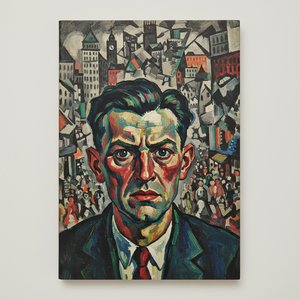
The Vibrant World of Ernst Ludwig Kirchner: A Definitive Guide to German Expressionism
Explore the raw emotion of German Expressionism through a definitive guide to Ernst Ludwig Kirchner. Discover how his bold colors and distorted forms redefined modern art history, from Berlin street scenes to iconic masterpieces.
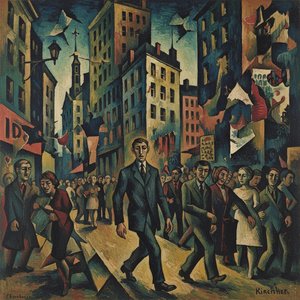
Ernst Ludwig Kirchner: Expressionism's Urban Anxiety & the Fragmentation of Modern Identity
Explore the powerful world of Ernst Ludwig Kirchner and German Expressionism. Discover his iconic paintings, Die Brücke group, and the movement's exploration of urban anxiety & modern identity. Expert analysis for collectors & enthusiasts.
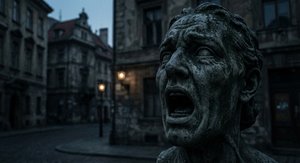
The Visceral Cry of a Nation: Exploring Emotion & Distortion in German Expressionism
Explore the powerful world of German Expressionism with OriginalUniqueArt. Discover Kirchner, Nolde & Die Brücke's emotive masterpieces. Learn about this pivotal art movement and its lasting impact on modern art.


