
 Peržiūrėti realaus dydžio版
 Pasidalinti
 Dalintis
 Išsamiau
 Vadovas

 Atsisiųsti
 Panašūs eksponatai
 Rentgeno spindulių nuotrauka
 Automatinė diorama
 问答
问答 Statistika
A moment


 Skaityti daugiau
Giclée / Meno spausdinimas
Muziejų lygio „giclée“ arba drobos spausdinimas: greita gamyba ir lankstios apdailos parinktys. ( Pirkti rankų darbo tapybą Perejti prie skaitmeninių vaizdų)




P118B €10

P118H €10

P118W €10

P438Z €10

P508JH €12

P508YH €12

P805H €10

P805Z €10

P919BZ €10

P919G €10

P919XJ €10

P959ZH €10

P968JZ €12

W106C €8

W218G €10

W218JH €8

W218Y €10

W307PJ €10

W316G €10

W316PJ €8

W316Y €10

W398PJ €8

W4111J €10

W500HY €15

W500JH €15

W692G €12

W849H €8

W940BG €15

W953PJ €8




Pasirinkite iš mūsų nustatytų dydžių, atitinkančių originalaus meno kūrinio proporcijas.

Įveskite jums reikiamą plotį ir aukštį, kad atvaizdas derėtų prie jūsų rėmo ar sienos. Spausdiną galima tik sumažinti, bet nepadidinti virš originalaus paveikslėlio dydžio, todėl keičiant proporcijas, dalis vaizdo prarandama. Prieš spausdinimą atsiųsime jums skaitmeninį maketą patvirtinimui. Šioje puslapio nuotraukoje matomas pjūvis nėra tikslus – jį rodo tik maketas.
Pristatymas visame pasaulyje () per 2 weeks, o ne įprastas 4/5 savaičių laikotarpis. (10 lapkritis)

Nemokamas greitasis pristatymas visame pasaulyje

Aukštos kokybės lininis drobė

Pilnas siuntimo draudimas

Muitinės mokesčių grąžinimo garantija

Tikro spalvų atitikimo garantija

100 dienų grąžinimo politika (tik esant įtaigoms)

100% pinigų grąžinimo garantija

Nuolaida dideliems užsakymams
 Stiklo variantas prieinamas tik pasirinkus dydį iki 110 cm

A moment
Giclée / Meno spausdinimas
Reprodukcijos matmenys
-


Bendroji kaina
€ 72
A Quietude Amidst Turmoil
In the delicate interplay of pastel watercolors and precise pencil strokes, "A moment" captures a profound sense of stillness that feels almost sacred against its heavy historical backdrop. Created in 1941 by Theodor Engel, this evocative sketch transports the viewer into the barracks of the Hay internment camp. The scene is one of weary repose; two young men rest upon their bunks, their bodies surrendered to sleep or exhaustion, while the world around them remains suspended in a state of quiet waiting. There is an intimate, almost voyeuristic quality to the composition, as if we are catching a fleeting glimpse of humanity attempting to reclaim a sense of normalcy amidst the profound displacement of war.
The technique employed by Engel is masterfully understated, utilizing the soft, bleeding edges of watercolor to evoke the hazy, dreamlike atmosphere of a midday rest. The pastel palette lends a gentle warmth to the scene, softening the harsh reality of the barracks and imbuing the paper with a luminous, nostalgic glow. This softness is brilliantly contrasted by the structural clarity of the pencil work, which defines the contours of the room, the wooden frames of the beds, and the slumped postures of the figures. It is this tension between the ethereal color and the grounded line that gives the piece its enduring emotional resonance.
The Weight of History and Human Spirit
To look upon this work is to confront the duality of the human condition: the capacity for profound suffering and the indomitable will to find peace. The historical context of 1941—a period defined by global upheaval and the shadows of internment—infuses every stroke with a layer of poignant symbolism. The cluttered surroundings, featuring scattered ties, suitcases, and the presence of a loyal dog, serve as much more than mere domestic details; they are remnants of lives interrupted, symbols of a domesticity that has been uprooted and compressed into the confines of a camp. Each object tells a story of what was left behind and what must be carried forward.
For the discerning collector or interior designer, "A moment" offers a sophisticated narrative element for any curated space. It is not merely a depiction of a historical event, but an exploration of the universal need for sanctuary. The artwork possesses a quiet strength that commands attention without overwhelming its surroundings, making it an ideal centerpiece for a study, a library, or a contemplative living area. As a high-quality reproduction, this piece allows the subtle textures of the original sketch to shine, bringing a sense of historical depth and soulful tranquility to contemporary interiors.
Klausimai ir atsakymai
Kurių spalvų dominuoja „A moment“ – Engel, Theodor?
„A moment“ – Engel, Theodor spalvų identitetas: Pastels paletė, kurioje dominuoja Khaki (#eac793).
Ar galėčiau pamatyti „A moment“ – Engel, Theodor ant savo sienos prieš pirkdama/pirkdamas?
„A moment“ – Engel, Theodor puslapio Peržiūra papildintajai realybei funkcija naudoja papildytojąjį realybės technologiją, kad suderinamame įrenginyje parodytų kūrinį jūsų erdvėje.
Kokia spalva labiausiai išsiskiria kūryniame „A moment“?
Khaki (#eac793) yra pagrindinė kūrinio „A moment“ – Engel, Theodor spalva.
Autoriaus biografija
The Intellectual Tapestry of Theodor Engel
Theodor Engel (1820-1895) remains a figure shrouded in both intellectual fascination and scholarly debate—a testament to his profound impact on the trajectory of 19th-century thought. Born in Barmen, Germany, Engel’s life unfolded against the backdrop of burgeoning industrialization and the turbulent currents of European politics, shaping him into an artist whose creative output was inextricably linked with his engagement in radical social critique. While not widely recognized for visual artistry alone, Engel's contribution to philosophical discourse—particularly his partnership with Karl Marx—solidifies his place as a pivotal voice within the genesis of Marxism and consequently, a significant influence on subsequent artistic movements.
Engel’s upbringing in a wealthy textile family instilled in him an early appreciation for economic realities—a perspective that would prove crucial to his intellectual development. He pursued studies at Bonn University, immersing himself in classical philology and German Romanticism, absorbing the spirit of Weimar’s artistic milieu. However, it was his encounter with Karl Marx in 1844 that irrevocably altered his path. This serendipitous meeting sparked a collaborative relationship that would yield groundbreaking results: The Holy Family, arguably Marx's most influential work on family dynamics and social reproduction, and subsequently, the foundational texts of German Ideology and The Communist Manifesto. Engel’s meticulous research into Hegelian philosophy provided Marx with intellectual ammunition for dismantling traditional conceptions of history and advocating for proletarian revolution.
A Symbiosis of Theory and Symbolism
Engel's artistic endeavors weren't merely a personal indulgence; they served as conduits for conveying Marxist ideas. He explored symbolism—particularly through the lens of spiritual and occult themes—to bridge the gap between materialist dialectics and the intangible human experience. His work often sought to illuminate the underlying structures of society, using metaphor and imagery to represent the struggle of the working class and the inevitable shifts in historical consciousness. This unique intersection of political radicalism and esoteric symbolism allowed him to create a visual language that was as much about the soul as it was about the state.
The depth of his contribution can be seen through several key facets of his intellectual and creative life:
- Philosophical Collaboration: His role in refining the dialectical materialism that would define modern political thought.
- Symbolic Exploration: The use of occultist undertones to represent the hidden forces of social change.
- Historical Contextualization: Integrating the industrial realities of Barmen and the broader German landscape into a larger narrative of human progress.
Legacy and Historical Significance
The legacy of Theodor Engel is one of profound complexity, existing at the crossroads of political revolution and spiritual inquiry. Though his name is often inextricably linked to the monumental shadow of Karl Marx, Engel deserves recognition as an independent thinker who navigated the tensions between the material world and the metaphysical realm. His ability to weave together the threads of economic critique, classical philology, and symbolic expression created a unique intellectual texture that continues to intrigue historians of both art and politics.
In the broader scope of 19th-century history, Engel represents the era's restless search for meaning amidst the upheaval of the Industrial Revolution. His life serves as a reminder that the most transformative ideas often emerge from the unexpected intersections of disparate disciplines—where the rigor of political science meets the evocative power of the symbolic imagination.

Engel, Theodor
1820 - 1895 , Germany
Trumpa informacija
- Full Name: Theodor Engel
- Nationality: German
- Date Of Birth: 1820
- Date Of Death: 1895
- Place Of Birth: Barmen, Germany
- Notable Artworks: ['A Moment']
- Artistic Movement Or Style: Occultism
- Artists Or Movements Influenced By This Artist: ['Karl Marx']
Susiję straipsniai
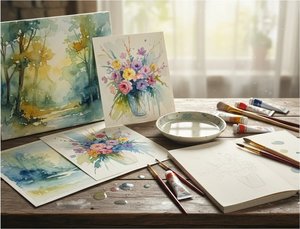
Ephemeral Visions: Exploring the Artistic Legacy & Nuances of Watercolor Painting
Explore the captivating world of watercolor painting! Discover its rich history, essential techniques, influential artists & collecting tips from art experts. A comprehensive guide for enthusiasts.

Watercolor Wonders: 10 Masterpieces That Redefined Art History | OriginalUniqueArt
Journey through 10 legendary watercolor masterpieces by Sargent, Turner & Homer! Explore iconic landscapes, portraits & floral art that redefined history. Find museum-quality reproductions and curated decor ideas at OriginalUniqueArt.com.

Ephemeral Visions: Exploring the History & Emotional Resonance of Watercolor Painting
Explore the captivating history of watercolor painting, from ancient techniques to modern masters like Kandinsky & Blake. Discover essential artists, collecting tips & the emotional power of this luminous medium. Expert insights for art enthusiasts.

Ephemeral Visions: Exploring the Artistic Legacy & Contemporary Practice of Watercolor Painting
Explore the captivating world of watercolor painting! Discover its rich history, essential techniques, influential artists & collecting tips. A comprehensive guide for art enthusiasts from OriginalUniqueArt.

Akvarelės meno istorija ir technikos: nuo senovės tradicijų iki šiuolaikinio ekspresionizmo
Atraskite akvarelės meno istoriją ir technikas nuo senovės tradicijų iki šiuolaikinio ekspresionizmo! Ekspertai pataria, meistrų kūriniai, vertinimo gairės. Įkvėpkite naujų idėjų savo kūrybai!