
 Peržiūrėti realaus dydžio版
 Siųsti
 Dalintis
 Išsamiau
 Vadovas

 Atsisiųsti
 Panašūs eksponatai
 Rentgeno spindulių nuotrauka
 Diaporama
 Statistika
Still life
 Rodyti daugiau
Įsigykite aukštos skiriamosios raiškos, patobulintą skaitmeninį vaizdą, gerokai pranašesnį už internetinę peržiūrą.
Kiekvieną failą mūsų specialistai kruopščiai paruošia naudojant pažangias technologijas ir profesionalų rankinį retušavimą. Užtikriname, kad kiekvienas vaizdas pasižymėtų išskirtiniu aiškumu, tikslia spalvų atspalviu ir smulkiomis detalėmis.
Baigiamas failas el. paštu pristatomas per 72 valandas; jis optimizuotas nedelsiant naudojimui profesionalioje, redakcinėje ir spausdinimo aplinkoje. Tai ta pati kokybė, kuria pasitiki aukščiausios klasės dizaino studijos, leidyklos ir galerijos.
Skaitmeninis vaizdas
Atsisiųskite didelės raiškos failą asmeniniam naudojimui, spausdinimui ir kūrybiniams projektams. ( Perjungti į spausdinimą Pirkti rankomis tapytą reprodukciją)
Kiekvieną skaitinio vaizdo užsakymą papildė
Profesionalus skaitmeninis vaizdų pristatymas, garantuotas
Pasirinkę OriginalUniqueArt.com, jūs ne tik gaunate paveikslėlį – jūs gaunate profesionaliai patobudintą skaitmeninį kūrinį, sukurtą itin tikniai ir užtikrinantį pasitenkinimą. Štai viską, kas automatiškai pritékia jūsų užsakymui:

Greitas nuotraukų gavimas el. paštu
Jūsų aukštos raiškos skaitmeninis vaizdo failas bus išsiųstas el. paštu per 72 valandas nuo užsakymo – jis bus paruoštas naudoti be jokių papildomų veiksmų.

Skaitmeninis failas su dirbtiniu intelektu
Jūsų meno kūrinys profesionaliai optimizuojamas naudojant pažangius dirbtinio intelekto įrankius ir rankinį redagavimą, užtikrinant maksimalią detalę, aiškumą ir spalvų tikslumą.

Nemokamas visam laikui pakartotinis siuntimas
Atsitiktinai ištrytikote ar praradote savo failą? Nebijokite – bet kuriuo metu atsiųsime jį jums vėl nemokamai.

Jokio importo mokesčio – niekada
Mėgaukitės savo meno kūriniu akimirka – skaitiniai failai visada yra neapmokestinami, todėl nereikės mokėti muitinės, mokesčių ar pristatymo mokesčių.

Spalvų tikslumo garantija
Naudodami profesionalią įrangą ir spalvų valdymo sistemas, užtikriname, kad jūsų skaitmeninis vaizdas kuo tiksliau atspindėtų originalias spalvas.

100 dienų patikimumo garantija
Jei nebuvosite patenkinti įsigyto skaitmeninio vaizdo, mes jį tališkai koreguosime arba grąžinsime 100% sumą per 100 dienų – be jokių klausimų.

100% pinigų grąžinimo garantija
Nesitenkinate? Gaukite visą sumokėtą sumą per 100 dienų nuo skaitmeninio failo gavimo – be jokių papildomų klausimų.

Nuolaidos dideliems užsakymams
Pirkti 3 nuotraukas – 10% nuolaida – Pirkti 5 – 15% nuolaida – Pirkti 10 ir daugiau – 20% nuolaida. Puikiai tinka kūrybiniams projektams, galerijoms bei agentūroms.
Autoriaus biografija
Edwart Collier (Evert Colyer): A Dutch Master of Mortality and Wealth
Edwart Collier, more commonly known as Evert Colyer, was a pivotal figure in 17th-century Dutch art, renowned for his poignant and meticulously detailed Vanitas still lifes. Born around 1642 in Breda, Netherlands, and tragically dying just before September 8, 1708, in Leiden, Collier’s work offers a profound meditation on the transience of life, the fleeting nature of earthly possessions, and the inevitability of death – themes deeply rooted in the philosophical currents of his time. While he initially trained under Vincent Laurensz van der Vinne in Haarlem, establishing a strong foundation in the established Dutch still-life tradition, Collier quickly developed a unique style characterized by an almost unsettling realism and a masterful manipulation of perspective to create the illusion of three-dimensionality within a two-dimensional canvas – a technique known as *trompe-l’œil*.Early Life and Artistic Training
Collier's early life remains somewhat shrouded in mystery, though it is believed he was baptized Evert Calier in Breda. His artistic education began under the tutelage of Vincent Laurensz van der Vinne, a prominent Haarlem painter whose work focused on capturing the beauty of everyday objects and domestic scenes. Van der Vinne’s influence is readily apparent in Collier's early paintings, which exhibit a similar attention to detail and a fondness for depicting still lifes of flowers, fruits, and tableware. However, Collier soon surpassed his teacher, developing a distinctive style that moved beyond mere representation towards a deeper exploration of symbolic meaning. He officially joined the Haarlem Guild of St. Luke in 1649, followed by membership in the Leiden Guild of St. Luke in 1673, marking a significant shift in his artistic career and geographic location. This move to Leiden coincided with a period of intense personal reflection and creative experimentation, culminating in the development of his signature *trompe-l’œil* technique.The Rise of Vanitas Painting
Collier's most enduring legacy lies in his masterful execution of Vanitas still lifes – a genre that gained prominence during the 17th century and became particularly associated with Dutch art. Vanitas, derived from the Portuguese word *vanitas vanitatum et omnia vanita* ("the vanity of vanities and all vanities"), served as a visual reminder of mortality and the futility of worldly pursuits. Collier’s paintings are not simply arrangements of objects; they are carefully constructed allegories designed to provoke contemplation on the ephemeral nature of existence. He skillfully combined seemingly disparate items – skulls, decaying fruit, extinguished candles, hourglasses, books, musical instruments, and coins – each laden with symbolic weight. A skull represented death, a wilting flower symbolized decay, an hourglass indicated the passage of time, and a closed book alluded to unfulfilled knowledge. These objects were not presented in a morbid or depressing manner, but rather arranged with a striking elegance and precision, highlighting their beauty alongside their inherent transience.Technique and Innovation: The Art of *Trompe-l’œil*
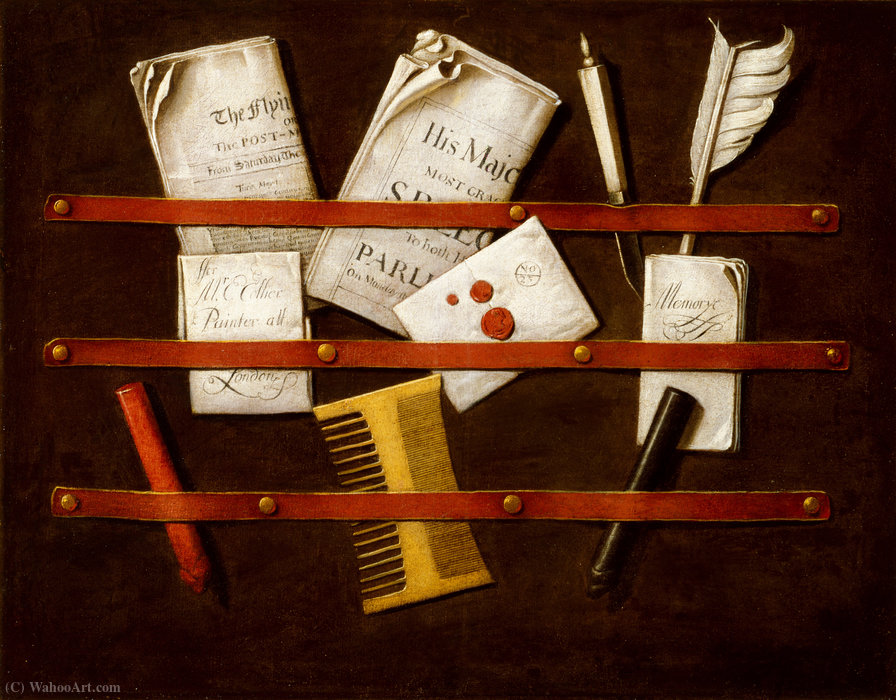
What truly distinguishes Collier's work is his innovative use of *trompe-l’œil*, or “fool the eye,” a technique that creates the illusion of three-dimensionality on a two-dimensional surface. He achieved this through meticulous attention to detail, precise perspective, and an understanding of light and shadow. Objects appeared to spill off the canvas, seemingly floating in space – a letter rack overflowing with documents, a collection of books stacked precariously high, or a smoking pipe resting on a table. This technique wasn’t merely decorative; it served to heighten the sense of realism and immediacy within his paintings, drawing the viewer into the scene and emphasizing the tangible nature of the objects depicted. Collier's mastery of *trompe-l’œil* set him apart from his contemporaries and established him as a pioneer in Dutch still-life painting.Legacy and Historical Significance
Evert Collier’s influence on subsequent generations of artists is considerable. His work served as a powerful commentary on the values and anxieties of 17th-century society, reflecting a growing awareness of mortality and the limitations of human ambition. His paintings continue to resonate with viewers today, offering a timeless meditation on the themes of life, death, and the pursuit of meaning. Major museums worldwide – including the Denver Art Museum, the Honolulu Museum of Art, the Indianapolis Museum of Art, the National Portrait Gallery (United Kingdom), the Rijksmuseum (Amsterdam), and the Art Institute of Chicago – house significant examples of his oeuvre, ensuring that his artistic legacy endures for centuries to come. Dror Wahrman’s book, *Mr. Collier's Letter Racks*, provides a comprehensive exploration of this artist’s unique contribution to the world of still-life painting, solidifying his place as a master of both symbolism and technique.
edwart collier (evert colyer)
1640 - 1708