1879
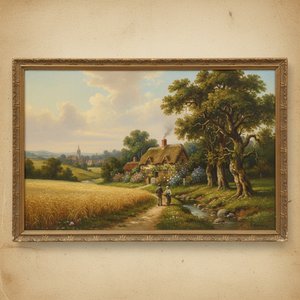
At Elmore, Gloucester (Edward Smith, 1879)
Edward Smith sukūrė At Elmore, Gloucester. Šis kūrinys datuojamas 1879 m. Eksponatas saugomas Museum of Gloucester Gloster, Jungtinė Karalienija. Dimensijos – 31 × 46 cm.
- 1879
- 31 × 46 cm
- Museum of Gloucester, Gloster

 Peržiūrėti realaus dydžio版

 Rankinio darbo aliejinės imitacijos paveikslas
 Pasidalinti
 Dalintis
 Informacinė l lapelė


 Atsisiųsti
 Panašūs eksponatai
 Rentgeno spindulių nuotrauka
 Automatinė diorama
 问答

 Statistika
At Elmore, Gloucester, trumpai
- Pavadinimas
- At Elmore, Gloucester
- Autorius
- Edward Smith
- Dizainere/is gimęs
- Kingdom of Great Britain
- Data
- 1879
- Matmenys
- 31 × 46 cm
- Kur galima pamatyti
- Museum of Gloucester, Gloster, Jungtinė Karalienija
Ką vaizduoja At Elmore, Gloucester?
A Glimpse into Rural Life
The scene depicted in "At Elmore, Gloucester" is one of serenity and tranquility. A couple, with a woman holding a baby, is seen walking towards a house or farm building, surrounded by animals such as dogs, horses, and cows. The presence of birds flying overhead adds to the sense of peace and harmony that pervades the atmosphere. This painting is a testament to Edward Smith's skill in capturing the beauty of everyday life.Other Notable Works by Edward Smith
Some of Edward Smith's other notable works include River Scene with Anglers, the Leadon, Gloucestershire, Southgate Street, Gloucester, and The Quay and Docks, Gloucester, 1878. These paintings can be found on OriginalUniqueArt.com, where art enthusiasts can discover and purchase handmade oil painting reproductions of these masterpieces.- Handmade oil painting reproductions of "At Elmore, Gloucester" and other works by Edward Smith are available on OriginalUniqueArt.com.
- The Museum of Gloucester is home to an impressive collection of artworks, including those by Edward Smith.
- For more information on Edward Smith and his works, visit OriginalUniqueArt.com's artist page.
The captivating scene depicted in "At Elmore, Gloucester" is a testament to Edward Smith's skill as an artist and his ability to capture the essence of rural life in the late 19th century.
Kuriame muziejuje eksponuojamas karya At Elmore, Gloucester?
Museum of Gloucester
Gloster, Jungtinė Karalienija
Viktorijos laikotarpio istorijos ir meno šventovė: Glosterio turtas Įsikūrędęs puikioje, II kategorijos architektūros vertės Viktorijos laikotarpio pastate – buvusiame Glosterio mokslo ir meno draugijos Price Memorial Hall – Museum of Gloucester siūlo neįtikėtiną kelionę per laiko atstumas, būdama turto ir meninės išraiškos neblėstanti galia. Šis pastatas, 1893 m. užbaigtas F.S.


At Elmore, Gloucester dididraudžios kokybės vaizdai

Protected by copyright: these files are for personal reference, not a licence to republish.
Edward Smith, At Elmore, Gloucester (1879), Museum of Gloucester.
Atsakimai į klausimus apie At Elmore, Gloucester
Kur šiandien galima pamatyti kūrinį „At Elmore, Gloucester“ – Edward Smith?
Originalus „At Elmore, Gloucester“ – Edward Smith saugomas Museum of Gloucester, Gloster, Jungtinė Karalienija. Kopija leidžia šį kūrinį eksponuoti namuose.
Kuriem metais buvo sukurta „At Elmore, Gloucester“ – Edward Smith?
„At Elmore, Gloucester“ – Edward Smith kūrybos metai – 1879.
Kokie yra originalaus „At Elmore, Gloucester“ matmenys?
Įrašyti kūrinio „At Elmore, Gloucester“ – Edward Smith matmenys yra 31 x 46 cm. Kopijas galima užsisakyti kitais dydžiais, išlaikant tą pačius proporcijas.
Ar „At Elmore, Gloucester“ – Edward Smith priklauso viešosios teisės domenui?
Kalbant apie autorišką teisę, „At Elmore, Gloucester“ yra vis dar saugoma autorineje teisėje.
Kas sukūrė „At Elmore, Gloucester“?
„At Elmore, Gloucester“ kūrybinį darbą sukūrė Edward Smith. Šioje puslapio informacijoje aprašomas Edward Smith originalus kūrinys.
Ar „At Elmore, Gloucester“ saugoma kūrijėjo šalyje?
Ne – kūrinys saugomas užsienyje. Edward Smith gimtoji šalis yra Kingdom of Great Britain, o kūrinio „At Elmore, Gloucester“ originalas saugomas muziejuje, esančiame Jungtinė Karalienija.
Apie šį menininką, Edward Smith

Kingdom of Great Britain
Edward Smith
The Visionary Landscapes of Edward Smith Edward Smith (1850 – 1912) stands as a singular figure in Victorian British art, recognized primarily for his monumental canvases depicting mythological scenes—particularly the biblical Flood—and expansive landscapes imbued with an almost unsettling grandeur. While overshadowed by contemporaries like Turner and Constable during his lifetime, Smith’s distinctive style has garnered renewed appreciation in recent decades, cementing his place as a pivotal artist of the era and influencing subsequent generations of painters. His work transcends mere representation; it strives to convey profound emotional resonance and philosophical contemplation, reflecting the anxieties and aspirations of a society grappling with scientific advancements alongside spiritual yearning. Born in Hanley, Staffordshire, Smith’s upbringing amidst a family of potters instilled an appreciation for craftsmanship and detail—traits that would become hallmarks of his artistic practice.
Taip pat Edward Smith darbai
 Market House, Dursley, Gloucestershire1879
 An Angling Party (The Willyams Family at Carnanton )1773
 Edward Rushton (1795–1851)1840
 Spa Grounds, Gloucester1875
Esdai apie At Elmore, Gloucester
 Alfred I. Glendening: Capturing Rural England's Poetic EssenceExplore the captivating rural landscapes of Alfred I. Glendening, a master of British sporting paintings. Discover his life, artistic style…
 Masterpieces of the Countryside: Top 25 Sir Alfred James Munnings ArtworksImmerse yourself in the vibrant world of Sir Alfred James Munnings. Explore 25 iconic equestrian paintings and English landscapes that defi…
 25 Must-See Masterpieces at the Smithsonian American Art MuseumExplore 25 iconic works from the Smithsonian American Art Museum. From Hopper to O'Keeffe, find museum-quality art on OriginalUniqueArt.com.