

 Peržiūrėti realybėje
 Pasidalinti
 Dalintis
 Išsamiau

 Atsisiųsti
 Panašūs eksponatai
 Rentgeno nuotrauka
 Automatinė diorama
Landscape with Windmill

 Skaityti daugiau
Giclée / Meno spausdinimas
Muziejų lygio „giclée“ arba drobos spausdinimas: greita gamyba ir lankstios apdailos parinktys. ( Perejti prie rankinio darbo paveikslėlio Perjungti į vaizdą)




































Pasirinkite iš mūsų nustatytų dydžių, atitinkančių originalaus meno kūrinio proporcijas.

Galite nurodyti savo matmenis, kad vaizdas atitiktų konkretų rėmą ar erdvę. Jei pasirinktas dydis nesutaps su originalaus paveikslėlio proporcijomis, mes arba apkirpsime kūrinį, arba išplėsime vaizdą naudojant veideliu atspindėtą arba vientisą šoną. Skaitmeninis maketas bus išsiųstas jums patvirtinti prieš pradedant gamybą.
Atkreipkite dėmesį, kad ekrane matomas vaizdinys neatspindi tikrojo apkirpimo ar išplėtimo. Tik maketas tiksliai parodytų galutinę kompoziciją.
Nors galima rinktis ir individualius dydžius, rekomenduojame pasirinkti vieną iš išanksti nustatytų matmenų, kad būtų išlaikytos originalios proporcijos.
Pristatymas visame pasaulyje () per 2 weeks, o ne įprastas 4/5 savaičių laikotarpis. (10 rugpjūtis)

Nemokamas greitasis pristatymas visame pasaulyje

Aukštos kokybės lininis drobė

Pilnas siuntimo draudimas

Muitinės mokesčių grąžinimo garantija

Tikro spalvų atitikimo garantija

60 dienų grąžinimo politika (tik esant gamyklinėms defektams)

100% pinigų grąžinimo garantija

Nuolaida už kelias reprodukcijas
 Stiklo variantas prieinamas tik pasirinkus dydį iki 110 cm

Landscape with Windmill
Giclée / Meno spausdinimas
Reprodukcijos matmenys
-


Galutinė kaina
$ 80
Autoriaus biografija
The Light of East Anglia: The Life and Legacy of Edward Seago
To wander through the canvases of Edward Seago is to embark on a sensory journey through the heart of the English landscape, where the air feels heavy with salt spray and the light dances upon the Norfolk marshes. Born in Norwich on March 31, 1910, Seago was a man whose destiny was inextricably linked to the soil and sea of East Anglia. Though he was the son of a coal merchant, his spirit was never tethered to the mundane; instead, it was drawn toward the fleeting brilliance of the natural world. His early years were marked by a profound connection to his surroundings, a bond that would later manifest in works that breathe with an almost palpable vitality. Even as a young boy, Seago faced the challenges of a rare heart condition, paroxysmal tachycardia, which often confined him to his home. Yet, it was during these periods of forced stillness that his observational powers flourished, allowing him to study the subtle shifts in light and shadow that would become the hallmarks of his mature style.
Seago’s artistic evolution was a masterful blend of self-directed passion and the influence of great masters. While he was largely a self-taught artist, his path was illuminated by the guidance of luminaries such as Sir Alfred Munnings and Bertram Priestman. This exposure helped refine his ability to marry a grounded sense of realism with the loose, expressive brushwork characteristic of late Impressionism. His technique, often compared to the luminous touch of John Singer Sargent, relied on careful color modulation to evoke atmosphere rather than mere topographical accuracy. Whether working in the fluid transparency of watercolors or the rich, textured depths of oils, Seago possessed a rare ability to capture the "essence" of a moment—the way a storm gathers over a Suffolk beach or the quiet, muted solitude of a winter garden.
A Vision Forged in War and Royalty
The trajectory of Seago’s career was profoundly shaped by the turbulent era of World War II. While many artists found their work interrupted by conflict, Seago’s unique talents were pressed into the service of his country. Enlisted by the Royal Engineers, he utilized his keen eye for color and form to develop camouflage, a task that required an intimate understanding of how light and texture blend within a landscape. This period of service did not stifle his creativity but rather deepened his technical command over the deceptive nature of sight. As the world emerged from the shadows of war, Seago’s reputation ascended to new heights, earning him the admiration of the highest echelons of British society.
His ability to document the beauty of the English coast and rural life resonated deeply with the British Royal Family. The prestige of being collected by figures such as Queen Elizabeth The Queen Mother and Prince Philip solidified his standing as a premier chronicler of the British landscape. His oeuvre expanded beyond the familiar Norfolk horizons to include evocative scenes from travels in France, notably his serene depictions of Rouen, where he captured the river's dusk with a masterful use of muted tones and loose, atmospheric strokes. This breadth of subject matter—ranging from intimate street scenes to expansive, stormy seascapes like Suffolk Beach—demonstrates an artist who was as much a traveler as he was a local observer.
The Enduring Impression of a Master
As we reflect on the life of Edward Seago, which came to an end in London in 1974, we see an artist who successfully bridged the gap between traditional realism and the emotive freedom of Impressionism. His significance lies not merely in his technical skill, but in his role as a custodian of a vanishing way of life. Through his eyes, we witness the timeless beauty of the Norfolk coastlines, the rhythmic movement of windmills in Thurne, and the quiet dignity of maritime life in Half-Tide, Pin Mill. His works serve as a nostalgic window into a landscape that feels both intimately familiar and ethereally beautiful.
Today, Seago’s legacy is preserved in prestigious institutions across the globe, ensuring that his "life painted in light" continues to inspire new generations of collectors and admirers. His contributions to British art can be summarized through several enduring themes:
- Mastery of Atmosphere: The ability to use color modulation to recreate the specific humidity, light, and weather of the English countryside.
- Technical Versatility: A seamless transition between the delicate nuances of watercolor and the robust textures of oil painting.
- Cultural Connection: A deep-seated devotion to the landscapes of East Anglia, making him a definitive voice in British landscape painting.
- Historical Resonance: An artistic journey that mirrored the resilience of the British spirit through the mid-20th century.
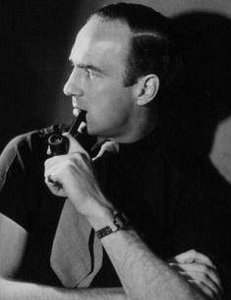
Edward Seago
1910 - 1974
Trumpa informacija
- Artistic Movement Or Style: Impressionism
- Artists Or Movements Influenced By This Artist: ['Post-Impressionism']
- Artists Who Influenced This Artist: ['Claude Monet']
- Date Of Birth: 1910
- Date Of Death: 1974
- Full Name: Edward Brian Seago
- Nationality: British
- Notable Artworks: ['Winter Morning']
- Place Of Birth: Norwich, England
Susiję straipsniai
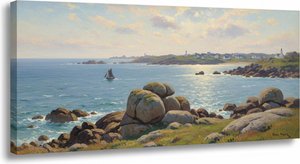
Henri Moret: Capturing the Essence of Brittany's Light – A Study in Post-Impressionist Landscape Painting
Explore the captivating landscapes of Henri Moret, a master of Post-Impressionism. Discover his unique style, key works, and legacy in our expert guide. Learn about collecting Moret's art & its investment potential.
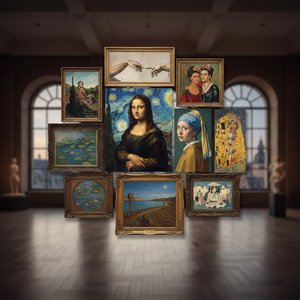
Oil on Canvas Masters: 10 Paintings That Redefined Art History |
Journey through art history with our guide to 10 legendary oil on canvas masterpieces! Explore iconic works by Van Gogh, Monet & Rembrandt. Find museum-quality reproductions and elevate your home decor at . Discover all masterpieces online.

Edward Seago: A Life Painted in Light – Nostalgia & the British Landscape Tradition
Explore the life & art of Edward Seago, a celebrated British Impressionist painter known for evocative landscapes & seascapes. Discover his captivating works and find high-quality reproductions at OriginalUniqueArt.
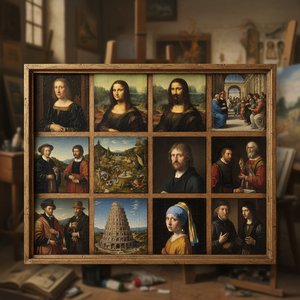
Oil on Panel Masters: 10 Paintings That Revolutionized Art |
Journey through 10 legendary 'Oil on Panel' masterpieces by Van Eyck, Bosch & Bruegel. Explore the stories behind these iconic Renaissance & Baroque paintings and find museum-quality art reproductions to elevate your home decor. Discover all masterpieces on !
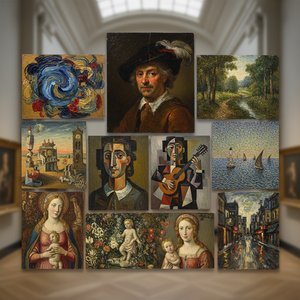
Oil on Board Masters: 10 Paintings That Redefined Art | OriginalUniqueArt
Explore 10 legendary 'Oil on Board' masterpieces by Van Gogh, Monet & more! Discover art history, iconic styles like Impressionism, and find museum-quality reproductions to elevate your home decor. Explore the full collection online at OriginalUniqueArt.com.

