Illustration
Eldorado (Edmundas Dulakas)
Edmundas Dulakas (1882–1953) sukūrė Eldorado. Šis kūrinys priklauso Illustration kieruliui. Pagaminta naudojant Watercolor.
- Watercolor

 Peržiūrėti

 Rankinio darbo aliejinės imitacijos paveikslas
 Pasidalinti
 Dalintis
 Informacinė lLapelė


 Atsisiųsti
 Panašūs eksponatai
 Rentgeno spindulių nuotrauka
 Automatinė diorama
 Klausimai ir atsakymai

 Statistika
Eldorado, trumpai
- Pavadinimas
- Eldorado
- Autorius
- Edmundas Dulakas (1882–1953)
- Autorius gimęs
- Tulūza, Prancūzija
- Technika
- Watercolor
- Judėjimas
- Illustration
- Laikotarpis
- Modern
- Tema
- fantasy, mythology, adventure, lost city, golden age, illustration art
Ką vaizduoja Eldorado?
The Subject and Artist of Eldorado
In Eldorado, the artist Edmund Dulac presents a scene steeped in the quiet tension of myth. The work focuses on a knight caught in a moment of profound movement, riding a spectral horse through an ethereal landscape. This figure is not merely a traveler but a participant in a legendary quest, likely drawn from the folklore surrounding the mythical city of gold. There is a sense of mystery here, as if the rider is navigating the threshold between the physical world and a realm of legend.
Edmund Dulac, born in Toulouse, France, possessed a particular ability to translate the spirit of fantasy into visual form. His approach to this subject matter avoids the heavy-handedness often found in epic tales, opting instead for a sense of quiet adventure. The knight and his mount appear to move through a swirling, otherworldly environment, suggesting that the destination of the quest—the fabled Eldorado—is as much a state of mind as it is a physical place of gold.
Composition and Visual Elements
The arrangement of this piece relies on a deliberate diagonal structure. The knight and his horse are positioned across the frame on a slant, creating a sense of purposeful, forward motion. This placement guides your eye naturally from the lower left toward the upper right, following the trajectory of the rider's movement. It is a dynamic way to organize the space, ensuring the viewer feels the momentum of the scene.
While the rider and horse occupy the central area of the composition, they are not static. They are offset by the swirling, ethereal elements of the background. These surrounding forms break the symmetry, adding a layer of complexity to the movement. The interaction between the central figures and the turbulent landscape creates a tension that keeps the eye moving through the frame.
Color, Light, and Atmosphere
The palette is defined by a dominance of cool tones, where deep blues, purples, and greens establish a sense of otherworldliness. These colors create a quiet, nocturnal mood that feels both mysterious and slightly melancholic. Within this cool landscape, one finds subtle hints of warmth; small touches of yellow and orange appear in the highlights, catching the light on the horse's details and the knight's armor. These warm accents provide a necessary counterpoint to the surrounding shadows.
The lighting is diffused and atmospheric, lacking a single, harsh directional source. Instead, there is an overall glow that seems to emanate from within the scene itself, as if the landscape and its figures are illuminated by an internal, ethereal light. This soft radiance softens the edges of the composition and contributes to the dreamlike quality of the environment. It is a light that suggests a realm existing outside of ordinary time, where the boundaries between the physical and the spectral are blurred.
Lines, Shapes, and Textures
In this composition, lines are employed with a specific purpose, working to define both movement and texture throughout the scene. The background is characterized by swirling lines that create a palpable sense of turbulence, suggesting an ethereal or shifting environment. These energetic strokes contrast with the more controlled, sharp lines found in the knight's armor, providing a structural counterpoint to the surrounding chaos.
The interplay of shapes further defines the visual rhythm of the piece. Organic and flowing shapes dominate the depiction of the clouds and the fabric of the cloak, lending a sense of weightless grace to the movement. In contrast, the knight’s armor and saddle are rendered through more rigid, geometric shapes. This juxtaposition of the fluid and the structured helps to ground the figure within the more nebulous elements of the landscape.
Texture is suggested through a delicate handling of the medium, inviting a tactile response from the viewer. One can sense the smooth, reflective quality of the metal armor against the soft, heavy folds of the cloak. The horse itself possesses an ethereal quality, its form appearing almost translucent, which contrasts with the rougher, more tangible textures of the landscape. This careful attention to surface detail gives the work a sense of physical presence despite its fantastical subject matter.
Artistic Style and Technique
The style of this work is fundamentally illustrative and decorative, deeply rooted in the principles of Art Nouveau. One can observe the sinuous, flowing lines that define the movement of the scene, a hallmark of the movement's emphasis on organic forms. The artist employs a meticulous approach to detail, ensuring that even the smallest elements of the knight's armor and the horse's form are rendered with precision. This careful execution creates a sense of refined elegance that characterizes the Golden Age of Illustration.
In terms of medium, the piece appears to be executed in watercolor or gouache on paper. This choice of material allows for a delicate brushwork that contributes to the ethereal quality of the landscape. The application of pigment is controlled yet fluid, allowing for subtle transitions in tone that build the atmospheric depth seen in the swirling background. There is a certain lightness to the touch, where the transparency of the watercolor meets the more opaque, saturated qualities of gouache to define the subject against the environment.
Perspective and Depth
The sense of space in this composition is achieved through a careful application of size variation. By placing the knight and his spectral horse in the foreground, the artist allows them to appear significantly larger than the surrounding elements. This scale shift immediately establishes a clear spatial hierarchy, grounding the viewer in the immediate presence of the rider before the eye moves toward the horizon.
Depth is further reinforced through the use of overlapping elements. The way the swirling, ethereal landscape interacts with the figure of the horse creates a layered effect, pushing the background away from the central subject. This technique ensures the scene feels three-dimensional rather than a flat arrangement of shapes. It invites a quiet contemplation of the distance between the rider and the unknown reaches of the landscape.
Atmospheric perspective plays a subtle role in defining the reach of the scene. As the eye moves toward the distant features, the details become softer and less distinct. This softening of the background elements mimics the way light and air interact in the physical world, contributing to the overall sense of depth and the otherworldly quality of the environment. The result is a composition that feels expansive, yet contained within its own dreamlike logic.
Related Works by Edmund Dulac
To understand the breadth of this artist's vision, one might look toward his other explorations of myth and legend. His work on Herakles and Deianeira offers a similar engagement with classical and legendary themes. There is a consistent thread in how he approaches these narratives, often utilizing the same delicate watercolor techniques seen here. His ability to translate ancient stories into visual form is a central part of his legacy.
The artist's fascination with Middle Eastern folklore is perhaps most evident in his 1907 illustrations for The Arabian Nights. These works share a certain atmospheric quality with Eldorado, particularly in their use of light and shadow to suggest a sense of mystery. Other pieces in our catalog, such as Sinbad 3 and Sinbad 20, further demonstrate his skill in constructing these dreamlike, orientalist settings through meticulous detail and flowing lines.
Eldorado dididraudžios kokybės vaizdai
Viešoji domenė: suregalis mirė 1953 m.
Edmundas Dulakas, Eldorado. Viešoji domenė
Atsakimai į klausimus apie Eldorado
Kokia technika panaudota kūriniui „Eldorado"]?
„Eldorado“ – Edmundas Dulakas technika – Watercolor. Kopijos siekia atkartoti šios technikos vaizdą.
Ką vaizduoja „Eldorado“ – Edmundas Dulakas?
Darbos „Eldorado“ temos yra fantasy, mythology, adventure, lost city, golden age, illustration art, orientalism.
Ar „Eldorado“ – Edmundas Dulakas priklauso viešosios teisės domenui?
Kalbant apie autorišką teisę, „Eldorado“ yra yra viešosios erdvės dalis – jo autorinė teisė pasibaigusi.
Kuriam menininkui priskiriamas kūrinys „Eldorado“?
Kūrinį „Eldorado“ sukūrė Edmundas Dulakas. Darbas katalogizuojamas Edmundas Dulakas vardu.
Kokiam meno stiliui priklauso „Eldorado“ – Edmundas Dulakas?
„Eldorado“ – Edmundas Dulakas priklauso Illustration stiliui. Ši dailės kryptis suteikia kūriniui stilistinį kontekstą.
Kokio Edmundas Dulakas kūrybos laikotarpio priklauso „Eldorado“?
„Eldorado“ atspindi Edmundas Dulakas kūrybinį laikotarpį Golden Age of Illustration.
Kodėl „Eldorado“ autoriškos teisės statusas yra toks, koks yra?
Autorinės teisės statusas kūriniui „Eldorado“ – yra viešosios erdvės dalis – jo autorinė teisė pasibaigusi – nustatomas remiantis to, kad menininkas mirė 1953 m.
Ką „Eldorado“ turi bendro su visa Edmundas Dulakas kūryba?
„Eldorado“ priklauso Edmundas Dulakas Illustration kūrybai, kurios įrašytoms temoms priskiriamas orientalism & fairy tales, art nouveau aesthetics, typical dulac fairy tale style, mythical quests and legends, exploration of the unknown.
Kaip „Eldorado“ tema susiję su įprastomis Edmundas Dulakas tematikos temos?
Dažniausios Edmundas Dulakas temos apima orientalism & fairy tales, art nouveau aesthetics, typical dulac fairy tale style, mythical quests and legends, exploration of the unknown; kūrinys „Eldorado“ susitelkia į fantasy, mythology, adventure, lost city, golden age, illustration art, orientalism.
Apie menininką Edmundas Dulakas
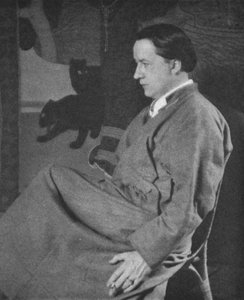
1882–1953, Prancūzija
Edmundas Dulakas
A Brushstroke of Dreams: Edmund Dulac’s Life and Artistic Journey Edmund Dulac, vardas sklambantis aukso amžiaus iliustracijų blizgesiu, sukelia fantastiškų pasaulių vizijas, įkūnintas kvapą gniaužiančia akvarelės menu. Gimęs Edmond Dulac Tulūzoje, Prancūzijoje, 1882 metais, jo kelias iš ambicingo teisininko į garsų menininką yra įtikinančias liudijimas apie savo artistinio pašaukimo stiprumą. Iš pradžių įstojęs į teisės studijas Tulūzos universitete, Dulac netrukus atrado neatsitiktinai patrauklų vizualinės istorijos pasaulį. Jis greitai pasižymėjo École des Beaux-Arts mokykloje, pelnydamas apdovanojimus, kurie jį stumtelėjo į menui skirtą gyvenimą.
Taip pat Edmundas Dulakas darbai
 The Rubaiyat. The Face of Wretched Man
 Sinbad 5
 Stealers of Light 1
 psyche and cerberus
Esdai apie Eldorado
 Capturing the Nightlife: A Visual Journey Through the Vibrant World of Toulouse-Lautrec ArtworksEmbark on a visual journey through the vibrant world of Toulouse-Lautrec. Discover the magic of Belle Époque Paris through our exquisite, h…
 Jean-Antoine Watteau's The Embarkation for Cythera: Using Implied Line to Create MovementLearn how Watteau uses composition to guide the eye and find out where the different versions of this Rococo masterpiece are located