Mexican Muralism
untitled (5629) (Diego Rivera)
Diego Rivera (1886–1957) sukūrė untitled (5629). Šis kūrinys priklaulo Mexican Muralism kieruliui.

 Peržiūrėti realaus dydžio版

 Rankinio darbo aliejinės imitacijos paveikslas
 Pasidalinti
 Dalintis
 Informacinė l lapelė


 Atsisiųsti
 Panašūs eksponatai
 Rentgeno spindulių nuotrauka
 Automatinė diorama
 问答

 Statistika
untitled (5629), trumpai
- Pavadinimas
- untitled (5629)
- Autorius
- Diego Rivera (1886–1957)
- Dizainere/is gimęs
- Guanachuatas, Meksika
- Judėjimas
- Mexican Muralism
- Tema
- revolution, labor, urban life, social commentary, mexico, muralism
Ką vaizduoja untitled (5629)?
A Monumental Narrative: Exploring Diego Rivera’s “untitled (5629)”
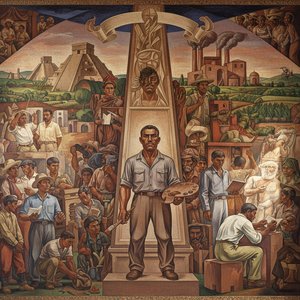
This powerful mural, “untitled (5629)” by Diego Rivera, is a compelling example of Mexican Muralism at its finest. The artwork isn't merely a visual experience; it’s a sweeping historical and social commentary rendered on a grand scale. It invites viewers to immerse themselves in a complex narrative brimming with symbolism and emotional resonance.Subject Matter & Composition: A Panorama of Life
The mural unfolds as a series of interconnected panels, each depicting distinct yet related scenes. We see glimpses of a tumultuous battlefield, the bustling energy of an urban landscape, figures poised in a significant doorway, and the diligent labor of agricultural workers. Rivera masterfully employs dynamic diagonal lines and overlapping elements to create a sense of depth, movement, and the interconnectedness of these scenes. This isn’t a static depiction; it's a vibrant snapshot of societal forces at play. The composition is deliberately structured using geometric forms – rectangles, squares, and triangles – lending a robust architectural quality to the overall design.Style & Technique: Echoes of Mexican Muralism
Rivera’s style in “untitled (5629)” is deeply rooted in the principles of Mexican Muralism, a movement he helped pioneer. The influence of artists like Diego Rivera himself is readily apparent through the use of bold outlines, simplified forms, and a commitment to representing social realities. The flattened perspective prioritizes storytelling over strict realism, drawing inspiration from pre-Columbian art and emphasizing the mural’s function as public art intended for broad accessibility. The technique appears to be primarily brushwork with pigments mixed directly into plaster – a traditional fresco method that lends itself to the durability and monumental quality characteristic of murals. The rough, textured surface adds another layer of visual interest and emphasizes the handmade nature of the work.Historical Context & Symbolism: Revolution & Social Critique
Created during a period of significant social and political upheaval in Mexico, “untitled (5629)” reflects the revolutionary spirit and concerns of its time. The mural is overtly political, addressing themes of revolution, labor, and urban life. The figures within the doorway likely symbolize authority or power structures, while the laborers in the fields represent the working class – a deliberate juxtaposition highlighting societal inequalities. Rivera frequently used his art as a vehicle for social commentary, aiming to educate and inspire viewers about Mexican history, culture, and the struggles of its people.Emotional Impact & Aesthetic Qualities
The dramatic lighting—with stark contrasts between highlights and shadows—creates a theatrical atmosphere that amplifies the mural’s emotional impact. The predominantly earthy color palette, punctuated by blues and greens, evokes both the landscape and the struggles of the people depicted. Overall, “untitled (5629)” conveys a sense of urgency, conflict, and social critique. It is a powerful statement on historical events and societal inequalities that continues to resonate with audiences today.Bringing Rivera’s Vision Home
For collectors and interior designers seeking a piece that embodies both artistic excellence and profound meaning, a high-quality reproduction of “untitled (5629)” offers an opportunity to infuse a space with the spirit of Mexican Muralism. Its dynamic composition and compelling narrative make it a striking focal point for any environment, sparking conversation and inspiring contemplation.untitled (5629) dididraudžios kokybės vaizdai
Protected by copyright: these files are for personal reference, not a licence to republish.
Diego Rivera, untitled (5629).
Atsakimai į klausimus apie untitled (5629)
Kas yra „untitled (5629)“?
Darbos „untitled (5629)“ temos yra revolution, labor, urban life, social commentary, mexico, muralism, diego rivera, politics.
Ar „untitled (5629)“ yra viešosios teisės kūrinys?
Kalbant apie autorišką teisę, „untitled (5629)“ yra vis dar saugoma autorineje teisėje.
Kuriam menininkui priskiriamas kūrinys „untitled (5629)“?
„untitled (5629)“ priskiriamas Diego Rivera.
Kokiam meno stiliui priklauso „untitled (5629)“ – Diego Rivera?
„untitled (5629)“ yra Mexican Muralism stiliaus kūrinys. Šis dailos kryptis nurodo meninę tradiciją, kurios šis darbas yra dalis.
Kokio Diego Rivera kūrybos etapo dalis yra „untitled (5629)“?
„untitled (5629)“ atspindi Diego Rivera kūrybinį laikotarpį Mature Period.
Ar Diego Rivera kūrinys „untitled (5629)“ yra viešosios nuoslegos ir kodėl?
„untitled (5629)“, kurį sukūrė Diego Rivera, yra vis dar saugoma autorineje teisėje. Autorinės teisės apsaugos terminai skaičiuojami nuo autoriaus mirties, o Diego Rivera mirė 1957 m.
Kokią vietą Diego Rivera kūrybos ešėlyje užima „untitled (5629)“?
Diego Rivera kūryboje „untitled (5629)“ atlieka Mexican Muralism stilių, susijęs su mexican muralism, aztec art", social realism, revolutionary spirit", labor struggles, social inequality, mexican identity temomis.
Kaip „untitled (5629)“ tema susiję su įprastomis Diego Rivera tematikos temos?
„untitled (5629)“ vaizduoja revolution, labor, urban life, social commentary, mexico, muralism, diego rivera, politics, o įrašytos Diego Rivera temos yra mexican muralism, aztec art", social realism, revolutionary spirit", labor struggles, social inequality, mexican identity. Šių dviejų lyginimas parodo, kaip šis kūrinys susijęs su įprastais šio kūrybinio veiksmo objektais.
Apie šį menininką, Diego Rivera

1886–1957, Meksika
Diego Rivera
An Užgaminis gyvenimas ir menininis pažaradimas Diego Rivera, gimęs Meksiko Guanajuato mieste 1886 m. gruodžio 8 d. kaip Diego María de la Concepción Juan Nepomuceno Estanislao de la Rivera y Barrientos Acosta y Rodríguez, į šlaiktą menine jautrumu pasaulį. Nuo vos trylikos metų jame klestėjo neįtikėtinas meilė menui, kurią puoselėjo tėvai, atpažinę į šią augančią talentą ir skatindami jį.
Taip pat Diego Rivera darbai
 Vyras kryžkelėje / Visatos valdytojas1934
 Detroit Industry, North Wall
 Sekmė sekmadienio pomeriggio Alamedos parke1948
 Land and Freedom
Esdai apie untitled (5629)
 10 Iconic Masterpieces to Elevate Your Meeting Room DecorElevate your office with iconic works by Dürer and Rivera. Discover museum-quality masterpieces on OriginalUniqueArt.com.
 Diego Rivera: A Revolutionary Vision of Mexican Identity Through MuralismExplore the revolutionary murals of Diego Rivera and his profound impact on Mexican art & identity. Discover his techniques, iconic works l…
 Tracing the Lineage of Mexican Muralism: History, Identity, and the Painted LandscapeExplore the profound history of Mexican Muralism and its iconic masters. Discover the legacy of Rivera and Nishizawa today.