

 Peržiūrėti realaus dydžio版
 Siųsti
 Dalintis
 Išsamiau
 Vadovas

 Atsisiųsti
 Panašūs eksponatai
 Rentgeno spindulių nuotrauka
 Diaporama
 Statistika
Ju Jitsu
 Oil On Board
- Cubism
 1913
1913- Late Medieval
 62.0 x 62.0 cm
 Tate Liverpool
 Rodyti daugiau
Šiame puslapyje rodomas meno kūrinys yra saugomas autorių teisių įstatymais, todėl neturime teisės legaliai kurti ar parduoti jo identiškos reprodukcijos. Ši apsauga užtikrinama remiantis tokiais tarptautiniais susitarimais kaip Bernės konvencija ir pagal nacionalines įstatymų nuostatas, įskaitant tas, kurias nurodo JAV autoriškos teisės įstatymas – 17-asis skyrius.
Šis metodas visiškai atitinka autorių teises, nes jame nėra kūrinio kopijavimo ar dubliavimo. Tai yra kūrybinė reinterpretacija – naujas paveikslas, kurį įkvėpė originalas, tačiau kuris nėra jo identiškas.
Giclée / Meno spausdinimas
Muziejų lygio „giclée“ arba drobos spausdinimas: greita gamyba ir lankstios apdailos parinktys. ( Pirkti rankomis tapytą reprodukciją Perejti prie skaitmeninių vaizdų)




P118B €10

P118H €10

P118W €10

P438Z €10

P508JH €12

P508YH €12

P805H €10

P805Z €10

P919BZ €10

P919G €10

P919XJ €10

P959ZH €10

P968JZ €12

W106C €8

W218G €10

W218JH €8

W218Y €10

W307PJ €10

W316G €10

W316PJ €8

W316Y €10

W398PJ €8

W4111J €10

W500HY €15

W500JH €15

W692G €12

W849H €8

W940BG €15

W953PJ €8




Pasirinkite iš mūsų nustatytų dydžių, atitinkančių originalaus meno kūrinio proporcijas.

Įveskite jums reikiamą plotį ir aukštį, kad atvaizdas derėtų prie jūsų rėmo ar sienos. Spausdiną galima tik sumažinti, bet nepadidinti virš originalaus paveikslėlio dydžio, todėl keičiant proporcijas, dalis vaizdo prarandama. Prieš spausdinimą atsiųsime jums skaitmeninį maketą patvirtinimui. Šioje puslapio nuotraukoje matomas pjūvis nėra tikslus – jį rodo tik maketas.
Pristatymas visame pasaulyje () per 2 weeks, o ne įprastas 4/5 savaičių laikotarpis. (26 spalis)

Nemokamas greitasis pristatymas visame pasaulyje

Aukštos kokybės lininis drobė

Pilnas siuntimo draudimas

Muitinės mokesčių grąžinimo garantija

Tikro spalvų atitikimo garantija

100 dienų grąžinimo politika (tik esant įtaigoms)

100% pinigų grąžinimo garantija

Nuolaida dideliems užsakymams
 Stiklo variantas prieinamas tik pasirinkus dydį iki 110 cm

Ju Jitsu
Giclée / Meno spausdinimas
Reprodukcijos dydis
-


Visų pasirinktų variantų kaina
€ 70
David Bomberg’s ‘Ju Jitsu’: A Fragmented Dance of Energy
David Bomberg's 1913 painting, “Ju Jitsu,” is not merely a depiction of a martial art; it’s a dynamic exploration of form, movement, and the very essence of human interaction. Captured on a relatively small board – measuring just 62 x 62 cm – the work explodes with an arresting energy that belies its modest scale. Bomberg, a key figure within the ‘Whitechapel Boys,’ a group of East End artists pushing against established artistic conventions, presents us with a collage-like composition featuring four figures engaged in what appears to be a grappling match. However, this isn’t a straightforward representation; instead, Bomberg employs a fractured, almost Cubist approach, layering torso and arm fragments against each other, creating an illusion of simultaneous action and spatial ambiguity.
The muted color palette – dominated by ochres, browns, and greys – contributes significantly to the painting’s subdued yet powerful atmosphere. This deliberate restraint allows the geometric forms and the implied movement to take center stage. The checkered backdrop, a subtle but effective element, adds depth and reinforces the sense of fragmented space, mirroring the disjointed nature of the figures themselves. Bomberg's use of line is particularly striking; bold, angular strokes define the contours of the bodies, conveying both strength and vulnerability. The painting’s roots lie in the burgeoning avant-garde movements of the early 20th century – Cubism, Futurism, and Constructivism – all of which sought to break down traditional representation and explore new ways of perceiving and depicting reality.
Influences and Artistic Context
Bomberg’s artistic journey was shaped by a diverse range of influences. His early training at the City and Guilds Technical Art School provided a foundational understanding of technique, while his time under Walter Sickert at Westminster School of Art instilled in him an appreciation for form and urban life – elements that would later inform his own distinctive style. Crucially, Bomberg’s exposure to Paul Cézanne through the 1910 Roger Fry exhibition “Manet and the Post-Impressionists” proved transformative, introducing him to Cézanne's emphasis on geometric simplification and the exploration of underlying structure. This influence is evident in Bomberg’s own use of fragmented forms and his focus on capturing essential shapes rather than detailed representations.
Furthermore, Bomberg was deeply engaged with the radical artistic currents circulating at the Slade School of Art during this period. Alongside contemporaries like Mark Gertler and Stanley Spencer, he experimented with abstract geometric compositions, drawing inspiration from the Futurists’ celebration of dynamism and movement. The painting “Ju Jitsu” stands as a testament to this experimental spirit, embodying Bomberg's willingness to challenge conventional artistic norms and explore new visual languages.
Decoding the Symbolism
While ostensibly depicting a scene of physical combat, "Ju Jitsu" transcends a simple representation of martial arts. The fragmented figures can be interpreted as symbols of human interaction – the struggle for dominance, the interplay of power and vulnerability, and the inherent tension between individuals. The act of grappling itself represents a negotiation, a yielding and resisting, mirroring the broader themes of conflict and resolution that permeate human experience. Considering Bomberg’s background as a Jewish immigrant in London's East End, one might also read the painting as an exploration of identity and resilience within a rapidly changing urban landscape.
The painting’s abstraction further enhances its symbolic resonance. By stripping away extraneous details and focusing on essential forms, Bomberg invites viewers to engage with the underlying dynamics of the scene – to contemplate the forces at play and to project their own interpretations onto the composition. The lack of a clear narrative or resolution encourages active participation from the viewer, transforming the painting into a dynamic meditation on human interaction.
A Legacy of Innovation
“Ju Jitsu” is more than just a striking visual work; it’s a pivotal example of David Bomberg's artistic evolution. It represents a crucial stage in his development as an abstract painter, bridging the gap between his early training and his later explorations of landscape and portraiture. The painting’s bold geometric forms, dynamic composition, and muted color palette established Bomberg as a leading figure within the British avant-garde, paving the way for future generations of artists to push the boundaries of artistic expression. Reproductions of this captivating work offer a unique opportunity to experience the energy and innovation of one of Britain's most important 20th-century painters.
问答 (or more naturally for a website heading): Klausimai ir atsakymai
Kur rekomenduojama eksponuoti „Ju Jitsu“ Square formatą?
Savo Square forma „Ju Jitsu“ reprodukcija siūloma Living Room kambariui.
Kokią emociją sukelia „Ju Jitsu“, autorius – Davidas Bombergas?
„Ju Jitsu“ kūryboje Dramatic nuotaika lydi Mysterious emociją.
Kokia spalva dominuoja „Ju Jitsu“, autorius – Davidas Bombergas kompozicijoje?
Dominuojanti „Ju Jitsu“, autorius – Davidas Bombergas spalva yra Phthalo Green (#262f40).
Autoriaus biografija
Pradiniai metai ir meninė mokslėsis
- Gimė: Birminghamas, Jungtinė Karalystė (1890 m. gruodžio 5 d.)
- Mirė: Londonas, Jungtinė Karalystė (1957 m. rug 아니라ją 19 d.)
- vienas iš „Whitechapel Boys“ – XX amžiaus pradいない grupės menininkų, iškilusių East End하게.
Gimęs lietuviškų kilmių, lenkų žydų imigrantų Abrahamo ir Rebekos Bomberg šeidoje, jis pirmiausia studijavo City and Guilds techninėje menų mokykloje, o vėliau Birminghame mokėsi litografui.
Westminster meno mokykloje (1908–1910 m.) jis studijavo su Walteriu Sickertu, kurį paveikė šio meistro dėmesys formai ir miesto gyvenimo ditempui. Didelę įtaką padarė ir susipažinimas su Pauliu Cézanne'u per 1910 m. Rogerio Fry eksponavimą „Manet ir postimpresionistai“.로 Įgavo patirties Slade meno mokykloje (1911 m.), kur pelnė Tonks apdovanojimą už savo piešinį bendrakimui studentui Isaacui Rosenbergui.
Avangardiniai metai: Kubizmas, futurizmas ir kontroversijos
- Slade mokykloje Bombergas buvo neįtikėtinos kartos dalis, įskaitant Marką Gertlerį, Stanley'į Spencerį, C.R.W. Nevinsoną ir Dorą Carrington.
- Jį paveikė 1912 m. Londone vykstantys Italijos futuristų parodai bei antroji Fry postimpresionistų paroda (Picasso, Matisse, Fauvists, Wyndham Lewis).
- Jis sukūrė išskirtinę stilių, sujungiantį kubizmą ir futurizmą – pasižymintį geometrinėmis kompozicijomis, ribota spalvų paleta, kampais aršios figūros ir tinklo struktūros.
- Jo radikalias požiūris 1913 m. pasižymėjo pašalinimu iš Slade meno mokyklos, nes jo metodai buvo laikyti per drastiškais tradicinei mokyklos būdui.
- Trumpam buvo susijęs su Bloomsbury grupės „Omega Workshops“ ir dalyvavo parodose su Camden Town grupėmis. Rodė ryšį su Wyndham Lewis vertizmo judėjimu, tačiau išliko nepriklausomas, atsisakydamas pilno įtraukimo.
Nuo karo iki peizažo: stiliaus transformacija
Pirmas karo patirtys pasaulinio karo I metu giliai pakeitė jo meninę viziją, paskatindami atsisakyti abstrakcijos.
20-metmetį Bombergas pradėjo taikyti figūratyvinį stilių, susitelkdamas į portretus ir peizažus, tiesiog iš gamtos išgriebintus. Jis sukūrė vis stiprisingą ekspresionistinę techniką, pasižymintį tekstūrinį impasto sluoksnį ir emocinį intensyvumą.
Ilgos kelionės per Artusias Vedas (ypač Palestiną) ir Europą reikšmingai paveikė jo vėlesnę kūrybą. Jo vaizdiniai Jeruzalės yra itin išskirtiniai.
Vėlesnie metai ir palikimas
- Nuo 1945 m. iki 1953 m. jis mokė Borough Polytechnic (dabar London South Bank University), įkvėpdamas visą menininkų kartą, įskaitant Franką Auerbach, Leoną Kossoff, Philipą Holmes, Cliffą Holden, Edną Mann, Dorothy Mead, Gustavą Metzger, Dennis Creffield, Cecil Bailey ir Miles Richmond.
- Susituokė su peizažų paveikslėtoja Lilian Holt.
- Nepaisant laikot periodų, kai jo kūryba buvo lygiai nepastebima, paskutinėmis dešimtmečiais Bombergo darbai sulaukė didelio pripažinimo kaip svarbus indėlis į britų moderniojo meno istoriją.
- London South Bank University pavadino David Bomberg House vardu, skirtą jo menui pagerbti.
- Jo palikimas slypi unikaliame Europos avangardinių judėjimų sinteze ir vėlesniame galingame, ekspresyvinio peizažo stiliaus sukūrime, kuris įtrapė vietos esmę ir žmogaus patirtį.

Davidas Bombergas
1890 - 1957 , Jungtinė Karalystė
Trumpa informacija apie kūrėją
- Gimimo Data: 1890 m. gruodžio 5 d.
- Gimimo Vieta: Birminghamas, Jungtinė Karalystė
- Meningai, Kurie Paveikė Šį Artistą:
- Paulius Cézanne'as
- Walteris Sickertas
- Wyndhamas Lewisas
- Menų Kryptis Ar Stilius:
- Kubizmas
- Futurizmas
- Ekspresionizmas
- Mirties Data: 1957 m. rugpjūčio 19 d.
- Tautybė: Britų
- Vardas, Pavardė: David Garshen Bomberg
- Šį Artistą Įkvėlusios Menų Kryptys Arba Menininkai:
- Frankas Auerbachas
- Leonas Kossoffas
- Žinomos Kūriniai:
- Savivarta (1937)
- Kitty, šio meno šalininko sesuo (1929)
- Eksperimentas paveikslui
- Jeruzalė
Susiję straipsniai
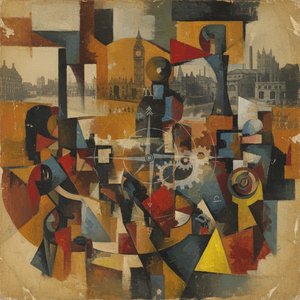
David Bomberg: Reassessing the Pioneering Spirit of Early British Abstraction
Explore the groundbreaking work of David Bomberg, a pivotal figure in British abstraction. Discover his artistic evolution, influences, and lasting legacy through insightful analysis & expert commentary.
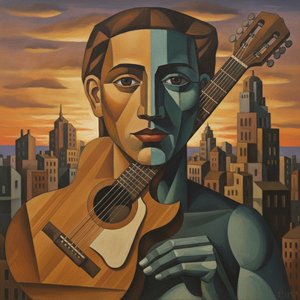
Cubism Unveiled: How Picasso and Braque Redefined Reality Through Geometric Abstraction
Explore the revolutionary world of Cubism. Discover how masters Pablo Picasso and Georges Braque dismantled reality through geometric abstraction to redefine modern art history.

Deconstructing Reality: Cubism's Evolution, Impact & Enduring Legacy
Explore the revolutionary world of Cubism with expert insights from OriginalUniqueArt. Discover Picasso & Braque's groundbreaking techniques, its philosophical roots, and lasting impact on modern art. Expert appraisal & custom reproductions available.
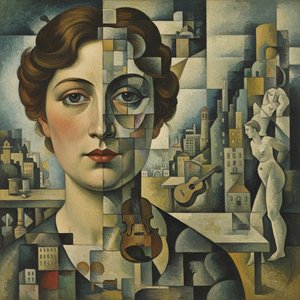
Deconstructing Reality: Cubism's Revolutionary Impact on 20th-Century Art
Explore the revolutionary world of Cubism with OriginalUniqueArt. Discover Picasso & Braque's groundbreaking techniques, its philosophical roots, and lasting impact on modern art. Expert insights for collectors.
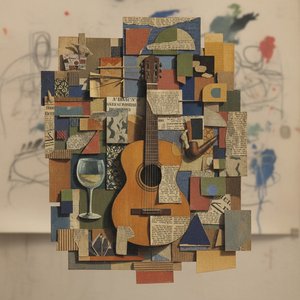
Deconstructing Reality: A Comprehensive Exploration of Synthetic Cubism's Evolution & Impact
Explore the revolutionary world of Synthetic Cubism! Discover its origins, key artists like Picasso & Braque, techniques, and lasting impact on modern art. A comprehensive guide for enthusiasts.

