

 Peržiūrėti realaus dydžio版
 Siųsti
 Dalintis
 Išsamiau
 Vadovas

 Atsisiųsti
 Panašūs eksponatai
 Rentgeno spindulių nuotrauka
 Diaporama
 Statistika
Lady Lucy Stuart
 Neoclassical
 1756
1756 74.0 x 61.0 cm
 Traquair House
 Rodyti daugiau
Įsigykite aukštos skiriamosios raiškos, patobulintą skaitmeninį vaizdą, gerokai pranašesnį už internetinę peržiūrą.
Kiekvieną failą mūsų specialistai kruopščiai paruošia naudojant pažangias technologijas ir profesionalų rankinį retušavimą. Užtikriname, kad kiekvienas vaizdas pasižymėtų išskirtiniu aiškumu, tikslia spalvų atspalviu ir smulkiomis detalėmis.
Baigiamas failas el. paštu pristatomas per 72 valandas; jis optimizuotas nedelsiant naudojimui profesionalioje, redakcinėje ir spausdinimo aplinkoje. Tai ta pati kokybė, kuria pasitiki aukščiausios klasės dizaino studijos, leidyklos ir galerijos.
Skaitmeninis vaizdas
Atsisiųskite didelės raiškos failą asmeniniam naudojimui, spausdinimui ir kūrybiniams projektams. ( Perjungti į spausdinimą Pirkti rankomis tapytą reprodukciją)
Kiekvieną skaitinio vaizdo užsakymą papildė
Profesionalus skaitmeninis vaizdų pristatymas, garantuotas
Pasirinkę OriginalUniqueArt.com, jūs ne tik gaunate paveikslėlį – jūs gaunate profesionaliai patobudintą skaitmeninį kūrinį, sukurtą itin tikniai ir užtikrinantį pasitenkinimą. Štai viską, kas automatiškai pritékia jūsų užsakymui:

Greitas nuotraukų gavimas el. paštu
Jūsų aukštos raiškos skaitmeninis vaizdo failas bus išsiųstas el. paštu per 72 valandas nuo užsakymo – jis bus paruoštas naudoti be jokių papildomų veiksmų.

Skaitmeninis failas su dirbtiniu intelektu
Jūsų meno kūrinys profesionaliai optimizuojamas naudojant pažangius dirbtinio intelekto įrankius ir rankinį redagavimą, užtikrinant maksimalią detalę, aiškumą ir spalvų tikslumą.

Nemokamas visam laikui pakartotinis siuntimas
Atsitiktinai ištrytikote ar praradote savo failą? Nebijokite – bet kuriuo metu atsiųsime jį jums vėl nemokamai.

Jokio importo mokesčio – niekada
Mėgaukitės savo meno kūriniu akimirka – skaitiniai failai visada yra neapmokestinami, todėl nereikės mokėti muitinės, mokesčių ar pristatymo mokesčių.

Spalvų tikslumo garantija
Naudodami profesionalią įrangą ir spalvų valdymo sistemas, užtikriname, kad jūsų skaitmeninis vaizdas kuo tiksliau atspindėtų originalias spalvas.

100 dienų patikimumo garantija
Jei nebuvosite patenkinti įsigyto skaitmeninio vaizdo, mes jį tališkai koreguosime arba grąžinsime 100% sumą per 100 dienų – be jokių klausimų.

100% pinigų grąžinimo garantija
Nesitenkinate? Gaukite visą sumokėtą sumą per 100 dienų nuo skaitmeninio failo gavimo – be jokių papildomų klausimų.

Nuolaidos dideliems užsakymams
Pirkti 3 nuotraukas – 10% nuolaida – Pirkti 5 – 15% nuolaida – Pirkti 10 ir daugiau – 20% nuolaida. Puikiai tinka kūrybiniams projektams, galerijoms bei agentūroms.
Autoriaus biografija
A Legacy of Portraiture and Pedagogy
The story of Cosmo Alexander is one of wandering brilliance and the profound influence of a master upon his pupil. Born in Scotland to the noted portrait painter John Alexander, Cosmo was destined for a life steeped in the traditions of fine art. Before his journey took him across the Atlantic, he refined his eye through extensive travels across Europe, documenting his presence in Italy between 1745 and 1751, including time in Rome. His artistic development continued in Holland, where he achieved professional recognition by joining the painters' guild at The Hague. These formative years in the great art centers of Europe provided him with a sophisticated foundation in classical techniques that would later define his work in the American colonies.
Though Alexander often referred to himself as a history painter, his enduring legacy resides in his mastery of the portrait. His style, which aligns closely with the Classical Realism later championed by John Singleton Copley, captured the essence of the Scottish community and the colonial elite with remarkable precision. As he moved through the American landscape between 1766 and 1772, his brush followed a path of significant historical importance. From the bustling streets of Philadelphia to the coastal elegance of Newport, Rhode Island, and even as far south as Charleston, South Carolina, Alexander sought to capture the likenesses of a burgeoning nation through a lens of European refinement.
The Teacher of a Master
Perhaps the most significant chapter in Alexander’s life was his role as a mentor. In Newport, Rhode Island, he encountered a young Gilbert Stuart, a meeting that would alter the course of American art history forever. Recognizing the potential in the fourteen-year-old, Alexander took Stuart on as an apprentice. This relationship was more than a mere professional arrangement; it was a passing of the torch from the Old World traditions to the New. The two traveled together through the colonies, eventually returning to Edinburgh in 1771, where the bond between master and student remained unbroken until Alexander’s sudden death.
Alexander's life was marked by both artistic triumph and personal hardship. Driven by financial debts that had forced him to leave London, he arrived in America with the hope of rebuilding his fortune through his craft. While his travels were frequent—visiting New York City, Boston, and Williamsburg—his ability to secure patrons remained a testament to his skill. In Burlington, New Jersey, he even resided within the governor's mansion, utilizing such high-profile connections to find sitters for his portraits. Though his life was cut short in Edinburgh, the impact of his work remains visible in the collections of prestigious institutions today.
- Key Artistic Contributions: Known for over twenty-five identified American portraits that showcase his skill in portraiture and historical genre painting.
- Notable Mentorship: Served as the primary teacher and mentor to the legendary American artist Gilbert Stuart.
- Geographic Reach: His career spanned Scotland, Italy, Holland, England, and various American colonies including New York, Pennsylvania, and Rhode Island.
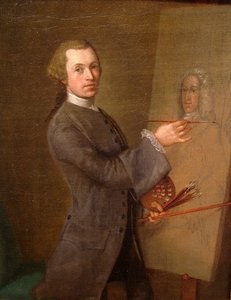
Cosmo Alexander
1724 - 1772