

 Peržiūrėti realaus dydžio版
 Siųsti
 Dalintis
 Išsamiau
 Vadovas

 Atsisiųsti
 Panašūs eksponatai
 Rentgeno spindulių nuotrauka
 Diaporama
 Statistika
Roman Ruins
 Oil
Oil- WallArt
- Dutch Golden Age
 1620
1620- Early Modern
 23.0 x 31.0 cm
 Rodyti daugiau
Rankų darbo aliejinės reprodukcijos
Rankiniu būdu tapytas aliejus ant droblio jūsų pageidaujamame dydį ir rėmuose – mūsų menininkų darbas pagal užsakymą. ( Perjungti į spausdinimą Perejti prie skaitmeninių vaizdų)




P118B €10

P118H €10

P118W €10

P438Z €10

P508JH €12

P508YH €12

P805H €10

P805Z €10

P919BZ €10

P919G €10

P919XJ €10

P959ZH €10

P968JZ €12

W106C €8

W218G €10

W218JH €8

W218Y €10

W307PJ €10

W316G €10

W316PJ €8

W316Y €10

W398PJ €8

W4111J €10

W500HY €15

W500JH €15

W692G €12

W849H €8

W940BG €15

W953PJ €8




Pasirinkite iš mūsų nustatytų dydžių, atitinkančių originalaus meno kūrinio proporcijas.

Įveskite jums reikiamą plotį ir aukštį, kad paveikslas atitiktų jūsų rėmą ar sieną. Kadangi šis darbas yra rankinio darbo, siekiant išgauti kitokio formos dydį, paveikslas gali būti šiek tiek didesnis (nuo kraštų bus palikta daugiau erdvės) arba mažesnis – pasirinkite jums patogiausią variantą. Prieš pradedant tapyti, atsiųsime jums skaitmeninį maketą patvirtinimui. Šioje puslapio nuotraukoje matomas vaizdas nėra galutinis rezultatas – jį parodys tik sukurtas maketas.
Gavus užsakymą, OriginalUniqueArt.com komanda susisieks su klientu el. paštu dėl instrukcijų ir pateiks maketo pavyzdį
Pristatymas visame pasaulyje () per 3–4 savaites, o ne įprastai – per 5 savaites. (24 spalis). Kokybė lieka nepakeičiama.

Nemokamas greitasis pristatymas visame pasaulyje

Aukštos kokybės lininis drobė

Pilnas siuntimo draudimas

Muitinės mokesčių grąžinimo garantija

Tikro spalvų atitikimo garantija

100 dienų grąžinimo politika (tik esant įtaigoms)

100% pinigų grąžinimo garantija

Nuolaida dideliems užsakymams
 Stiklo variantas prieinamas tik pasirinkus dydį iki 110 cm

Roman Ruins
Reprodukcijos technika
Reprodukcijos dydis
-


Visų pasirinktų variantų kaina
€ 263
A Window into Antiquity: The Timeless Allure of Roman Ruins
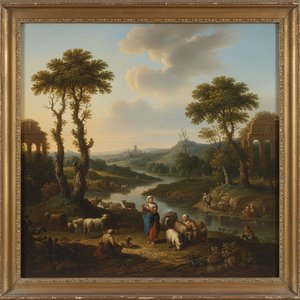
In the delicate, circular embrace of this exquisite tondo, Cornelis van Poelenburgh invites us to step through a portal into a bygone era. Painted around 1620, Roman Ruins is far more than a mere depiction of architectural decay; it is a profound meditation on the passage of time and the enduring relationship between humanity and the remnants of greatness. The composition, framed by its characteristic round format, focuses our gaze upon a landscape where the grandeur of the Roman Empire has softened into a pastoral sanctuary. Within this intimate space, the heavy stone arches and crumbling pillars serve as silent witnesses to history, now providing a backdrop for the quiet, rhythmic pulse of rural life.
The scene unfolds with a masterful use of light and shadow, reminiscent of the Dutch Golden Age's obsession with atmospheric truth. As we gaze upon the foreground, we encounter a world in gentle motion: a shepherd tending his flock, a laborer with his oxen, and figures caught in quiet contemplation. These small-scale inhabitants of the landscape bring a sense of warmth and vitality to the otherwise somber ruins. The artist employs a subtle, earthy palette—rich ochres, muted greens, and soft umbers—to weave a tapestry of textures that feels both tactile and ethereal. The hazy, overcast sky suggests the fleeting light of dawn or dusk, casting a melancholic yet peaceful glow over the entire vista, evoking a sense of nostalgia for a lost civilization.
The Mastery of the Italianate Style
Cornelis van Poelenburgh was a pivotal figure in the first generation of Dutch landscape painters who found profound inspiration in Italy. His travels to Rome allowed him to infuse his Northern training with the classical elegance of the Mediterranean. In Roman Ruins, we see this synthesis perfected. The technique is characterized by an incredible attention to detail; every crack in the ancient masonry and every distant bird in flight is rendered with a precision that draws the viewer deeper into the frame. This meticulousness does not feel clinical, however, but rather serves to enhance the three-dimensional depth of the scene, making the archway feel like a real threshold through which one might walk.
For the discerning collector or interior designer, this piece offers a unique emotional resonance. It possesses a "Caravaggesque" drama tempered by a serene, pastoral tranquility. The symbolism of the ruins—representing the inevitable cycle of rise and fall—is balanced by the resilience of the natural world and the simplicity of the human spirit. Such a work is an ideal centerpiece for a sophisticated interior, providing a conversational focal point that inspires reflection. Whether placed in a sunlit study or a grand gallery, this reproduction captures a moment of eternal stillness, offering any space it inhabits a touch of historical majesty and poetic grace.
问答 (or more naturally for a website heading): Klausimai ir atsakymai
Kas sukūrė „Roman Ruins“ ir kokia metais?
„Roman Ruins“ kūrybinį darbinį sukūrė Cornelis Van Poelenburch 1620 metais.
Ką vaizduoja „Roman Ruins“, autorius – Cornelis Van Poelenburch?
„Roman Ruins“, autorius – Cornelis Van Poelenburch temos apima figures, sheep, cow, archway, ruins, trees, birds, earth tones. Kartu jie apibendrina šio kūrinio tematiką.
Kiek ryški yra „Roman Ruins“ spalva?
„Roman Ruins“, autorius – Cornelis Van Poelenburch spalvos pasižymi Muted nasyginimu ir Balanced intensyvumu.
Autoriaus biografija
Rašutis gyvenimas ir mokymas
Cornelis van Poelenburghas, iškilusis holandijos pejzažų dailininkas, gimė Utrechtėje, Holandijoje 1594 m. Jis pradėjo mokytis pas Akmeniu Bloemaertu, tuo metu garsiu dirbtiniu. Šis pagrindinis mokymas padarė pagrindą Van Poelenburghaus ateičiai sėklei.Dailės karjera ir įtakos
Van Poelenburghaus kelionės į Romą ankstyvo XVII amžiaus metu žymiai paepino jo kūrinį, panaudojant jį kaip pirmosios kartos holandijos pejzažų dailininkų lyderį, aktyvius Italijoje. Jo mažo formato vaizdai, dažnai su itališkais kraštomiliais, kuriuose atvaizduotas maži kūriniai, įgyvendinant biblingas ar mitologijas scenas, parodė jo unikalią stilių išsaugavimą.Žymūs kūriniai:- Satyrai, stebinantių nimfų (po 1627 m.), charakteringas Van Poelenburghaus kūrinis, atvaizduojantis arhaikiniais kraštomiliais su keliu, įkąpę žomis. (Peržiūrėti OriginalUniqueArt)
- Dievų Taryba (apsk. 1630 m.), vienas vaizdas, atvaizduojantis Van Poelenburghaus idealizuotą papurginį kraštomilį ir romane įkvėptas dieves, dabar saugomas Mauritshuise (Hagė, Holandija)>. (Peržiūrėti OriginalUniqueArt)
Palėjimas ir vėlesnis gyvenimas
Van Poelenburghaus kūriniai buvo labai vertinami jo bendraamživių, įskaitant Tuscanios didgubią ir holandijos statholdžerį. Vėliau jis grįžo į Utrechtę, kur mirė 1667 m., tik keliais metais po savo senesnio mokytojo Abraham Bloemaerto. Pagrindiniai punktai:- Gimė Utrechtėje, Holandijoje 1594 m.
- Mokėsi pas Abraham Bloemaerto
- Įkvėptas laiku Rimo
- Žinomas dėl mažo formato itališkų kraštomilžių su kūriniais
- Mirė Utrechtėje 1667 m. Peržiūrėti Cornelis van Poelenburghaus kūrinius OriginalUniqueArt Daugiau apie Cornelis van Poelenburghą į Wikipedia

Cornelis Van Poelenburch
1594 - 1667 , Netherlandija
Trumpa informacija apie kūrėją
- Artistic Movement Or Style: Holandijos pejzažas, Romanikas
- Artists Or Movements Influenced By This Artist: ['Klaudas Lorrainas']
- Artists Who Influenced This Artist: ['Abraham Bloemaert']
- Date Of Birth: 1594 m., Utrechtas, Holandija
- Date Of Death: 1667 m., Utrechtas, Holandija
- Full Name: Cornelis van Poelenburgh
- Nationality: Holandietis
- Notable Artworks:
- Satyrai, žinotų nimfų
- Dievų Taryba
- Place Of Birth: Utrechtas, Holandija
Susiję straipsniai

Golden Light & Dutch Skies: The Timeless Magic of Dutch Golden Age Landscapes
Discover the breathtaking beauty of Dutch Golden Age landscapes. Explore the mastery of light, chiaroscuro, and 17th-century realism through an expert art history lens, celebrating the enduring legacy of the Dutch Masters for discerning collectors and art lovers.

Golden Age Reflections: Dutch Baroque Painting & Cultural Innovation
Explore the Dutch Golden Age of painting! Discover key artists like Vermeer & ter Borch, their innovative techniques, and the rich cultural context behind these Baroque masterpieces. Learn about collecting & appreciating this iconic art period.

Mastering Light & Shadow: A Journey Through the Dutch Golden Age's Luminous Legacy
Embark on a cultural journey through the Dutch Golden Age. Explore the masterful interplay of light and shadow in 17th-century masterpieces, from Rembrandt to Vermeer, and discover how this era of profound realism continues to inspire fine art collectors today.

Olandijos Aukso Amžius: 10 Šedevrų, Apibrėžiančių Meną ir Stilių
Atraskite Olandijos Aukso Amži\u017us meninius šedevrus! 10 legendin\u017iŴ paveikslžiai – Rembrandto, Vermeerio ir kt. darbai. Sužnkitę j\u016ungo namus aukso amži\u017us grožiu! Āukrai, interjero dizainas – viskas OriginalUniqueArt.com. Ižirkite kolekciją internete!
Nicolaes Berchem: Dutch Golden Age Pastoralism & the Evolution of Landscape Painting
Explore the captivating world of Nicolaes Berchem, a leading Dutch Golden Age painter. Discover his idyllic landscapes, masterful technique & lasting influence on art history. Learn more at OriginalUniqueArt.