

 Peržiūrėti realaus dydžio版
 Siųsti
 Dalintis
 Išsamiau
 Vadovas

 Atsisiųsti
 Panašūs eksponatai
 Rentgeno spindulių nuotrauka
 Diaporama
 Statistika
Aeroplane, called Avion no. 3


 Rodyti daugiau
Giclée / Meno spausdinimas
Muziejų lygio „giclée“ arba drobos spausdinimas: greita gamyba ir lankstios apdailos parinktys. ( Pirkti rankomis tapytą reprodukciją Perejti prie skaitmeninių vaizdų)




































Pasirinkite iš mūsų nustatytų dydžių, atitinkančių originalaus meno kūrinio proporcijas.

Galite nurodyti savo matmenis, kad vaizdas atitiktų konkretų rėmą ar erdvę. Jei pasirinktas dydis nesutaps su originalaus paveikslėlio proporcijomis, mes arba apkirpsime kūrinį, arba išplėsime vaizdą naudojant veideliu atspindėtą arba vientisą šoną. Skaitmeninis maketas bus išsiųstas jums patvirtinti prieš pradedant gamybą.
Atkreipkite dėmesį, kad ekrane matomas vaizdinys neatspindi tikrojo apkirpimo ar išplėtimo. Tik maketas tiksliai parodytų galutinę kompoziciją.
Nors galima rinktis ir individualius dydžius, rekomenduojame pasirinkti vieną iš išanksti nustatytų matmenų, kad būtų išlaikytos originalios proporcijos.
Pristatymas visame pasaulyje () per 2 weeks, o ne įprastas 4/5 savaičių laikotarpis. (25 rugsėjis)

Nemokamas greitasis pristatymas visame pasaulyje

Aukštos kokybės lininis drobė

Pilnas siuntimo draudimas

Muitinės mokesčių grąžinimo garantija

Tikro spalvų atitikimo garantija

100 dienų grąžinimo politika (tik esant įtaigoms)

100% pinigų grąžinimo garantija

Nuolaida dideliems užsakymams
 Stiklo variantas prieinamas tik pasirinkus dydį iki 110 cm

Aeroplane, called Avion no. 3
Giclée / Meno spausdinimas
Reprodukcijos dydis
-


Visų pasirinktų variantų kaina
$ 80
Autoriaus biografija
The Visionary Architect of the Skies
Born in the quiet town of Muret, near Toulouse, on April 2, 1841, Clément Agnés Ader was a man whose intellect soared far beyond the terrestrial bounds of his era. While his father, a skilled carpenter, envisioned a future for his son within the steady traditions of woodworking, the young Ader possessed a restless, mathematical mind that could not be contained by timber and joinery. His early education in Toulouse, marked by an extraordinary aptitude for drawing and science, laid the foundation for a life defined by the pursuit of the impossible. By the age of twenty, he had emerged from the prestigious industrial schools of his time not merely as a graduate, but as a trained engineer equipped with the technical precision necessary to reshape the modern world.
Ader’s journey was never a linear path through a single discipline; rather, it was a brilliant, interconnected web of innovation. His early professional years were spent navigating the iron veins of France, working for the Compagnie des Chemins de Fer du Midi. It was within this industrial landscape that his curiosity began to manifest as tangible invention. He looked at the heavy, clattering machinery of the mid-19th century and saw opportunities for refinement and grace. From developing specialized devices for railway maintenance to reimagining the very mechanics of the velocipede, Ader applied a singular philosophy to all his endeavors: the reduction of weight and the enhancement of efficiency through ingenious design.
The Dawn of Aerial Ambition
The true soul of Clément Ader’s legacy, however, lies in his profound obsession with the mechanics of flight. Long before the world accepted the reality of heavier-than-air travel, Ader was studying the delicate balance of nature and machine. His childhood experiments with kites and even the erratic movements of insects served as a primitive laboratory for what would become his greatest contribution to humanity. He did not merely dream of flight; he engineered it. Through a meticulous process of trial and error, he sought to replicate the aerodynamic principles found in the natural world, blending the strength of metal with the lightness of thought.
In 1890, the world witnessed a moment of pure, unadulterated magic when his creation, the Éole, achieved what many deemed a scientific impossibility: the first self-propelled flight of a heavier-than-air machine. This achievement was not merely a technical milestone but a poetic triumph of the human spirit over gravity. Though the flight was brief, its impact was eternal, signaling the birth of an era where the sky was no longer a ceiling, but a frontier. It is this sense of breathtaking possibility that defines his work—a bridge between the heavy industrialism of the 19th century and the soaring technological optimism of the 20th.
A Legacy of Innovation and Artistry
Beyond the roar of engines and the clatter of rails, Ader was a master of communication and sound. His invention of the théâtrophone—a system that allowed listeners to experience the stereophonic magic of live theater through telephone lines—demonstrated his ability to capture the ephemeral essence of human experience and transmit it across distances. He understood that technology could be used to bridge the gap between presence and absence, much like a painter uses light to evoke a memory. His work in electrical engineering and telephony reflected a deep sensitivity to the invisible threads that connect us all.
To look upon the history of Clément Ader is to witness the evolution of modern thought. He remains a towering figure whose influence stretches from the early days of cycling to the very foundations of aeronautics. His life was a testament to the power of a disciplined mind paired with an untamed imagination. As we reflect on his contributions, we see more than just an engineer; we see a pioneer who looked at the horizon and saw not a limit, but an invitation. His spirit lives on in every wing that catches the wind and every innovation that dares to defy the status quo.

clément agnes ader
1841 - 1925 , France
Trumpa informacija apie kūrėją
- Artistic Movement Or Style: Impressionism
- Artists Or Movements Influenced By This Artist: ['Renoir influenced Watteau and Rubens']
- Artists Who Influenced This Artist:
- Courbet
- Monet
- Bazille
- Date Of Birth: 1841
- Date Of Death: 1919
- Full Name: Auguste Renoir
- Nationality: French
- Notable Artworks:
- Peaches and Almonds
- Dance at Le Moulin de la Galette
- Place Of Birth: Limoges, France
Susiję straipsniai

Neoclassical Portraiture: The Timeless Elegance of Order, Grace, and Academic Mastery
Explore the refined world of Neoclassical portraiture. Discover the mastery of line, light, and order through an expert exploration of academic art history, from Jacques-Louis David to Jean-Antoine Houdon. Immerse yourself in the timeless elegance of classical realism.

Francesco Clemente: Transcendent Narratives & the Alchemy of Identity
Explore the captivating world of Francesco Clemente, a Transavanguardia master blending Italian artistry with Indian spirituality. Discover his evocative paintings & symbolism – a valuable addition to any discerning collection.
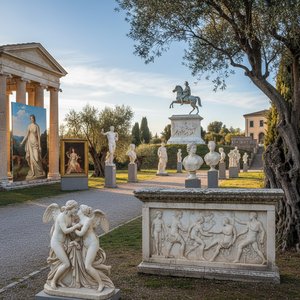
Top 10 Neoklasicizmo Šedevrai: Meninė Elegancija Jūsų Interjere
Atraskite 10 neoklasicizmo šedevrų, kurie formavo dailės istoriją! Davidas, Ingresas ir Canova – jų kūriniai atspindi eleganciją bei antikinius idealus. Puikūs meno reprodukcijos Jūsų namams. Tyrinėkite kolekciją OriginalUniqueArt.com!
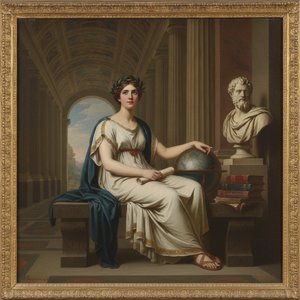
Timeless Elegance: The Grace, Order, and Intellectual Majesty of Neoclassical Portraiture
Explore the profound beauty of Neoclassical portraiture. Discover how masters used order, grace, and antiquity to transform portraits into timeless monuments of virtue and character through academic excellence.
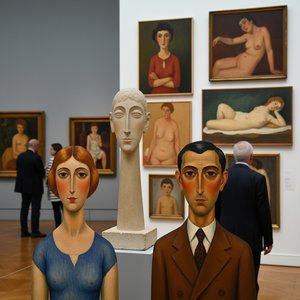
Amedeo Modigliani: Top 25 Šedevrai – Išskirtinė Meno Kolekcija Jūsų Interjerui
Atraskite 25 įspūdingiausius Amedeo Modigliani šedevrus! Portretai, aktų tapyba, unikalus stilius. Meno istorija ir interjero dekoravimo idėjos su OriginalUniqueArt.com – aukštos kokybės reprodukcijos jūsų namams. Explore the full collection online!