

 Peržiūrėti realaus dydžio版
 Siųsti
 Dalintis
 Išsamiau
 Vadovas

 Atsisiųsti
 Panašūs eksponatai
 Rentgeno spindulių nuotrauka
 Diaporama
 Statistika
Incunabulum 92
 Contemporary Realism
 110.0 x 165.0 cm
 MAGA - Museo Arte Gallarate
 Rodyti daugiau
Šiame puslapyje rodomas meno kūrinys yra saugomas autorių teisių įstatymais, todėl neturime teisės legaliai kurti ar parduoti jo identiškos reprodukcijos. Ši apsauga užtikrinama remiantis tokiais tarptautiniais susitarimais kaip Bernės konvencija ir pagal nacionalines įstatymų nuostatas, įskaitant tas, kurias nurodo JAV autoriškos teisės įstatymas – 17-asis skyrius.
Šis metodas visiškai atitinka autorių teises, nes jame nėra kūrinio kopijavimo ar dubliavimo. Tai yra kūrybinė reinterpretacija – naujas paveikslas, kurį įkvėpė originalas, tačiau kuris nėra jo identiškas.
Giclée / Meno spausdinimas
Muziejų lygio „giclée“ arba drobos spausdinimas: greita gamyba ir lankstios apdailos parinktys. ( Pirkti rankomis tapytą reprodukciją Perejti prie skaitmeninių vaizdų)




































Pasirinkite iš mūsų nustatytų dydžių, atitinkančių originalaus meno kūrinio proporcijas.

Įveskite jums reikiamą plotį ir aukštį, kad atvaizdas derėtų prie jūsų rėmo ar sienos. Spausdiną galima tik sumažinti, bet nepadidinti virš originalaus paveikslėlio dydžio, todėl keičiant proporcijas, dalis vaizdo prarandama. Prieš spausdinimą atsiųsime jums skaitmeninį maketą patvirtinimui. Šioje puslapio nuotraukoje matomas pjūvis nėra tikslus – jį rodo tik maketas.
Pristatymas visame pasaulyje () per 2 weeks, o ne įprastas 4/5 savaičių laikotarpis. (24 spalis)

Nemokamas greitasis pristatymas visame pasaulyje

Aukštos kokybės lininis drobė

Pilnas siuntimo draudimas

Muitinės mokesčių grąžinimo garantija

Tikro spalvų atitikimo garantija

100 dienų grąžinimo politika (tik esant įtaigoms)

100% pinigų grąžinimo garantija

Nuolaida dideliems užsakymams
 Stiklo variantas prieinamas tik pasirinkus dydį iki 110 cm

Incunabulum 92
Giclée / Meno spausdinimas
Reprodukcijos dydis
-


Visų pasirinktų variantų kaina
€ 70
Autoriaus biografija
A Luminous Exploration of the Invisible: The Life and Work of Claudio Olivieri
Claudio Olivieri, born in Rome in 1934 and passing away in Milan in 2019, was a pivotal figure in Italian analytical painting. He wasn’t merely a painter; he was an investigator of light, a sculptor of space, and a quiet revolutionary who sought to articulate the intangible through the rigorous language of form and color. His journey began amidst the vibrant artistic currents of post-war Italy, but Olivieri quickly charted his own course, rejecting prevailing trends like Abstract Expressionism, Pop Art, and Arte Povera in favor of an intensely personal and introspective approach. He believed that true art resided not in representation or spectacle, but in a direct relationship between the artist’s inner world and the canvas itself – a pursuit he obstinately maintained throughout his prolific career.Early Influences and the Rise of Analytical Painting
The artistic landscape of Italy during Olivieri's formative years was one of reconstruction and redefinition. While many artists embraced the dynamism of new movements, Olivieri found himself drawn to a more contemplative path. He became associated with a group often labeled as “new painting,” or “painting painting,” a term coined by Filiberto Menna that encapsulated their shared commitment to restoring value to the expressive potential of the canvas itself. This wasn’t about abandoning tradition; it was about stripping away extraneous elements and focusing on the fundamental qualities of paint, color, and form. Influenced by a desire for pure expression, Olivieri, alongside contemporaries like Griffa, Guarneri, Verna, and Pinelli, sought to revive an artistic language that had been overshadowed by more flamboyant styles. He wasn’t interested in depicting the world *as* it appeared, but rather in revealing its underlying structure and emotional resonance through abstract means. This dedication to rigorous exploration led him to develop a unique visual vocabulary characterized by large luminous fields of color emerging from darkness, creating subtle yet profound balances within his compositions.The Language of Light and Monochromatic Forms
Olivieri’s mature work is instantly recognizable for its distinctive aesthetic: monochromatic palettes, simple geometric shapes, and an almost palpable sense of depth. He wasn't interested in narrative or symbolism; instead, he aimed to create paintings that functioned as self-contained universes, inviting viewers into a meditative experience. His exploration of light was central to this endeavor. Olivieri believed that light wasn’t simply something *on* the canvas, but rather the very substance from which form emerged. He sought to “give form to the invisible,” using light as a means to make visible the infinite possibilities contained within the abstract realm. This pursuit led him to experiment with subtle gradations of color and carefully calibrated compositions that created an illusion of spatial recession. His paintings aren’t about what they *show*, but rather about how they *feel* – evoking a sense of tranquility, mystery, and profound contemplation. The use of X-ray photography in works like “Incunabulum 92” demonstrates his fascination with revealing hidden structures and the beauty found within anatomical detail, further emphasizing his exploration of what lies beneath the surface.Teaching and Institutional Recognition
Beyond his studio practice, Olivieri dedicated a significant portion of his life to education. From 1933 until 2011, he served as a professor of visual arts and painting at Nuova Accademia di Belle Arti (NABA) in Milan, shaping the minds of generations of aspiring artists. This commitment to teaching reflects his belief in the importance of rigorous artistic training and the power of critical inquiry. His influence extended far beyond the classroom, however. Olivieri’s work garnered widespread recognition throughout his career, with exhibitions at prestigious institutions including the Centre Pompidou in Paris, the Museum of Modern Art in New York, and numerous appearances at the Venice Biennale. His paintings are now held in esteemed collections such as the Tate Modern in London and the Guggenheim Museum in New York, solidifying his place within the canon of contemporary art.Legacy and Historical Significance
Claudio Olivieri’s legacy lies not in grand gestures or overt statements, but in the quiet power of his introspective vision. He demonstrated that abstraction could be a vehicle for profound emotional expression, and that true artistic innovation resided in the relentless pursuit of personal truth. While the market was initially slow to recognize his value, there is growing appreciation for his work as part of the broader Italian artistic scene of the mid-20th century. His dedication to exploring the fundamental qualities of light, color, and form continues to inspire artists today, reminding us that the most compelling art often resides in the subtle nuances of perception and the boundless possibilities of the abstract realm. He stands as a testament to the enduring power of analytical painting and the importance of seeking beauty within the invisible structures of our world.
Claudio Olivieri
1934 - 2019 , Italy
Trumpa informacija apie kūrėją
- Full Name: Claudio Olivieri
- Nationality: Italian
- Date Of Birth: 1934
- Date Of Death: 2019
- Place Of Birth: Rome, Italy
- Notable Artworks: ['Incunabulum 92']
- Artistic Movement Or Style: Analytical Painting
Susiję straipsniai

Secrets Beneath the Surface: How X-Rays Reveal the True Story of Masterpiece Paintings
Explore the hidden history of fine art through X-ray imaging. Discover how radiography reveals pentimento, secret layers, and the chemical alchemy of Old Master paintings, uncovering the untold stories beneath the surface of the world's most beloved masterpieces.

Pictorialism: A Search for Artistic Photography's Soul – Aesthetics, Techniques & Legacy
Explore the captivating world of Pictorialism – a pivotal movement that transformed photography into fine art. Discover key artists like Stieglitz & Käsebier, techniques, and collecting tips from experts.

Beyond the Lens: Photography's Enduring Influence on Modern & Contemporary Art
Explore photography's pivotal role in shaping modern & contemporary art. Discover key movements, influential artists like Stieglitz, and expert collecting advice from OriginalUniqueArt.
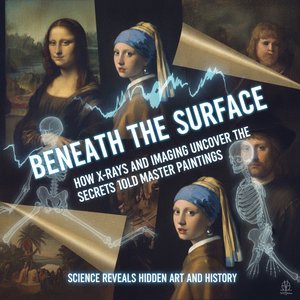
Beneath the Surface: How X-Rays and Imaging Uncover the Secrets of Old Master Paintings
Explore the hidden secrets of Old Master paintings through X-ray imaging and radiography. Discover how science reveals pentimento, pigment alchemy, and the profound layers of history beneath the surface of classical masterpieces.

Monochrome Visions: Exploring the Aesthetic & Historical Significance of Black & White Photography
Explore the rich history & artistic power of black and white photography. From early techniques to iconic masters like Ansel Adams, discover why monochrome continues to captivate art lovers today. Expert insights for collectors.