- Pradžia

- Skaitmeninis vaizdas
- claude vignon
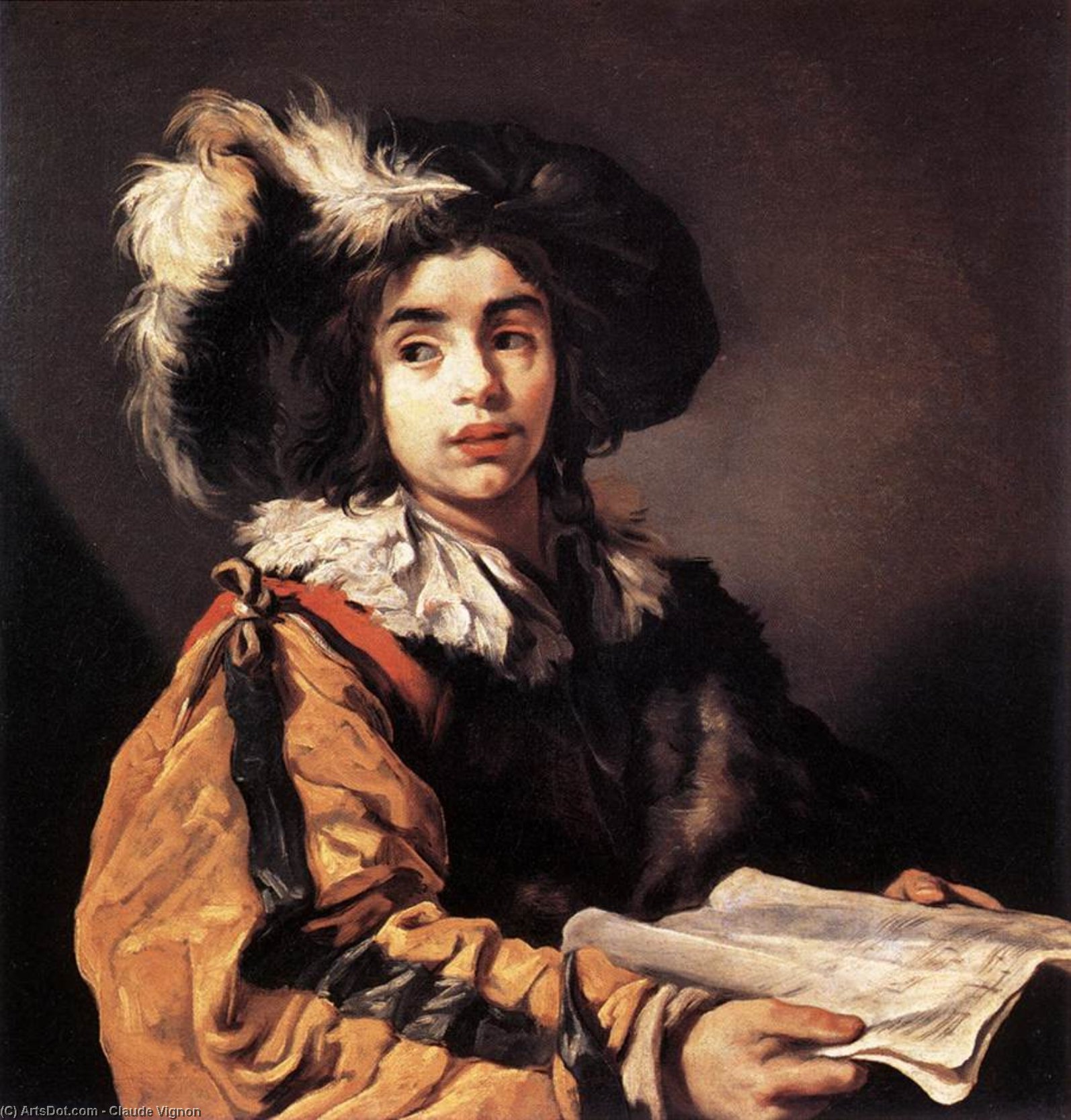
- The Young Singer
 Preview
 Pirkti atspaudą Užsisakyti kopiją
 Pasidalinti
 Dalintis
 Išsamiau
 Pridėti į mėgstamiausius

 Atsisiųsti
 Panašūs eksponatai
 Rentgeno nuotrauka
 Automatinė diorama
The Young Singer
 Acrylic On Canvas
- WallArt
- Caravaggism
 1622
1622 95.0 x 90.0 cm
 Liuvro muziejus
 Skaityti daugiau
Įsigykite aukštos skiriamosios raiškos, patobulintą skaitmeninį vaizdą, gerokai pranašesnį už internetinę peržiūrą.
Kiekvieną failą mūsų specialistai kruopščiai paruošia naudojant pažangias technologijas ir profesionalų rankinį retušavimą. Užtikriname, kad kiekvienas vaizdas pasižymėtų išskirtiniu aiškumu, tikslia spalvų atspalviu ir smulkiomis detalėmis.
Baigiamas failas el. paštu pristatomas per 72 valandas; jis optimizuotas nedelsiant naudojimui profesionalioje, redakcinėje ir spausdinimo aplinkoje. Tai ta pati kokybė, kuria pasitiki aukščiausios klasės dizaino studijos, leidyklos ir galerijos.
Skaitmeninis vaizdas
Atsisiųskite didelės raiškos failą asmeniniam naudojimui, spausdinimui ir kūrybiniams projektams.
Kiekvieną skaitinio vaizdo užsakymą papildė
Profesionalus skaitmeninis pristatymas, garantuotas
Pasirinkę OriginalUniqueArt.com, jūs ne tik gaunate paveikslėlį – jūs gaunate profesionaliai patobudintą skaitmeninį kūrinį, sukurtą itin tikniai ir užtikrinantį pasitenkinimą. Štai viską, kas automatiškai pritékia jūsų užsakymui:

Greitas siuntimas el. paštu
Jūsų aukštos raiškos skaitmeninis vaizdo failas bus išsiųstas jums el. paštu per 72 valaudas nuo užsakymo – paruoštas naudojimui be jokių papildomų veiksmų.

Skaitmeninis failas su dirbtiniu intelektu
Jūsų meno kūrinys profesionaliai optimizuojamas naudojant pažangius dirbtinio intelekto įrankius ir rankinį redagavimą, užtikrinant maksimalią detalę, aiškumą ir spalvų tikslumą.

Nemokamas visam laikui pakartotinis siuntimas
Atsitiktinai ištrytikote ar praradote savo failą? Nebijokite – bet kuriuo metu atsiųsime jį jums vėl nemokamai.

Jokio importo mokesčio – niekada
Mėgaukitės savo meno kūriniu akimirka – skaitiniai failai visada yra neapmokestinami, todėl nereikės mokėti muitinės, mokesčių ar pristatymo mokesčių.

Spalvų tikslumo garantija
Naudodami profesionalią įrangą ir spalvų valdymo sistemas, užtikriname, kad jūsų skaitmeninis vaizdas kuo tiksliau atspindėtų originalias spalvas.

60 dienų pasitenkinimo garantija
Jei nebuvate patenkinti savo skaitinio vaizdo, per 60 dienų jį pertaisysime arba grąkinsime 100% sumą – be jokių klausimų.

100% pinigų grąžinimo garantija
Nepat 만족inti? Gaukite visą sumokėtą sumą per 60 dienų nuo skaitmeninio failo gavimo – be jokių papildomų klausimų.

Nuolaidos dideliems užsakymams
Pirkti 3 nuotraukas – pasiūla 10% - Pirkti 5 – pasiūla 15% - Pirkti 10 ir daugiau – pasiūla 20%. Puikiai tinka kūrybiniams projektams, galerijoms bei agentūroms.
Kolekcinio objekto aprašymas
A Glimpse into 17th-Century France: The Enigmatic “The Young Singer”
Claude Vignon’s “The Young Singer,” painted in 1622, is more than a simple portrait; it's a meticulously crafted window into the burgeoning artistic landscape of early modern France. Born into wealth in Tours, Vignon’s journey began within the established Mannerist circles of Paris under Jacob Bunel, but his true transformation occurred during his sojourn in Italy – a period profoundly shaped by the dramatic innovations of Caravaggio and his followers. This painting represents a pivotal moment in Vignon's evolution, showcasing a masterful synthesis of influences that would define his uniquely evocative style.
The subject himself—a young man radiating an almost palpable sense of anticipation—immediately draws the viewer’s attention. Dressed in what appears to be a theatrical costume, perhaps intended for performance or even a nascent career as a musician, he holds a book open in his hand, suggesting both intellectual curiosity and a potential future beyond mere entertainment. His direct gaze, meeting the eye of the observer, establishes an intimate connection—a silent invitation into his world. The inclusion of two secondary figures – a man standing behind him on the left and another further back on the right – subtly hints at a social context, perhaps indicating patronage or a shared circle of acquaintances. The backdrop, dominated by a clock mounted on the wall, adds an element of temporal awareness, anchoring the scene within a specific moment in time and subtly reinforcing the themes of youth, aspiration, and the passage of time.
Caravaggism’s Shadow: Light, Drama, and Texture
Vignon's technique is immediately striking. He employs a vibrant, almost theatrical palette—a hallmark of his mature work—that explodes with rich reds, deep blues, and luminous golds. This isn’t the muted elegance of earlier Mannerism; instead, it’s a bold declaration of color, reminiscent of Venetian painters like Titian and Veronese, yet filtered through a distinctly French sensibility. The artist's brushwork is remarkably fluid and dynamic, creating an almost electric energy that animates the scene. Notice particularly how Vignon renders the textures – the velvet of the costume, the sheen of the book’s leather binding, the delicate feathers adorning the young man’s hat. These details are rendered with astonishing precision, demonstrating a mastery of chiaroscuro—the dramatic interplay of light and shadow—a technique heavily influenced by Caravaggio.
The lighting itself is crucial to the painting's impact. It’s not diffuse or evenly distributed; instead, it originates from an unseen source, bathing the young man in a warm glow while casting deep shadows that heighten the drama and create a sense of mystery. This masterful use of light isn’t merely decorative; it serves to draw attention to key elements—the face, the hands holding the book—and imbue the scene with emotional weight.
Symbolism and the Portrait of Ambition
Beyond its technical brilliance, “The Young Singer” is rich in symbolic meaning. The young man’s posture – alert, engaged, and looking directly at the viewer – suggests a desire for recognition and perhaps even a hint of ambition. The book he holds could represent knowledge, learning, or a potential career path beyond performance. The costume itself might symbolize aspiration—a yearning to transcend one's circumstances and achieve social standing. Considering Vignon’s own trajectory, moving from the established Mannerist traditions to embrace Caravaggism, the painting can be interpreted as a reflection of his own artistic evolution – a striving for something new and bold.
Furthermore, the inclusion of the clock serves as a potent reminder of time's relentless march. It subtly underscores the fleeting nature of youth and the urgency to seize opportunities. “The Young Singer” is not simply a portrait; it’s a carefully constructed meditation on ambition, identity, and the passage of time—a testament to Vignon’s artistic genius and his ability to capture the complexities of human experience.
Autoriaus biografija
The Enigmatic Brilliance of Claude Vignon
In the grand, sweeping tapestry of the seventeenth century, few threads are as vibrant or as difficult to untangle as those woven by Claude Vignon. A master of contradictions, Vignon was a painter whose brush seemed to dance between the structured elegance of Mannerism and the raw, dramatic shadows of the Caravaggisti. Born in Tours, France, in 1593 into a family of significant wealth, his early life provided him with the stability to pursue an artistic journey that would eventually take him from the studios of Paris to the sun-drenched streets of Rome and even through the perilous landscapes of Spain. His career was not merely a progression of skill, but a restless exploration of style, making him one of the most prolific and enigmatic figures of the French Baroque era.
Vignon’s artistic soul was forged in the crucible of international influence. While his initial training under the Mannerist Jacob Bunel in Paris provided a foundation of formal grace, it was his transformative period in Italy that truly ignited his genius. Immersed in the Roman art scene, he breathed the same air as the followers of Caravaggio, absorbing the dramatic chiaroscuro and emotional intensity of artists like Guercino and Guido Reni. This exposure allowed him to develop a technique that was nothing short of electric. His mature works are characterized by an almost feverish brushwork, where light does not merely illuminate a subject but seems to vibrate against it. He possessed a singular ability to render the tactile splendor of the material world, capturing the shimmering luster of gold, the deep richness of precious stones, and the intricate, heavy folds of luxurious textiles with a precision that mesmerized his contemporaries.
A Life of Adventure and Artistic Triumph
The life of Claude Vignon was as dramatic as the canvases he produced. His travels were marked by both cultural enrichment and physical peril; most notably, during a journey through Spain, he survived a harrowing encounter in Barcelona where he was attacked by bandits, leaving him with a permanent scar upon his face. Yet, such hardships did not dampen his professional ascent. Upon returning to France, Vignon established himself as one of the most respected and successful artists in Paris. His talent earned him the patronage of the highest echelons of French society, including the formidable King Louis XIII and the powerful Cardinal Richelieu. This level of recognition placed him at the very heart of the nation's cultural and political life.
Beyond his individual mastery, Vignon’s significance lies in his role as a bridge between disparate artistic movements. His work serves as a fascinating intersection where several great traditions met:
- The Mannerist Legacy: Retaining the sophisticated elegance and complex compositions of his early training.
- The Caravaggesque Revolution: Embracing the dramatic lighting and psychological depth brought to Europe by the Italian masters. • International Synthesis: Integrating subtle influences from Venetian color, Dutch realism, and German precision into a uniquely French vernacular.
As he navigated his career, Vignon also became a vital figure in the art commerce of his time, working closely with print publishers and dealers to ensure his imagery reached a wider audience. Though his style remained difficult for historians to categorize—often shifting between the theatrical and the delicate—his impact was undeniable. He stood as a precursor to the great shifts in European art, embodying the restless, searching spirit of an age that was moving away from the rigidities of the past toward the profound emotional landscapes of the future.

claude vignon
1593 - 1670 , France
Trumpai apie šį kūrėją
- Artistic Movement Or Style: Baroque, Mannerism, Caravaggism
- Artists Who Influenced This Artist:
- Caravaggio
- Guercino
- Guido Reni
- Annibale Carracci
- Date Of Birth: 1593
- Date Of Death: 1670
- Full Name: Claude Vignon
- Nationality: French
- Place Of Birth: Tours, France

