Perjungti į spausdinamus版作品
 Skaityti daugiau







































 Dėl meno kūrinių ar reprodukcijų, kurių bet kuri pusė yra didesnė nei 105 cm (apie 41 inch), rėmas bus siunčiamas kaip išskaidytas surinkimo rinkinys. Šis metodas užtikrina saugų pristatymą ir apsaugo nuo transportavimo metu galimos žalos.


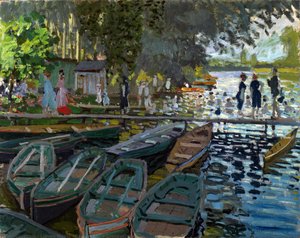
Red Boats at Argenteuil – A Snapshot of Impressionist Brilliance
Claude Monet’s “Red Boats at Argenteuil,” painted in 1875, transcends mere depiction; it's an invitation to inhabit a fleeting moment of Parisian summer. This canvas embodies the core tenets of Impressionism—a deliberate rejection of academic precision in favor of capturing the ephemeral dance of light and atmosphere—marking a pivotal shift in artistic expression. Situated in Argenteuil, where Monet resided from 1871 to 1878, the location served as an unparalleled laboratory for observing how sunlight interacts with water and foliage, informing his groundbreaking approach to landscape painting. The scene unfolds along the Seine River, presenting a tranquil vista that continues to resonate with viewers today, capturing not just visual beauty but also the spirit of innovation that defined its era.The Technique of Broken Color: Monet’s Revolutionary Approach
Monet's distinctive technique—characterized by “broken color”—immediately grabs attention. Rather than meticulously blending hues into seamless gradients, he applies pigment in small, separate strokes, allowing individual colors to mingle optically on the canvas surface. This method isn’t about inaccuracy; it’s a conscious decision to convey the sensation of light as it refracts and blends across the landscape. The vibrant palette—dominated by blues, greens, and reds—reflects the shimmering surface of the Seine and the lush vegetation lining its banks. These strokes aren't uniform; they vary in size and direction, creating textural richness and dynamism that mimics the natural world. This technique was revolutionary for its time, challenging the conventions of academic painting and paving the way for future generations of artists.A Reflection of Argenteuil’s Atmosphere: Symbolism and Impressionistic Vision
Argenteuil itself holds symbolic significance within Monet's oeuvre. The riverside town—a haven for leisure and artistic contemplation—represents a deliberate departure from the grandeur of Parisian boulevards, prioritizing intimacy and sensory experience. More importantly, the painting captures the very essence of Argenteuil’s atmosphere: hazy sunlight filtering through the foliage, creating an ethereal glow that softens the contours of buildings and boats alike. The red house on the left serves as an anchor point, grounding the composition while simultaneously introducing a contrasting hue—a deliberate element designed to heighten visual interest and convey emotion. Monet's masterful use of color and brushwork communicates not just what he sees but how he *feels*, embodying the Impressionist preoccupation with subjective perception.Historical Context: Challenging Artistic Tradition
“Red Boats at Argenteuil” emerged during a period of profound artistic upheaval—the dawn of Impressionism—as artists actively resisted the rigid formalism of the Salon system, seeking to express their own experiences and interpretations of the world around them. Monet’s decision to paint en plein air—directly from nature—was itself a radical act, rejecting studio-based painting in favor of capturing the immediacy of observation. This defiance of convention signaled a fundamental rethinking of artistic priorities, prioritizing sensory experience over intellectual analysis and paving the way for a new aesthetic sensibility that would transform the art world forever. The painting stands as a testament to Monet’s unwavering commitment to innovation and his enduring legacy as one of the most influential painters of the 19th century.Red Boats at Argenteuil – Reproduction Quality Considerations
To appreciate the true beauty and nuance of Claude Monet's masterpiece, consider commissioning a high-quality reproduction from reputable art dealers or online platforms. Selecting a print crafted by skilled artisans using archival inks on textured linen canvas ensures that you experience the vibrancy and authenticity of Monet’s original vision—preserving its artistic integrity for generations to come.Klausimai ir atsakymai
Ar „Raudi Laiveliai, Argenteuil“ yra būdingas tam, ką Klodas Monet paprastai kūrė?
Dažniausios Klodas Monet temos apima nature observation, light capture technique, plein air impressionism, monet legacy style, landscape aesthetic vision; kūrinys „Raudi Laiveliai, Argenteuil“ susitelkia į seine river, argenteuil bridge, monet landscape, impressionist painting, summer light, boat reflections, french impressionism.
Kokia naudojimo paskirtis ir erdvė rekomenduojama kūriniam darbui „Raudi Laiveliai, Argenteuil“ – Klodas Monet?
„Raudi Laiveliai, Argenteuil“ – Klodas Monet rekomenduojamas Akcentas, idealiai – Popieriaus svetainė erdvėje. Naudojimo paskirtis ir erdvė padeda suprasti, kur ši reprodukcija tiktų geriausiai.
Į kokį kambarį rekomenduojamas „Raudi Laiveliai, Argenteuil“ – Klodas Monet?
„Raudi Laiveliai, Argenteuil“ reprodukcija puikiai tinka į Popieriaus svetainė.
Daugiau informacijos apie šį paveikslą
 Peržiūrėti realaus dydžio版
 Pasidalinti
 Dalintis
 Išsamiau
 Vadovas

 Atsisiųsti
 Panašūs eksponatai
 Rentgeno spindulių nuotrauka
 Automatinė diorama
 问答
问答 Statistika