

 Peržiūrėti realaus dydžio版
 Siųsti
 Dalintis
 Išsamiau
 Vadovas

 Atsisiųsti
 Panašūs eksponatai
 Rentgeno spindulių nuotrauka
 Diaporama
 Statistika
Majestato Madonė (detalė)
 Akrilas ant drobės
- Sieninis menas
- Italobožantiškas
 1285
1285- Renesansas
 91.0 x 75.0 cm
 Uffizi galerija
 Rodyti daugiau
Giclée / Meno spausdinimas
Muziejų lygio „giclée“ arba drobos spausdinimas: greita gamyba ir lankstios apdailos parinktys. ( Pirkti rankomis tapytą reprodukciją Perejti prie skaitmeninių vaizdų)




P118B €10

P118H €10

P118W €10

P438Z €10

P508JH €12

P508YH €12

P805H €10

P805Z €10

P919BZ €10

P919G €10

P919XJ €10

P959ZH €10

P968JZ €12

W106C €8

W218G €10

W218JH €8

W218Y €10

W307PJ €10

W316G €10

W316PJ €8

W316Y €10

W398PJ €8

W4111J €10

W500HY €15

W500JH €15

W692G €12

W849H €8

W940BG €15

W953PJ €8




Pasirinkite iš mūsų nustatytų dydžių, atitinkančių originalaus meno kūrinio proporcijas.

Įveskite jums reikiamą plotį ir aukštį, kad atvaizdas derėtų prie jūsų rėmo ar sienos. Spausdiną galima tik sumažinti, bet nepadidinti virš originalaus paveikslėlio dydžio, todėl keičiant proporcijas, dalis vaizdo prarandama. Prieš spausdinimą atsiųsime jums skaitmeninį maketą patvirtinimui. Šioje puslapio nuotraukoje matomas pjūvis nėra tikslus – jį rodo tik maketas.
Pristatymas visame pasaulyje () per 2 weeks, o ne įprastas 4/5 savaičių laikotarpis. (25 spalis)

Nemokamas greitasis pristatymas visame pasaulyje

Aukštos kokybės lininis drobė

Pilnas siuntimo draudimas

Muitinės mokesčių grąžinimo garantija

Tikro spalvų atitikimo garantija

100 dienų grąžinimo politika (tik esant įtaigoms)

100% pinigų grąžinimo garantija

Nuolaida dideliems užsakymams
 Stiklo variantas prieinamas tik pasirinkus dydį iki 110 cm

Majestato Madonė (detalė)
Giclée / Meno spausdinimas
Reprodukcijos dydis
-


Visų pasirinktų variantų kaina
€ 70
Dievo Majestato žvilgsis: Cimabue „Madonna majestate“ (detalė)
Ši išskirtinė detalė iš Cimabue „Madonna majestate“, pildyta 1285 m., suteikia įkvėpimą kelionės per Bizantijos tradiciją ir augančią Italijos renesansą. Matydama 91 x 75 cm, šis fragmentas įklausomas savo laikų spiritinį užvedimą ir meninį išnaudojimą.Bizantijos šaknis ir gaunančias realizmo pastangas
Cimabue (apsk. 1240–1302 m.), gimęs Cenni di Pepo Florancijoje, yra pagrindinė istorinė figūra. Jis buvo esminis įrankis atssidarius nuo griežto Italo-Bizantijos stiliaus, kuris šimtmečius dominavo itališką dailę. Nors jis giliai buvo įdėjęs į Bizantijos konvencijas – tai matoma plokščioje perspektyvoje, turtingame aukso lapu ir stilizuotais figūromis – Cimabue pradėjo įvedti didesnių naturalizmo elementus. Įmanykite, kaip, net iš ikoninės reprezentacijos, yra subtilus pastangos apdodelėti veidarius ir drąsias dalis, keliodami žvilgsį į volumenį ir formą. Tai buvo revoliucija savo laikotarpiui!Kompozicijos ir technikos atskleidimas
Detalė akcentuojasi Virgin Mary, globojančią kūdėją Jēzusą. Kompozicija yra centruota aplink šią šventą motina ir vaikas ryšį, o Marija yra padėta šiek tiek išcentro, traukdama žiūrovę žvilgsį į sceną. Šviesų aureolė apgaubia Kristuserį, iškart pažymėdama jo dievinę statusą. Fonas nėra tik dekoratyvus; tai nuikštos būdu išdėstytas geometrinioje rašinio tapizija šviesojantį aukso – Bizantijos menų ženlas, skirtas sukurti jausmę apie kitokioją prabangą ir spiritinį gylį.Medžiagos ir meninis procesas
Cimabue tikėtina naudojo temperą arba freską ant medienos plokštės, technikų populiarias Trecento laikotarpiu. Daiktų įdėjęmas yra sąmoningas, su sluoksniu apdailomis, kurios sukuria tekstūrą, ypač šviesojantose aukso lapų vietose. Linijos yra aiškios ir apribotos, konturuojančios tiek figūras, tiek dekoratyvinius elementus. Formos – apyliai, kvadratai, rektangulai – prisidėdos prie bendro stilizuotoje estetiikos, priorizuojant simbolinę reikšmę prieš griežtą realizmą.Simbolika ir spiritinė reikšmė
Kiekvienas elementas šio dirbtinio neša gilios simbolines reikšmes:- Aureola: Atspindi dievybę ir šventotę.
- Marijos gestas: Jos saugantis apkabymas Kristuseriu simbolizuoja globą, pobožnamą ir jos vaidmenį kaip Dievo Moterių.
- Auksinis fonas: Atspindi angelišką pasaulį – šventą erdvę už žemės rūpesčius.
- Stilizuotos formos : Pabrėžia spiritines tiesas, o ne fizinę tikslumą, įkvėpinant apmąstymą, o ne imitaciją.
Emocinis rezonansas ir išlikęs palikimas
„Madonna majestate“ (detalė) kelia jausmus apie pagarbą, pobožnamą ir ramybę. Šventiška spalvų paletė – dominuojanti aukso, maršpanų ir juodos spalvos – patvirtina šventiško atmosferą. Cimabue darbas buvo kritiškai svarbus žingsnis į priekį jo studento Giotto meninio pasiekimų ir giliai paveikė itališkos dailės kūrinio vietą. Šis darbas nėra tik gražus objektas; tai patvirtinimas apie pagrindinį momentą menininkų istorijoje – tilptutis tarp tradicijos ir inovacijų, spiritumo ir humanizmo. Šios detalės reprodukcija įnešę būtų šviesiško elegancijos ir gilios reikšmės bet kokiam interjero vietai.问答 (or more naturally for a website heading): Klausimai ir atsakymai
Kada buvo sukurta „Majestato Madonė (detalė)“ ir prie kokio stiliaus priskiriama?
„Majestato Madonė (detalė)“ sukurtas 1285 m., priklausantį Italobožantiškas stiliui.
Kur galiu peržiūrėti „Majestato Madonė (detalė)“ išsamiai?
Prežiūrėti „Majestato Madonė (detalė)“, autorius – Čimabujė galima puslapio Peržiūra kūrinio peržiūros puslapyje.
Kaip kontrastas ir harmonija susilieja kūryboje „Majestato Madonė (detalė)“?
„Majestato Madonė (detalė)“, autorius – Čimabujė spalvų analizėje fiksuojamas Švelnus kontrastas ir Suvarta paletė harmonija.
Autoriaus biografija
Giovanni Cimabue: Grandfather of the Italian Renaissance
Giovanni Cimabue, born Cenni di Pepo around 1240 in Florence, stands as a monumental figure—a bridge between the established artistic traditions of the Byzantine world and the burgeoning innovations that would define the Italian Renaissance. His life, though partially obscured by time and romanticized accounts – most notably those penned by Giorgio Vasari centuries later – marks an undeniable turning point in Western art history. Cimabue wasn’t simply a painter; he was a courageous innovator who dared to subtly challenge artistic conventions, laying the groundwork for the revolutionary changes that would soon sweep across Italy. Even his nickname, believed to mean “bull-headed,” hints at a strong will and perhaps a rebellious spirit—qualities demonstrably present in his willingness to experiment with form and expression. He represents a crucial moment where art began to shift from being solely devotional imagery towards something more humanistic and emotionally resonant.Early Influences and Artistic Development
Initially immersed in the Italo-Byzantine style prevalent throughout Florence, Cimabue’s early work adhered closely to established aesthetic principles: flattened figures adorned with shimmering gold leaf, symbolic rather than realistic depictions of space, and a profound focus on religious iconography. However, even within these constraints, a nascent desire for naturalism began to emerge. He wasn't content merely replicating existing forms; he sought to imbue his paintings with a greater sense of life and emotional depth. While the precise nature of his early training remains debated, it’s likely he honed his skills within Florentine workshops, absorbing the techniques and influences of the time while simultaneously developing his own unique artistic voice. The Byzantine style, characterized by its formality and spiritual focus, provided him with a solid foundation, but Cimabue began to subtly introduce elements that would foreshadow the coming Renaissance—a greater attention to volume, more expressive facial features, and a nascent understanding of spatial relationships. This wasn’t a sudden break from tradition, but rather a gradual evolution, a delicate balancing act between honoring the past and embracing new possibilities.Masterpieces and Artistic Innovations
Cimabue's legacy is cemented through a series of breathtaking works that showcase his evolving style. The *Maestà* (Louvre), originally created for the Church of San Francesco in Pisa, stands as one of his most celebrated masterpieces. This monumental altarpiece exemplifies his mastery of composition and use of color, while simultaneously hinting at the shift away from rigid Byzantine conventions. The figures, though still possessing a degree of formality, exhibit a newfound sense of volume and presence. The *Crucifixion* (San Domenico, Arezzo), dating around 1270, is particularly significant as an early demonstration of his departure from strict Byzantine norms. Here, the proportions are more realistic, and the emotional weight of the scene is palpable—a stark contrast to the often-distant depictions found in earlier religious art. Further evidence of Cimabue’s innovative spirit can be seen in works like the *Flagellation of Christ* (Frick Collection), generally attributed to his workshop. This complex composition reveals an evolving understanding of perspective and spatial relationships, showcasing a growing interest in creating more immersive and believable scenes. His contributions weren't limited to panel paintings; Cimabue also excelled as a mosaicist, contributing significantly to the decoration of the Baptistery of Florence—though these mosaics have unfortunately suffered from deterioration over time.A Pivotal Teacher: Giotto and Beyond
Perhaps Cimabue’s most enduring legacy lies in his role as the teacher of Giotto di Bondone. While historical accounts vary regarding the exact nature of their relationship, it is widely accepted that Giotto received crucial training under Cimabue's guidance. However, Giotto would ultimately surpass his master, revolutionizing Italian painting with an even more radical embrace of naturalism and emotional realism. It’s a testament to Cimabue’s skill as a teacher that he fostered such talent, even knowing it might eclipse his own achievements. The story, often recounted by Vasari, of Giotto playfully painting a fly on Cimabue's face speaks volumes about the dynamic between master and pupil—a playful rivalry that ultimately pushed both artists to greater heights. Cimabue’s influence extended beyond Giotto, impacting numerous other artists of the period. He challenged the artistic norms of his time, demonstrating that art could be more than just religious symbolism; it could also reflect human emotion and experience. His willingness to experiment with form, proportion, and expression paved the way for the innovations of the Renaissance, establishing him as a crucial transitional figure in the history of Western art.Enduring Significance
Cimabue passed away in 1302 in Pisa, leaving behind a body of work that continues to captivate and inspire. Despite his significant contributions, details surrounding his later life remain scarce. However, Cimabue’s artistic legacy resonates powerfully through the works of his students and the evolution of Italian art. He represents a crucial step in the development of Western painting, moving away from the stylized conventions of the Byzantine era towards a more humanistic and naturalistic approach. His paintings are not merely historical artifacts; they are windows into a pivotal moment in artistic history—a time when artists began to question established norms and explore new possibilities. He was a pioneer, a visionary who dared to challenge the status quo and lay the foundations for the artistic brilliance that would define the Renaissance. Cimabue’s work reminds us that even within tradition, there is always room for innovation, and that true artistry lies in the courage to push boundaries and explore new horizons.
Čimabujė
1240 - 1302 , إيطاليا
Trumpa informacija apie kūrėją
- Artistic Movement Or Style: Byzantine & Renaissance
- Artists Who Influenced This Artist:
- Nicolo Pisano
- Giunta Pisano
- Date Of Birth: c. 1240
- Date Of Death: 1302
- Full Name: Giovanni Cimabue
- Nationality: Italian
- Notable Artworks:
- Maestà
- Crucifixion
- Flagellation of Christ
- Place Of Birth: Florence, Italy
Susiję straipsniai
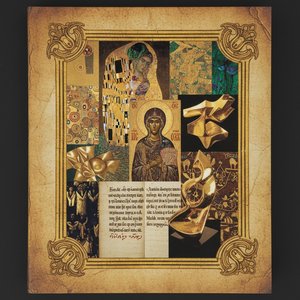
The Allure of Gold in Art History: Symbolism, Technique & Cultural Significance
Explore the rich history of gold in art! Discover symbolism, techniques & cultural significance from ancient civilizations to Klimt's masterpieces. Expert insights for collectors at OriginalUniqueArt.
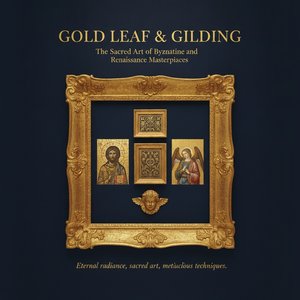
The Sacred Glow: Mastering Gold Leaf and Gilding in Byzantine Art
Explore the divine mastery of Byzantine gold leaf and gilding. Discover how ancient artisans used gold ground and mosaics to create celestial light, a timeless legacy of spiritual splendor and technical excellence in sacred art history.
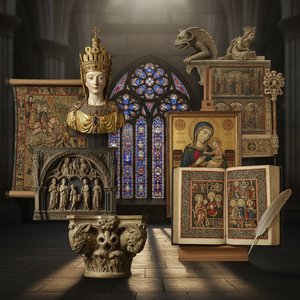
High Medieval Art: 10 Masterpieces That Shaped an Era | OriginalUniqueArt
Journey through High Medieval Art! Explore 10 iconic masterpieces – from Giotto's frescoes to stunning Gothic cathedrals. Discover the stories behind these timeless paintings, sculptures & illuminated manuscripts. Find museum-quality art reproductions at OriginalUniqueArt.com.

Golden Glow: How to Use Metallic Gold Artworks to Elevate Your Home Decor with Timeless Luxury
Discover how to elevate your home with the timeless elegance of metallic gold artworks. From sculptural metal pieces to gilded oil paintings, learn expert interior design tips for integrating luxurious gold accents into your space with sophistication and grace.
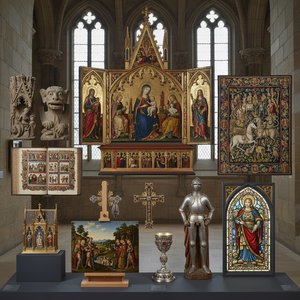
Late Medieval Masterpieces: 10 Artworks That Defined an Era | OriginalUniqueArt
Journey through 10 defining Late Medieval masterpieces – from Giotto's frescoes to Jan van Eyck’s realism. Explore the stories, techniques & vibrant colors of Gothic art. Find museum-quality reproductions and elevate your home decor with OriginalUniqueArt.com! Discover all masterpieces on OriginalUniqueArt.com


