

 Peržiūrėti realaus dydžio版
 Siųsti
 Dalintis
 Išsamiau
 Vadovas

 Atsisiųsti
 Panašūs eksponatai
 Rentgeno spindulių nuotrauka
 Diaporama
 Statistika
Clouds after Storm


 Rodyti daugiau
Giclée / Meno spausdinimas
Muziejų lygio „giclée“ arba drobos spausdinimas: greita gamyba ir lankstios apdailos parinktys. ( Pirkti rankomis tapytą reprodukciją Perejti prie skaitmeninių vaizdų)




P118B €10

P118H €10

P118W €10

P438Z €10

P508JH €12

P508YH €12

P805H €10

P805Z €10

P919BZ €10

P919G €10

P919XJ €10

P959ZH €10

P968JZ €12

W106C €8

W218G €10

W218JH €8

W218Y €10

W307PJ €10

W316G €10

W316PJ €8

W316Y €10

W398PJ €8

W4111J €10

W500HY €15

W500JH €15

W692G €12

W849H €8

W940BG €15

W953PJ €8




Pasirinkite iš mūsų nustatytų dydžių, atitinkančių originalaus meno kūrinio proporcijas.

Įveskite jums reikiamą plotį ir aukštį, kad atvaizdas derėtų prie jūsų rėmo ar sienos. Spausdiną galima tik sumažinti, bet nepadidinti virš originalaus paveikslėlio dydžio, todėl keičiant proporcijas, dalis vaizdo prarandama. Prieš spausdinimą atsiųsime jums skaitmeninį maketą patvirtinimui. Šioje puslapio nuotraukoje matomas pjūvis nėra tikslus – jį rodo tik maketas.
Pristatymas visame pasaulyje () per 2 weeks, o ne įprastas 4/5 savaičių laikotarpis. (22 spalis)

Nemokamas greitasis pristatymas visame pasaulyje

Aukštos kokybės lininis drobė

Pilnas siuntimo draudimas

Muitinės mokesčių grąžinimo garantija

Tikro spalvų atitikimo garantija

100 dienų grąžinimo politika (tik esant įtaigoms)

100% pinigų grąžinimo garantija

Nuolaida dideliems užsakymams
 Stiklo variantas prieinamas tik pasirinkus dydį iki 110 cm

Clouds after Storm
Giclée / Meno spausdinimas
Reprodukcijos dydis
-


Visų pasirinktų variantų kaina
€ 70
A Moment After Tempest: Exploring Charles Harold Davis’s “Clouds after Storm”
The canvas holds an arresting stillness—a deceptive calm that belies the turbulent drama captured within its muted hues. “Clouds after Storm,” painted by Charles Harold Davis in 1900, isn't merely a landscape; it’s a distillation of emotion rendered with meticulous observation and imbued with the spirit of Barbizon Impressionism. Located at the Fogg Art Museum in Cambridge, Massachusetts, this piece offers more than just visual pleasure—it invites contemplation on resilience and the quiet beauty that emerges from adversity.The Landscape as Meditation
Davis’s vision centers around a sprawling expanse of rolling hills punctuated by solitary trees silhouetted against a sky dominated by bruised purple clouds. The storm has passed, leaving behind an ethereal glow – a subtle luminescence that clings to the upper reaches of the cloud formations and casts dappled light onto the tree trunks below. This isn't a depiction of violent upheaval; rather, it’s a careful portrayal of the aftermath, emphasizing the restorative power of nature after periods of disturbance. The artist skillfully employs atmospheric perspective—a technique championed by Barbizon painters—to convey depth and realism, subtly guiding the viewer’s eye into the distance.Barbizon Influence: Precision Meets Impressionistic Light
Davis's artistic journey was profoundly shaped by his formative years in Paris under the guidance of luminaries like Jules Joseph Lefebvre and Gustave Boulanger at the Académie Julian. These masters instilled in him a dedication to anatomical accuracy combined with an embrace of Impressionist principles, specifically capturing fleeting moments of light and color. Unlike earlier Romantic landscapes that prioritized dramatic grandeur, Davis prioritizes nuanced tonal gradations—a hallmark of Barbizon painting—to convey the mood of tranquility and acceptance. The artist’s meticulous brushstrokes meticulously blend pigments to achieve a velvety texture, creating an illusion of palpable airiness.Symbolism Within Serenity
Beyond its aesthetic qualities, “Clouds after Storm” resonates with symbolic significance. The storm represents challenges – hardships endured by humanity—while the subsequent clouds signify renewal and hope. The solitary trees stand as emblems of perseverance, rooted firmly in the earth despite facing external forces. Davis’s deliberate choice of color palette—primarily blues, greens, and muted yellows—contributes to this overarching theme of serenity and spiritual contemplation. These colors evoke feelings of peace and tranquility, mirroring the emotional state conveyed by the scene itself.A Legacy of Quiet Beauty
“Clouds after Storm” exemplifies the enduring appeal of Impressionism’s understated elegance. It serves as a reminder that beauty can be found not only in grand spectacle but also in the subtle nuances of everyday life—the quiet grace of nature following a storm's fury. Its presence within the Fogg Art Museum ensures its continued appreciation by generations to come, cementing Davis’s place as a pivotal figure in the history of landscape painting and demonstrating the transformative power of artistic vision.问答 (or more naturally for a website heading): Klausimai ir atsakymai
Kokio Čarls Haroldas Deivisas kūrybos etapo priklauso „Clouds after Storm“ (1900)?
1900 m. data įtraugia "Clouds after Storm" į Čarls Haroldas Deivisas kūrybinio plėtojimo Mature Impressionism laikotarpį.
Kokiam stiliui priklauso „Clouds after Storm“?
„Clouds after Storm“, autorius – Čarls Haroldas Deivisas priklauso Impressionistic Landscape stiliui. Šis dailės kryptys suteikia šiam kūriniui stilistinį kontekstą.
Kaip aprašoma „Clouds after Storm“, autorius – Čarls Haroldas Deivisas spalvų paletė?
„Clouds after Storm“ spalvos sudaro Earthy paletę. Ši klasifikacija aprašo dominuojančias spalvų grupes.
Autoriaus biografija
ankstyvasis gyvenimas ir mokslas
Charles Harold Davis, amerikiečių landšaftų paveikslų meistras, gimė 1856 m. sausio 7 d. Amesbury mieste, Masačusetsas. Kaip Boston meno muziejaus mokinys, jis 1880 m. buvo išsiųstas į Paryžių tobulinti savo meninį meistriškumą. Dirbdamas Académie Julian mokytojų Jules Joseph Lefebvre ir Gustave Boulanger priežiūroje, Davis sukūrė gilią supratimą apie Europos meno pasaulį.meninis stilius ir įtaginiai veiksniai
Davis kūrybai būdingi rami ir idiliška landšaftų interpretacijos, dažnai su didžiausiu tikslumu užfiksuojant gamtos grožį. Jo laikui Barbizone, kur jis intensyviai tapavo, turėjo itin didelę įtaką jo stiliui, kuris vėliau evoliucionavo link impresionizmo. Šis transformacijos procesas itin ryškiai pasireiškia jo debesuotų peizažų paveiksluose, dėl kurių jis tapo itin garsus.pastebimiausi pasiekimai ir priskyrimai
- 1906 m. tapo pilnu National Academy of Design nariu.
- Gavo sidabro medą 1889 m. Paris parodoje.
- Jo darbai yra pristatyti žinomuose muziejuose, įskaitant Metropolitan Museum of Art (Niujorkas), Corcoran Gallery of Art (Vašingtonas) ir Boston meno muziejus.
palikimas
Davis palikimas yra daug daugiau nei tik jo meniniai prisidėjimai. Jis suvaidė lemiamą vaidmenį 1913 m. įtvirtinant Mystic Art Association, tapdamas viena iš pagrindinių figūrų meno kolonijoje, praturtinančioje Mystic miestą, Konektikute. peržiūrėti Charles Harold Davis paveikslus OriginalUniqueArt: https://OriginalUniqueArt.com/@/charles-harold-davis skaityti daugiau apie Charles Harold Davis „Wikipedia“: https://en.wikipedia.org/wiki/charles_harold_davis
Čarls Haroldas Deivisas
1856 - 1933
Susiję straipsniai

The Hague School: Realism, Atmosphere & the Dawn of Dutch Impressionism
Explore the Hague School's pivotal role in Dutch art history. Discover realism, atmospheric landscapes & its influence on Impressionism. Learn about key artists like Mauve & Maris with OriginalUniqueArt.
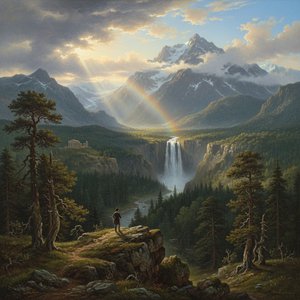
Evoking Nature's Sublime: A Comprehensive Exploration of 19th-Century Landscape Painting
Explore the captivating world of 19th-century landscape painting! Discover renowned artists like Friedrich & Monet, key movements, and find the perfect artwork to bring nature's serenity into your home. Expert insights at OriginalUniqueArt.
The Barbizon School: A Professional Guide to Naturalism and Landscape Mastery for Interior Designers
Explore the Barbizon School's mastery of naturalism. An expert guide for hotel designers and procurement managers on sourcing high-quality landscape reproductions to elevate hospitality and corporate interiors with authentic, large-scale fine art solutions.
The Barbizon School: The Soulful Origins of Impressionism's Natural Light and Atmospheric Mastery
Discover the profound influence of the Barbizon School on Impressionism. Explore how these masters captured natural light and atmospheric beauty through plein air painting, paving the way for Monet and Renoir. A journey into the soulful origins of landscape art history.

Evocations of Place: A Historical Journey Through Landscape Art
Explore the rich history of landscape art with OriginalUniqueArt. Discover renowned artists, movements like Impressionism & tonalism, and expert guidance for collecting timeless pieces. Find your perfect serene escape today!