() ·

A painting made for you, by hand

On the Pasture

Rankų darbo aliejinės reprodukcijos

Rankiniu būdu tapytas aliejus ant droblio jūsų pageidaujamame dydį ir rėmuose – tai mūsų menininkų pagal užsakymą sukurtas darbas. ( Perjungti į spausdinamus版作品 Perejti prie skaitmeninių vaizdų)

Kolekcinio objekto aprašas

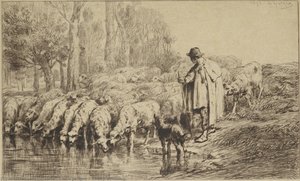
Charles-Émile Jacque's 'On the Pasture' captures a serene rural scene of a man and sheep under a tree, showcasing the Barbizon School’s idyllic landscapes and masterful detail.

Autoriaus biografija

Charles-Émile Jacque (1813-1894): Barbizon mokyklos paveikslastoris, vaizduojantis idiliškus kaimo peizažus, avies ir gyvulius. meistriškas graviruotojas ir viena realizmo veikėjas.

from ·

Chapter 1

How large should it be?

Slide to change the size; the picture on the left shows the frame at its real width. The proportions of the original are kept.

Standartinis dydis
pagal užsakymą
CM
INCH

Pasirinkite iš mūsų nustatytų dydžių, atitinkančių originalaus meno kūrinio proporcijas.

plotis
aukštis

Įveskite jums reikiamą plotį ir aukštį, kad paveikslas atitiktų jūsų rėmą ar sieną. Kadangi šis darbas yra rankinio darbo, siekiant išgauti kitokios formos dydį, paveikslas gali būti šiek tiek didesnis (nuo kraštų bus palikta daugiau erdvės) arba mažesnis – pasirinkite jums patogiausią variantą. Prieš pradedant tapyti, atsiųsime jums skaitmeninį maketą patvirtinimui. Šioje puslapio nuotraukoje matomas vaizdas nėra galutinis rezultatas – jį parodys tik sukurtas maketas.

Chapter 2

How should it arrive?

Choose the edges of the stretched canvas

Choose your frame

Corner sample of the WhiteWrap canvas edge finish, stretched on solidus medžio

**Improved version:**
solidus medis bars
White €1
Corner sample of the BlurSideWrap canvas edge finish, stretched on solidus medžio

**Improved version:**
solidus medis bars
Blurside €1
Corner sample of the ExtendedWrap canvas edge finish, stretched on solidus medžio

**Improved version:**
solidus medis bars
Extended €1
Corner sample of the P118B picture frame: lieto polistirolo detalės, 5 cm wide and 3 cm thick
P118B €10
Corner sample of the P118H picture frame: lieto polistirolo detalės, 5 cm wide and 3 cm thick
P118H €10
Corner sample of the P118W picture frame: lieto polistirolo detalės, 5 cm wide and 3 cm thick
P118W €10
Corner sample of the P438Z picture frame: lieto polistirolo detalės, 5.5 cm wide and 3.5 cm thick
P438Z €10
Corner sample of the P508JH picture frame: lieto polistirolo detalės, 7 cm wide and 3.5 cm thick
P508JH €12
Corner sample of the P508YH picture frame: lieto polistirolo detalės, 7 cm wide and 3.5 cm thick
P508YH €12
Corner sample of the P805H picture frame: lieto polistirolo detalės, 5 cm wide and 3.5 cm thick
P805H €10
Corner sample of the P805Z picture frame: lieto polistirolo detalės, 5 cm wide and 3.5 cm thick
P805Z €10
Corner sample of the P919BZ picture frame: lieto polistirolo detalės, 7 cm wide and 3.5 cm thick
P919BZ €10
Corner sample of the P919G picture frame: lieto polistirolo detalės, 7 cm wide and 3.5 cm thick
P919G €10
Corner sample of the P919XJ picture frame: lieto polistirolo detalės, 7 cm wide and 3.5 cm thick
P919XJ €10
Corner sample of the P959ZH picture frame: lieto polistirolo detalės, 5 cm wide and 3 cm thick
P959ZH €10
Corner sample of the P968JZ picture frame: lieto polistirolo detalės, 6 cm wide and 4 cm thick
P968JZ €12
Corner sample of the W106C picture frame: solidus medžio

**Improved version:**
solidus medis, 5 cm wide and 3 cm thick
W106C €8
Corner sample of the W218G picture frame: solidus medžio

**Improved version:**
solidus medis, 5 cm wide and 3 cm thick
W218G €10
Corner sample of the W218JH picture frame: solidus medžio

**Improved version:**
solidus medis, 5 cm wide and 3 cm thick
W218JH €8
Corner sample of the W218Y picture frame: solidus medžio

**Improved version:**
solidus medis, 5 cm wide and 3 cm thick
W218Y €10
Corner sample of the W307PJ picture frame: solidus medžio

**Improved version:**
solidus medis, 6 cm wide and 3 cm thick
W307PJ €10
Corner sample of the W316G picture frame: solidus medžio

**Improved version:**
solidus medis, 6 cm wide and 3 cm thick
W316G €10
Corner sample of the W316PJ picture frame: solidus medžio

**Improved version:**
solidus medis, 6 cm wide and 3 cm thick
W316PJ €8
Corner sample of the W316Y picture frame: solidus medžio

**Improved version:**
solidus medis, 6 cm wide and 3 cm thick
W316Y €10
Corner sample of the W398PJ picture frame: solidus medžio

**Improved version:**
solidus medis, 5 cm wide and 3 cm thick
W398PJ €8
Corner sample of the W4111J picture frame: solidus medžio

**Improved version:**
solidus medis, 6.5 cm wide and 3.5 cm thick
W4111J €10
Corner sample of the W500HY picture frame: solidus medžio

**Improved version:**
solidus medis, 7 cm wide and 5 cm thick
W500HY €15
Corner sample of the W500JH picture frame: solidus medžio

**Improved version:**
solidus medis, 7 cm wide and 5 cm thick
W500JH €15
Corner sample of the W692G picture frame: solidus medžio

**Improved version:**
solidus medis, 8 cm wide and 4 cm thick
W692G €12
Corner sample of the W849H picture frame: solidus medžio

**Improved version:**
solidus medis, 5 cm wide and 3 cm thick
W849H €8
Corner sample of the W940BG picture frame: solidus medžio

**Improved version:**
solidus medis, 7.5 cm wide and 4.5 cm thick
W940BG €15
Corner sample of the W953PJ picture frame: solidus medžio

**Improved version:**
solidus medis, 6 cm wide and 3.5 cm thick
W953PJ €8
Corner sample of the H24-GOLD picture frame: medžio skulptūra su gipso sluosniu, 10 cm wide and 6 cm thick
H24-GOLD €30
Corner sample of the H24-SILVER picture frame: medžio skulptūra su gipso sluosniu, 10 cm wide and 6 cm thick
H24-SILVER €30
Corner sample of the H36-GOLD picture frame: medžio skulptūra su gipso sluosniu, 15 cm wide and 6.5 cm thick
H36-GOLD €45
Corner sample of the H36-SILVER picture frame: medžio skulptūra su gipso sluosniu, 15 cm wide and 6.5 cm thick
H36-SILVER €45
Rėmo peržiūra
Įrėmintas

Moulding: . Overall size with the frame: .

Chapter 3

Who paints it, and should anything change?

Examples of what can be changed: Replace face with customer photo; Add pet (e.g., replace cat with dog); Include hidden message in background; Change background landscape or elements.
After order, OriginalUniqueArt.com team will email client for instructions and provide a mockup preview

Pristatymas visame pasaulyje () per 3–4 savaites, o ne įprastai – per 5 savaites. (2 lapkritis). Kokybė lieka nepakeičiama.

Chapter 4

The finishing touches

A nameplate, as in a museum?

Išgraviruotos bronzinės plokštelės detalės

This elegant plaque features the artist's name and the title of the artwork, finely engraved for a timeless presentation.

It is made from bronze with a refined, elegant finish. The text is precisely laser-engraved for a sharp and permanent result. Measuring 9x2 cm, the plaque is compact yet easy to read. It's built to be durable and scratch-resistant, offering a professional, museum-quality look. Mounting is simple thanks to the included adhesive backing.

Skaidrios akrilo plokštelės informacija

The plaque includes essential engraved details such as the artist's name, the title of the artwork, the date it was created, the type of media used-like oil on canvas or watercolor-a brief description of the piece, and a QR code that links to the complete artwork information.

It is crafted from clear acrylic, offering a sleek, modern appearance. The text is UV-engraved in black to ensure strong visual contrast. With a size of 10x15 cm, it ensures optimal readability. It comes equipped with two metal hooks for secure wall mounting. The plaque is designed to be weather-resistant, making it suitable for various environments, and it includes interactive features that work seamlessly with smartphone scanning.

Juodos akrilo plokštelės informacija

This elegant plaque includes engraved information such as the artist's name, the title of the artwork, the date it was created, the type of media used (like oil on canvas or watercolor), a short description of the artwork, and a QR code for quick access to more information.

The plaque itself is made from refined black acrylic with a premium finish. The text is laser-engraved in white for high contrast and readability. Its size is 10x15 cm, designed to be easy to read. It comes with two metal hooks for professional mounting. The design is sleek and fits any interior style. It is also weather-resistant and durable, with built-in digital integration for mobile compatibility.

A protective varnish?

When do you need it?

Chapter 5

Your painting, as you ordered it

On the Pasture

Reprodukcijos technika

Reprodukcijos matmenys

-

Aukščiausios klasės meistras

Daugiau detalių, meistriškumo ir papildomo gamybos laiko

-

Reprodukcijos rėmėjimo parinktys

-

-

Dėl meno kūrinių ar reprodukcijų, kurių bet kuri pusė yra didesnė nei 105 cm (apie 41 inch), rėmas bus siunčiamas kaip išskaidytas surinkimo rinkinys. Šis metodas užtikrina saugų pristatymą ir apsaugo nuo transportavimo metu galimos žalos.

Reikalingas profesionalus surinkimas – tai nėra „pasidaryk pats“ (DIY) produktas.
Rinkinys turi būti surinktas, o drobė išplėsta naudojant patyrį profesionalų rėmininką, medžio klijus (nėra įtraukti į rinkinį), drobės plėšimo kleslę bei presas, kad rėmo rėžiai išliktų tiesūs, kol klijai išdžiūvus. Netinkamas surinkimas arba netolydus drobės įtampa gali negrįžtamai sugadinti meno kūrinį, todėl šie atvejai nėra užtraukiami mūsų garantijos.

  • Į komplektą įeina visi vientisos medienos elementai, tiksliai išpjauti pagal dydį.

  • Surmontinama naudojant pridėtus varžtus bei papildomai reikalingą medžio kliją kampų jungtims, kuris nėra pridėtas ir turi būti parinktas rėmininkui.

  • Reikalingi profesionalūs įrankiai, kurie nėra įtraukti į rinkinį: drobės kėlimo plytelės (stiprintuvai) ir klemiai, laikantys rėmo strygius tiesiu kampu, kol džiūsta lipas.

Svarbu:
Kampų jungtims reikalingi medžio klijai, barams reikia laikyti naudojant presas, kol klijai visiškai išdžiūvės, o surinktam rėmui įtempiamai privilgti būtinos drobės įtempimo plytযুক্ত. Šios priemonės į rinkinį neįtrauktos. Prieš užsakydami šio dydžio rinkinį, rekomenduojame pasimalkoti patyrusiu rėmų meistru.

Pavadinimo lentelė

-

-

Apsauginis lakas

Blizgus lakas (ryškina spalvas, saugo nuo šviesos ir drėgmės)

-

Personalizuoti kūrinį

Ką galima pakeisti (pavyzdžiui): pakeisti veidą klientui skirta nuotrauka; pridėti augintinį (pvz., katę pakeisti šuniu); įtraukti paslėptą žinutę fone; pakeisti fono kraštovaizdį ar elementus.

-

Skubiai

Pristatymas visame pasaulyje () per 3–4 savaites, o ne įprastai – per 5 savaites. (2 lapkritis). Kokybė lieka nepakeičiama.

-

Skubus pristatymas

Pristatymas visame pasaulyje () per 5 weeks. (9 lapkritis).

Įskaičiuota

Bendroji kaina

€ 267

Visos kainos suma € 267

Stiklo variantas prieinamas tik pasirinkus dydį iki 110 cm

Included with every order

  • Nemokamas greitasis pristatymas visame pasaulyje
  • Aukštos kokybės lininis drobė
  • Pilnas siuntimo draudimas
  • Muitinės mokesčių grąžinimo garantija
  • Tikro spalvų atitikimo garantija
  • 100 dienų grąžinimo politika (tik esant įtaigoms)
  • 100% pinigų grąžinimo garantija
  • Nuolaida dideliems užsakymams

A Pastoral Moment Frozen in Time: Charles-Émile Jacque’s “On the Pasture”

Charles-Émile Jacque's "On the Pasture" is more than just a depiction of a rural scene; it’s a poignant meditation on tranquility, connection to nature, and the quiet dignity of everyday life. Painted in 1860 during his time with the Barbizon School, this oil on canvas transports us to a sun-drenched field in France, where a solitary figure finds solace beneath the shade of an ancient tree while sheep graze peacefully around him. The painting immediately evokes a sense of serenity—a deliberate antidote to the burgeoning industrialization and urban sprawl that were rapidly reshaping 19th-century Europe.

Jacque’s artistic journey was surprisingly unconventional, beginning not with brushes and canvas but with the meticulous craft of map engraving for the French army. This early training instilled in him a remarkable attention to detail, a precision of observation, and an appreciation for capturing subtle nuances – qualities that would later become hallmarks of his pastoral paintings. He transitioned into painting after serving his military duty, initially exploring illustration before finding his true voice within the Barbizon School’s embrace of direct observation and rejection of academic conventions.

The Barbizon School: A Return to Nature

To understand “On the Pasture,” one must appreciate the context of the Barbizon School. Emerging in the 1850s, this movement represented a deliberate rebellion against the rigid formality of the French Salon system and the prevailing academic style. Artists like Jacque, Millet, and Corot sought to capture the essence of rural France—its landscapes, its people, and its rhythms—with an unprecedented level of realism and immediacy. They eschewed studio work in favor of *plein air* painting, directly observing nature and translating it onto canvas with bold brushstrokes and a focus on capturing light and atmosphere.

Unlike the idealized landscapes favored by earlier Romantic painters, the Barbizon School’s depictions were often rough-hewn and unpolished. Jacque's work is particularly notable for its earthy palette—a symphony of muted greens, browns, and ochres—that perfectly captures the weathered beauty of the French countryside. The composition itself is deceptively simple: a central tree acting as a visual anchor, framing the scene and drawing the viewer’s eye to the solitary figure and the grazing sheep.

Symbolism and Emotional Resonance

The lone man beneath the tree isn't merely an observer; he embodies a quiet contemplation, a connection to something larger than himself. He is not actively engaged in labor or social interaction—rather, he seems lost in thought, absorbing the peace of the natural world. The sheep, symbols of innocence and simplicity, further reinforce this theme of pastoral harmony. The painting’s emotional impact is profoundly calming; it invites us to slow down, breathe deeply, and appreciate the beauty of a moment suspended in time.

Furthermore, Jacque's work reflects a broader cultural shift—a growing awareness of the importance of rural life and a yearning for an escape from the pressures of modern society. The painting speaks to a desire for authenticity, for connection with the land, and for a simpler way of being.

Technical Details and Legacy

Jacque’s masterful technique is evident in his skillful rendering of texture—the rough bark of the tree, the soft wool of the sheep, the undulating grass of the field. He employs loose, expressive brushstrokes that convey both a sense of immediacy and a deep understanding of light and shadow. The painting's size – approximately 81 x 65 cm – allows for a remarkable level of detail while maintaining an overall feeling of spaciousness and tranquility.

“On the Pasture” remains a powerful example of Barbizon School art, showcasing Jacque’s unique ability to capture the essence of rural France. It's a timeless depiction of human connection with nature, offering a poignant reminder of the beauty and serenity that can be found in the simplest of moments. Reproductions of this evocative work continue to resonate with viewers today, transporting them to a world of quiet contemplation and pastoral charm.

Klausimai ir atsakymai

Kada ir kokiais medžiagomis buvo sukurta „On the Pasture“?

„On the Pasture“ sukurtas 1860 m., naudojant Acrylic On Canvas.

Ar „On the Pasture“ – Karolis Emilė Žak yra žinomas kūrinys?

„On the Pasture“ – Karolis Emilė Žak populiarumumo lygis yra Recognized.

Koks kontrastas yra darbe „On the Pasture“ – Karolis Emilė Žak?

Kūrinio „On the Pasture“ – Karolis Emilė Žak kontrasto lygis yra Statement.

More about this painting

Peržiūrėti realaus dydžio版 Peržiūrėti AR realybėje Perjungti į spausdinamus版作品 Perejti prie skaitmeninių vaizdų Pasidalinti
Išsamiau Vadovas Pridėti į mėgstamiausius Atsisiųsti Panašūs eksponatai Rentgeno spindulių nuotrauka Automatinė diorama Q&A Statistika

In numbers

  • 1860the year it was painted
  • 29frames to choose from
  • standard sizes, in its own proportions
  • 5weeks to paint and deliver it
Karolis Emilė Žak

Karolis Emilė Žak

1813 - 1894, Prancūzija

Quick facts about Karolis Emilė Žak

  • Artistic Movement Or Style: Barbizon mokykla
  • Artists Or Movements Influenced By This Artist: ['Realizmas']
  • Artists Who Influenced This Artist: ['Adriaen van Ostade']
  • Date Of Birth: 1813
  • Date Of Death: 1894
  • Full Name: Charles-Émile Jacque
  • Nationality: Prancūzų
  • Notable Artworks:
    • Mažasis mėlynas berniukas
    • Aviary
    • Auginėja
  • Place Of Birth: Paris, Prancūzija

Autoriaus biografija

Gyvenimas, į šaknus įsišaknijęs prancūzių kaimo gamtoje

Charles-Émile Jacque, gimęs Paryzjuje 1813 m., nebuvo paskirtas konvencionaliam menininkui keliui. Jo ankstyvasis gyvenimas pasisuko netikėta kryptimi – jis septynis metus tarnavo Prancūzijos armijoje. Tačiau net ir griežtoje karinio gyvenimo struktūroje jo prigimtas talentas rado išraišką – ne iškart per tapybą, o per kruopštį žemiepiešio graviravimo meistriškę. Šis bazinis mokymasis, reikalaujantis tikslumo ir stebėjimo, vėliau tapo neįtikėtinai svarbus jo meninei plėtrai, įsidėliodamas dėmesį detalėms, kuris tapo jo kūrybos žyminėms požymio. Tai buvo neįtikėtinai neįprastas pradžia paveikslui, kuris vėliau tapo idilėska prancūziško kaimo grožio simboliu, tačiau tai atskleidžia neįtikėtiną Jacque gebėjimą prisitaikyti ir jo prigimtį kūrybai. Palikęs tarnybą, jis trumpam užsiėmė iliustracijomis ir karikatūra, prisidėdamas prie parysio žurnalų, kol pagaliau rado savo tikrąją pašaukimą ešliuose ir tapyboje.

Barbizonos mokyklos ir pastoralinės vizijos priėmimas

XIX amžiaus viduryje Jacque buvo pragnetęs Barbizonos – mažo kaimelio, tapusio revoliucinės meno judėjimo epizentru. Bėgdamas nuo Paryziumą k skirtingais choleros epidemijomis, jis prisijungė prie Jean-François Millet ir kitų panašios sureikmingumo nuotaikos menininkų, ieškančių įkvėpimo tiesiog gamtoje. Tai pažymėjo ryškų atsitiktinį posūkį nuo akademinių konvencijų link tiesiškesnio, realistiškesnio gyvenimo vaizdinio. Jacque pilnai priėmė šį naują požiūrį, pasitenkinęs savo gyvenimu užfiksuoti kaimo egzistencijos esmę – tylią piemenų orumą rūpinčiais savo avinų stada, švelnų ūkinio darbo ritmą, paprastą gyvulių grožį saulės apšvitintose pievose. Jo paveikslai nebuvo tik scenų vaizdiniai; jie buvo prisipildę gilaus ramybės ir harmonijos pojūčio, atspindėdami gilią pagarbą gamtos pasauliui. Jis ne tiesiog tapė avinus ar irtas; jis perdavė jausmą, atmosferą – pagarbą pastoraliam gyvenimui, kuri giliai rezonavo su žiūrovais.

Mediumų meistras: Tapyba ir grafika

Jacque meninė meistriškė išsivystė ne tik tapybos srityje. Jis tapo garsėjantis ešlio ir graviravimo meistru, atgaivinęs XVII amžiaus technikas ir plečiant grafikos ribas. Jo ešliai buvo pagalboti dėl savo drąsos ir gerai sukoncipuotos tematikos, pelnydami pagarbą tokių kritikų kaip Charles Baudelaire. Henri Béraldi išskyrė dvi skirtingas periodus Jacque grafiniame darbe: ankstyvąją fazę, įkvėptą olandų vignettes, pasižyminčią spontoniškumu, ir vėlesnį laikotarpį, žymimą didesniais, detalesniais plokštėmis, demonSTRUojančiomis kruopštumą. Šis dvigubas meistriškumas – tiek šluostės, tiek burino – leido jam pasiekti platesnę auditoriją ir užtvirtinti savo reputaciją kaip svarbios figūros meno pasaulyje. Jis nematė tapybos ir grafikos kaip atskirų disciplinų, o kaip papildomus kelius savo meninei vizijai išreikšti. Jo iliustracijos literatūros klasikai, įskaitant Goldsmith's The Vicar of Wakefield ir Wordsworth’s Picturesque Greece版, dar labiau parodė jo universalumą ir gebėjimą.

Palikimas ir ilgalaikė įtaka

Charles-Émile Jacque mirė 1894 m., palikęs turtingą meninį palikimą, kuris ir šiandien sužavėtų žiūrovus. Jis grąžino labai svarbų vaidmenį formuojant realizmo plėtrą prancūzių mene, paveddamas kelią būsimoms menininkų kartoms, siekiantms gyvenimą vaizduoti sąžiningai ir jautriai. Jo atsidavimas vaizduojant kaimo gyvenimą pakėlė žanrinę tapybą – kasdienybės escenas – į svarbią vietą meno peizaže.
  • Ešlio atgimimo pionierius: Jacque XVII amžiaus ešlio technikų atgaivinimas reikiamai paveikė grafiką.
  • Įtaka Milletui: Jo ankstyvasis darbas ir ešliai giliai paveikė jo draugą ir Barbizonos mokyklos kolegą, Jean-François Millet.
  • <Kaimo gyvenimo šlovininkas: Jis amžinuja prancūziško kaimo gyvenimo grožį ir orumą, sukuriant ilgalaikį vizualinį įrašą nykstančiam būvynei.
Jacque tapyba ir graviūra siūlo daugiau nei tik vaizdingas vaizdus; jos suteikia langą praėjusiems laikams, kvėdami mus apsvarstyti neatsiejamą ryšį tarp žmogaus ir gamtos. Jo kūriniai išlieka įrodymu apie meno galią užfiksuoti ne tik tai, ką matome, bet ir tai, kaip jaučiame.

Trumpa informacija

  • Location: Szépmûvészeti Múzeum
  • Subject or theme: Rural life
  • Title: On the Pasture
  • Artist: Jacque, Charles-Émile
  • Year: 1860

Karo viktorina

Kiekviename klausime yra tik vienas teisingas atsakymas.

Klausimas 1:
What is the primary subject depicted in Charles-Émile Jacque’s painting, ‘On the Pasture’?
Klausimas 2:
In what artistic movement was Charles-Émile Jacque primarily associated?
Klausimas 3:
According to the provided information, what was Charles-Émile Jacque’s early career before pursuing painting?
Klausimas 4:
What year does the description state that Charles-Émile Jacque was born?
Klausimas 5:
The description mentions that Jacque’s work influenced Jean-François Millet. What characteristic of Jacque's style is highlighted in this connection?
Tyrinėkite meno kūrinius, suskirstytus pagal temas, stilius ir savybes.