
 Peržiūrėti realaus dydžio版
 Pasidalinti
 Dalintis
 Išsamiau
 Vadovas

 Atsisiųsti
 Panašūs eksponatai
 Rentgeno spindulių nuotrauka
 Automatinė diorama
 Q&A
Q&A Statistika
Picos de Europa

- 31.0 x 41.0 cm


 Skaityti daugiau
Gaukite spausdinimui paruoštą failą, kurio kokybė gerokai viršija internetinę peržiūrą. Kiekvienas mūsų parduodamas skaitmeninis vaizdas yra ištrauktas iš aukštos raiškos pagrindinio failo mūsų duomenų bazėje — paprastai jis siekia nuo 5 000 iki 15 000 pikselių plotio — todėl galite drąsiai spausdinti didelius formatus, apkirpti vaizdą ar reprodukcija užtikrins visas smulkias detales.
Mūsų studijoje nė viena kopija nelieka neapdorota. Skaitmeninio vaizdo ekspertas, lygiu su originaliu paveikslu, patikrina spalvas ir, jei reikia, jas koreguoja, o tada profesionaliais retušavimo įrankiais padidina aiškumą bei detales — visada išlaikydamas ištikimybę autoriaus teptuko traukoms ir stiliui. Rezultatas – vaizdas, kuris atrodo kaip tikras paveikslas, o ne kaip su filtrais apdorotas skenavimas.
Patvirtinate prieš užsakymo pabaigą: mūsų ekspertas per 72 valandas el. laišku atsiųsta vaizdą jūsų peržiūrai. Nepasitenkinate rezultatu? Paprašykite patobulinimų ar pataisymų arba prašykite pinigų grąžinimo, jei kokybė neatitinka jūsų lūkesčių.
Ši kokybė yra patikima leidybos įstaigoms, dizaino studijoms, galerijoms ir spaudos įmonėms.
Skaitmeninis vaizdas
Atsisiųskite didelės raiškos failą asmeniniam naudojimui, spausdinimui ir kūrybiniams projektams. ( Perjungti į spausdinamus版作品 Pirkti rankų darbo tapybą)
Kiekvieną skaitinio vaizdo užsakymą papildė
Profesionalus skaitmeninis vaizdų pristatymas, garantuotas
Pasirinkę OriginalUniqueArt.com, jūs ne tik gaunate paveikslėlį – jūs gaunate profesionaliai patobudintą skaitmeninį kūrinį, sukurtą itin tikniai ir užtikrinantį pasitenkinimą. Štai viską, kas automatiškai pritékia jūsų užsakymui:

Greitas pristatymas el. paštu
Jūsų aukštos raiškos skaitmeninis vaizdo failas bus išsiųstas el. paštu per 72 valandas nuo užsakymo – jis bus paruoštas naudoti be jokių papildomų veiksmų.

Dirbtiniu intelektu tobulintas skaitmeninis failas
Jūsų meno kūrinys profesionaliai optimizuojamas naudojant pažangius dirbtinio intelekto įrankius ir rankinį redagavimą, užtikrinant maksimalią detalę, aiškumą ir spalvų tikslumą.

Nemokamas visam laikui pakartotinis siuntimas
Atsitiktinai ištrytikote ar praradote savo failą? Nebijokite – bet kuriuo metu atsiųsime jį jums vėl nemokamai.

Jokio importo mokesčio – niekada
Mėgaukitės savo meno kūrynu be jokių muitinės mokesčių, įkainų ar pristatymo išlaidų – skaitiniai failai visada yra neapmokestinami.

Spalvų tikslumo garantija
Naudodami profesionalią įrangą ir spalvų valdymo sistemas, užtikriname, kad jūsų skaitmeninis vaizdas kuo tiksliau atspindėtų originalias spalvas.

100 dienų patikimumo garantija
Jei nebuvosite patenkinti įsigyto skaitmeninio vaizdo, mes jį tališkai koreguosime arba grąžinsime 100% sumą per 100 dienų – be jokių klausimų.

100% pinigų grąžinimo garantija
Nesitenkinate? Gaukite visą sumokėtą sumą per 100 dienų nuo skaitmeninio failo gavimo – be jokių papildomų klausimų.

Nuolaidos dideliems užsakymams
Pirkti 3 nuotraukas – 10% nuolaida – Pirkti 5 – 15% nuolaida – Pirkti 10 ir daugiau – 20% nuolaida. Puikiai tinka kūrybiniams projektams, galerijoms bei agentūroms.
A Breath of Alpine Majesty
In the quiet majesty of Picos de Europa, we encounter more than just a landscape; we enter a profound dialogue between the earth and the sky. Painted in 1874 by the master of Spanish realism, Carlos de Haes, this work captures the rugged, untamed spirit of one of Spain's most iconic mountain ranges. The scene unfolds with a breathtaking sense of scale, where two prominent peaks rise through a veil of drifting clouds, their slopes draped in a lush, verdant tapestry of greenery. As the eye wanders across the canvas, it discovers a delicate balance of textures—from the soft, ephemeral movement of the sky to the solid, enduring presence of the ancient stone and scattered trees that anchor the composition.
The painting serves as a masterful window into the en plein air tradition. De Haes, influenced by his Flemish training under Joseph Quinaux, brings an unparalleled level of observational truth to this piece. Every brushstroke feels intentional, contributing to a sense of depth that pulls the viewer into the cool, mountain air. The interplay of light and shadow across the undulating terrain creates a dynamic atmosphere, where the clouds do not merely sit in the sky but seem to dance around the summits, suggesting the fleeting, ever-changing nature of the natural world.
The Legacy of Realism and Natural Truth
To understand Picos de Europa is to understand the pivotal moment in art history when painters moved away from idealized, studio-bound fantasies toward a sincere devotion to nature. Carlos de Haes was a pioneer of this movement in Spain, bridging the gap between Northern European precision and the vibrant, sun-drenched landscapes of his adopted home. This particular work exemplifies his ability to capture the geological soul of a place. There is no unnecessary drama here—only the quiet, powerful reality of the mountains, rendered with a meticulousness that honors the true character of the landscape.
For the discerning collector or interior designer, this reproduction offers a sophisticated focal point that brings an element of organic tranquility to any space. The lush greens and earthy tones provide a grounding presence, making it an ideal selection for rooms designed for contemplation or refined elegance. It is not merely a decoration; it is an invitation to pause and reconnect with the sublime beauty of the natural world, offering a timeless sense of peace that transcends the modern era.
Klausimai ir atsakymai
Kokiam meno stiliui priklauso „Picos de Europa“ – Carlos de Haes?
„Picos de Europa“ – Carlos de Haes priklauso Realism stiliui. Ši dailės kryptis suteikia kūriniui stilistinį kontekstą.
Kokia technika sukurta „Picos de Europa“ – Carlos de Haes?
Carlos de Haes kūriniui „Picos de Europa“ panaudojo Oil techniką. Ši technika apibrėžė originalaus kūrinio medžiaginę prigimtį.
Kaip galiu įsigyti „Picos de Europa“ – Carlos de Haes skaitmeninį vaizdą?
„Picos de Europa“ galima įsigyti kaip aukštos raiškos skaitmeninio vaizdo atsisiuntimas, tiesiogiai savo Skaitmeninis vaizdas puslapio.
Autoriaus biografija
A Pioneer of Spanish Realist Landscape Painting
Carlos de Haes, born in Brussels in 1829 and later a defining figure in Spanish art, occupies a unique position as a bridge between Northern European landscape traditions and the burgeoning realist movement within Spain. His journey began not amidst artistic circles, but within a family of bankers, a background that would subtly inform his meticulous approach to observation and representation. The relocation to Málaga in 1835 proved pivotal, immersing the young artist into a distinctly Spanish light and culture that would become the enduring subject of his work. Early training under Luis de la Cruz y Ríos, a neoclassical portraitist, provided a foundational skill set, but it was his subsequent studies with Joseph Quinaux, a Flemish landscape painter, that truly ignited his artistic path. Quinaux instilled in him the revolutionary practice of *en plein air* painting – working directly from nature – a method that would become synonymous with de Haes’s name and fundamentally alter Spanish art education. These formative years were further enriched by extensive travels throughout Europe—Holland, France, and Germany—exposing him to diverse artistic styles and broadening his understanding of landscape representation.Forging a New Path in Spain
Returning to Spain in 1855, de Haes actively engaged with the National Exhibitions of Fine Arts, steadily gaining recognition for his increasingly sophisticated landscapes. However, it was his appointment as professor of landscape painting at the Real Academia de Bellas Artes de San Fernando in 1857 that cemented his legacy. This wasn’t merely a professional advancement; it was a paradigm shift. De Haes championed *en plein air* painting and direct observation from nature—a radical departure from the then-prevalent studio-bound academic tradition. He became an Academician at the Royal Academy in 1860, further solidifying his influence. His teaching extended far beyond technical instruction; he fostered a generation of landscape painters who embraced outdoor work and sought to capture the essence of Spain’s diverse topography. Among his most notable students were Jaime Morera, Aureliano de Beruete, and Darío de Regoyos—artists who would themselves become leading figures in Spanish Realism. While *La Canal de Mancorbo en los Picos de Europa*, submitted to the 1876 National Exhibition, didn’t initially receive a prize, its profound impact was undeniable. The painting's realistic depiction of the rugged Spanish landscape resonated deeply and was subsequently acquired by the Museo del Prado, marking a significant moment in the acceptance of landscape as a serious genre within the Spanish art world.Style, Influences, and Artistic Evolution
De Haes is fundamentally recognized as a Realist painter, prioritizing accurate representation over romanticized ideals. His early work reflects this commitment, meticulously capturing the details of light, atmosphere, and terrain. However, his style wasn’t static. Over time, it evolved towards the aesthetic principles of the Barbizon School, characterized by looser brushwork and an increased emphasis on conveying atmospheric effects. This shift is evident in a growing sensitivity to mood and nuance within his landscapes. The influence of Joseph Quinaux remained paramount throughout his career, continually reinforcing the importance of direct observation. Beyond this foundational mentorship, de Haes drew inspiration from broader European landscape traditions encountered during his travels, synthesizing these influences into a uniquely Spanish vision. He wasn’t simply replicating what he saw; he was interpreting it through a lens shaped by his Belgian origins and his deep immersion in the Spanish environment. This synthesis allowed him to capture “something of a particularly Spanish ‘essence’” as contemporaries noted—a quality that distinguished his work from purely imitative representations.A Lasting Legacy
Carlos de Haes left behind an extensive body of work – approximately 4,000 paintings and sketches – now scattered across various institutions including the Carmen Thyssen Museum in Málaga, the Lleida Museum, and, most notably, the Museo del Prado. His influence on Spanish landscape painting remains profound. He not only revolutionized artistic practice through his advocacy of *en plein air* painting but also elevated the status of landscape within the broader art world. The generation of artists he mentored continued to build upon his foundations, further developing Spanish Realism and establishing a vibrant tradition of outdoor painting. His dedication to depicting Spain’s natural beauty with accuracy and sensitivity continues to inspire artists today. Even literary figures recognized his contribution; Rubén Darío acknowledged Haes's artistic merit, cementing his place in Spanish cultural history. La Canal de Mancorbo en los Picos de Europa, remains a testament to his skill—a powerful example of how meticulous observation and a deep connection to the land can result in art that transcends mere representation and captures the very soul of a nation.Exploring De Haes’s Work Today
Fortunately, experiencing the artistry of Carlos de Haes is more accessible than ever. OriginalUniqueArt.com offers meticulously hand-painted reproductions of his iconic works, allowing art enthusiasts to bring the beauty and realism of Spanish landscapes into their own homes. From detailed copies of Los Picos de Europa, capturing the grandeur of the mountains, to serene depictions like Left Channel, showcasing his mastery of light and atmosphere, these reproductions offer a tangible connection to a pivotal figure in art history. Exploring his oeuvre through platforms like OriginalUniqueArt provides not only aesthetic pleasure but also an opportunity to appreciate the enduring legacy of a painter who dared to challenge convention and capture the essence of Spain with unparalleled skill and sensitivity.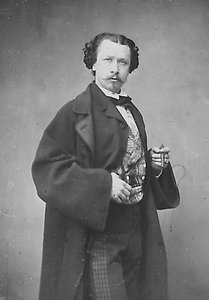
Carlos de Haes
1829 - 1898 , Belgium
Trumpa informacija
- Full Name: Carlos Sebastián Pedro Hubert de Haes
- Nationality: Spanish
- Date Of Birth: 1829
- Date Of Death: 1898
- Place Of Birth: Brussels, Belgium
- Notable Artworks: ['La Canal de Mancorbo en los Picos de Europa']
- Artistic Movement Or Style: Realism
- Artists Who Influenced This Artist: ['Joseph Quinaux']
- Artists Or Movements Influenced By This Artist:
- Jaime Morera
- Aureliano de Beruete
- Darío de Regoyos