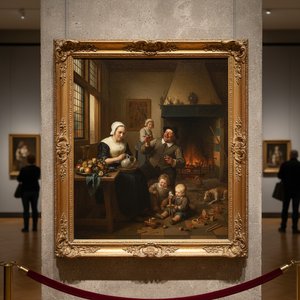
Diogenes Seeks a True Man
Oil On Canvas
WallArt
Baroque
1652
Early Modern
76.0 x 104.0 cm
Het Mauritshuis
Rankų darbo aliejinės reprodukcijos
Rankiniu būdu tapytas aliejus ant droblio jūsų pageidaujamame dydį ir rėmuose – mūsų menininkų darbas pagal užsakymą. ( Pirkti spaudinį
Pirkti vaizdą)
P118B $10
P118H $10
P118W $10
P438Z $10
P508JH $12
P508YH $12
P805H $10
P805Z $10
P919BZ $10
P919G $10
P919XJ $10
P959ZH $10
P968JZ $12
W106C $8
W218G $10
W218JH $8
W218Y $10
W307PJ $10
W316G $10
W316PJ $8
W316Y $10
W398PJ $8
W4111J $10
W500HY $15
W500JH $15
W692G $12
W849H $8
W940BG $15
W953PJ $8
Pasirinkite iš mūsų nustatytų dydžių, atitinkančių originalaus meno kūrinio proporcijas.
Galite įvesti savo matmenis, kad jie atitiktų konkretų rėmą ar erdvę. Jei pasirinktas dydis neatitinka originalaus paveikslėlio proporcijų, mes arba apkropsime meno kūrinį, arba papildysime tapybą rankomis dažytい elementais. Prieš pradėdami gamybą, jūsų patvirtinimui atsiųsime skaitmeninį maketą.
Atkreipkite dėmesį, kad ekrane rodomas vaizdas neatspindi tikrojo apkarpymo ar papildymo. Tik maketas tiksliai parodys galutinę kompoziciją.
Nors galima rinktis ir individualius dydžius, rekomenduojame pasirinkti matmenis iš nustatytos sąrašo, kad būtų išlaikytos originalios proporcijos.
Gavus užsakymą, OriginalUniqueArt.com komanda susisieks su klientu el. paštu dėl instrukcijų ir pateiks maketo pavyzdį.
Pristatymas visame pasaulyje () per 3–4 savaites, o ne įprastai – per 5 savaites. (16 rugpjūtis). Kokybė lieka nepakeičiama.
Nemokamas greitasis pristatymas visame pasaulyje
Aukštos kokybės lininis drobė
Pilnas siuntimo draudimas
Muitinės mokesčių grąžinimo garantija
Tikro spalvų atitikimo garantija
60 dienų grąžinimo politika (tik esant gamyklinėms defektams)
100% pinigų grąžinimo garantija
Nuolaida už kelias reprodukcijas
Diogenes Seeks a True Man
Reprodukcijos technika
Reprodukcijos matmenys
-
Galutinė kaina
$ 300
Kūrinio aprašymas
A Glimpse into Social Dynamics: Diogenes Seeks a True Man
To stand before this canvas is to step directly into the vibrant, sometimes chaotic heart of 17th-century Dutch social life. Caesar van Everdingen’s depiction, "Diogenes Seeks a True Man," is far more than a mere gathering of figures; it is a richly textured tableau vivant, capturing a moment charged with human interaction and underlying philosophical tension. The scene unfolds before what appears to be the facade of a church, suggesting that even in moments of communal celebration or inquiry, the weight of belief and community structure looms large. Observe the central grouping: individuals dressed in varying degrees of formality—some sporting modern ties, others clad in styles hinting at different strata of society—all converging into a dynamic knot of humanity.
Mastery of Genre and Atmosphere
Van Everdingen, known for his keen eye for genre scenes and portraiture, employs a masterful technique that breathes life into every corner of the composition. The brushwork, characteristic of the Dutch Golden Age masters, is both meticulous in its detail—noticeable in the folds of clothing or the sheen on the horse’s coat—and remarkably loose when capturing the ephemeral quality of light and movement. The inclusion of animals, particularly the two watchful dogs flanking the scene and the stately presence of the horse near the center, grounds the human drama within a tangible, lived-in world. This skillful blending of portraiture with genre elements allows the viewer to feel not just what happened, but the very air that hung between these assembled souls.
The Echoes of Philosophy: Symbolism in the Crowd
The title itself, "Diogenes Seeks a True Man," immediately elevates the painting from simple social commentary to profound allegory. Diogenes, the Cynic philosopher, represents radical authenticity and skepticism toward societal artifice. His presence within this bustling crowd—a group seemingly preoccupied with wine, fashion, or mere socializing—creates an immediate visual friction. The man holding the wine glass seems caught between participation and contemplation. This tension suggests that the search for genuine connection, for truth unvarnished by social expectation, remains a timeless human quest. It invites us, the modern viewer, to question our own gatherings: are we truly connecting, or merely performing for an audience?
A Collector's Perspective on Reproduction
For those seeking to bring this sophisticated narrative into your home or gallery space, understanding the depth of Van Everdingen’s vision is key. A high-quality reproduction allows you to possess a piece that speaks volumes without demanding the reverence reserved for an original masterpiece. The scale of 76 x 104 cm ensures that the complexity of the crowd and the subtle gestures are visible up close, while its overall composition maintains breathtaking impact from across a room. It serves not only as decorative art but as a sophisticated conversation starter—a piece that rewards prolonged study and thoughtful discussion among admirers.
Autoriaus biografija
A Legacy of Light and Line: The Life of Caesar van Everdingen
In the golden era of Dutch painting, where the interplay of light and shadow defined a nation's visual identity, Caesar van Everdingen emerged as a master of subtle emotion and atmospheric depth. Born around 1616 in the historic city of Alkmaar, Netherlands, his artistic journey was deeply intertwined with the prestigious lineage of his family. While often discussed alongside his celebrated brothers, Allart and Jan, Caesar carved out a distinct space for himself within the Dutch Golden Age. His early training under the esteemed Jan Gerritsz van Bronckhorst in Utrecht provided him with a rigorous foundation in classical aesthetics, instilling in him a precision that would later allow him to transcend mere technical skill and achieve true artistic vision.
His professional ascent began in earnest in 1632 when he officially joined the guild in Alkmaar. During these formative years, his repertoire was characterized by meticulous portraits and evocative genre scenes, works that demanded an intense observation of the human condition. However, as his talent matured, so too did his ambition. He moved beyond the confines of literal representation, developing a unique ability to manipulate brushstrokes to capture the fleeting nuances of light and the weight of atmosphere. This evolution marked his transition from a skilled craftsman to a visionary painter capable of breathing life into the canvas.
The Haarlem Years and Grand Ambitions
A pivotal chapter in Van Everdingen’s life unfolded in 1648 when he relocated to the vibrant, culturally rich city of Haarlem. This move was more than a change of scenery; it was an immersion into the heart of the Dutch art world. By joining the prestigious Haarlem Guild of St. Luke and becoming active within the schutterij (civic guard), Caesar embedded himself in the very fabric of the city's social and political elite. These connections proved instrumental in securing commissions that would define his historical significance.
Perhaps the most breathtaking achievement of his career was his involvement in the decoration of the Oranje Zaal (Orange Room) within the Huis ten Bosch. This monumental undertaking required a mastery of large-scale historical painting, a genre that demanded both narrative complexity and grand scale. In this setting, Caesar demonstrated his prowess in composing epic scenes, blending historical gravity with a delicate touch. His work during this period showcased a burgeoning ability to handle complex compositions, ensuring that his name would be etched into the architectural history of the Netherlands.
Artistic Maturity and Lasting Influence
In his later years, Caesar returned to his roots in Alkmaar, establishing a workshop that became a sanctuary for artistic instruction. This period of his life was marked by a profound dedication to the refinement of his craft and the mentorship of a new generation of painters. His late works reflect a lifetime of accumulated wisdom, characterized by a recurring fascination with celestial and ethereal themes. He became particularly renowned for his depictions of winged figures—angels and divine beings—rendered with a softness that suggested the presence of the sublime.
The significance of Caesar van Everdingen lies not only in his individual masterpieces but in his role as a bridge between the rigorous traditions of the early 17th century and the more emotive, atmospheric styles that followed. His ability to marry the precision of Dutch portraiture with the grandeur of historical narrative remains a testament to his versatility. Today, his works serve as vital windows into the soul of the Dutch Golden Age, reminding us of a time when every brushstroke was an attempt to capture the eternal within the ephemeral.
caesar van everdingen (cesar pietersz)
1616 - 1678 , Netherlands
Trumpa informacija
- Artistic Movement Or Style: Portrait & History
- Artists Who Influenced This Artist: ['Jan Gerritsz van Bronckhorst']
- Date Of Birth: 1616/17
- Date Of Death: 1678
- Full Name: Cesar Pietersz van Everdingen
- Nationality: Dutch
- Notable Artworks:
- Vertumnus and Pomona
- Young woman warming her hands
- Place Of Birth: Alkmaar, Netherlands

Stiklo variantas prieinamas tik pasirinkus dydį iki 110 cm