Futurism · 1936
Bridge (Joseph Stella, 1936)
Joseph Stella (1877–1946) sukūrė Bridge. Šis kūrinys datuojamas 1936 m. Šis kūrinys priklaulo Futurism kieruliui. Pagaminta naudojant Oil On Canvas. Eksponatas saugomas San Francisco modernio meno muziejus San Francisco, JAV. Dimensijos – 127.3 × 76.5 cm.
- 1936
- Oil On Canvas
- 127.3 × 76.5 cm
- San Francisco modernio meno muziejus

 Peržiūrėti realaus dydžio版

 Pasidalinti
 Dalintis
 Informacinė l lapelė


 Atsisiųsti
 Panašūs eksponatai
 Rentgeno spindulių nuotrauka
 Automatinė diorama
 问答

 Statistika
Bridge, trumpai
- Pavadinimas
- Bridge
- Autorius
- Joseph Stella (1877–1946)
- Dizainere/is gimęs
- Muro Lucano, Italija
- Data
- 1936
- Mediumas
- Oil On Canvas
- Matmenys
- 127.3 × 76.5 cm
- Kur galima pamatyti
- San Francisco modernio meno muziejus, San Francisco, JAV
- Judėjimas
- Futurism
- Laikotarpis
- Modern
- Tema
- bridge, architecture, blue, black, silver, lines
Ką vaizduoja Bridge?
Identification of the Artwork Bridge
Joseph Stella created Bridge in 1936. This painting captures a structural rhythm through the medium of oil on canvas. It belongs to the Precisionist style, where the geometry of the modern age finds its form in pigment and cloth.
The work exists as a Precisionist Oil on Canvas Painting. It is a painting that translates the hard edges of industry into a fixed, silent arrangement. The steel and the sky are held within the weave of the fabric.
A stillness settles over the composition. The lines remain fixed.
Visual Composition and Style
The composition is a study in structural dynamism, driven by a Futurist-inspired energy. Strong verticality meets sweeping curves to create a sense of upward motion and industrial power. Sharp vertical stripes cut through the space, providing a rigid counterpoint to large, graceful parabolic arcs that sweep across the frame. These elongated, geometric shapes overlap in planes that suggest a deep, converging perspective.
A cool color palette governs the work. Deep blacks and various shades of blue, from cyan to navy, anchor the composition. Metallic silvers and whites catch the light, while glowing teal circles at the bottom suggest artificial illumination or light reflecting off steel. The texture appears smooth and blended, as if rendered in pastel or charcoal on paper, creating soft gradients within the hard-edged geometric structure. The style aligns with both Futurism and Precisionism, focusing on the rhythmic energy of urban architecture.
Technical Details and Materials
The work is an oil on canvas painting. The medium carries the weight of the structure through layered pigments. Each stroke defines a plane of light or a shadow of steel. The surface holds the tension of the composition within its woven fibers.
The dimensions of the piece are 127.3 x 76.5cm. This translates to 50 1/8 × 30 1/8 in. The scale provides a window into the geometric rhythm of the subject. It occupies a space that balances the verticality of the lines with the breadth of the frame. The physical presence of the canvas supports the structural clarity of the design.
The paint settles into the grain. It creates a smooth, blended texture that mimics the soft gradients of light on metal. The application of oil allows for the precise edges required by the style. A quiet stillness remains within the pigment.
Current Location and Collection
The painting resides within the San Francisco Museum of Modern Art in the United States. It is a permanent part of the San Francisco Museum of Modern Art collection. The work is held at the San Francisco Museum of Modern Art, the United States.
This piece belongs to the Collection SFMOMA. Its history is tied to the United States General Services Administration, formerly the Federal Works Agency and the Works Projects Administration. It was allocated to the San Francisco Museum of Modern Art. The steel and light of the composition remain preserved within these walls.
Kuriame muziejuje eksponuojamas karya Bridge?
San Francisco modernio meno muziejus
San Francisco, JAV
Institucijos kilmė ir istorija San Francisco modernio meno muziejus buvo įkurtas 1935 metais. Dirigiuojama Grace L. McCann Morley, institucija pradinai veikė kaip San Francisco meno muziejus.


Bridge dididraudžios kokybės vaizdai

Viešoji domenė: suregalis mirė 1946 m.
Kiti dydžiai, iškarai ir citavimo informacija →Joseph Stella, Bridge (1936), San Francisco modernio meno muziejus. Viešoji domenė.
Atsakimai į klausimus apie Bridge
Kuriam muziejui priklauso originalus „Bridge“?
Kūrinys „Bridge“ – Joseph Stella rodomas San Francisco modernio meno muziejus, San Francisco, JAV. Muziejaus informacija nuoroda į originalą, o ne į reprodukciją.
Kuriem metais buvo sukurta „Bridge“ – Joseph Stella?
„Bridge“ – Joseph Stella kūrybos metai – 1936.
Kokia technika buvo panaudota kūriniam darbui „Bridge“ – Joseph Stella?
„Bridge“ – Joseph Stella technika – Oil On Canvas. Kopijos siekia atkartoti šios technikos vaizdą.
Kokie yra originalaus „Bridge“ matmenys?
Įrašyti kūrinio „Bridge“ – Joseph Stella matmenys yra 127.3 x 76.5cm. Kopijas galima užsisakyti kitais dydžiais, išlaikant tą pačius proporcijas.
Kas yra „Bridge“?
„Bridge“ – Joseph Stella vaizdeletas: bridge, architecture, blue, black, silver, lines, circles.
Ar „Bridge“ – Joseph Stella vaizdą galima laisvai reprodukcijaoti?
„Bridge“ – Joseph Stella yra yra viešosios erdvės dalis – jo autorinė teisė pasibaigusi. Šis statusas nustato, kaip galima reprodukcijaus šio kūrinio vaizdą.
Kuriam menininkui priskiriamas kūrinys „Bridge“?
„Bridge“ kūrybinį darbą sukūrė Joseph Stella. Šioje puslapio informacijoje aprašomas Joseph Stella originalus kūrinys.
Kokiam stiliui priklauso „Bridge“?
„Bridge“ – Joseph Stella priklauso Futurism stiliui. Ši dailės kryptis suteikia kūriniui stilistinį kontekstą.
Kokį Joseph Stella kūrybos etapą atspindi „Bridge“?
„Bridge“ atspindi Joseph Stella kūrybinį laikotarpį Mature Period.
Apie šį menininką, Joseph Stella

1877–1946, Italija
Joseph Stella
Joseph Stella: Tiltų Statytojas Tarp Pasaulių Gimęs 1877 metais nedideliame Muro Lucano kaime Italijoje, Joseph Stella kelionė buvo nuolatinės permainos ir aštraus modernumo apkabinimo istorija. Pradžioje numatytas medicinos karjerai po to, kai jo šeima 1896 metais emigravo į Niujorko miestą, Stella greitai atrado meno pasaulį, palikdamas medicinos studijas ir įstodamas į Art Students League bei vėliau į New York School of Art pas William Merritt Chase. Ankstyvieji jo darbai atspindėjo šiurkų realizmą, vaizduojant sunkų imigrantų gyvenimo Niujorko getuose realumą – toli nuo gyvybingos dinamikos, kuri vėliau apibrėžė brandųjį jo stilių. Šie pradiniai paveikslai, nors ir reikšmingi dėl savo socialinės kritikos, tarnavo pagrindu, ant kurio jis sukūrė tikrai unikalų artistinę viziją.
Taip pat Joseph Stella darbai
 Untitled (432)
 Portrait of a Young Man1909
 Study for Battle Of Lights, Coney Island, Mardi Gras1913
 Cypresses Tree Trunk1927
Esdai apie Bridge
 Spontaneity and Matter: Distinguishing CoBrA from Art InformelMaster the differences between CoBrA and Art Informel with our expert guide. Learn to identify these post-war movements today.
 Visual Velocity: Analyzing the Principles of Kinetic Energy in Futurism and Abstract ArtMaster the principles of kinetic energy from Futurism to Abstraction. Explore how artists capture motion on canvas today.
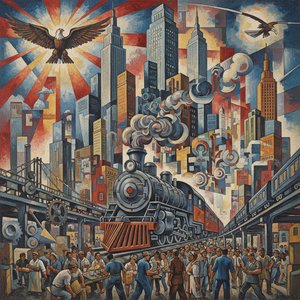 Joseph Stella: Modernism's Dynamic Vision of Industry, Urban Life & the American SpiritExplore the captivating world of Joseph Stella, a pioneer of American Modernism. Discover his iconic depictions of industry, urban life & t…