

 Peržiūrėti realaus dydžio版
 Siųsti
 Dalintis
 Išsamiau
 Gidas
Gidas

 Atsisiųsti
 Panašūs eksponatai
 Rentgeno spindulių nuotrauka
 Diaporama
 Statistika
CASOAR ET CORBEAU BLANC


 Rodyti daugiau
Giclée / Meno spausdinimas
Muziejų lygio „giclée“ arba drobos spausdinimas: greita gamyba ir lankstios apdailos parinktys. ( Pirkti rankomis tapytą reprodukciją Perejti prie skaitmeninių vaizdų)




P118B $10

P118H $10

P118W $10

P438Z $10

P508JH $12

P508YH $12

P805H $10

P805Z $10

P919BZ $10

P919G $10

P919XJ $10

P959ZH $10

P968JZ $12

W106C $8

W218G $10

W218JH $8

W218Y $10

W307PJ $10

W316G $10

W316PJ $8

W316Y $10

W398PJ $8

W4111J $10

W500HY $15

W500JH $15

W692G $12

W849H $8

W940BG $15

W953PJ $8




Pasirinkite iš mūsų nustatytų dydžių, atitinkančių originalaus meno kūrinio proporcijas.

Galite nurodyti savo matmenis, kad vaizdas atitiktų konkretų rėmą ar erdvę. Jei pasirinktas dydis nesutaps su originalaus paveikslėlio proporcijomis, mes arba apkirpsime kūrinį, arba išplėsime vaizdą naudojant veideliu atspindėtą arba vientisą šoną. Skaitmeninis maketas bus išsiųstas jums patvirtinti prieš pradedant gamybą.
Atkreipkite dėmesį, kad ekrane matomas vaizdinys neatspindi tikrojo apkirpimo ar išplėtimo. Tik maketas tiksliai parodytų galutinę kompoziciją.
Nors galima rinktis ir individualius dydžius, rekomenduojame pasirinkti vieną iš išanksti nustatytų matmenų, kad būtų išlaikytos originalios proporcijos.
Pristatymas visame pasaulyje () per 2 weeks, o ne įprastas 4/5 savaičių laikotarpis. (20 rugsėjis)

Nemokamas greitasis pristatymas visame pasaulyje

Aukštos kokybės lininis drobė

Pilnas siuntimo draudimas

Muitinės mokesčių grąžinimo garantija

Tikro spalvų atitikimo garantija

100 dienų grąžinimo politika (tik esant įtaigoms)

100% pinigų grąžinimo garantija

Nuolaida dideliems užsakymams
 Stiklo variantas prieinamas tik pasirinkus dydį iki 110 cm

CASOAR ET CORBEAU BLANC
Giclée / Meno spausdinimas
Reprodukcijos dydis
-


Visų pasirinktų variantų kaina
$ 80
The Majesty of Nature Captured: A Study in Contrast
Before you lies an arresting vision, a still life that transcends mere depiction to become a meditation on life, death, and the wild heart of nature. This painting, CASOAR ET CORBEAU BLANC, presents two magnificent avian subjects against a warm, earthy backdrop. The composition is dominated by the imposing presence of the cassowary, its dark plumage and distinctive casque lending it an air of regal power. Beneath this vibrant sentinel rests the pale form of a white crow, its stillness suggesting a narrative pause—a moment suspended between existence and memory. The artist has masterfully arranged these figures not just as objects of study, but as characters in an unspoken drama.
A Glimpse into Flemish Naturalism
The hand that created this work belonged to Boel Pieter (Boule), a significant painter rooted in the vibrant tradition of 17th-century Antwerp. His dedication to animal studies places him within the lineage of Flemish naturalism, a style renowned for its meticulous attention to anatomical detail and palpable texture. Observe how the artist has treated the feathers; they do not merely lie flat but possess weight and structure, each visible brushstroke contributing to the illusion of life. The technique employed suggests oil paint applied with confident layering, allowing the viewer to appreciate both the subject's inherent beauty and the sheer skill of its execution. While the perspective remains relatively grounded, typical of panel paintings from this era, the depth achieved through careful tonal variation draws the eye into the immediate drama unfolding on the wooden support.
Symbolism Woven into Feathers
Art has always spoken in symbols, and few pairings resonate with such potent duality as the cassowary and the white crow. The cassowary, an exotic creature often associated with untamed wilderness and vibrant life force, stands tall—a symbol of robust vitality. Conversely, the pale, seemingly quiescent crow introduces a note of melancholy or perhaps profound transition. This juxtaposition invites contemplation: is it a commentary on mortality? Is it the contrast between raw, powerful life and quiet repose? For the modern collector, this inherent tension provides an intellectual depth that elevates the piece beyond simple decoration; it becomes a philosophical anchor for any space.
Bringing the Masterpiece Home
To own a reproduction of CASOAR ET CORBEAU BLANC is to invite a piece of historical narrative and artistic mastery into your personal sanctuary. Whether adorning an elegant drawing-room or lending gravitas to a study, this artwork commands attention through its sheer dramatic quality. The rich tones and the palpable texture captured in high-quality reproductions allow you to experience the depth of Boel Pieter’s original vision without the constraints of time or distance. It is a timeless piece that speaks eloquently of nature's enduring mysteries.
Autoriaus biografija
Boel Pieter (1622–1674): Flamų natūro mirtuviečių ir gyvūnų studijų meistras
Pieter Boel – vardas, galbūt mažiau pažįstamas nei jo samtvorių Frans Snyders ar Jan Fyt – vis dėltingai išsiskiria svarbia figūra gyvybingame XVII amək flamūsko meno pasaulyje. 1622 m. Antverpyje gimęs į menininkų šeimą – jo senelis buvo Šv. Logo guildo tapinęs paveikslų kūrėjas, o tėvas – grave
Boel’s career unfolded across two key locations: Antwerp, where he initially honed his skills, and Paris, where he ultimately found a prestigious position within the royal tapestry workshops. His journey began in Antwerp, likely under the tutologie of Jan Fijt, a renowned master known for his dynamic animal paintings and elaborate still lifes. This apprenticeship provided Boel with a solid foundation in composition, technique, and the depiction of natural subjects – skills that would later inform his own work. Crucially, he also benefited from connections within the artistic community through his family ties; his uncle, Cornelis de Wael, was an established art dealer and painter who had spent considerable time in Genoa, fostering relationships with other artists and expanding Boel’s horizons.
Stiliaus evoliucija: nuo flamūskų tradicijos iki pariziškos inovacijos
Boel's artistic development is marked by a fascinating interplay between traditional Flemish techniques and emerging stylistic trends. Initially influenced by the dramatic realism and theatrical compositions of Frans Snyders, he gradually developed his own distinct approach – one characterized by an exceptional attention to detail, particularly in the rendering of animal anatomy and textures. Unlike many of his contemporaries who relied heavily on studio assistants for background elements or complex details, Boel famously insisted on working directly from live animals, a revolutionary practice at the됨 time. This commitment to direct observation resulted in remarkably lifelike depictions of birds, game, and other creatures, capturing their movements, expressions, and individual characteristics with astonishing accuracy.
His Parisian period proved pivotal. Appointed *peintre ordinaire* (ordinary painter) to King Louis XIV in 1674, Boel found himself at the heart of a thriving artistic environment within the Gobelins tapestry workshops. This appointment afforded him access to royal collections and provided opportunities to create works for the court, including elaborate still lifes featuring exotic animals – a testament to the king’s fascination with the natural world. The atmosphere in Paris fostered experimentation and innovation, allowing Boel to refine his techniques and explore new compositional possibilities. He collaborated closely with other prominent artists of the era, such as Adam Frans van der Meulen and Gerard Scotin, exchanging ideas and contributing to a dynamic artistic dialogue.
Simbolizmu pasaulis: Vanitas ir gyvūnų studijos
Boel’s paintings are not merely representations of nature; they are imbued with layers of symbolic meaning. His still lifes frequently incorporate elements of *vanitas*, a genre that emphasizes the transience of life, the futility of earthly pursuits, and the inevitability of death. These compositions often feature objects such as skulls, decaying fruit, extinguished candles, and hourglasses – potent reminders of mortality and the fleeting nature of beauty. Alongside these *vanitas* paintings, Boel produced a significant body of work dedicated to animal studies. These meticulously rendered depictions of birds, mammals, reptiles, and fish were not simply exercises in observation; they served as models for tapestry design and provided valuable insights into the anatomy and behavior of animals.
The symbolism within his animal paintings is particularly rich. The presence of a porcupine, for example, held significant cultural resonance in France, evoking associations with chivalry, strength, and invincibility – qualities highly valued by King Louis XIV. Boel’s ability to capture the essence of these animals through careful observation and skillful rendering cemented his reputation as one of the most accomplished animal painters of his time.
Palikimas ir įtaka
Despite his relatively short career, Pieter Boel left a lasting impact on the development of Flemish still life painting. His innovative approach to depicting animals – his insistence on working directly from live subjects – challenged conventional artistic practices and paved the serway for future generations of artists. His meticulous attention to detail, combined with his masterful use of color and light, produced works of exceptional beauty and technical virtuosity. While many of his paintings were lost or damaged over the centuries, a significant number survive today, offering valuable insights into the artistic world of 17th-century Antwerp and Paris. Boel’s legacy endures through his influence on subsequent artists and the continued appreciation of his remarkable still lifes and animal studies – testaments to the enduring power of observation, skill, and symbolic representation.

Pieteris Boelis (Boule)
1622 - 1680
Trumpa informacija apie kūrėją
- Artistic Movement Or Style: Nyderlandų aukštojo aptikimo laikotarpio stilius
- Artists Or Movements Influenced By This Artist:
- Adam Frans van der Meulen
- Gerard Scotin
- Artists Who Influenced This Artist:
- Frans Snyders
- Jan Fyt
- Date Of Birth: 1622 m. rugsėjo 10 d.
- Date Of Death: 1674 m. rugsėjo 3 d.
- Full Name: Pieter Boel (Peeter Boel)
- Nationality: Flamūnas
- Notable Artworks:
- Pasaulinio gyvenimo alegorija
- Praukštės studija
- Papagalės studija
- Place Of Birth: Antverpianas, Belgija
Susiję straipsniai

The Enduring Legacy of Fine Art Prints: Technique, History & Aesthetic Impact
Explore the rich history & techniques of fine art prints. Discover investment potential, assess authenticity, and learn how to preserve your collection with expert guidance. Trusted insights for discerning collectors.

Giclée Prints: Archival Quality & Aesthetic Nuances for the Discerning Collector
Explore the world of giclée prints with OriginalUniqueArt. Learn about archival quality, aesthetic nuances & investment potential. Expert guidance for discerning art collectors seeking museum-quality reproductions and lasting value.

Silent Narratives: Exploring the Enduring Appeal of Still Life Painting Across Centuries
Explore the rich history of still life painting with OriginalUniqueArt. Discover Dutch Masters, decode vanitas symbolism & learn about collecting timeless art. Expert insights and museum-quality reproductions.

Echoes of Time: Exploring the Enduring Appeal & Historical Context of Vintage Art Prints
Explore the captivating world of vintage art prints! Discover their history, collecting tips & enduring appeal. Expert insights on chromolithography and building a legacy collection with OriginalUniqueArt.
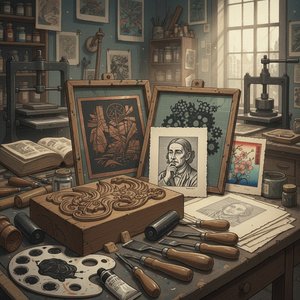
The Enduring Legacy of Printmaking: Techniques, Themes & Artistic Innovation Across Centuries
Explore the rich history of printmaking with OriginalUniqueArt. Discover techniques from intaglio to lithography, learn about collecting valuable prints & find museum-quality reproductions. Expert insights for art enthusiasts and collectors.