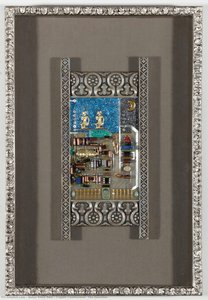
Peržiūrėti realaus dydžio版
 Pasidalinti
 Dalintis
 Išsamiau
 Vadovas

 Atsisiųsti
 Panašūs eksponatai
 Rentgeno spindulių nuotrauka
 Automatinė diorama
 Q&A
Q&A Statistika
Bridge to Infinity


 Skaityti daugiau
Šiame puslapyje rodomas meno kūrinys yra saugomas autorių teisių įstatymais, todėl neturime teisės legaliai kurti ar parduoti jo identiškos reprodukcijos. Ši apsauga užtikrinama remiantis tokiais tarptautiniais susitarimais kaip Bernės konvencija ir pagal nacionalines įstatymų nuostatas, įskaitant tas, kurias nurodo JAV autoriškos teisės įstatymas – 17-asis skyrius.
Šis metodas visiškai atitinka autorių teises, nes jame nėra saugomo kūrinio kopijavimo ar dubliavimo. Tai yra kūrybinė reinterpretacija – naujas paveikslas, kurį įkvėpė originalas, tačiau kuris nėra jo identiškas.
Giclée / Meno spausdinimas
Muziejų lygio „giclée“ arba drobos spausdinimas: greita gamyba ir lankstios apdailos parinktys. ( Pirkti rankų darbo tapybą Perejti prie skaitmeninių vaizdų)




































Pasirinkite iš mūsų nustatytų dydžių, atitinkančių originalaus meno kūrinio proporcijas.

Įveskite jums reikiamą plotį ir aukštį, kad atvaizdas derėtų prie jūsų rėmo ar sienos. Spausdiną galima tik sumažinti, bet nepadidinti virš originalaus paveikslėlio dydžio, todėl keičiant proporcijas, dalis vaizdo prarandama. Prieš spausdinimą atsiųsime jums skaitmeninį maketą patvirtinimui. Šioje puslapio nuotraukoje matomas pjūvis nėra tikslus – jį rodo tik maketas.
Pristatymas visame pasaulyje () per 2 weeks, o ne įprastas 4/5 savaičių laikotarpis. (1 lapkritis)

Nemokamas greitasis pristatymas visame pasaulyje

Aukštos kokybės lininis drobė

Pilnas siuntimo draudimas

Muitinės mokesčių grąžinimo garantija

Tikro spalvų atitikimo garantija

100 dienų grąžinimo politika (tik esant įtaigoms)

100% pinigų grąžinimo garantija

Nuolaida dideliems užsakymams
 Stiklo variantas prieinamas tik pasirinkus dydį iki 110 cm

Bridge to Infinity
Giclée / Meno spausdinimas
Reprodukcijos matmenys
-


Bendroji kaina
€ 71
Autoriaus biografija
A Life Forged in Assemblage: The World of Betye Saar
Betye Irene Saar, born in Los Angeles in 1926, is more than just an artist; she’s a visual storyteller, a cultural archaeologist, and a powerful voice challenging the narratives surrounding race, gender, and spirituality. Her journey began amidst personal shifts – the loss of her father when she was six, followed by a formative upbringing with her maternal great-aunt Hattie Parson Keys in Pasadena. This early experience deeply imprinted upon her an understanding of Black womanhood, resilience, and the power of inherited memory, themes that would become central to her artistic explorations. Saar’s academic path included a B.A. in Design from UCLA in 1949, followed by graduate studies at several California institutions, but it was a period of diverse creative pursuits – social work, jewelry making, costume design – that ultimately paved the way for her unique artistic voice. These early endeavors honed her sensitivity to materials and narrative, skills she would later deploy with profound effect in her assemblages.Finding Her Voice: From Printmaking to Three Dimensions
While initially drawn to printmaking, a pivotal moment arrived in 1967 with an exhibition of work by Joseph Cornell. The intricate, poetic boxes of Cornell sparked something within Saar, igniting a fascination with assemblage – the art of constructing three-dimensional works from found objects. This discovery proved transformative. It wasn’t merely about creating art *from* things; it was about imbuing those things with new meaning, reclaiming their histories, and challenging the stories they silently carried. Saar's artistic development was also profoundly influenced by her surroundings. The monumental Watts Towers, a testament to individual vision and resourceful construction, inspired her use of everyday materials and exploration of personal mythology. A visit to the Field Museum in Chicago exposed her to the rich visual languages of African, Oceanic, and Egyptian art, broadening her aesthetic horizons and deepening her connection to ancestral roots. These influences coalesced into a distinctive style characterized by its layered symbolism, evocative imagery, and powerful emotional resonance.Deconstructing Stereotypes: Themes and Artistic Style
Betye Saar’s work is fundamentally a critique of racism and the harmful stereotypes that have historically plagued representations of African Americans. She doesn't shy away from confronting these painful legacies; instead, she actively engages with them, transforming objects laden with racist imagery – “mammy” figures, antique advertisements, derogatory caricatures – into statements of empowerment and resistance. Her art is a process of deconstruction and reclamation, stripping away the layers of prejudice to reveal the humanity beneath. But Saar’s vision extends beyond racial injustice. She delves deeply into themes of spirituality, drawing from African religions, folklore, and mystical traditions to create works that explore the unseen forces shaping our lives. Her pieces often incorporate talismans, charms, and symbolic objects, inviting viewers to contemplate the power of belief and the search for meaning. Furthermore, Saar consistently addresses the experiences of Black women, reclaiming narratives often marginalized in mainstream art history and celebrating their strength, resilience, and inner worlds.Legacy and Recognition: A Pioneer’s Impact
Throughout her illustrious career, Betye Saar has received widespread acclaim for her groundbreaking work. She emerged as a key figure within the Black Arts Movement of the 1970s, a period of intense artistic and political activism that sought to redefine African American identity and challenge systemic oppression. Her artwork is now featured in prominent museum collections worldwide, including the Museum of Modern Art (MoMA) and the Whitney Museum of American Art, solidifying her place within the canon of contemporary art. Beyond these accolades, Saar has received honorary doctorate degrees from numerous institutions, recognizing not only her artistic achievements but also her contributions to art education and cultural discourse. Her historical significance lies in her pioneering exploration of complex social issues through innovative artistic practices. She paved the way for future generations of artists to address race, gender, and spirituality with honesty, courage, and a commitment to challenging the status quo. Her legacy extends far beyond individual artworks; she has inspired countless creators to reclaim their narratives, question conventions, and create art that is both visually compelling and politically engaged – a testament to the enduring power of her vision. Betye Saar’s work continues to resonate today, reminding us of the importance of confronting our past, celebrating our diversity, and striving for a more just and equitable future.
Betye Irene Saar
1926 - , United States of America
Trumpa informacija
- Full Name: Betye Irene Saar
- Nationality: American
- Date Of Birth: 1926
- Place Of Birth: Los Angeles, United States of America
- Notable Artworks:
- Cryptic Confessions, The Question
- Lost Dimensions of Time
- Bridge to Infinity
- Artistic Movement Or Style: Assemblage, Black Arts Movement
- Artists Who Influenced This Artist:
- Joseph Cornell
- Simon Rodia
- Artists Or Movements Influenced By This Artist: Future generations of artists
Susiję straipsniai
Dramatic Masterpieces: 10 Artworks for a Powerful Home Decor Statement |
Explore 10 dramatic artworks by masters like Caravaggio, Van Gogh & Munch. Uncover the stories behind these powerful paintings and find museum-quality reproductions to transform your home decor. Discover all masterpieces on .

Jacopo Tintoretto: 25 Šedevrai Venecijetiško Dramatizmo | OriginalUniqueArt.lt
Atraskite Jacopo Tintoretto 25 įspūdingiausius kūrinius! Venecijos mokyklos dramatiškumas, renesanso tapybos šedevrai ir baroko menas – viskas vienoje kolekcijoje. Meno istorija, paveikslų reprodukcijos interjerui. Explore the full collection online!

El Greco Šedevrai: Top 25 Darbai, Įkvėpę Meną ir Interjerus
Atraskite 25 įspūdingiausius El Greco kūrinius! Išsami analizė, meno istorija ir technikos paslaptys. Renesanso meistro paveikslai jūsų interjerui – aukštos kokybės reprodukcijos OriginalUniqueArt.com. Explore the full collection online!
Jusepe de Ribera: Dramatic Realism & Spiritual Intensity in the Spanish Golden Age
Explore the powerful Baroque paintings of Jusepe de Ribera, master of tenebrism and dramatic realism. Discover his spiritual intensity, influence on Spanish art, and considerations for collectors. Expert insights at OriginalUniqueArt.

Spiritual Art: 10 Masterpieces to Inspire Your Soul |
Explore 10 spiritual art masterpieces – from Da Vinci to Van Gogh – that ignite inner peace & reflection. Discover their stories, techniques & emotional power. Find museum-quality reproductions & curated decor ideas at .