 Skaityti daugiau


 Dėl meno kūrinių ar reprodukcijų, kurių bet kuri pusė yra didesnė nei 105 cm (apie 41 inch), rėmas bus siunčiamas kaip išskaidytas surinkimo rinkinys. Šis metodas užtikrina saugų pristatymą ir apsaugo nuo transportavimo metu galimos žalos.


Daugiau informacijos apie šį paveikslą
Teksto dydis

() ·
Jūsų laukia rūpestingai pareistas spauskinys
Giclée / Meno spausdinimas
Muziejų lygio „giclée“ arba drobos spausdinimas: greita gamyba ir lankstios apdailos parinktys. ( Pirkti rankų darbo tapybą Perejti prie skaitmeninių vaizdų)
Autoriaus biografija
British Enlightenment portraitist known for capturing the dignity of the aristocracy through a sophisticated use of light and texture.
nuo ·
1 skyrius
Ant kokio pagrindo turėtų būti spausdinta?
Lennas naudojamos giclée raštos, kuris gali būti ištiesintas arba įdėtas į rėmą kaip paveikslas; popierius pristatomas plokštė, arba įdėtas į stiklinį rėmą.
2 skyrius
Kokio dydžio turėtų būti?
Slinkite, kad pakeistumėte dydį; kairėje pusėje esančiame paveikslėlyje rodomas tikrasis rėmo plotis. Originalios proporcijų išlaikomos.
Standartinis dydis
pagal užsakymą
CM
INCH
Pasirinkite iš mūsų nustatytų dydžių, atitinkančių originalaus meno kūrinio proporcijas.
Kraunami dydžiai...

plotis
aukštis
Įveskite jums reikiamą plotį ir aukštį, kad atvaizdas derėtų prie jūsų rėmo ar sienos. Spausdiną galima tik sumažinti, bet nepadidinti virš originalaus paveikslėlio dydžio, todėl keičiant proporcijas, dalis vaizdo prarandama. Prieš spausdinimą atsiųsime jums skaitmeninį maketą patvirtinimui. Šioje puslapio nuotraukoje matomas pjūvis nėra tikslus – jį rodo tik maketas.
3 skyrius
Kokia būda yra siunčiamas?
Pasirinkite ištempto drobės kraštus
Pasirinkite rėmelį

Baltas apasutojimas €1

Išblėstantis šonas €1

Išplėstinis €1

P118B €10

P118H €10

P118W €10

P438Z €10

P508JH €12

P508YH €12

P805H €10

P805Z €10

P919BZ €10

P919G €10

P919XJ €10

P959ZH €10

P968JZ €12

W106C €8

W218G €10

W218JH €8

W218Y €10

W307PJ €10

W316G €10

W316PJ €8

W316Y €10

W398PJ €8

W4111J €10

W500HY €15

W500JH €15

W692G €12

W849H €8

W940BG €15

W953PJ €8

H24-GOLD €30

H24-SILVER €30

H36-GOLD €45

H36-SILVER €45
Įrėmintas
Rėmo apvadas: . Bendras dydis su rėmu: .
4 skyrius
Pristatymas visame pasaulyje () per 2 weeks, o ne įprastas 4/5 savaičių laikotarpis. (24 lapkritis)
Paskutinės detalės
Pavadinimo plokštelė, kaip muziejuje?
Išgraviruotos bronzinės plokštelės detalės
This elegant plaque features the artist's name and the title of the artwork, finely engraved for a timeless presentation.
It is made from bronze with a refined, elegant finish. The text is precisely laser-engraved for a sharp and permanent result. Measuring 9x2 cm, the plaque is compact yet easy to read. It's built to be durable and scratch-resistant, offering a professional, museum-quality look. Mounting is simple thanks to the included adhesive backing.
Skaidrios akrilo plokštelės informacija
The plaque includes essential engraved details such as the artist's name, the title of the artwork, the date it was created, the type of media used-like oil on canvas or watercolor-a brief description of the piece, and a QR code that links to the complete artwork information.
It is crafted from clear acrylic, offering a sleek, modern appearance. The text is UV-engraved in black to ensure strong visual contrast. With a size of 10x15 cm, it ensures optimal readability. It comes equipped with two metal hooks for secure wall mounting. The plaque is designed to be weather-resistant, making it suitable for various environments, and it includes interactive features that work seamlessly with smartphone scanning.
Juodos akrilo plokštelės informacija
This elegant plaque includes engraved information such as the artist's name, the title of the artwork, the date it was created, the type of media used (like oil on canvas or watercolor), a short description of the artwork, and a QR code for quick access to more information.
The plaque itself is made from refined black acrylic with a premium finish. The text is laser-engraved in white for high contrast and readability. Its size is 10x15 cm, designed to be easy to read. It comes with two metal hooks for professional mounting. The design is sleek and fits any interior style. It is also weather-resistant and durable, with built-in digital integration for mobile compatibility.
Apsauginis lakas?
Kada jums reikia?
5 skyrius
Jūsų spausdinys pagal užsakymą
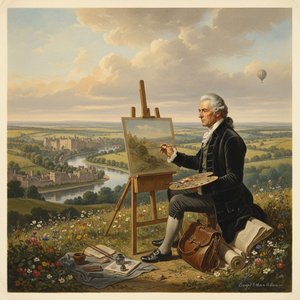
Thomas Gray -
Reprodukcijos technika
Reprodukcijos matmenys
-
Reprodukcijos rėmėjimo parinktys
-
-
Dėl meno kūrinių ar reprodukcijų, kurių bet kuri pusė yra didesnė nei 105 cm (apie 41 inch), rėmas bus siunčiamas kaip išskaidytas surinkimo rinkinys. Šis metodas užtikrina saugų pristatymą ir apsaugo nuo transportavimo metu galimos žalos.
Reikalingas profesionalus surinkimas – tai nėra „pasidaryk pats“ (DIY) produktas.
Rinkinys turi būti surinktas, o drobė išplėsta naudojant patyrį profesionalų rėmininką, medžio klijus (nėra įtraukti į rinkinį), drobės plėšimo kleslę bei presas, kad rėmo rėžiai išliktų tiesūs, kol klijai išdžiūvus. Netinkamas surinkimas arba netolydus drobės įtampa gali negrįžtamai sugadinti meno kūrinį, todėl šie atvejai nėra užtraukiami mūsų garantijos.
Į komplektą įeina visi vientisos medienos elementai, tiksliai išpjauti pagal dydį.
Surmontinama naudojant pridėtus varžtus bei papildomai reikalingą medžio kliją kampų jungtims, kuris nėra pridėtas ir turi būti parinktas rėmininkui.
Reikalingi profesionalūs įrankiai, kurie nėra įtraukti į rinkinį: drobės kėlimo plytelės (stiprintuvai) ir klemiai, laikantys rėmo strygius tiesiu kampu, kol džiūsta lipas.
Svarbu:
Kampų jungtims reikalingi medžio klijai, barams reikia laikyti naudojant presas, kol klijai visiškai išdžiūvės, o surinktam rėmui įtempiamai privilgti būtinos drobės įtempimo plytযুক্ত. Šios priemonės į rinkinį neįtrauktos. Prieš užsakydami šio dydžio rinkinį, rekomenduojame pasimalkoti patyrusiu rėmų meistru.
Pavadinimo lentelė
-
-
Apsauginis lakas
Blizgus lakas (ryškina spalvas, saugo nuo šviesos ir drėgmės)
-
Skubiai
Pristatymas visame pasaulyje () per 2 savaites, o ne standartines 4/5 savaičių. (24 lapkritis)
-
Skubus pristatymas
Pristatymas visame pasaulyje () per 4–5 weeks. (1 gruodis).
Įskaičiuota
Bendroji kaina
€ 72
Stiklo variantas prieinamas tik pasirinkus dydį iki 110 cm
Pridedama prie kiekvieno užsakymo
- Nemokamas greitasis pristatymas visame pasaulyje
- Aukštos kokybės lininis drobė
- Pilnas siuntimo draudimas
- Muitinės mokesčių grąžinimo garantija
- Tikro spalvų atitikimo garantija
- 100 dienų grąžinimo politika (tik esant įtaigoms)
- 100% pinigų grąžinimo garantija
- Nuolaida dideliems užsakymams
 Peržiūrėti realaus dydžio版

 Pasidalinti
 Dalintis
 Išsamiau
 Vadovas


 Atsisiųsti
 Panašūs eksponatai
 Rentgeno spindulių nuotrauka
 Automatinė diorama
 问答
 Statistika
Skaičiais
- 29pasirinkimo rėmai
- standartinės dydžio, savo proporcijomis
- 5savaitės sugryžti ir pristatyti
Apie originalą

Benjamin Wilson
1721 - 1788, United Kingdom
Trumpa informacija apie Benjamin Wilson
- Full Name: Benjamin Wilson
- Nationality: British
- Date Of Birth: 1721
- Date Of Death: 1788
- Place Of Birth: United Kingdom
- Notable Artworks:
- Judge Richard Wilson
- James Parsons
- Sir William Henry Lyttelton
- Artistic Movement Or Style: Neoclassical Portraiture
- Artists Who Influenced This Artist:
- Jacques Parmentier
- Thomas Hudson
- Artists Or Movements Influenced By This Artist: ['Joshua Reynolds']
Autoriaus biografija
A Painter of Light and Science: The Dual Legacy of Benjamin Wilson
In the vibrant intellectual landscape of the eighteenth-century Enlightenment, few figures embodied the era's marriage of aesthetic beauty and scientific inquiry as gracefully as Benjamin Wilson. Born in 1721 to a prosperous clothier family in Leeds, Wilson’s early life was steeped in an environment where craftsmanship and artistry were deeply valued. His formative years were marked by an encounter with the opulent decorations of Jacques Parmentier at Leeds Grammar School, a moment that ignited a lifelong passion for the visual arts. This early spark eventually propelled him from the industrial heart of England to the bustling artistic circles of London, where he would transform from a diligent legal clerk into one of Britain’s most respected painters and philosophers.
Wilson's journey through the London art scene was defined by a relentless pursuit of mastery. Under the guidance of luminaries such as William Hogarth and Lambert, he honed his skills at the St. Martin's Lane Academy, learning to capture the subtle nuances of human character and the dramatic interplay of light. His talent was not merely local; during the late 1740s, Wilson traveled to Dublin, where his success as a portraitist began to flourish. This period of development allowed him to refine a style characterized by a sophisticated use of texture and a profound ability to imbue his subjects with both dignity and psychological depth. His work became a mirror for the era's rising aristocracy, capturing the essence of figures like David Garrick and Sir William Henry Lyttelton with an elegance that spoke to their social standing and intellectual vigor.
The Intersection of Artistry and Natural Philosophy
What truly distinguishes Benjamin Wilson from his contemporaries was his refusal to confine his intellect to the canvas. He was a man of profound curiosity, viewing the world through both an artistic and a scientific lens. While his hands were busy with the delicate application of oil paint, his mind was engaged in the rigorous debates of natural philosophy. Wilson became a notable figure in the scientific community, particularly through his investigations into electricity and magnetism. He famously championed Isaac Newton’s theory of gravitation-optical ether, standing firm against the prevailing views of Benjamin Franklin, a testament to his independent and courageous intellectual spirit.
This scientific rigor deeply informed his artistic technique. His meticulous observations of natural phenomena—such as his celebrated studies on tourmaline—translated into a painterly approach that prioritized the authentic representation of light and atmosphere. To Wilson, light was not merely a tool for visibility but a subject of physical study. This dual identity allowed him to create portraits that felt remarkably alive, where the sheen of silk or the soft glow of skin was rendered with a precision born from an understanding of the very physics of light. His legacy is thus a rare tapestry woven from two seemingly disparate threads: the emotive power of fine art and the empirical truth of scientific discovery.
Artistic Achievements and Historical Significance
The breadth of Wilson's contributions to British art remains a cornerstone of eighteenth-century history. His ability to secure patronage from high-ranking figures, including Prince Edward, allowed him to participate in the highest levels of cultural production. His oeuvre, which includes notable works such as Charles Ingram and James Parsons, showcases a mastery of the portrait genre that helped define the British school of painting during a period of immense transition.
Beyond his individual paintings, Wilson's significance lies in his role as a bridge between eras. He stood at the crossroads of the classical traditions of the past and the burgeoning scientific revolution of the future. His life serves as a poignant reminder of a time when the boundaries between disciplines were fluid, and when the pursuit of beauty was seen as inseparable from the pursuit of truth. Today, we remember Benjamin Wilson not just as a skilled hand with a brush, but as a visionary who sought to illuminate the world, both through the pigment on his canvas and the light of human reason.
Susiję straipsniai

Masterpieces of Light: The Top 25 Artworks by James McNeill Whistler
Explore the iconic masterpieces of James McNeill Whistler. Discover the essence of Tonalism and fine art on OriginalUniqueArt.com.
Thomas Sandby: Pioneering Watercolourist & Topographer of Georgian England
Explore the life & art of Thomas Sandby (1721-1798), a pioneering English watercolourist and architect. Discover his innovations, role in founding the Royal Academy, and lasting legacy at OriginalUniqueArt.

Džeimso Ebboto Maknilo Vislerio 25 Šedevrai: Tonalizmo Elegancija Jūsų Interjere
Atraskite 25 įspūdingiausius Džeimso Ebboto Maknilo Vislerio kūrinius! Tonalizmo meistras, noktiurnai ir portretai – meno istorijos šedevrai jūsų interjerui. Pirkti aukštos kokybės reprodukcijas OriginalUniqueArt.com

Atmospheric Moods: The Nuanced Beauty of Grey Skies in Masterpiece Landscapes
Master the moody beauty of grey skies through expert analysis of Monet and Impressionism. Explore the power of atmospheric landscapes now.