
 Peržiūrėti realybėje
 Pasidalinti
 Dalintis
 Išsamiau

 Atsisiųsti
 Panašūs eksponatai
 Rentgeno nuotrauka
 Automatinė diorama
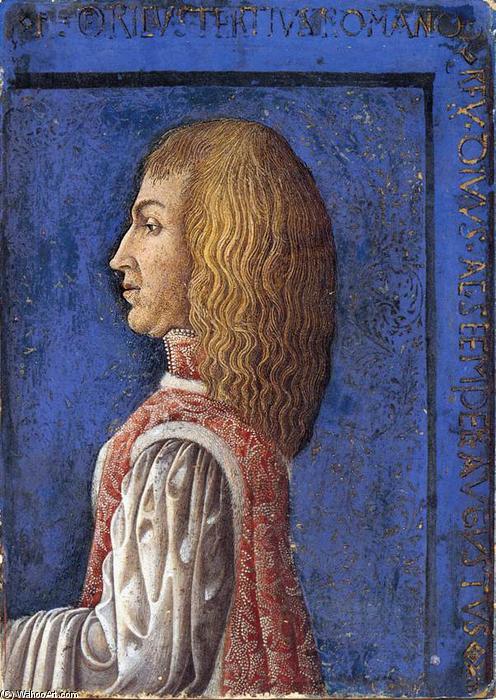
Frederick III
 Oil On Panel
- Early Renaissance
 1451
1451 23.0 x 16.0 cm
 Uffizi galerija
 Skaityti daugiau
Giclée / Meno spausdinimas
Muziejų lygio „giclée“ arba drobos spausdinimas: greita gamyba ir lankstios apdailos parinktys. ( Pirkti rankomis tapytą paveikslą Pirkti vaizdą)




P118B $10

P118H $10

P118W $10

P438Z $10

P508JH $12

P508YH $12

P805H $10

P805Z $10

P919BZ $10

P919G $10

P919XJ $10

P959ZH $10

P968JZ $12

W106C $8

W218G $10

W218JH $8

W218Y $10

W307PJ $10

W316G $10

W316PJ $8

W316Y $10

W398PJ $8

W4111J $10

W500HY $15

W500JH $15

W692G $12

W849H $8

W940BG $15

W953PJ $8




Pasirinkite iš mūsų nustatytų dydžių, atitinkančių originalaus meno kūrinio proporcijas.

Galite nurodyti savo matmenis, kad vaizdas atitiktų konkretų rėmą ar erdvę. Jei pasirinktas dydis nesutaps su originalaus paveikslėlio proporcijomis, mes arba apkirpsime kūrinį, arba išplėsime vaizdą naudojant veideliu atspindėtą arba vientisą šoną. Skaitmeninis maketas bus išsiųstas jums patvirtinti prieš pradedant gamybą.
Atkreipkite dėmesį, kad ekrane matomas vaizdinys neatspindi tikrojo apkirpimo ar išplėtimo. Tik maketas tiksliai parodytų galutinę kompoziciją.
Nors galima rinktis ir individualius dydžius, rekomenduojame pasirinkti vieną iš išanksti nustatytų matmenų, kad būtų išlaikytos originalios proporcijos.
Pristatymas visame pasaulyje () per 2 weeks, o ne įprastas 4/5 savaičių laikotarpis. (12 rugpjūtis)

Nemokamas greitasis pristatymas visame pasaulyje

Aukštos kokybės lininis drobė

Pilnas siuntimo draudimas

Muitinės mokesčių grąžinimo garantija

Tikro spalvų atitikimo garantija

60 dienų grąžinimo politika (tik esant gamyklinėms defektams)

100% pinigų grąžinimo garantija

Nuolaida už kelias reprodukcijas
 Stiklo variantas prieinamas tik pasirinkus dydį iki 110 cm

Frederick III
Giclée / Meno spausdinimas
Reprodukcijos matmenys
-


Galutinė kaina
$ 80
Kolekcinio eksponato aprašymas
A Glimpse into the Reign: Benedetto Bonfigli’s Frederick III
Benedetto Bonfigli's 1451 tempera painting, “Frederick III,” is more than just a portrait; it’s a meticulously crafted window into the heart of the early Renaissance and the ambitions of a Holy Roman Emperor. Housed within the hallowed halls of the Galleria degli Uffizi in Florence, this work transcends its modest dimensions (23 x 16 cm) to radiate an aura of regal authority and quiet contemplation. The painting immediately draws the eye with its rich palette – deep reds and blues dominate, contrasted by the luminous gold leaf that accents the Emperor’s garments and the intricate details of his attire. It's a testament to Bonfigli’s mastery of color and texture, reflecting the burgeoning artistic sophistication of the period.
The subject himself, Frederick III, is depicted in a pose of dignified repose. He isn’t caught mid-action or engaged in grand gestures; instead, he embodies an almost serene power. His gaze is direct yet measured, suggesting both wisdom and a certain melancholy – perhaps reflecting the weight of his imperial responsibilities. The artist skillfully employs linear perspective to create a sense of depth, drawing the viewer into the scene and emphasizing Frederick’s importance within it. The careful rendering of his facial features—the strong jawline, the thoughtful eyes—reveals a man of considerable character.
Renaissance Techniques: A Masterclass in Tempera
Bonfigli's technique is deeply rooted in the traditions of the early Renaissance, yet infused with a distinctly personal style. The painting is executed in tempera on wood panel, a medium favored for its ability to create vibrant colors and fine details. The layering of thin glazes—a hallmark of Bonfigli’s approach—builds up the image gradually, resulting in an astonishing level of luminosity and depth. Note the subtle gradations of color within the folds of his robes, achieved through meticulous blending and a deep understanding of light and shadow. The use of gold leaf is particularly noteworthy; it not only adds to the painting's opulence but also symbolizes Frederick’s divine right to rule.
Furthermore, the composition itself reflects Renaissance ideals. The arrangement of figures—Frederick III at the center, surrounded by attendants and symbolic elements—is carefully balanced and harmonious. The inclusion of Latin text at the top – “FREDERICVS III ROMANVS IMPERATOR” – reinforces the Emperor’s status and provides a crucial historical context. This inscription serves as a reminder that this portrait was intended to commemorate a significant figure in European history, commissioned likely for display within a royal or ecclesiastical setting.
Symbolism and Historical Context
Beyond its technical brilliance, “Frederick III” is rich in symbolism. The elaborate attire—the crimson robes, the jeweled crown, the richly embroidered mantle—are all indicators of imperial power and wealth. The inclusion of specific heraldic symbols would have further emphasized Frederick’s lineage and authority. Considering the painting was created during a period of intense political maneuvering and dynastic rivalries, it's likely that Bonfigli sought to project an image of stability and legitimacy for the Emperor. The portrait served as a powerful visual statement—a declaration of Frederick III’s claim to the throne and his commitment to upholding the traditions of the Holy Roman Empire.
The painting’s creation coincided with a period of significant change in Europe, marked by the rise of humanism, the rediscovery of classical art and literature, and the burgeoning power of city-states like Florence. Bonfigli's work reflects these trends, demonstrating a sophisticated understanding of artistic conventions while also incorporating elements of his own distinctive style. It’s a remarkable example of how art can simultaneously document history and express profound human emotions.
Today, reproductions of “Frederick III” are available through OriginalUniqueArt.com, offering art enthusiasts the opportunity to own a piece of this captivating Renaissance masterpiece. The website also provides access to further information about Benedetto Bonfigli and his other works, inviting viewers to delve deeper into the world of this talented artist.
Autoriaus biografija
The Radiant Legacy of Benedetto Bonfigli
In the heart of the Umbrian Renaissance, a period defined by spiritual luminosity and the dawn of humanistic perspective, the name Benedetto Bonfigli emerges as a vital architect of visual devotion. Born in Perugia around 1420, Bonfigli operated within a landscape where the lingering elegance of the Late Gothic tradition began to merge with the burgeoning intellectual rigor of the Florentine masters. While much of his personal biography remains shrouded in the mists of the fifteenth century, his artistic presence is undeniably monumental. His life’s work served as a bridge, connecting the symbolic, gilded richness of the medieval past with the profound spatial realism that would come to define the Italian Renaissance.
The essence of Bonfigli’s genius lies in his ability to synthesize disparate artistic currents into a singular, cohesive vision. He did not merely imitate his predecessors; rather, he absorbed their very souls. From Fra Angelico, he inherited a profound sense of spiritual serenity and a mastery of color that could evoke the divine through light alone. From Domenico Veneziano, he learned the transformative power of atmospheric perspective, allowing him to breathe depth and air into the flat surfaces of his frescoes. This fusion created a style that was simultaneously ethereal and grounded, capable of transporting the viewer to a celestial realm while maintaining a palpable connection to the physical world.
Mastery of Form and Symbolism
To gaze upon a Bonfigli masterpiece is to enter a world where every pigment and gesture carries theological weight. His technique was characterized by an exquisite attention to detail, particularly in his use of vibrant palettes—most notably the deep, commanding blues used to signify divine majesty. In works such as his Annunciation, one can witness the delicate balance between human emotion and sacred event. The artist utilized light not just as a tool for visibility, but as a narrative force, guiding the eye through meticulously composed scenes that capture pivotal moments of Christian history with unparalleled grace.
Beyond his religious commissions, Bonfigli demonstrated a remarkable capacity for portraiture and secular grandeur. His ability to render texture and character is perhaps most evident in works like Frederick III. In this tempera painting, housed within the prestigious Uffizi Gallery, the Holy Roman Emperor is presented with a level of symbolic complexity and physical detail that speaks to the artist's command over the medium. Through his brush, the sitter becomes more than a mere likeness; he becomes an icon of power and permanence, draped in the intricate textures of his era.
A Lasting Impression on the Umbrian School
The historical significance of Benedetto Bonfigli extends far beyond the walls of the Perugian churches he adorned. He was instrumental in establishing a distinct Umbrian identity that could stand alongside the innovations occurring in Florence. His contributions can be summarized through several key artistic milestones:
- Integration of Perspectives: His successful adoption of sfumato-like atmospheric depth helped transition regional art from two-dimensional storytelling to immersive, three-dimensional environments.
- Theological Color Theory: The use of luminous, symbolic color palettes became a hallmark of the Umbrian school, influencing generations of painters in the region.
- Civic and Sacred Synthesis: By decorating both religious frescoes and civic spaces like the Palazzo dei Priori, he helped elevate the visual culture of Perugia, making art an inseparable part of the city's political and spiritual identity.
Though his life concluded in 1496, the echoes of Bonfigli’s artistry continue to resonate. His ability to marry the devotional intensity of the Middle Ages with the rational clarity of the Renaissance ensures his place as a cornerstone of Italian art history. Through his frescoes and temperas, he remains a master of the light that illuminates the human spirit.

Benedetto Bonfigli
1420 - 1496 , Italy
Trumpa informacija
- Artistic Movement Or Style: Umbrian Renaissance
- Artists Or Movements Influenced By This Artist: ['Luca Signorelli']
- Artists Who Influenced This Artist:
- Fra Angelico
- Domenico Veneziano
- Benozzo Gozzoli
- Date Of Birth: c. 1420
- Date Of Death: July 8, 1496
- Full Name: Benedetto Bonfigli
- Nationality: Italian
- Notable Artworks:
- Annunciation
- Adoration of the Magi
- The Last Judgment
- Madonna with the Thumb
- Oratory of San Bernardino
- Place Of Birth: Perugia, Italy
Susiję straipsniai
Timeless Grandeur: Capturing the Majesty of Roman Architecture through the Lens of Art History
Explore the profound beauty of Roman architecture through art history. From Piranesi's evocative engravings to classical masterpieces, discover how the grandeur of ancient Rome continues to inspire collectors and art enthusiasts worldwide.

Bartolomeo Pinelli: Neoclassical Linearity & Roman Topography of Memory
Explore the captivating world of Bartolomeo Pinelli, a master Italian engraver renowned for his evocative Roman scenes & historical narratives. Discover his art and legacy with OriginalUniqueArt.
Frederick Morgan: A Study in Aestheticism & Victorian Beauty
Explore the captivating world of Frederick Morgan, a key figure in Victorian Aestheticism. Discover his beautiful paintings, recurring themes, and lasting legacy with our expert analysis. Learn more today!
John Frederick Herring Sr.: Equestrian Mastery & the Rise of Sporting Art in Victorian England
Explore the life & work of John Frederick Herring Sr., a leading Victorian equestrian artist. Discover his masterpieces, patronage, techniques & investment potential. Expert insights for collectors.
Sebastiano del Piombo: Bridging Venetian Colorism & Roman Grand Manner Portraiture
Explore the captivating art of Sebastiano del Piombo, a Renaissance master bridging Venetian colorism & Roman grandeur. Discover his iconic portraits and lasting influence on art history. Learn more at OriginalUniqueArt.

