
 Peržiūrėti realaus dydžio版
 Pasidalinti
 Dalintis
 Išsamiau
 Vadovas

 Atsisiųsti
 Panašūs eksponatai
 Rentgeno spindulių nuotrauka
 Automatinė diorama
 问答
问答 Statistika
Fruits and Shells on a Ledge

- 37.0 x 51.0 cm


 Skaityti daugiau
Giclée / Meno spausdinimas
Muziejų lygio „giclée“ arba drobos spausdinimas: greita gamyba ir lankstios apdailos parinktys. ( Pirkti rankų darbo tapybą Perejti prie skaitmeninių vaizdų)




P118B €10

P118H €10

P118W €10

P438Z €10

P508JH €12

P508YH €12

P805H €10

P805Z €10

P919BZ €10

P919G €10

P919XJ €10

P959ZH €10

P968JZ €12

W106C €8

W218G €10

W218JH €8

W218Y €10

W307PJ €10

W316G €10

W316PJ €8

W316Y €10

W398PJ €8

W4111J €10

W500HY €15

W500JH €15

W692G €12

W849H €8

W940BG €15

W953PJ €8




Pasirinkite iš mūsų nustatytų dydžių, atitinkančių originalaus meno kūrinio proporcijas.

Įveskite jums reikiamą plotį ir aukštį, kad atvaizdas derėtų prie jūsų rėmo ar sienos. Spausdiną galima tik sumažinti, bet nepadidinti virš originalaus paveikslėlio dydžio, todėl keičiant proporcijas, dalis vaizdo prarandama. Prieš spausdinimą atsiųsime jums skaitmeninį maketą patvirtinimui. Šioje puslapio nuotraukoje matomas pjūvis nėra tikslus – jį rodo tik maketas.
Pristatymas visame pasaulyje () per 2 weeks, o ne įprastas 4/5 savaičių laikotarpis. (9 lapkritis)

Nemokamas greitasis pristatymas visame pasaulyje

Aukštos kokybės lininis drobė

Pilnas siuntimo draudimas

Muitinės mokesčių grąžinimo garantija

Tikro spalvų atitikimo garantija

100 dienų grąžinimo politika (tik esant įtaigoms)

100% pinigų grąžinimo garantija

Nuolaida dideliems užsakymams
 Stiklo variantas prieinamas tik pasirinkus dydį iki 110 cm

Fruits and Shells on a Ledge
Giclée / Meno spausdinimas
Reprodukcijos matmenys
-


Bendroji kaina
€ 72
A Microcosm of Abundance: The Luminous World of Balthasar van der Ast
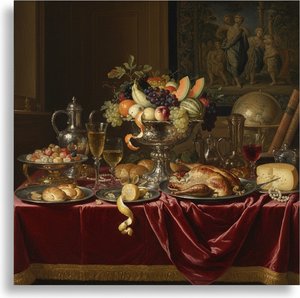
To gaze upon Balthasar van der Ast’s “Fruits and Shells on a Ledge” is to step through a portal into the heart of the Dutch Golden Age. Painted around 1630, this masterpiece is far more than a mere arrangement of inanimate objects; it is a meticulously orchestrated symphony of texture, light, and life. The canvas presents an opulent assembly of nature’s finest offerings—plump apples, vibrant oranges, deep plums, and the exotic curve of bananas—resting alongside a collection of seashells that whisper of distant, sun-drenched shores. Through his unparalleled skill, van der Ast transforms a simple stone ledge into a stage where the natural world performs its silent, breathtaking drama.
The painting serves as a profound reflection of the 17th-century Dutch spirit, an era defined by scientific curiosity and burgeoning global connections. During this period, the reach of the Dutch East India Company brought treasures from far-flung corners of the earth to the ports of Zeeland and beyond. The inclusion of exotic shells and tropical fruits was not merely a display of wealth, but a celebration of discovery and the expanding horizons of the human experience. Yet, amidst this display of prosperity, there is a poignant layer of vanitas—a subtle reminder of the fleeting nature of existence. As tiny insects buzz around the ripening fruit, the artist invites us to contemplate the delicate balance between the permanence of art and the ephemeral beauty of life itself.
Mastery of Light and Tactile Realism
What distinguishes this work for the discerning collector is van der Ast’s extraordinary command over technique. He employs a method of painstaking oil layering and subtle glazing that grants the surface an almost tactile luminosity. One can almost feel the cool, smooth skin of the apples, the rough, calcified ridges of the seashells, and the delicate, velvety softness of the single rose blossom that balances the composition. The artist utilizes atmospheric perspective to create a sense of profound depth, subtly shifting tones to pull the viewer into the scene, making the ledge appear as though it projects physically into our own space.
The lighting is equally masterful, emanating from an unseen source on the left to cast soft, defining shadows that sculpt each object with precision. This interplay of light and shadow creates a rhythmic movement across the canvas, guiding the eye from the dense, colorful cluster of fruit on the left toward the more tranquil, open space on the right. For those seeking to incorporate such a piece into a curated interior, its muted palette of greens, ochres, and deep reds offers a sophisticated anchor, providing both a sense of historical gravity and a timeless aesthetic elegance that complements both classical and contemporary decor.
An Invitation to Contemplation
Beyond its technical brilliance, “Fruits and Shells on a Ledge” possesses an emotional resonance that transcends centuries. It evokes a sense of quietude and reverence for the natural order. There is no overt narrative or loud drama; instead, there is a meditative stillness that encourages the viewer to slow down and observe the intricate details of the universe. Whether viewed as a celebration of botanical beauty or a philosophical meditation on time, the painting remains an enduring icon of Dutch excellence.
For art lovers and interior designers alike, owning a high-quality reproduction of this work means bringing more than just decoration into a room; it means inviting a piece of history, a sense of abundance, and a profound moment of reflection into the everyday environment. It is a testament to the idea that true beauty lies in the meticulous observation of the world around us.
Klausimai ir atsakymai
Kur galiu įsigyti „Fruits and Shells on a Ledge“ – Balthasar Van Der Ast skaitmeninį vaizdą?
Norėdami gauti „Fruits and Shells on a Ledge“ – Balthasar Van Der Ast skaitmeninį failą, užsisakykite aukštos raiškos skaitmeninio vaizdo atsisiuntimas jo Skaitmeninis vaizdas puslapio.
Kaip kontrastas ir harmonija susilieja kūryboje „Fruits and Shells on a Ledge“?
„Fruits and Shells on a Ledge“ kūryboje Serene kontrastas susilieja su Softly Mixed Palette harmonija.
Kokia yra „Fruits and Shells on a Ledge“ – Balthasar Van Der Ast dominuojanti spalva?
Gray (#67655c) yra pagrindinė kūrinio „Fruits and Shells on a Ledge“ – Balthasar Van Der Ast spalva.
Autoriaus biografija
Miniatūrinės visatos meistras: Balthasar van der Ast
XVII amžiaus Nyderlandų aukso šviesoje, laikotarpyje, apibūdiname neįtikėtinu klestėjimu ir moksliniu smalsu, Balthasar van der Ast iškilo kaip mažų formų šedevrų virtuozas. Gimęs Middelburge apie 1593 metus, van der Ast ne tik tapė paveikslavojaudavo daiktus; jis drobė kūrė tylius dramas. Jo gyvenimas buvo glaudžiai susipynęs su augančia Zeelandos prekybos kultūra, nes jis buvo sėkmingo vilnos kupėliaus Hanso van der Ast sūnus. Ši kilmė jam suteikė ne tik socialią stabilumą; ji suteikė ankstyvą artumą su egzotiškais prekės ir brangiais pavyzdžiais, kurie vėliau tapo pagrindiniais jo šlovės užlaikiusių stille lifų herojais.
Jo meninės sielos potyris negrįžtamai buvo nustatytas ryšio su Bosschaertų dynastija. Per šeimyninius ryšius van der Ast tapo legendinio Ambrosius Bosschaert senojo, savo globėjo, aukLtinojo mokinio. Po šio mokytojo priežiūra jis išmokėjo itin tikslaus meistriškumo, reikalingo „gėlių paveikslui“ – žanrui, reikalaujantiam beveik mikroskopinio stebėjimo lygio. Ši aukščiausios kokybės linija leido jam tobulinti techniką, pasižinčiantį subtiliu tonų skaidrumu ir giliu pagarba gamtos fizinei tekstūrai. Jis nebuvo vienas šio tobulumo siekime; kartu su savo maršmėnu helpė kultivuoti stilių judėjimą, kuris prioritetą teikė šviesos ir šešėlio subtiliam sąveikai, paversdamas paprastus botanikos tyrimus giliomis egzistencijos meditacijomis.
Muskelėlių ir floros simfonija
Nors daugelis jo samtvorių susikoncentruojo tik į nyksčios žiedų grožio, van der Ast pasiekė istorinę nemortalumą per savo pionieriškas tyrimas konchologijoje. Jis tapo muskelėlių tapybos pradininku, su kreiptiniu pagarbos lygia, su šviesiausiu žiedlapį, traktuodamas jūraičių kalcifikuotas likučius. Tokiuose darbuose kaip „Stille lifas su kliautais, vyšniomis ir muskelėmis“, galima stebėti kvapą gniaužiančią skirtingų tekstūrų suderinimą: sultingą, protingą vaisių odelę, kontrastingą kietoms, perlaminiu blizguliems muskelėms. Šis susižavėjimas nebuvo tik estetinį; jis atspindėjo to laikmečio augantį mokslinį susidomėjimą gamtos istorija ir pasaulinę Nyderlandų jūros prekybos plėtrą.
Jo kompozicijos dažnai veikė daug daugiau nei kaip tiesiog turto ar botanikinio tikslumo demonstravimas. Giliai žvelgiant į van der Ast paveikslą, įsivėliai į sudėtingą simbolių tinklą, šaknus įsišaknijusį humanistinėje filosofijoje. Jo sukomponuotuose vaizdu galima rasti:
- Gyvenimo nyksčios prigimtis: Atsprendžiama per nuvystusius žiedlapius arba vabzdžius, kurie sunaudoja būtent tą grožį, kuriame gyvena.
- Mokslinis stebėjimas: Tikslingas rūšių įrašymas, atspindintis Atr发现 amžių ir to laikmečio troškimą žinias.
- Vanitas temos: Subtilūs mirtumo priminimai, kur vaisių pūvimas tarnauja kaip jautrus memento mori.
Palikimas ir meninė reikšmė
Balthasar van der Ast įtarmis išsiplėtė daug toli už jo paties studijos Utrechtuje. Priimdamas tokius menininkus kaip Roelandt Savery į vietinę giliją, jis padėjo sukurti aplinką, kurioje tonališkumas ir realizmas galėtų klestėti. Jo gebėjimas nežemiems daiktams suteikti gyvybės pojūtį – savybė, matoma jo paveiksluose vaizduojant liaudžius ir vabzdžius, klaidžiojančius tarp vaisių – nustatė naują standartą Nyderlandų Aukso amžiui. Jis still life žanrą iš statinės išdėstymo link transformavo į dinamiškesnę, kvapą gniaužiančią realybę.
Šiandien jo darbai išlieka svarbiausiomis muziejų kolekcijų pamatinėmis dalimis visame pasaulyje, nuo Britiško muziejaus iki didelių Europos galerijų. Jo palikimas slypi kiekviename traukio: jame užfiksuota lašas lapuje ar muskelės perlažinis blizgesys. Balthasar van der Ast išlieka Stilleven titanų, menininkas, kuris išmokė pasaulį rasti begalybę begalėje ir paversdino paprastus gamtos pasaulio daiktus amžinais grožio įžymėtais.

Balthasar Van Der Ast
1593 - 1657 , Nyderlandai
Trumpa informacija
- Artistic Movement Or Style: Aukso amžiaus tapybos
- Artists Or Movements Influenced By This Artist: Olandų barokas
- Artists Who Influenced This Artist: Ambrosius Bosschaert
- Date Of Birth: 1593
- Date Of Death: 1657
- Full Name: Balthasar van der Ast
- Nationality: Olandas
- Notable Artworks:
- Vaisiai ir muskelės ant laiptelio
- Tulipas
- Gatvė ir muskelė
- Place Of Birth: Middelburgas, Nyderlandai
Susiję straipsniai
Abraham Hendricksz van Beyeren: Pioneering Dutch Still Life & the Banquet Tradition
Explore the captivating world of Dutch Golden Age still life with Abraham van Beyeren. Discover his innovative techniques, symbolic banquet scenes & lasting influence on art history. Learn about collecting these masterpieces.

Golden Light & Dutch Skies: The Timeless Magic of Dutch Golden Age Landscapes
Discover the breathtaking beauty of Dutch Golden Age landscapes. Explore the mastery of light, chiaroscuro, and 17th-century realism through an expert art history lens, celebrating the enduring legacy of the Dutch Masters for discerning collectors and art lovers.

Rembrandto van Rijn šedevrai: 25 paveikslai, įkvėpę amžius | OriginalUniqueArt
Atraskite 25 įspūdingiausius Rembrandto paveikslus! Išsami istorija, meno technikos ir simbolika. Olandų baroko šedevrai jūsų interjerui – aukštos kokybės reprodukcijos OriginalUniqueArt.com. Explore the full collection online!

Golden Age Reflections: Dutch Baroque Painting & Cultural Innovation
Explore the Dutch Golden Age of painting! Discover key artists like Vermeer & ter Borch, their innovative techniques, and the rich cultural context behind these Baroque masterpieces. Learn about collecting & appreciating this iconic art period.

Olandijos Aukso Amžius: 10 Šedevrų, Apibrėžiančių Meną ir Stilių
Atraskite Olandijos Aukso Amži\u017us meninius šedevrus! 10 legendin\u017iŴ paveikslžiai – Rembrandto, Vermeerio ir kt. darbai. Sužnkitę j\u016ungo namus aukso amži\u017us grožiu! Āukrai, interjero dizainas – viskas OriginalUniqueArt.com. Ižirkite kolekciją internete!