Perjungti į spausdinamus版作品
 Skaityti daugiau







































 Dėl meno kūrinių ar reprodukcijų, kurių bet kuri pusė yra didesnė nei 105 cm (apie 41 inch), rėmas bus siunčiamas kaip išskaidytas surinkimo rinkinys. Šis metodas užtikrina saugų pristatymą ir apsaugo nuo transportavimo metu galimos žalos.


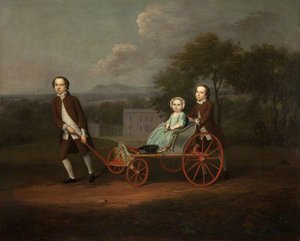
Young Man, the Young Waltonian: An Intimate Portrait of Georgian Elegance
Arthur William Devis’s “Young Man, the Young Waltonian,” painted circa 1750, stands as a quintessential example of the conversation piece – a genre that flourished during the Georgian era and captured not just likeness but also social milieu. This captivating portrait resides within the Government Art Collection at Old Admiralty Building in London, offering visitors a glimpse into a period defined by refined sensibilities and burgeoning naval ambition. Measuring 142 x 153 cm, Devis’s masterful brushstrokes convey a remarkable level of detail, reflecting the meticulous observation characteristic of his artistic practice.A Window Into Georgian Society
The painting depicts a young gentleman posed confidently beside a dog, dressed in attire indicative of colonial influence – a subtle nod to Britain's expanding empire at the time. The pose itself is deliberately relaxed yet dignified, mirroring the social conventions of the period where portraiture served as both documentation and assertion of status. Devis skillfully captures not merely physical appearance but also an aura of intellectual curiosity and composure, qualities valued in Georgian gentlemen. The inclusion of two dogs adds to the scene’s narrative richness, symbolizing loyalty and companionship – themes prevalent within aristocratic circles.Technique and Artistic Style
Devis employed oil paint on canvas with remarkable precision, utilizing layering techniques to achieve luminous tonal gradations that illuminate the subject's face and clothing. His brushwork is characterized by delicate blending and subtle modeling, creating a palpable sense of texture and depth. This meticulous approach aligns perfectly with Devis’s reputation as a painter known for his “gentle hand,” emphasizing accuracy and subtlety rather than dramatic flair. The artist’s focus on capturing the nuances of human expression distinguishes him from more flamboyant contemporaries like Joshua Reynolds, establishing Devis as a champion of psychological realism within portraiture.Symbolism and Emotional Resonance
Beyond its depiction of an individual, “Young Man, the Young Waltonian” speaks to broader cultural values. The fishing rod symbolizes aspiration – reaching for achievement and mastering one's environment—a sentiment resonating with the ambitions of Georgian Britain. Furthermore, the serene setting contributes to a mood of contemplative contemplation, inviting viewers to consider themes of virtue and refinement. Devis’s ability to convey emotion through visual means elevates this portrait beyond mere likeness, transforming it into an enduring emblem of Georgian elegance and intellectual grace.Legacy and Rediscovery
Forgotten for much of the 20th century, “Young Man, the Young Waltonian” experienced a significant revival in scholarly interest during the latter half of the century. Art historians recognized Devis’s contribution to the conversation piece genre and celebrated his dedication to capturing the subtleties of human psychology. Today, reproductions of this artwork continue to inspire collectors and interior designers alike, offering a tangible connection to a bygone era—a testament to Devis's enduring artistic legacy.Klausimai ir atsakymai
Ką „Young Man, the Young Waltonian“ turi bendro su visa Arturas Viljamas Devis kūryba?
Arturas Viljamas Devis kūryboje „Young Man, the Young Waltonian“ atlieka Georgian Portraiture stilių, susijęs su evokes georgian aristocratic taste, reflects naval history traditions, shows refined domestic portraiture, illustrates colonial era ideals temomis.
Kokia pagrindinė spalva dominuoja kūrynije „Young Man, the Young Waltonian“ – Arturas Viljamas Devis?
„Young Man, the Young Waltonian“ linksta į Ochre to Sepia atspalvį.
Ar „Young Man, the Young Waltonian“ – Arturas Viljamas Devis yra portretinė, peisžinio tipo ar kvadratinė kompozicija?
„Young Man, the Young Waltonian“ – Arturas Viljamas Devis kūrinio formatas yra Square. Formatas aprašo kompozicijos proporcijas.
Daugiau informacijos apie šį paveikslą
 Peržiūrėti realaus dydžio版
 Pasidalinti
 Dalintis
 Išsamiau
 Vadovas

 Atsisiųsti
 Panašūs eksponatai
 Rentgeno spindulių nuotrauka
 Automatinė diorama
 问答
问答 Statistika