

 Peržiūrėti realaus dydžio版
 Siųsti
 Dalintis
 Išsamiau
 Vadovas

 Atsisiųsti
 Panašūs eksponatai
 Rentgeno spindulių nuotrauka
 Diaporama
 Statistika
Red Gaze
 Acrylic On Canvas
- WallArt
- Expressionist Modernism
 1910
1910- 19th Century
 22.0 x 28.0 cm
 Arnold Schönberg Center
 Rodyti daugiau
Giclée / Meno spausdinimas
Muziejų lygio „giclée“ arba drobos spausdinimas: greita gamyba ir lankstios apdailos parinktys. ( Pirkti rankomis tapytą reprodukciją Perejti prie skaitmeninių vaizdų)




P118B €10

P118H €10

P118W €10

P438Z €10

P508JH €12

P508YH €12

P805H €10

P805Z €10

P919BZ €10

P919G €10

P919XJ €10

P959ZH €10

P968JZ €12

W106C €8

W218G €10

W218JH €8

W218Y €10

W307PJ €10

W316G €10

W316PJ €8

W316Y €10

W398PJ €8

W4111J €10

W500HY €15

W500JH €15

W692G €12

W849H €8

W940BG €15

W953PJ €8




Pasirinkite iš mūsų nustatytų dydžių, atitinkančių originalaus meno kūrinio proporcijas.

Įveskite jums reikiamą plotį ir aukštį, kad atvaizdas derėtų prie jūsų rėmo ar sienos. Spausdiną galima tik sumažinti, bet nepadidinti virš originalaus paveikslėlio dydžio, todėl keičiant proporcijas, dalis vaizdo prarandama. Prieš spausdinimą atsiųsime jums skaitmeninį maketą patvirtinimui. Šioje puslapio nuotraukoje matomas pjūvis nėra tikslus – jį rodo tik maketas.
Pristatymas visame pasaulyje () per 2 weeks, o ne įprastas 4/5 savaičių laikotarpis. (21 spalis)

Nemokamas greitasis pristatymas visame pasaulyje

Aukštos kokybės lininis drobė

Pilnas siuntimo draudimas

Muitinės mokesčių grąžinimo garantija

Tikro spalvų atitikimo garantija

100 dienų grąžinimo politika (tik esant įtaigoms)

100% pinigų grąžinimo garantija

Nuolaida dideliems užsakymams
 Stiklo variantas prieinamas tik pasirinkus dydį iki 110 cm

Red Gaze
Giclée / Meno spausdinimas
Reprodukcijos dydis
-


Visų pasirinktų variantų kaina
€ 70
A Descent into Torment: Unveiling Schönberg’s “Red Gaze”
Arnold Schönberg's "Red Gaze," painted in 1910, isn't merely a portrait; it’s a visceral plunge into the heart of human anguish. Executed during a period of radical artistic experimentation, this work embodies the composer’s intensely personal and often unsettling vision – a vision he sought to translate directly onto canvas with startling immediacy. The painting, currently residing within the hallowed halls of the Arnold Schönberg Center in Vienna, Austria, immediately commands attention with its arresting focus on a face dominated by a searing red gaze. This isn't a gentle observation; it’s an intrusion, a direct confrontation with a state of profound distress.
- Subject & Composition: The central figure is rendered in a strikingly simplified manner, prioritizing emotional impact over realistic representation. The close-up perspective intensifies the feeling of claustrophobia and vulnerability, drawing the viewer into the subject’s tormented experience.
- Color Palette: Predominantly red and yellow hues dominate the canvas, creating an atmosphere of feverish intensity. The strategic use of these colors – traditionally associated with passion, danger, and even madness – amplifies the painting's unsettling effect.
The Roots of Atonality: Contextualizing Schönberg’s Vision
To fully appreciate “Red Gaze,” one must understand the artistic climate in which it was created. Schönberg, a pivotal figure in the development of atonality – music devoid of traditional tonal centers – was pushing boundaries with his compositions like "Pierrot Lunaire." This experimentation extended to his visual art, where he rejected conventional representational techniques in favor of conveying raw emotion and psychological states. Elsa Bienenfeld’s observation that Schönberg aimed for “a fulgurant clarity” – a sudden flash of insight – perfectly encapsulates this approach. He wasn't striving for beauty or harmony; he was attempting to capture the unsettling, almost unbearable truth of human experience.
- Musical Influence: Schönberg’s musical innovations directly informed his painting style. The fragmented harmonies and dissonances found in works like the Fourth Quartet are mirrored in the fractured composition and jarring color choices of “Red Gaze.”
- The Second Viennese School: This painting represents a key element of the Second Viennese School, alongside artists such as Gustav Klimt and Egon Schiele, who sought to express psychological realities through unconventional forms.
Symbolism & Emotional Resonance
"Red Gaze" is profoundly unsettling, evoking a sense of dread and vulnerability. The phrase “a vein bursts in the brain” – Schönberg’s own description of one of his quartet movements – speaks volumes about the painting's intended effect. It suggests an overwhelming surge of emotion, a moment of catastrophic breakdown. The painting doesn’t offer answers; it presents a raw, unfiltered glimpse into a tormented soul. The use of quick, hastily veiled lights adds to this sense of urgency and instability, as if the subject is struggling to maintain control against forces beyond their comprehension.
- Interpretation: Some scholars interpret the red gaze as representing suppressed rage or unacknowledged guilt, while others see it as a symbol of existential anxiety. The ambiguity is deliberate, inviting viewers to project their own fears and anxieties onto the canvas.
- Technique: Schönberg’s technique involved rapid brushstrokes and a layering of colors, creating a textured surface that further enhances the painting's sense of urgency and movement.
A Timeless Expression of Human Suffering
"Red Gaze" remains a powerfully evocative work, demonstrating Schönberg’s extraordinary ability to translate his musical innovations into a visual language of intense emotion. Its unsettling beauty and profound psychological depth continue to captivate viewers over a century later. This meticulously crafted reproduction offers an unparalleled opportunity to experience this seminal artwork firsthand, bringing its haunting intensity into your space.
问答 (or more naturally for a website heading): Klausimai ir atsakymai
Kaip „Red Gaze“ stilius susijęs su kūrėjo laikmečiu?
Karya `„Red Gaze“, autorius – Arnoldas Šēnbergas` kūryboje `Expressionist Modernism` kryptis susilieja su `Modernizmas` laikotarpiu.
Kokia spalva labiausiai išsiskiria kūryniame „Red Gaze“?
Quinacridone Magenta (#75534c) yra pagrindinė kūrinio „Red Gaze“, autorius – Arnoldas Šēnbergas spalva.
Kokie yra originalaus „Red Gaze“ matmenys?
Originalaus dydžio kūrinys „Red Gaze“ yra 22 x 28 cm. Originalūs matmenys yra naudingas orientiris renkantis reprodukcijos dydį.
Autoriaus biografija
ankstyvasis gyvenimas ir muzikiniai pradžiai
arnoldas schoenbergas, austro-amerikos kompozitorius, gimė 1874 m. gruodžio 13 d. Vienoje, Austrijoje. Jo ankstyvasis gyvenimas prasidėjo skaudžiai paprastai – jo tėvas buvo suvienukų parduotuvės savininkas. Nepaisant to, prigimta aistra muzikai paskatino schoenbergą daugosi로 savikurti savo žinias šioje srityje.muzikinė evoliucija ir iškilę darbai
schoenbergo ankstyvieji kūriniai, tokie kaip verklärte nacht (1899), rodė brahmsizmo ir wagneriško stiliaus sintezę. Tobulėdamas, jis tapo antrosios vienosios mokyklos pagrindine figūra kartu su antonu webernu ir albanu bergą. Jo kompozicijos, įskaitant strykų kvartetą nr. 2 (1907–1908), erwartung (1909) ir pierrot lunaire (1912), atskleidė jo inovatyvų požiūrį į atonalumą.mokymas, emigracija ir vėlesnio gyvenimo metai
1933 m., nazių prie šios valdžios pakilimo dėl, schoenbergas nusitraukė iš Prusijos meno akademijos, nes jo muzika buvo pavadata „degeneratyva“. Vėliau jis mokė JAV, įskaitant Kalifornijos universiteto Los Angeluose (1936–1944), kurios patalpos įvardijamos jo garbei. [https://OriginalUniqueArt.com/@/arnold-serdenberg](atraskite daugiau apie schoenbergo gyvenimą ir kūrybą OriginalUniqueArt).- schoenbergas tyrinėjo filmų muziką ir rašė daugiau tonalinės muzikos, baigdamas savo kamarinę simfoniją nr. 2 1939 m.
- jis farsavo fašistus tiranus Byrono stiliaus odele napoleonui (1942).
- poatremsio Viena jam suteikė garbės piliebystę, tačiau jis buvo ligas, kaip tai atspindima jo strykų trio (194ng).
palikimas ir įtaka
pasaukui sužinojus apie holokaustą, schoenbergas įamžino jo aukas kūrybinėje a survivor from warsaw (1947). Izraelio konservatorija ir muzikos akademija 1951 m. paskyrė jį garbės prezidentu. [https://OriginalUniqueArt.com/@@/a@d3bqc7-the-museum-destroyed-by-fire-(united-states)](sužinokite daugiau apie jo kūrybos poveikį OriginalUniqueArt). pagrindiniai akcentai:- schoenbergo inovatyvi muzika buvo viena įtakingiausių ir daugiausiai debatuojamų 20-osios amžiaus klasikinės muzikos kūrybos.
- bent trys kompozorių kartos išplėtė jos kiek formalius principus.
- jo estetiniai ir muzikos istoriniai požiūri įtakos muzikologams theodorui w. adornui ir carliui dahlhausui.

Arnoldas Šēnbergas
1874 - 1951 , Austrija
Trumpa informacija apie kūrėją
- Gimimo Data: 1874 m. rugsėjo 13 d.
- Gimimo Vieta: Viena, Austrija
- Meningus Įkvėlusios Šį Artistą Asmenybės:
- Johannes Brahms
- Richard Wagner
- MenなさInis Kryptis Ar Stilius: Dvylika tono technika; Ekspresionizmas
- Mirties Data: 1951 m.
- Tautybė: Austrijo-amerikietis
- Visas Vardas Ir Pavardė: Arnold Schoenberg
- Šį Artistą Įkvėlusios MenなさIniai Kryptys Arba Menininkai:
- Anton Webern
- Alban Berg
- Žinomos Kūriniai:
- Suite, op. 29
- Music Typewriter
- Staffliner
Susiję straipsniai

Geometrinės Abstrakcijos Šedevrai: 10 Kūrinių, Pakeitusių Meną | OriginalUniqueArt.com
Atraskite 10 geometrinės abstrakcijos šedevrų – nuo Mondriano iki Malevičiaus! Sužinokite apie Piet Mondrian, Kazimir Malevič ir kitus menininkus. Meno kūriniai jūsų interjerui | OriginalUniqueArt.com

Kandinsky's Masterpieces: 25 Paintings That Define Abstract Art | OriginalUniqueArt
Journey through Wassily Kandinsky's 25 most iconic abstract paintings. Explore his revolutionary use of color, form & spiritual expressionism. Find museum-quality Kandinsky reproductions and elevate your home decor with OriginalUniqueArt.com. Discover all masterpieces on OriginalUniqueArt.com!
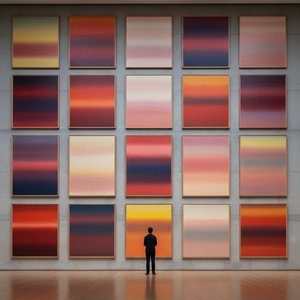
Mark Rothko: 25 Šedevrai, Apibūdinantys Spalvų Ir Jaustmo Gylį | OriginalUniqueArt
Atraskite 25 įspūdingiausius Mark Rothko kūrinius! Gilinkitės į abstraktaus meno spalvų laukus, ekspresionizmą ir jaustmingas tapybas. Meno reprodukcijos aukščiausia kokybe – OriginalUniqueArt.com

Top 10 Abstraktus Ekspresionizmas: Simboliai ir Grožio Paslaptys
Atraskite 10 legendinių abstraktus ekspresionizmo kūrinių! Pažinkite Pollocko, Rothko ir kitų genijų istorijas bei jų spalvingas meno interpretacijas. Puikios meninės reprodukcijos jūsų namams – OriginalUniqueArt.com

Beyond Form & Color: Geometric Abstraction's Evolution in 20th/21st Century Art
Explore the evolution of geometric abstraction from Cubism to contemporary art. Discover key artists like Malevich & Mondrian, investment insights, and expert collecting advice at OriginalUniqueArt.


