

 Peržiūrėti realaus dydžio版
 Siųsti
 Dalintis
 Išsamiau
 Vadovas

 Atsisiųsti
 Panašūs eksponatai
 Rentgeno spindulių nuotrauka
 Diaporama
 Statistika
Sleeping Diana Watched by Two Fauns
 Acrylic On Canvas
- WallArt
- Symbolist Painting
 1877
1877 50.0 x 774.0 cm
 Kunstpalast
 Rodyti daugiau
Giclée / Meno spausdinimas
Muziejų lygio „giclée“ arba drobos spausdinimas: greita gamyba ir lankstios apdailos parinktys. ( Pirkti rankomis tapytą reprodukciją Perejti prie skaitmeninių vaizdų)




P118B $10

P118H $10

P118W $10

P438Z $10

P508JH $12

P508YH $12

P805H $10

P805Z $10

P919BZ $10

P919G $10

P919XJ $10

P959ZH $10

P968JZ $12

W106C $8

W218G $10

W218JH $8

W218Y $10

W307PJ $10

W316G $10

W316PJ $8

W316Y $10

W398PJ $8

W4111J $10

W500HY $15

W500JH $15

W692G $12

W849H $8

W940BG $15

W953PJ $8




Pasirinkite iš mūsų nustatytų dydžių, atitinkančių originalaus meno kūrinio proporcijas.

Galite nurodyti savo matmenis, kad vaizdas atitiktų konkretų rėmą ar erdvę. Jei pasirinktas dydis nesutaps su originalaus paveikslėlio proporcijomis, mes arba apkirpsime kūrinį, arba išplėsime vaizdą naudojant veideliu atspindėtą arba vientisą šoną. Skaitmeninis maketas bus išsiųstas jums patvirtinti prieš pradedant gamybą.
Atkreipkite dėmesį, kad ekrane matomas vaizdinys neatspindi tikrojo apkirpimo ar išplėtimo. Tik maketas tiksliai parodytų galutinę kompoziciją.
Nors galima rinktis ir individualius dydžius, rekomenduojame pasirinkti vieną iš išanksti nustatytų matmenų, kad būtų išlaikytos originalios proporcijos.
Pristatymas visame pasaulyje () per 2 weeks, o ne įprastas 4/5 savaičių laikotarpis. (27 rugsėjis)

Nemokamas greitasis pristatymas visame pasaulyje

Aukštos kokybės lininis drobė

Pilnas siuntimo draudimas

Muitinės mokesčių grąžinimo garantija

Tikro spalvų atitikimo garantija

100 dienų grąžinimo politika (tik esant įtaigoms)

100% pinigų grąžinimo garantija

Nuolaida dideliems užsakymams
 Stiklo variantas prieinamas tik pasirinkus dydį iki 110 cm

Sleeping Diana Watched by Two Fauns
Giclée / Meno spausdinimas
Reprodukcijos dydis
-


Visų pasirinktų variantų kaina
$ 80
The Enigmatic Realm of Arnold Böcklin’s “Sleeping Diana”
Arnold Böcklin's "Sleeping Diana Watched by Two Fauns," painted in 1877-85, is not merely a depiction of a serene woodland scene; it’s an immersion into a realm of potent symbolism and haunting beauty. This tempera on panel masterpiece, currently residing in the Museum Kunstpalast in Düsseldorf, immediately draws the viewer into a world where classical mythology intertwines with unsettling introspection. The painting's power lies not just in its exquisite detail – the dappled sunlight filtering through ancient trees, the delicate folds of Diana’s gown – but in the palpable tension between innocence and primal instinct, restraint and desire.
Böcklin, a key figure in the Symbolist movement, rejected the naturalism prevalent in earlier art. Instead, he sought to evoke emotions and ideas through suggestive imagery, often drawing upon folklore, mythology, and the darker aspects of human experience. His work frequently explores themes of death, decay, and the subconscious—elements subtly woven into this particular composition. The painting’s genesis is rooted in a fascination with the ancient world, particularly Roman art and literature, combined with a deeply personal exploration of mortality and the fleeting nature of beauty.
A Dance of Contrasts: Goddess and Creatures
At the heart of “Sleeping Diana” lies a captivating interplay of figures. The goddess Diana, depicted in a state of languid repose upon a moss-covered rock, embodies purity, chastity, and the hunt—attributes traditionally associated with her role as protector of young women. Her serene expression and graceful posture suggest both vulnerability and an underlying strength. However, this idealized image is dramatically contrasted by the two fauns flanking her. These creatures, rendered with a touch of unsettling realism, possess a distinctly animalistic quality, their hands almost touching in a gesture that hints at a suppressed, perhaps even forbidden, attraction.
The positioning of the fauns—one reaching out tentatively towards Diana, the other holding back—creates a dynamic tension. It’s not a violent confrontation, but rather a delicate negotiation between opposing forces: the divine and the earthly, the rational and the instinctual, the controlled and the wild. The subtle shift in their postures suggests a moment suspended in time, a fleeting glimpse into a primal drama.
Technique and Atmosphere – A Palette of Twilight
Böcklin’s masterful technique contributes significantly to the painting's evocative atmosphere. He employed a rich, layered application of tempera paint, creating a sense of depth and texture that captures the dappled light filtering through the trees. The color palette is dominated by muted greens, browns, and blues—tones reminiscent of twilight or early morning—which imbue the scene with a melancholic beauty. Böcklin’s use of chiaroscuro – the dramatic contrast between light and shadow – further enhances the painting's emotional impact, drawing attention to Diana’s form while simultaneously shrouding the surrounding landscape in mystery.
Notably, Böcklin was influenced by the Italian Renaissance color palettes, particularly those favored during the Early Renaissance. This influence is evident in the warm, earthy tones and the overall sense of harmony and balance within the composition. The meticulous detail in rendering the foliage and the subtle nuances of light and shadow demonstrate Böcklin’s exceptional skill as a landscape painter.
Symbolism and Enduring Resonance
“Sleeping Diana Watched by Two Fauns” is replete with symbolic meaning, inviting multiple interpretations. The painting can be read as an allegory for the tension between desire and restraint, innocence and experience, or perhaps even the struggle to maintain control over one’s impulses. The fauns themselves are often interpreted as representing the darker aspects of human nature—the primal instincts that lie beneath the surface of civilized society. Diana's sleep can be seen as a state of vulnerability, while the watchful fauns embody the constant threat of temptation and transgression.
Despite its somewhat unsettling undertones, “Sleeping Diana” remains a profoundly beautiful and captivating work of art. It’s a testament to Böcklin’s ability to capture not just visual beauty but also the complex emotions and psychological states that lie beneath the surface of human experience. Reproductions of this iconic painting continue to resonate with viewers today, offering a glimpse into a world where myth, symbolism, and timeless beauty converge.
Autoriaus biografija
ankylas gyvenimas ir mokslas
Arnoldas Böcklinis, šveicarių simbolizmo dailininkas, gimė 1827 m. spalio 16 d. Bazely, Šveicarijoje. Jo tėvas, Christian Frederick Böcklin, kilęs iš senios Šafenhauzeno šeimos, užsiėmė šilko prekyba. Arnoldo motina, Ursula Lippe, taip pat kilusi iš to paties miesto. Dailininkas studijavo Diseldorfo akademijoje dirbdamas su Schirmeriu, tapdamas Anselm Feuerbach draugu. Böcklinio kūryba neatsiejama nuo Diseldorfo tapybos mokyklos.meninė karjera ir simbolizmas
Böcklinio meninė kelionė jį vedė per įvairius miestus, įskaitant Paryžių, kur jis dirbo Luvre muziejuje, ir Romą, kur jį įkvėpė tenక matiniai vaizdai. Jo kūrinys dažnai로 atskleidė alegoriškas ir mitologines figūras klasikinės architektūros aplinkoje, nagrinėjant mirties ir žmogiškosios būties prigimtį.- „Didysis parkas“, vienas jo ankstyviausių darbų, pristatė senovės mitologiją.
- „Nimfa ir satiras“ (1858) bei „Safona“ (1859) buvo išskirtiniai šio laikotarpio kūriniai.
- Böcklinio „Mano portretas, kai mirtis groja smuiku“ (1872) tapo jo unikalaus stiliaus pavyzdžiu.
palikimas ir įtaka
Böcklinis geriausiai žinomas dėl penkių savo versijų paveikslų „Mirusioji sala“ (1880–1886), kurie priminė Florencijos anglišką kapinę, kurioje buvo palaikyta jo dukra. Jo kūryba paveikė jaunesnius menininkus, tokius kaip Hans Thoma, ir įkvėpė keletą vėlyvo romantizmo kompozitorių.- Clement Greenbergas apibūdino Böcklinio darbą kaip „vieną iš to laikmečio paryškintų išraiškų“.
- Böcklinio stilius sutapė su prerafaelitais, pabrėžiant sapnų ir mistikos pasaulį.
muziejai ir kolekcijos
Böcklinio kūriniai galima rasti įvairiuose muziejuose, įskaitant:- Öffentliche Kunstsammlung (Bazelis, Šveicarija)
- Kunstmuseum Basel (Šveicarija)
- Museum Kunsthaus Zürich (Zürich, Šveicarija)
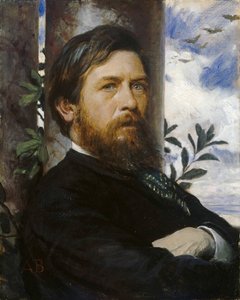
Arnoldas Böcklinas
1827 - 1901 , Šveicarija
Trumpa informacija apie kūrėją
- Artinis Stilius Ar Kryptis: Simbolizmas
- Artistus, Kurie Paveikė Šį Artistą:
- Schirmer
- Feuerbach
- Gimimo Data: 1827 m. gruodžio 16 d.
- Gimimo Vieta: Bazelis, Šveicarija
- Mirties Data: 1901 m. sausio 16 d.
- Tautybė: Šveicarių
- Visas Vardas Ir Pavardė: Arnold Böcklin
- Šį Artistą Įkvėlusios Menininkai Ar Kryptys:
- Hans Thoma
- Prerafelitai
- Žinomos Kūriniai:
- Mirusiųios salos
- Nimfa ir satiras
- Safona
- Mano portretas
Susiję straipsniai

Timeless Legends: The Eternal Allure of Mythological Figures in Masterpiece Art
Explore the profound beauty of mythological figures through the lens of art history. From Renaissance masterpieces to custom oil reproductions, discover how legendary tales of heroism and divinity are immortalized in fine art for discerning collectors.
Echoes of Olympus: Mythological Narratives in Western Art Through the Ages
Explore the captivating history of mythological narratives in Western art! From ancient Greece to modern masterpieces, discover iconic artworks & symbolism. Expert analysis and high-quality reproductions at OriginalUniqueArt.
Timeless Legends: A Curated Guide to the Eternal Allure of Mythological Masterpieces
Embark on a sophisticated journey through the eternal allure of mythological art. Discover how master painters breathe life into ancient legends, from Greek deities to Baroque masterpieces, and learn to curate these timeless narratives within your own exquisite art collection.
Franz von Stuck: Symbolism, Decadence & the Pursuit of Ideal Beauty
Explore the captivating world of Franz von Stuck, a leading Symbolist painter. Discover his mythological masterpieces, decadent themes, & investment potential. Expert analysis for discerning collectors.
Asmeninių mitų pynimas aliejinės tapybos audinyje: idėjų transformacija į simbolinius šedevrus
Atraskite aliejinės tapybos magiją ir simbolizmo gylį! Ekspertai padės transformuoti Jūsų idėjas į unikalų meno kūrinį. Kokybiškos reprodukcijos, užsakomieji paveikslai bei konsultacijos. Investicijos į meno paveldą.
