

 Peržiūrėti realybėje
 Pasidalinti
 Dalintis
 Išsamiau

 Atsisiųsti
 Panašūs eksponatai
 Rentgeno nuotrauka
 Automatinė diorama
Roemer


 Skaityti daugiau
Rankų darbo aliejinės reprodukcijos
Rankiniu būdu tapytas aliejus ant droblio jūsų pageidaujamame dydį ir rėmuose – mūsų menininkų darbas pagal užsakymą. ( Pirkti spaudinį Pirkti vaizdą)




P118B $10

P118H $10

P118W $10

P438Z $10

P508JH $12

P508YH $12

P805H $10

P805Z $10

P919BZ $10

P919G $10

P919XJ $10

P959ZH $10

P968JZ $12

W106C $8

W218G $10

W218JH $8

W218Y $10

W307PJ $10

W316G $10

W316PJ $8

W316Y $10

W398PJ $8

W4111J $10

W500HY $15

W500JH $15

W692G $12

W849H $8

W940BG $15

W953PJ $8




Pasirinkite iš mūsų nustatytų dydžių, atitinkančių originalaus meno kūrinio proporcijas.

Galite įvesti savo matmenis, kad jie atitiktų konkretų rėmą ar erdvę. Jei pasirinktas dydis neatitinka originalaus paveikslėlio proporcijų, mes arba apkropsime meno kūrinį, arba papildysime tapybą rankomis dažytい elementais. Prieš pradėdami gamybą, jūsų patvirtinimui atsiųsime skaitmeninį maketą.
Atkreipkite dėmesį, kad ekrane rodomas vaizdas neatspindi tikrojo apkarpymo ar papildymo. Tik maketas tiksliai parodys galutinę kompoziciją.
Nors galima rinktis ir individualius dydžius, rekomenduojame pasirinkti matmenis iš nustatytos sąrašo, kad būtų išlaikytos originalios proporcijos.
Gavus užsakymą, OriginalUniqueArt.com komanda susisieks su klientu el. paštu dėl instrukcijų ir pateiks maketo pavyzdį.
Pristatymas visame pasaulyje () per 3–4 savaites, o ne įprastai – per 5 savaites. (12 rugpjūtis). Kokybė lieka nepakeičiama.

Nemokamas greitasis pristatymas visame pasaulyje

Aukštos kokybės lininis drobė

Pilnas siuntimo draudimas

Muitinės mokesčių grąžinimo garantija

Tikro spalvų atitikimo garantija

60 dienų grąžinimo politika (tik esant gamyklinėms defektams)

100% pinigų grąžinimo garantija

Nuolaida už kelias reprodukcijas
 Stiklo variantas prieinamas tik pasirinkus dydį iki 110 cm

Roemer
Reprodukcijos technika
Reprodukcijos matmenys
-


Galutinė kaina
$ 300
Kūrinio aprašymas
A Glimpse of Renaissance Refinement: The Glass Vase "Roemer"
Anna Roemers Visscher’s “Roemer,” created in 1619, is more than just a beautiful glass vessel; it's a captivating window into the artistic and intellectual currents of the Dutch Golden Age. This exquisite vase, now meticulously reproduced, offers a rare glimpse into the world of a remarkably talented woman – a poet, translator, and, crucially, a master glass engraver operating within a society that often relegated women to domestic roles. The piece itself is a testament to the burgeoning craft of diamond-point engraving, a technique demanding immense skill and patience, where delicate lines are etched directly into the surface of the glass using a sharp diamond tool.
The photograph reveals a deep blue glass, subtly shifting in tone – a deliberate choice likely achieved through careful selection and manipulation of the molten material. The design is dominated by cursive text, “Constantinus Huygens,” a prominent figure in Dutch science and astronomy, suggesting a connection to intellectual pursuits and perhaps even commissioned for him as a gift or token of appreciation. Beyond the inscription, intricate floral motifs – stylized roses, lilies, and other blooms – intertwine with decorative flourishes, demonstrating Visscher’s mastery of both form and narrative. The rounded bowl shape, narrowing gracefully to a slender stem culminating in three small, pearl-like elements, speaks to an understanding of balance and proportion, hallmarks of Renaissance design.
The Artist: Anna Roemers Visscher – A Hidden Gem
Anna Roemers Visscher’s story is one of quiet brilliance. Born into a wealthy Amsterdam merchant family in 1584, she received an unusually comprehensive education for a woman of her time, encompassing languages, calligraphy, embroidery, and, most notably, the art of glass engraving. Her marriage to Dominicus Booth van Wesel brought her into a refined social circle, including luminaries like P.C. Hooft and Jacob Cats – figures who recognized and championed her artistic talent. The Muiderkring, a prestigious group of artists, writers, and musicians, provided a platform for her work and intellectual discussions. Despite the societal constraints placed upon women, Visscher persevered, producing a remarkable body of work that continues to fascinate art historians today.
Her life was interwoven with literary pursuits; she translated works by Georgette de Montenay and contributed poetry to emblem books – demonstrating her versatility and intellectual engagement. The fact that she was celebrated by prominent figures like Rubens, who dedicated engravings to her, underscores the profound respect she commanded within artistic circles. Visscher’s work wasn't merely decorative; it reflected a sophisticated understanding of symbolism and humanist ideals prevalent during the Renaissance.
Symbolism and Context: A Window into 17th-Century Life
The inclusion of “Constantinus Huygens” within the design is particularly significant. Huygens was not only a renowned astronomer but also a key figure in the development of the telescope, representing scientific advancement and intellectual curiosity – values highly valued during this period. The floral motifs themselves carry symbolic weight; roses often represent love and beauty, lilies symbolize purity and grace, while other blooms evoke themes of fertility and prosperity. The vase itself would have been a prized possession within a wealthy household, serving as both a functional object for holding wine or water and a decorative element reflecting the owner’s status and taste.
“Roemer” is thus a microcosm of 17th-century Dutch society – a blend of artistic refinement, intellectual engagement, and social aspiration. It offers a tangible connection to a vibrant era marked by innovation, patronage, and the flourishing of the arts.
Recreating the Masterpiece: A High-Quality Reproduction
Today, through meticulous reproduction techniques, we can appreciate the exquisite detail and artistry of Anna Roemers Visscher’s “Roemer.” The process involves skilled artisans carefully replicating every delicate line, subtle shade, and intricate motif using traditional methods. The result is a faithful representation that captures not only the visual beauty of the original but also its historical context and artistic significance. This reproduction serves as a lasting tribute to a remarkable artist whose contributions have often been overlooked – a testament to her enduring legacy within the world of art.
Autoriaus biografija
A Muse of the Golden Age: The Radiant Life of Anna Roemers Visscher
In the vibrant, bustling heart of seventeenth-century Amsterdam, where the scent of spice and sea salt mingled with the intellectual fervor of the Renaissance, a remarkable talent emerged from the prestigious Visscher lineage. Anna Roemers Visscher was not merely a witness to the Dutch Golden Age; she was one of its most luminous participants. Born into a family of profound cultural significance—the eldest daughter of the celebrated merchant and poet Roemer Visscher—Anna was raised in an environment where literature, art, and philosophy were as essential as the very air of the Republic. Her upbringing provided her with an extraordinary education, far exceeding the typical domestic training of her era, allowing her to master a diverse array of disciplines including calligraphy, embroidery, drawing, and the delicate, demanding art of glass engraving.
The essence of Anna’s artistry lay in her ability to bridge the gap between the tactile and the lyrical. She was a creator who worked at the intersection of visual precision and poetic depth. Her specialty, diamond-point glass engraving, required an almost superhuman level of patience and steady-handedness. Using a diamond tip to etch intricate designs directly into glass, she transformed functional objects into vessels of profound meaning. These works were often characterized by their mastery of chiaroscuro, using the interplay of light through the etched surface to create subtle tonal variations that breathed life into floral motifs and classical imagery. One of her most poignant surviving works, a roemer glass from 1621, serves as a testament to this skill, featuring exquisite engravings paired with her own poetic verses—a gift intended for the great Constantijn Huygens.
The Muiderkring and the Intellectual Tapestry
Anna’s life was deeply intertwined with the Muiderkring, or the Muiden Circle, an illustrious assembly of the most brilliant minds of the Dutch Renaissance. Within this prestigious circle, she moved among luminaries such as Pieter Corneliszoon Hooft, Jacob Cats, and Joates van den Vondel. To these titans of literature and thought, Anna was much more than a contemporary; she was a source of inspiration, often affectionately referred to with titles such as "the second Sappho" or "a fourth grace." Her presence in these intellectual debates provided a rare female voice that commanded respect, proving that her intellect was as sharp as the diamond point she used on glass.
Her literary contributions were equally significant, acting as a bridge between different cultures and languages. As a poet and translator, she brought foreign sensibilities to the Dutch tongue, notably through her Dutch renditions of Christian emblems. This duality of her talent—the ability to translate the written word and to engrave the visual image—allowed her to participate in a unique form of artistic expression where text and image were inseparable. Her work helped define a specific genre of Dutch art where objects served as social and cultural conduits, facilitating communication and shared values among the elite.
Legacy of a Renaissance Visionary
Though the traditional narratives of history often suggest that marriage and domesticity might curtail the creative output of women, Anna Roemers Visscher’s legacy suggests a different story of persistence and integration. Even after her marriage to Dominicus Booth van Wesel in 1624 and her subsequent move to Leiden, her connection to the cultural pulse of the Netherlands remained unbroken. Her life stands as a monumental achievement of the Dutch Golden Age, representing a period where the boundaries of gendered art were pushed by individuals of immense skill and intellect.
The historical significance of Anna Roemers Visscher lies in her role as a pioneer of self-representation. Through her engravings, she was able to forge an identity that was both deeply personal and broadly cultural. Her ability to command the respect of the era's greatest masters—including the legendary Peter Paul Rubens, who shared his own artistic triumphs with her—ensures her place in the canon of European art history. Today, we remember her not just as a "muse," but as a formidable artist whose etched lines and poetic verses continue to illuminate the brilliance of the Dutch Renaissance.
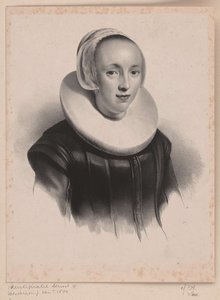
Anna Roemers Visscher
1584 - 1651 , Netherlands
Trumpa informacija
- Artistic Movement Or Style: Renaissance
- Artists Or Movements Influenced By This Artist: ['Anna Maria van Schurman']
- Artists Who Influenced This Artist:
- Peter Paul Rubens
- Jacob Cats
- Date Of Birth: Amsterdam, Netherlands (1584)
- Date Of Death: 1651
- Full Name: Anna Roemers Visscher
- Nationality: Dutch
- Notable Artworks: ['Susanna and the Elders engraving']
- Place Of Birth: Amsterdam
Susiję straipsniai

Golden Light & Dutch Skies: The Timeless Magic of Dutch Golden Age Landscapes
Discover the breathtaking beauty of Dutch Golden Age landscapes. Explore the mastery of light, chiaroscuro, and 17th-century realism through an expert art history lens, celebrating the enduring legacy of the Dutch Masters for discerning collectors and art lovers.

Olandijos Aukso Amžius: 10 Šedevrų, Apibrėžiančių Meną ir Stilių
Atraskite Olandijos Aukso Amži\u017us meninius šedevrus! 10 legendin\u017iŴ paveikslžiai – Rembrandto, Vermeerio ir kt. darbai. Sužnkitę j\u016ungo namus aukso amži\u017us grožiu! Āukrai, interjero dizainas – viskas OriginalUniqueArt.com. Ižirkite kolekciją internete!

Chiaroscuro and Character: A Definitive Guide to Light and Shadow in the Dutch Baroque Era
Explore the dramatic mastery of the Dutch Baroque era. Discover how masters like Rembrandt used chiaroscuro to transform everyday life into timeless art. An expert guide for collectors and enthusiasts seeking to understand the profound interplay of light and shadow.

Golden Age Reflections: Dutch Baroque Painting & Cultural Innovation
Explore the Dutch Golden Age of painting! Discover key artists like Vermeer & ter Borch, their innovative techniques, and the rich cultural context behind these Baroque masterpieces. Learn about collecting & appreciating this iconic art period.

Mastering Light & Shadow: A Journey Through the Dutch Golden Age's Luminous Legacy
Embark on a cultural journey through the Dutch Golden Age. Explore the masterful interplay of light and shadow in 17th-century masterpieces, from Rembrandt to Vermeer, and discover how this era of profound realism continues to inspire fine art collectors today.

