Skaityti daugiau







































 Dėl meno kūrinių ar reprodukcijų, kurių bet kuri pusė yra didesnė nei 105 cm (apie 41 inch), rėmas bus siunčiamas kaip išskaidytas surinkimo rinkinys. Šis metodas užtikrina saugų pristatymą ir apsaugo nuo transportavimo metu galimos žalos.


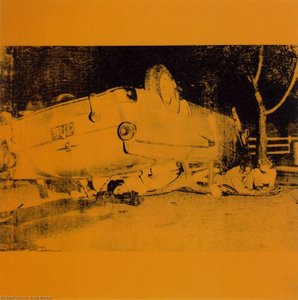
A Descent into Familiar Horror: Analyzing Warhol’s “Suicide”
Andy Warhol's "Suicide," a silkscreen print depicting a man leaping from a building, transcends mere visual representation; it embodies the unsettling core of Pop Art’s fascination with confronting mortality and societal anxieties. Executed in 1963, this artwork emerged during a period marked by profound cultural shifts—the burgeoning counterculture movement challenged established norms while simultaneously embracing mass media and celebrity culture. Warhol himself deliberately eschewed traditional artistic conventions, opting for a technique rooted in commercial printing – silkscreen – to achieve an unprecedented level of reproducibility and democratize access to art. This deliberate choice wasn’t simply pragmatic; it served as a powerful statement about the artist's belief that art should be accessible to everyone, mirroring the pervasive influence of advertising and popular imagery on daily life.- Style: Warhol’s signature style is undeniably Pop Art, characterized by its bold flatness, vibrant color palettes (primarily purple), and appropriation of imagery from everyday sources – in this case, a photograph taken by Hiroshi Sugimoto.
- Technique: The silkscreen process itself was revolutionary for its time. Warhol meticulously transferred the photographic image onto a canvas, applying emulsion paint to create a stencil. Multiple layers of pigment were then pressed through the stencil onto successive sheets of paper, resulting in an astonishingly uniform print. This method ensured consistency across editions and underscored Warhol’s commitment to mass production as a form of artistic expression.
Symbolism Within Familiar Imagery
The image's stark simplicity belies its complex symbolic resonance. The man jumping from the building isn’t merely a depiction of suicide; it’s an unsettling allusion to biblical narratives—specifically, Cain and Abel—where God instructs Adam to kill his brother. Warhol deliberately avoids portraying the act itself with gruesome detail, instead focusing on capturing the moment of transition – the precipice before the fall. The inclusion of a clock reinforces this temporal dimension, emphasizing the inevitability of death and highlighting the fleeting nature of existence. Furthermore, the presence of the car adds an element of urban alienation, mirroring the anxieties surrounding rapid industrialization and societal fragmentation prevalent in the 1960s.Historical Context: Warhol’s Engagement with Mortality
Warhol's preoccupation with death wasn’t solely aesthetic; it stemmed from his own personal struggles with Sydenham’s chorea, a debilitating neurological disorder that profoundly impacted his life and fueled his artistic exploration of vulnerability. This experience instilled in him a deep understanding of human suffering and prompted him to confront uncomfortable truths about the human condition—themes that permeate much of his oeuvre. “Suicide” stands as a testament to Warhol's ability to distill profound philosophical ideas into visually arresting imagery, cementing its place within the broader context of Pop Art’s interrogation of societal values and psychological complexities.Emotional Impact: Confronting Anxiety
Ultimately, "Suicide" compels viewers to confront their own anxieties about mortality and the precariousness of life. Warhol's deliberate avoidance of melodrama—his refusal to sensationalize the act of jumping—creates a chilling effect, forcing us to contemplate the unsettling beauty of decay and transformation. The photograph’s muted color scheme contributes to this atmosphere of unease, mirroring the psychological state of contemplation and prompting introspection about existential questions. It remains a haunting reminder that even seemingly mundane images can hold immense emotional power when viewed through the lens of artistic innovation and philosophical inquiry.Klausimai ir atsakymai
Ar šis kūrinys Suicide yra sukeitintas rankiniu būdu ar atspausdintas?
Ranko darbas: profesionalus pavežėjas rankiniu būdu nukopijuoja Suicide aliejuje ant lino drobės.
Kokią dydį turėčiau pasirinkti darbui Suicide?
Dydviai svyra nuo 38.6 x 25.9 cm (€179) iki 246.3 x 165.1 cm (€1362); šioje pusėje pateiktoje lentelėje nurodyti pagrindiniai etapai ir jų kainos.
Kiek trunka pristatymas?
Pristatymas užtruks nuo 4 iki 5 savaičių, naudojant nemokamą ekspresinį siuntimą visame pasaulyje; šioje pusėje taip pat galite rinktis skubios gamybos variantą. Jūs galite grąžinti prekę per 100 dienų ir gauti visą sumokėtą sumą atgal, nepriklausomai nuo bet kokių sąlygų.
Kokia technika buvo naudojama kūriniui Suicide autoriu Andy Warhol?
Silkscreen
Daugiau informacijos apie šį paveikslą
 Peržiūrėti realaus dydžio版

 Pasidalinti
 Dalintis
 Išsamiau
 Vadovas


 Atsisiųsti
 Panašūs eksponatai
 Rentgeno spindulių nuotrauka
 Automatinė diorama
 问答

 Statistika