gėlės
Gėlės (Andy Warhol)
Andy Warhol (1928–1987) sukūrė Gėlės. Šis kūrinys priklaulo gėlės kieruliui. Pagaminta naudojant Akrilas ant drobės.
- Akrilas ant drobės

 Peržiūrėti realaus dydžio版

 Rankinio darbo aliejinės imitacijos paveikslas
 Pasidalinti
 Dalintis
 Vadovas


 Atsisiųsti
 Panašūs eksponatai
 Rentgeno spindulių nuotrauka
 Automatinė diorama
 问答

 Statistika
Gėlės: pagrindinė informacija
- Pavadinimas
- Gėlės
- Autorius
- Andy Warhol (1928–1987)
- Dizainere/is gimęs
- Pitsburgas, Jungtinės Amerikos Valstijos
- Mediumas
- Akrilas ant drobės
- Judėjimas
- gėlės
- Laikotarpis
- Modernizmas
- Tema
- gėlės, pop art, si̇lkscreenas, gyvi, spalvingi, gamta
Ką vaizduoja Gėlės?
A Burst of Pop: Decoding Andy Warhol’s ‘Flowers’
Andy Warhol's ‘Flowers,’ a series born from his fascination with mass production and the ephemeral beauty of everyday life, stands as one of the most recognizable emblems of the Pop Art movement. More than just pretty pictures, these silkscreen prints are a complex meditation on consumer culture, artistic reproduction, and the very nature of perception. Emerging in 1964, at the height of Warhol’s fame following his iconic portraits of Marilyn Monroe and Campbell's Soup Cans, ‘Flowers’ represented a deliberate shift—or perhaps an expansion—of his artistic concerns. While seemingly simpler in subject matter than his previous work, the series possesses a quiet power that continues to resonate with audiences today.
The Silkscreen Process: A Factory Aesthetic
Warhol's technique was integral to the meaning of ‘Flowers.’ He didn’t approach these images as a traditional painter would. Instead, he embraced the mechanical process of silkscreen printing—a method borrowed from commercial illustration—to create multiples that deliberately blurred the lines between high art and mass-produced objects. The original source image, a black and white photograph of hibiscus flowers taken by Patricia Caulfield for Modern Photography magazine, was transformed through Warhol’s signature layering of vibrant, often unexpected colors. This process wasn't about achieving photographic realism; it was about flattening the image, removing any sense of depth or individual brushstroke, and emphasizing the artificiality inherent in reproduction. The slight misalignments and imperfections that sometimes appear in the prints aren’t flaws but rather hallmarks of the ‘Factory’ aesthetic—a testament to Warhol’s embrace of mechanical processes and collaborative production. The legal battle with Caulfield over copyright further underscores this tension between artistic appropriation and originality, a key theme within Warhol's oeuvre.
Symbolism in Bloom: Beyond Surface Beauty
On the surface, ‘Flowers’ appears to celebrate the simple beauty of nature. However, beneath this veneer lies a more nuanced commentary on American society in the 1960s. The flowers themselves can be interpreted as symbols of fleeting youth, fragile beauty, and the commodification of natural forms. Warhol's choice to depict flowers—a traditional subject for still life painting—was itself a subversive act. By stripping away any sense of sentimentality or artistic skill, he challenged conventional notions of what constituted ‘high art.’ The repetitive nature of the imagery also speaks to the pervasive influence of advertising and mass media in postwar America, where images were endlessly reproduced and circulated. The vibrant, almost artificial colors further emphasize this sense of manufactured beauty, suggesting that even our appreciation of nature is mediated through consumer culture.
A Lasting Legacy: ‘Flowers’ in Contemporary Culture
‘Flowers’ continues to captivate viewers not only for its aesthetic appeal but also for its enduring relevance. The series embodies Warhol's prescient understanding of the changing relationship between art, commerce, and celebrity. Its influence can be seen in countless works by subsequent artists who have explored themes of appropriation, reproduction, and consumerism. Today, a high-quality hand-painted reproduction of ‘Flowers’ offers more than just a decorative addition to a space; it's an invitation to engage with a pivotal moment in art history—a vibrant reminder of the power of images to shape our perceptions and reflect our culture. The artwork’s enduring popularity speaks to its ability to transcend time, remaining as fresh and thought-provoking today as it was over half a century ago.
Gėlės dididžioja:resoliucija

Autorių teisės apsaugotos: vaizdas pateikiamas tik informacinėms tikslams.
Daugiau variantų, iškaržymų ir citavimo →Andy Warhol, Gėlės.
Dalykas Gėlės: klausimai
Kokia technika sukurta „Gėlės“ – Andy Warhol?
„Gėlės“ technika – Akrilas ant drobės.
Kokios temos atsispindi kūrynioje „Gėlės“ – Andy Warhol?
„Gėlės“ – Andy Warhol vaizdeletas: gėlės, pop art, si̇lkscreenas, gyvi, spalvingi, gamta, warholas, masinė gamyba.
Ar „Gėlės“ – Andy Warhol priklauso viešosios teisės domenui?
„Gėlės“ – Andy Warhol yra vis dar saugoma autorineje teisėje. Šis statusas nustato, kaip galima reprodukcijaus šio kūrinio vaizdą.
Kas sukūrė „Gėlės“?
Kūrinį „Gėlės“ sukūrė Andy Warhol. Darbas katalogizuojamas Andy Warhol vardu.
Kokiam meno stiliui priklauso „Gėlės“ – Andy Warhol?
„Gėlės“ yra gėlės stiliaus kūrinys. Šis dailos kryptis nurodo meninę tradiciją, kurios šis darbas yra dalis.
Kokio Andy Warhol kūrybos etapo dalis yra „Gėlės“?
„Gėlės“ priklauso Andy Warhol kūrybos karjeros Brandus laikotarpis (Pop Art) etapui. Ši klasifikacija atspindi kūrinio ryšį su menininko evoliucija.
Ar Andy Warhol kūrinys „Gėlės“ yra viešosios nuoslegos ir kodėl?
„Gėlės“ – Andy Warhol yra vis dar saugoma autorineje teisėje. Autorinės teisės galioja nuo mirties metų, kai šis kūrėjas mirė 1987 m.
Ką „Gėlės“ turi bendro su visa Andy Warhol kūryba?
„Gėlės“ priklauso Andy Warhol gėlės kūrybai, kurios įrašytoms temoms priskiriamas masinės žinių vaizdinė medžiaga, komercinė iliustracija, pop kultūros estetika, ikoninė pop art serija, pakartojimo tyrimas, charakteristinis si̇lkscreeno stilius, vartotojiškumas ir šlovė, kelio po karų amerikos gyvenimas.
Kaip „Gėlės“ tema susiję su įprastomis Andy Warhol tematikos temos?
Dažniausios Andy Warhol temos apima masinės žinių vaizdinė medžiaga, komercinė iliustracija, pop kultūros estetika, ikoninė pop art serija, pakartojimo tyrimas, charakteristinis si̇lkscreeno stilius, vartotojiškumas ir šlovė, kelio po karų amerikos gyvenimas; kūrinys „Gėlės“ susitelkia į gėlės, pop art, si̇lkscreenas, gyvi, spalvingi, gamta, warholas, masinė gamyba.
Apie šį menininką, Andy Warhol

1928–1987, Jungtinės Amerikos Valstijos
Andy Warhol
Endžio Varolio: Amerikos Vaizdų Simfonija Endis Varolas, gimęs Andrew Warhola jaunesnysis 1928 metais Pitsburgo pramoniniame širdyje, Pensilvanijoje, buvo figūra, paskirtas peržengti meno ir garsumo ribas. Jo ankstyvieji metai pasižymėjo tiek vargumais, tiek kylant menine kūryba. Vaikystės liga, Sydenhamo chorea – dažnai vadinama Šv. Vito šokiu – ilgam apribojo jį namuose, skatindamas intensyvią vidinę pasaulį, kuriame meninis pasireiškimas tapo gyvybiškai svarbia išlaisvinimo priemone.
Taip pat Andy Warhol darbai
 „Campbell“ sriandėlių skardinės1962
 Marilinų diptichas1962
 Balto automobilio avarija 19 kartų, Privabu1963
 Merilin, Leo Castelli galerija, Niujorkas1964
Esdai apie Gėlės
 Andy Warholo Top 25 Kūriniai: Pop Art Šedevrai Jūsų InterjeruiAtraskite 25 ikoniškiausius Andy Warholo pop art kūrinius! Sužinokite apie Marilyn Diptych, Campbell's Soup Cans ir kitus šedevrus. Meno re…
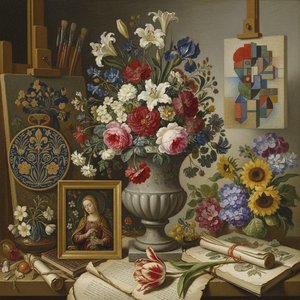 Blossoming Symbolism: A Historical Journey Through Flowers in Western PaintingExplore the rich history of flower symbolism in Western painting! Discover how artists from the Renaissance to Modernism used blossoms to c…
 10 Iconic Silkscreen Masterpieces That Defined Pop ArtExplore iconic Pop Art silkscreens by Warhol and Lichtenstein. Discover museum-quality masterpieces on OriginalUniqueArt.com.