School of Paris · 1928
Rita van Leer (André Derain, 1928)
André Derain (1880–1954) sukūrė Rita van Leer. Šis kūrinys datuojamas 1928 m. Šis kūrinys priklaulo School of Paris kieruliui. Pagaminta naudojant Oil On Panel. Dimensijos – 41 × 34 cm.
- 1928
- Oil On Panel
- 41 × 34 cm

 Peržiūrėti realaus dydžio版

 Rankinio darbo aliejinės imitacijos paveikslas
 Pasidalinti
 Dalintis
 Informacinė l lapelė


 Atsisiųsti
 Panašūs eksponatai
 Rentgeno spindulių nuotrauka
 Automatinė diorama
 问答

 Statistika
Rita van Leer, trumpai
- Pavadinimas
- Rita van Leer
- Autorius
- André Derain (1880–1954)
- Dizainere/is gimęs
- Chatou, Prancūzija
- Data
- 1928
- Mediumas
- Oil On Panel
- Matmenys
- 41 × 34 cm
- Judėjimas
- School of Paris
- Laikotarpis
- Modern
- Tema
- woman, portrait, face, shoulders, gray, black
Ką vaizduoja Rita van Leer?
The Portrait of Rita van Leer
In this intimate portrait, André Derain turns his attention to Rita van Leer. Created about 1928, the work moves away from the loud colorism of his earlier years, focusing instead on the quiet presence of the sitter. There is a certain stillness here, a moment captured in a way that prioritizes her character over a mere photographic likeness. She meets the viewer with a directness that feels both personal and somewhat guarded.
André Derain captures the subject with an expressive likeness, favoring the essence of her personality over rigid, academic precision. The portrait focuses on the head and shoulders, stripping away unnecessary distractions to ensure the viewer's attention remains fixed upon her gaze. It is a study of a person rather than a mere likeness, offering a glimpse into a specific, fleeting moment of her life.
Composition and Visual Elements
The composition is centered entirely upon the woman’s face, which occupies the majority of the frame. Presented in a close-up view, the subject's head and shoulders emerge from a dark, minimalist background. This lack of environmental detail ensures that the viewer's attention remains fixed on the sitter. Her head is slightly tilted, a subtle movement that introduces a sense of dynamism to an otherwise still moment.
There is a directness in her gaze, as she looks straight toward the viewer. This connection is established through the careful placement of her features and the use of tonal variations rather than sharp, photographic lines. Light and shadow work together to define the contours of her face, creating a sense of three-dimensionality through the layering of different shades.
Technique and Artistic Style
The work is characteristic of early modern art, leaning into the expressive possibilities of Fauvism and Expressionism. Rather than seeking photographic accuracy, the artist employs a loose and gestural application of paint to capture the sitter. There is a palpable sense of immediacy here, driven by the visible brushstrokes that define the form. This approach prioritizes the emotional essence of the subject over a strictly realistic representation.
One notices how the artist uses short, choppy strokes to build up the features of the face and the contours of the hair. This method creates a textured, almost rugged surface. The use of thick impasto is particularly evident, providing a physical depth that makes the paint feel sculptural. These heavy applications of pigment allow the light to catch the ridges of the brushwork, adding a sense of movement to the portrait.
Materials and Physical Properties
This work is executed in oil paint, applied with a deliberate and textured hand. The artist has worked upon a surface of either canvas or panel, a choice that supports the heavy impasto visible throughout the piece. Such tactile application allows the paint to hold its form, creating a physical presence that catches the light in subtle ways. The dimensions of the work are 41 x 34 cm, a scale that invites a close, intimate inspection of the surface.
The palette is notably restrained, eschewing the riotous color often associated with the artist's earlier years. Instead, we find a monochromatic arrangement of gray, black, and white. These tones are layered to build depth and define the contours of the subject. The interplay of light and shadow is achieved through these varying shades, providing a sense of volume without the need for chromatic intensity. It is a quiet, disciplined approach to the medium.
Rita van Leer dididraudžios kokybės vaizdai
Viešoji domenė: suregalis mirė 1954 m.
André Derain, Rita van Leer (1928). Viešoji domenė.
Atsakimai į klausimus apie Rita van Leer
Kokia yra „Rita van Leer“ – André Derain kūrybos data?
„Rita van Leer“ – André Derain kūrybos metai – 1928.
Kokia technika sukurta „Rita van Leer“ – André Derain?
„Rita van Leer“ – André Derain technika – Oil On Panel. Kopijos siekia atkartoti šios technikos vaizdą.
Kokie yra originalaus „Rita van Leer“ – André Derain matmenys?
Įrašyti kūrinio „Rita van Leer“ – André Derain matmenys yra 41 x 34 cm. Kopijas galima užsisakyti kitais dydžiais, išlaikant tą pačius proporcijas.
Ką vaizduoja „Rita van Leer“ – André Derain?
Darbos „Rita van Leer“ temos yra woman, portrait, face, shoulders, gray, black, white.
Ar „Rita van Leer“ yra viešosios teisės kūrinys?
Autorių teisių statusas kūriniui „Rita van Leer“ – André Derain: kūrinys priklauso yra viešosios erdvės dalis – jo autorinė teisė pasibaigusi. Tai nulemia, ar galima laisvai reprodukciuoti šį vaizdą.
Kas sukūrė „Rita van Leer“?
Kūrinį „Rita van Leer“ sukūrė André Derain. Darbas katalogizuojamas André Derain vardu.
Kokio meno kryžmės dalis yra „Rita van Leer“ – André Derain?
Kūrinio „Rita van Leer“ – André Derain stilius – School of Paris. Ši klasifikacija leidžia šį darbą įtraukti į bendrą susijusių menininkų ir kūrinių kontekstą.
Kokį André Derain kūrybos etapą atspindi „Rita van Leer“?
„Rita van Leer“ atspindi André Derain kūrybinį laikotarpį Late Period.
Kokia buvo André Derain amžius sukuriant „Rita van Leer“?
André Derain „Rita van Leer“ sukūrė būdamas 48 metų amžiaus.ت Artistas gimė 1880, o kūrinys datuojamas 1928 metais.
Apie šį menininką, André Derain
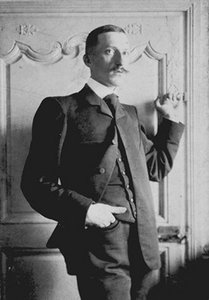
1880–1954, Prancūzija
André Derain
Ankstyvas gyvenimas ir Fauvizmo sėklos André Derainas, gimęs 1880 metais žavingame Šatuo kaime netoli Paryžiaus, iš pradžių nebuvo lemta gyventi tapybai ir drobėms. Priešingai nei kartais pasakojama apie staigų artistinį pabudimą susitikimų su tokiais dailininkais kaip Vlaminck ar Matisse dėka, Derainas ėmėsi meno kelio savarankiškai maždaug 1895 metais. Šios pirmosios patirtys dažnai vykdavo kartu su tėvu Jacominu ir jo sūnumis kaimo ekskursijų metu – formacinis įvykis, suteikęs gilų natūralaus pasaulio supratimą. Trumpai studijavęs inžineriją Camillo akademijoje 1898 metais, jis lemtingai susitiko su Henri Matisse, pradėdamas svarbiausią artistinę partnerystę.
Taip pat André Derain darbai
 kūsininkės1907
 London Bridge1906
 Charing Cross from sw1906
 Landscape at L'Estaque1906
Esdai apie Rita van Leer
 Fauvism vs German Expressionism: Distinguishing Color and EmotionMaster the differences between Fauvism and German Expressionism through expert analysis. Learn to decode the emotion behind the color today.
 Dutch artworks of the 1860s1860s Dutch masterpieces by Vincent van Gogh, Gerard Bilders, and August Allebé. View the full collection online at OriginalUniqueArt.com.
 The Silent Dialogue: Examining Intimacy and Psychological Depth in Classical PortraitureExplore the psychological depth of classical portraiture through masters like Rembrandt and Vermeer. Discover the power of the gaze today.