
 Peržiūrėti realaus dydžio版
 Pasidalinti
 Dalintis
 Išsamiau
 Vadovas

 Atsisiųsti
 Panašūs eksponatai
 Rentgeno spindulių nuotrauka
 Automatinė diorama
 问答
问答 Statistika
Woman with Daisies


 Skaityti daugiau
Giclée / Meno spausdinimas
Muziejų lygio „giclée“ arba drobos spausdinimas: greita gamyba ir lankstios apdailos parinktys. ( Pirkti rankų darbo tapybą Perejti prie skaitmeninių vaizdų)




P118B €10

P118H €10

P118W €10

P438Z €10

P508JH €12

P508YH €12

P805H €10

P805Z €10

P919BZ €10

P919G €10

P919XJ €10

P959ZH €10

P968JZ €12

W106C €8

W218G €10

W218JH €8

W218Y €10

W307PJ €10

W316G €10

W316PJ €8

W316Y €10

W398PJ €8

W4111J €10

W500HY €15

W500JH €15

W692G €12

W849H €8

W940BG €15

W953PJ €8




Pasirinkite iš mūsų nustatytų dydžių, atitinkančių originalaus meno kūrinio proporcijas.

Įveskite jums reikiamą plotį ir aukštį, kad atvaizdas derėtų prie jūsų rėmo ar sienos. Spausdiną galima tik sumažinti, bet nepadidinti virš originalaus paveikslėlio dydžio, todėl keičiant proporcijas, dalis vaizdo prarandama. Prieš spausdinimą atsiųsime jums skaitmeninį maketą patvirtinimui. Šioje puslapio nuotraukoje matomas pjūvis nėra tikslus – jį rodo tik maketas.
Pristatymas visame pasaulyje () per 2 weeks, o ne įprastas 4/5 savaičių laikotarpis. (4 lapkritis)

Nemokamas greitasis pristatymas visame pasaulyje

Aukštos kokybės lininis drobė

Pilnas siuntimo draudimas

Muitinės mokesčių grąžinimo garantija

Tikro spalvų atitikimo garantija

100 dienų grąžinimo politika (tik esant įtaigoms)

100% pinigų grąžinimo garantija

Nuolaida dideliems užsakymams
 Stiklo variantas prieinamas tik pasirinkus dydį iki 110 cm

Woman with Daisies
Giclée / Meno spausdinimas
Reprodukcijos matmenys
-


Bendroji kaina
€ 72
The Ethereal Grace of Art Nouveau
In the heart of the Belle Époque, a period defined by its vibrant cultural flourishing and a departure from industrial rigidity, Alphonse Mucha emerged as a master of visual enchantment. His work, epitomized in "Woman with Daisies," serves as a breathtaking window into the soul of the Art Nouveau movement. This piece is not merely a depiction of a figure; it is an immersive experience where the boundaries between humanity and the natural world dissolve. The subject—a woman of transcendent beauty—stands amidst a lush, botanical sanctuary, her presence harmonizing perfectly with the sinuous vines and delicate blossoms that surround her. To gaze upon this work is to step into a dreamscape where elegance is the only law, making it an irresistible centerpiece for any collection seeking to evoke a sense of timeless romance and organic tranquility.
The technique employed in this masterpiece reflects Mucha’s legendary ability to marry meticulous detail with flowing, rhythmic movement. Characterized by his signature le style Mucha, the painting utilizes sweeping, curvilinear lines that mimic the growth patterns of flora, creating a sense of perpetual motion. The artist’s mastery is evident in the way he renders the textures of the woman's attire and the soft, organic petals of the daisies. Through a sophisticated use of color—often incorporating warm golds and soft pastels—Mucha achieves a luminous quality that feels both ethereal and grounded. For the discerning interior designer, this painting offers a profound decorative depth, providing a focal point that breathes life and sophisticated charm into a room, whether set within a classical salon or a contemporary living space.
Symbolism and the Spirit of Nature
Beyond its surface beauty, "Woman with Daisies" is steeped in the profound symbolism that defined Mucha’s artistic philosophy. The recurring motifs of flowers, specifically the daisies, are not merely decorative; they represent purity, innocence, and the cyclical nature of life. As the woman gazes upward, perhaps toward a distant horizon or an unseen divinity, she embodies the Art Nouveau ideal of the interconnectedness between human emotion and the natural environment. The inclusion of birds—delicate observers within the composition—adds layers of narrative intrigue, suggesting themes of freedom and the fleeting beauty of the moment. Every spiral, every leaf, and every petal is a deliberate stroke in a larger dialogue about harmony and the eternal dance of existence.
For collectors and enthusiasts of fine art reproductions, owning a piece of this caliber means possessing a fragment of history. This artwork captures the very essence of an era that sought to find beauty in the organic rather than the mechanical. It invites the viewer to pause, to breathe, and to reconnect with a sense of wonder. As a high-quality reproduction, it brings the prestige of the Prague Academy and the glamour of Parisian theaters into the modern home, offering an enduring emotional impact that transcends time. It is more than decoration; it is an invitation to inhabit a world of grace, virtue, and unparalleled aesthetic splendor.
Klausimai ir atsakymai
Į kokį kambarį rekomenduojamas „Woman with Daisies“ – Alfonzas Muha?
Rekomenduojama erdvė kūriniui „Woman with Daisies“ – Alfonzas Muha yra Living Room. Šią rekomendaciją, žinoma, galima pritaikyti prie jūsų interjero.
Kokią spalvų harmoniją išpriešia „Woman with Daisies“ – Alfonzas Muha?
„Woman with Daisies“ – Alfonzas Muha spalvos于demonstruoja Strong Color Unity harmoniją. Harmonija apibūdina, kaip spalvos dera viena su kita.
Kaip aprašoma „Woman with Daisies“ – Alfonzas Muha spalvų paletė?
„Woman with Daisies“ spalvos sudaro Neutrals paletę. Ši klasifikacija aprašo dominuojančias spalvų grupes.
Autoriaus biografija
Ankstyvas gyvenimas ir išsilavinimas
Alfonzas Marija Mucha (Alfonsas Mucha) gimė 1860 metų liepos 15 dieną Ivaničicėje, Moravijoje (dabartinėje Čekijos Respublikoje). Netrukus pasireiškė jo meninis talentas. Studijavo meno akademijoje Prahoje, tačiau nusivylęs tradiciniais metodais, 1887 metais persikėlė į Paryžių, siekdamas kurti savitu stiliumi. Šis sprendimas tapo lemtingu žingsniu jo kūrybiniame kelyje, atvėrusiu duris į naują meno erą – Art Nouveau. Jaunasis Mucha greitai susipažino su Paryžiaus bohemos gyvenimu ir ėmėsi įvairių užsakymų, kad išgyventų, tačiau jo širdyje degė troškimas rasti savitą kalbą meno pasaulyje.Meninis stilius ir reikšmingiausi darbai
Mucha greitai susiformavo ryškus Art Nouveau stilius, pasižymintis srauniomis linijomis, organinėmis formomis ir judėjimo įspūdiu. Jo kūriniuose dominuoja dekoratyvumas, simbolizmas ir moterų įvaizdžiai. Menininkas buvo paveiktas tokio menininko kaip Pierre-Auguste Renoir ir Gustave Moreau darbų. Žymiausi darbai:- Slavų sukilimas – demonstruoja tradicinių čekų motyvų derinį su moderniais Art Nouveau elementais.
- Salon des Cent - puikiai atspindi jo stiliaus eleganciją ir dekoratyviškumą.
- Tapybos darbai, įkvėpti Gustave Moreau kūrinių, pavyzdžiui, Tespio dukterys, ir Piero Dorazio La Ribambelle des Gobelins.
- Iliustracijos pagal Sir Huberto von Herkomer darbą Jauni ūkininkai skinantys linus.
Karjeros aukštumos ir svarbiausi užsakymai
- Bendradarbiavimas su Sarah Bernhardt: 1894 metais Mucha sukūrė plakatus ir dizainus aktorei Sarah Bernhardt, pradėdamas nuo Gismonda plakatų, kurie suteikė jam didžiulį populiarumą.
- Universalinė paroda Paryžiuje (1900): Jo Art Nouveau stilius sulaukė tarptautinio pripažinimo šioje parodoje. Jis dekoravo Bosnijos ir Hercegovinos paviljoną ir bendradarbiavo prie Austrijos paviljono įrengimo.
- Charles Richard Crane globa: Gavęs paramą iš Charles Richard Crane, Mucha sukūrė monumentalų ciklą Slavų epas (1912–30).
- Nepriklausomos Čekoslovakijos kūrimas: Sukūrė pašto ženklus, banknotus ir vyriausybės dokumentus naujai nepriklausomai Čekoslovakijai.
Įtakos ir palikimas
Mucha buvo paveiktas čekų meno tradicijų ir modernių Europos meno judėjimų. Jo unikalus stilius atvėrė kelią ateities kartoms Art Nouveau ir Secesijos stilistikoje. Įkvėpė kitus menininkus, pavyzdžiui, Evą Prokopcovą. Jo darbai iki šiol įkvepia dizainerius ir estetus visame pasaulyje. Muchos palikimas apima ne tik jo meno kūrinius, bet ir didelę įtaką grafikos dizainui, interjerų dekoravimui bei bendrai estetikai. Slavų epas, kaip monumentalus istorinis projektas, atspindi menininko patriotiškumą ir meilę savo šaliai.Vėlesnis gyvenimas ir mirtis
- 1906 metais vedė Maruską (Mariją/Mariyą) Chytilovą.
- Nuo 1906 iki 1910 metų apsilankė Jungtinėse Amerikos Valstijose, kur gimė dukra Jaroslava.
- Mirė 1939 metų liepos 14 dieną Prahoje, Čekoslovakijoje.

Alfonzas Muha
1860 - 1939 , Čekija
Trumpa informacija
- Gimimo Data: 1860 m. liepos 15 d.
- Gimimo Vieta: Brno, Čekija
- Meninis Stilius: Art Nouveau
- Mirties Data: 1939 m.
- Pilietybė: Čekas
- Pilnas Vardas: Alphonse Maria Mucha
- Įtakoję Menininkai:
- Pierre-Auguste Renoir
- Gustave Moreau
- Įtakoti Menininkai: ['Eva Prokopcová']
- Žymiausi Darbai:
- Slavų sukilimas
- Salon des Cent
Susiję straipsniai
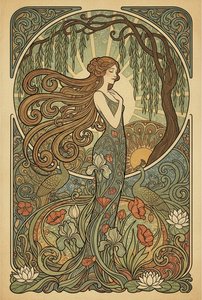
The Flowing Line & Flourishing Form: Exploring Art Nouveau's Aesthetic Legacy
Explore the captivating world of Art Nouveau! Discover its origins, key artists like Horta & Mucha, regional styles, innovative techniques, and lasting influence on architecture & design. A comprehensive guide for art enthusiasts.
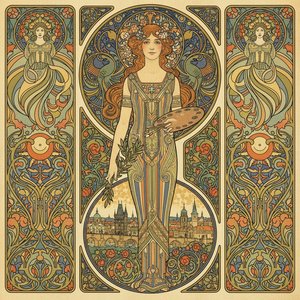
Alphonse Mucha: A Comprehensive Exploration of Art Nouveau's Master of Decorative Symbolism
Explore the life & art of Alphonse Mucha, master of Art Nouveau! Discover his iconic posters, stunning illustrations, and the monumental Slav Epic. A comprehensive guide for collectors & enthusiasts.

Timeless Elegance: A Curated Guide to the Flowing Beauty of Art Nouveau Masterpieces
Discover the enchanting world of Art Nouveau. Explore the flowing lines of Alphonse Mucha and learn how to integrate these timeless, organic masterpieces into your collection with expert guidance on fine art appreciation and preservation.
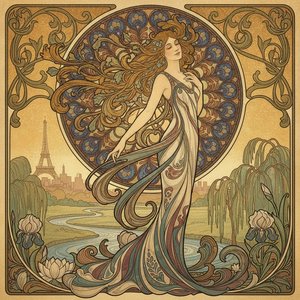
The Elegance of Art Nouveau: Embracing Nature's Fluid Beauty and the Belle Époque Spirit
Discover the enchanting world of Art Nouveau. Explore the organic beauty, flowing lines, and Belle Époque elegance that defined an era of unparalleled craftsmanship and natural inspiration.
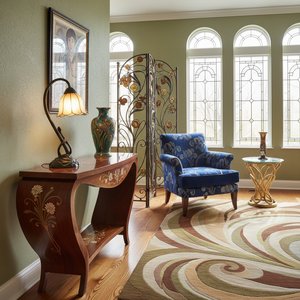
Art Nouveau: 10 Šedevrai, Apibrėžę Dekoratyvinio meno Era | OriginalUniqueArt
Atraskite 10 legendinių Art Nouveau šedevrų! Gustav Klimt, Alphonse Mucha ir daugiau – meniniai pasiekimai, apibrėžę dekoratyvinio meno epochą. Pasinerkite į istorijas, spalvas ir grožį. Kokybiškos dailės reprodukcijos ir interjero idėjos OriginalUniqueArt.com.