
 Peržiūrėti realaus dydžio版
 Pasidalinti
 Dalintis
 Išsamiau
 Vadovas

 Atsisiųsti
 Panašūs eksponatai
 Rentgeno spindulių nuotrauka
 Automatinė diorama
 Q&A
Q&A Statistika
Monaco, Monte-Carlo

 Skaityti daugiau
Giclée / Meno spausdinimas
Muziejų lygio „giclée“ arba drobos spausdinimas: greita gamyba ir lankstios apdailos parinktys. ( Pirkti rankų darbo tapybą Perejti prie skaitmeninių vaizdų)




P118B €10

P118H €10

P118W €10

P438Z €10

P508JH €12

P508YH €12

P805H €10

P805Z €10

P919BZ €10

P919G €10

P919XJ €10

P959ZH €10

P968JZ €12

W106C €8

W218G €10

W218JH €8

W218Y €10

W307PJ €10

W316G €10

W316PJ €8

W316Y €10

W398PJ €8

W4111J €10

W500HY €15

W500JH €15

W692G €12

W849H €8

W940BG €15

W953PJ €8




Pasirinkite iš mūsų nustatytų dydžių, atitinkančių originalaus meno kūrinio proporcijas.

Įveskite jums reikiamą plotį ir aukštį, kad atvaizdas derėtų prie jūsų rėmo ar sienos. Spausdiną galima tik sumažinti, bet nepadidinti virš originalaus paveikslėlio dydžio, todėl keičiant proporcijas, dalis vaizdo prarandama. Prieš spausdinimą atsiųsime jums skaitmeninį maketą patvirtinimui. Šioje puslapio nuotraukoje matomas pjūvis nėra tikslus – jį rodo tik maketas.
Pristatymas visame pasaulyje () per 2 weeks, o ne įprastas 4/5 savaičių laikotarpis. (1 lapkritis)

Nemokamas greitasis pristatymas visame pasaulyje

Aukštos kokybės lininis drobė

Pilnas siuntimo draudimas

Muitinės mokesčių grąžinimo garantija

Tikro spalvų atitikimo garantija

100 dienų grąžinimo politika (tik esant įtaigoms)

100% pinigų grąžinimo garantija

Nuolaida dideliems užsakymams
 Stiklo variantas prieinamas tik pasirinkus dydį iki 110 cm

Monaco, Monte-Carlo
Giclée / Meno spausdinimas
Reprodukcijos matmenys
-


Bendroji kaina
€ 71
Monaco Monte Carlo: An Ode to Elegance and Ornamentation
The artwork, “Monaco Monte Carlo,” created in 1897 by Alphonse Maria Mucha, stands as a quintessential emblem of Art Nouveau—a movement that sought to liberate art from academic constraints and embrace the beauty of organic forms inspired by nature. More than just a promotional poster for Monaco’s opulent casino district, it's a meticulously crafted visual poem celebrating luxury, leisure, and the idealized feminine spirit. Mucha’s signature style is immediately recognizable: flowing curvilinear lines dominate the composition, intertwining seamlessly with stylized floral arrangements that burst forth from the central figure’s drapery—a deliberate echo of the natural world and its fecundity.- Style & Influences: Mucha's Art Nouveau aesthetic draws heavily from influences like Pierre-Auguste Renoir and Gustave Moreau, artists who similarly explored themes of mythology and symbolism through decorative painting. However, Mucha distinguishes himself with a singular vision—one that prioritizes graceful movement and sensual beauty above all else.
- Composition & Technique: The poster employs a vertical orientation, maximizing visual impact while maintaining compositional balance. Lithography was the printing technique chosen, ensuring exceptional clarity and tonal gradation – crucial for capturing the shimmering gold leaf accents strategically applied to highlight key floral elements and contribute to the overall ethereal luminescence of the scene.
- Symbolism & Narrative: At its core lies an allegorical representation of femininity—a reclining woman adorned in flowing robes embodies elegance, serenity, and aristocratic grace. Surrounding her are stylized flowers—primarily lilies and roses—representing purity, devotion, and prosperity – motifs commonly found throughout Art Nouveau art.
- Historical Context: Monaco’s burgeoning reputation as a glamorous destination for European aristocracy fueled Mucha's artistic ambition. The poster reflects the broader cultural fascination with exotic locales and idealized beauty during the Belle Époque, capturing the spirit of an era defined by optimism and artistic experimentation.
- Floral Arrangement: The lilies and roses dominate the floral arrangement, meticulously rendered in shades of ivory and blush pink. Their petals are depicted with astonishing realism—a testament to Mucha’s meticulous observation of botanical specimens.
- Line Quality: Mucha achieves this mesmerizing effect through careful consideration of line quality—employing subtle variations in thickness and curvature to create depth and texture without resorting to traditional perspective techniques.
- Atmospheric Perspective: Mucha skillfully employs atmospheric perspective—reducing color saturation and tonal gradation in distant floral elements—to create a convincing illusion of depth.
- Sensual Appeal: Mucha's meticulous attention to detail—particularly in the depiction of drapery folds and floral textures—appeals to the senses—creating a visually stimulating experience that lingers long after viewing.
Klausimai ir atsakymai
Ar „Monaco, Monte-Carlo“ – Alfonzas Muha spalvos yra ryškios ar blėdžios?
Kūrinys „Monaco, Monte-Carlo“ – Alfonzas Muha pasižymi Balanced Soft nasyginimu ir Balanced intensyvumu.
Ar „Monaco, Monte-Carlo“ yra garsus Art Nouveau kūrinys?
Kataloge kūrinys „Monaco, Monte-Carlo“ vertinamas kaip Recognized tarp Art Nouveau stiliaus darbų.
Kokie kiti pseudonimai arba alternatyvūs vardai priklauso Alfonzas Muha?
Kiti Alfonzas Muha, „Monaco, Monte-Carlo“ kūrybos autoriaus, vardai apima Alfonsas Muha, Alfonzas Marija Muha, Alfons Maria Mucha.
Autoriaus biografija
Ankstyvas gyvenimas ir išsilavinimas
Alfonzas Marija Mucha (Alfonsas Mucha) gimė 1860 metų liepos 15 dieną Ivaničicėje, Moravijoje (dabartinėje Čekijos Respublikoje). Netrukus pasireiškė jo meninis talentas. Studijavo meno akademijoje Prahoje, tačiau nusivylęs tradiciniais metodais, 1887 metais persikėlė į Paryžių, siekdamas kurti savitu stiliumi. Šis sprendimas tapo lemtingu žingsniu jo kūrybiniame kelyje, atvėrusiu duris į naują meno erą – Art Nouveau. Jaunasis Mucha greitai susipažino su Paryžiaus bohemos gyvenimu ir ėmėsi įvairių užsakymų, kad išgyventų, tačiau jo širdyje degė troškimas rasti savitą kalbą meno pasaulyje.Meninis stilius ir reikšmingiausi darbai
Mucha greitai susiformavo ryškus Art Nouveau stilius, pasižymintis srauniomis linijomis, organinėmis formomis ir judėjimo įspūdiu. Jo kūriniuose dominuoja dekoratyvumas, simbolizmas ir moterų įvaizdžiai. Menininkas buvo paveiktas tokio menininko kaip Pierre-Auguste Renoir ir Gustave Moreau darbų. Žymiausi darbai:- Slavų sukilimas – demonstruoja tradicinių čekų motyvų derinį su moderniais Art Nouveau elementais.
- Salon des Cent - puikiai atspindi jo stiliaus eleganciją ir dekoratyviškumą.
- Tapybos darbai, įkvėpti Gustave Moreau kūrinių, pavyzdžiui, Tespio dukterys, ir Piero Dorazio La Ribambelle des Gobelins.
- Iliustracijos pagal Sir Huberto von Herkomer darbą Jauni ūkininkai skinantys linus.
Karjeros aukštumos ir svarbiausi užsakymai
- Bendradarbiavimas su Sarah Bernhardt: 1894 metais Mucha sukūrė plakatus ir dizainus aktorei Sarah Bernhardt, pradėdamas nuo Gismonda plakatų, kurie suteikė jam didžiulį populiarumą.
- Universalinė paroda Paryžiuje (1900): Jo Art Nouveau stilius sulaukė tarptautinio pripažinimo šioje parodoje. Jis dekoravo Bosnijos ir Hercegovinos paviljoną ir bendradarbiavo prie Austrijos paviljono įrengimo.
- Charles Richard Crane globa: Gavęs paramą iš Charles Richard Crane, Mucha sukūrė monumentalų ciklą Slavų epas (1912–30).
- Nepriklausomos Čekoslovakijos kūrimas: Sukūrė pašto ženklus, banknotus ir vyriausybės dokumentus naujai nepriklausomai Čekoslovakijai.
Įtakos ir palikimas
Mucha buvo paveiktas čekų meno tradicijų ir modernių Europos meno judėjimų. Jo unikalus stilius atvėrė kelią ateities kartoms Art Nouveau ir Secesijos stilistikoje. Įkvėpė kitus menininkus, pavyzdžiui, Evą Prokopcovą. Jo darbai iki šiol įkvepia dizainerius ir estetus visame pasaulyje. Muchos palikimas apima ne tik jo meno kūrinius, bet ir didelę įtaką grafikos dizainui, interjerų dekoravimui bei bendrai estetikai. Slavų epas, kaip monumentalus istorinis projektas, atspindi menininko patriotiškumą ir meilę savo šaliai.Vėlesnis gyvenimas ir mirtis
- 1906 metais vedė Maruską (Mariją/Mariyą) Chytilovą.
- Nuo 1906 iki 1910 metų apsilankė Jungtinėse Amerikos Valstijose, kur gimė dukra Jaroslava.
- Mirė 1939 metų liepos 14 dieną Prahoje, Čekoslovakijoje.

Alfonzas Muha
1860 - 1939 , Čekija
Trumpa informacija
- Gimimo Data: 1860 m. liepos 15 d.
- Gimimo Vieta: Brno, Čekija
- Meninis Stilius: Art Nouveau
- Mirties Data: 1939 m.
- Pilietybė: Čekas
- Pilnas Vardas: Alphonse Maria Mucha
- Įtakoję Menininkai:
- Pierre-Auguste Renoir
- Gustave Moreau
- Įtakoti Menininkai: ['Eva Prokopcová']
- Žymiausi Darbai:
- Slavų sukilimas
- Salon des Cent
Susiję straipsniai
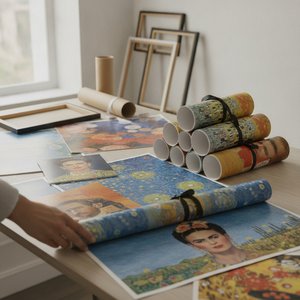
OriginalUniqueArt.com F.A.Q.: Premium Art Poster Prints – Vivid Colors & Versatile Sizing
Discover OriginalUniqueArt.com's premium art poster prints. Featuring 12-color archival pigments for vivid color fidelity and versatile sizing for bespoke decor. Expertly crafted museum-quality reproductions designed for discerning collectors and professional decorators.