

 Peržiūrėti realaus dydžio版
 Pasidalinti
 Dalintis
 Išsamiau
 Vadovas

 Atsisiųsti
 Panašūs eksponatai
 Rentgeno spindulių nuotrauka
 Automatinė diorama
 Q&A
Q&A Statistika
George III (1738–1820)
 Oil On Canvas
- WallArt
- Neoclassicism
 214.0 x 150.0 cm
 The Royal Hospital Chelsea
 Skaityti daugiau
Rankų darbo aliejinės reprodukcijos
Rankiniu būdu tapytas aliejus ant droblio jūsų pageidaujamame dydį ir rėmuose – tai mūsų menininkų pagal užsakymą sukurtas darbas. ( Perjungti į spausdinamus版作品 Perejti prie skaitmeninių vaizdų)




P118B €10

P118H €10

P118W €10

P438Z €10

P508JH €12

P508YH €12

P805H €10

P805Z €10

P919BZ €10

P919G €10

P919XJ €10

P959ZH €10

P968JZ €12

W106C €8

W218G €10

W218JH €8

W218Y €10

W307PJ €10

W316G €10

W316PJ €8

W316Y €10

W398PJ €8

W4111J €10

W500HY €15

W500JH €15

W692G €12

W849H €8

W940BG €15

W953PJ €8




Pasirinkite iš mūsų nustatytų dydžių, atitinkančių originalaus meno kūrinio proporcijas.

Įveskite jums reikiamą plotį ir aukštį, kad paveikslas atitiktų jūsų rėmą ar sieną. Kadangi šis darbas yra rankinio darbo, siekiant išgauti kitokios formos dydį, paveikslas gali būti šiek tiek didesnis (nuo kraštų bus palikta daugiau erdvės) arba mažesnis – pasirinkite jums patogiausią variantą. Prieš pradedant tapyti, atsiųsime jums skaitmeninį maketą patvirtinimui. Šioje puslapio nuotraukoje matomas vaizdas nėra galutinis rezultatas – jį parodys tik sukurtas maketas.
Gavus užsakymą, OriginalUniqueArt.com komanda susisieks su klientu el. paštu dėl instrukcijų ir pateiks maketo pavyzdį
Pristatymas visame pasaulyje () per 3–4 savaites, o ne įprastai – per 5 savaites. (28 spalis). Kokybė lieka nepakeičiama.

Nemokamas greitasis pristatymas visame pasaulyje

Aukštos kokybės lininis drobė

Pilnas siuntimo draudimas

Muitinės mokesčių grąžinimo garantija

Tikro spalvų atitikimo garantija

100 dienų grąžinimo politika (tik esant įtaigoms)

100% pinigų grąžinimo garantija

Nuolaida dideliems užsakymams
 Stiklo variantas prieinamas tik pasirinkus dydį iki 110 cm

George III (1738–1820)
Reprodukcijos technika
Reprodukcijos matmenys
-


Bendroji kaina
€ 264
A Regal Portrait: Allan Ramsay’s George III
Allan Ramsay's portrait of King George III, completed around 1761-2, is more than just a likeness; it’s a carefully constructed embodiment of power, authority, and the nascent complexities of the British monarchy. This masterful work, rendered in oil on canvas, transcends mere representation to become a window into the era's political climate and artistic sensibilities – specifically, the rise of Neoclassicism within portraiture. The painting immediately commands attention with its dramatic lighting, a key element that draws the viewer’s eye directly to the King’s face, imbuing him with an almost palpable sense of presence.
Ramsay, a leading figure in 18th-century Scottish art, expertly employs linear perspective to create a sense of depth and spatial arrangement. The throne, rendered as a robust square, anchors the composition while the draped fabric behind George III flows into a dark, indistinct background – a deliberate choice that serves to highlight the subject’s importance and elevate his status. The use of geometric shapes—squares for the throne, rectangles for the robes—contrasts with the more organic curves of the King's face, suggesting a balance between rigid formality and human warmth.
A Study in Neoclassical Detail
Examining the brushwork reveals Ramsay’s meticulous technique. Layered glazes build up color depth and luminosity, particularly noticeable in the rich textures of the royal robes – a testament to his ability to capture the sheen of velvet and the weight of heavy fabrics. The artist skillfully renders skin tones with subtle variations, avoiding overly smooth surfaces; instead, he introduces a slight roughness that lends a sense of realism and immediacy. The careful attention to detail extends to the rendering of the King’s attire: the intricate embroidery, the gleaming gold accents, and the precise folds of his garments all speak to the immense wealth and power associated with the monarchy.
The painting's palette is restrained yet sophisticated, dominated by deep reds, blues, and browns – colors traditionally linked with royalty and authority. The lighting, originating from a strong left-hand source, casts dramatic shadows that sculpt George III’s features, emphasizing his brow, cheekbones, and the solemnity of his expression. This chiaroscuro effect not only adds visual interest but also contributes to the overall sense of gravitas and dignity.
Symbolism and Historical Context
George III reigned from 1760 until his death in 1820, a period marked by significant political and military upheaval. The portrait itself is deeply symbolic, reflecting the King’s role as head of state during a time of considerable change. The crown, prominently displayed, represents sovereignty and divine right – concepts that were increasingly challenged during George III's reign. The robes, rich in color and ornamentation, symbolize his wealth and status, while the scepter and orb further reinforce his authority.
Ramsay’s work was commissioned during a pivotal moment in British history—the early years of George III’s rule. The King's reign coincided with the Seven Years’ War and the subsequent American Revolution, events that profoundly shaped the course of British history. The portrait, therefore, can be interpreted as an attempt to project an image of stability and strength at a time of considerable uncertainty. It is also important to note that this particular painting was one of many commissioned by the King, reflecting his desire to solidify his position and assert his authority.
A Legacy of Elegance
Allan Ramsay’s portrait of George III stands as a remarkable achievement of Neoclassical portraiture. It is a testament to the artist's technical skill, his understanding of symbolism, and his ability to capture the essence of a historical figure. Reproductions of this iconic image continue to resonate with viewers today, offering a glimpse into the grandeur and complexities of 18th-century Britain. The painting’s enduring appeal lies not only in its aesthetic beauty but also in its ability to evoke a sense of history, power, and timeless elegance.
Klausimai ir atsakymai
Ką vaizduoja „George III (1738–1820)“ – Alanas Ramsėjus?
„George III (1738–1820)“ – Alanas Ramsėjus temos apima royal portraiture, 18th century britain, george iii, king, neoclassical art, scottish nobility, portrait painting, regal authority. Kartu jie apibendrina šio kūrinio tematiką.
Kokia naudojimo paskirtis ir erdvė rekomenduojama kūriniam darbui „George III (1738–1820)“ – Alanas Ramsėjus?
„George III (1738–1820)“ – Alanas Ramsėjus rekomenduojamas Statement, idealiai – Living Room erdvėje. Naudojimo paskirtis ir erdvė padeda suprasti, kur ši reprodukcija tiktų geriausiai.
Ką „George III (1738–1820)“ turi bendro su visa Alanas Ramsėjus kūryba?
Alanas Ramsėjus kūryboje „George III (1738–1820)“ atlieka Neoclassicism stilių, susijęs su classical ideals, roman influence, royal power, british identity, political authority, monarchy, ramsay's aristocratic portraits, scottish nobility depiction temomis.
Autoriaus biografija
Alanas Ramsėjus: Elegancijos ir Meninės Meistrybės Gyvenimas
Gimęs Edinburge, Škotijoje, 1713 metų spalio 13 dieną, Alanas Ramsėjus iškilo kaip žymus škotų portretistas, kurio darbai užfiksavo savo epochos eleganciją ir rafinuotumą. Jo meninis kelias prasidėjo sulaukęs dvidešimties metų, kai jis nuvyko į Londoną studijuoti pas švedų tapytoją Hans Hysing, o vėliau tęsė mokslus St Martin's Lane Akademijoje. Šis pagrindinis išsilavinimas suteikė jam tvirtą pamatą technikai ir kompozicijai.
Itališkos Įtakos ir Kūrybinis Ugdymas
Ramsėjo kūrybiniam ugdymui esminį posūkį padarė kelionės į Romą ir Neapolį, kur jis tris metus (1736–1738 m.) dirbo Francesco Solimena ir Imperiali (Francesco Fernandi) vadovaujant. Šie italų meistrai giliai paveikė jo stilių, ugdydami didesnį klasikos principų supratimą ir tobulindami įgūdžius perteikti panašumą bei charakterį. Jis perėmė vyraujantį rokoko estetiką, kartu lavindamas skonį neoklasicizmo idealams.
Klestinti Karjera ir Žymiausi Darbai
Grįžęs į Didžiąją Britaniją 1738 metais, Ramsėjus greitai pasiekė sėkmės kaip portretistas. Jo gebėjimas atvaizduoti savo modelius tiek tiksliai, tiek išgražintai netrukus pelnė jam kilmingų užsakovų dėmesį. Kai kurie žymiausi jo darbai apima:
- Karalienės Šarlotės (1744–1818) portretas su jos vyresniaisiais sūnumis (Royal Collection, Londonas): Karališkas vaizdas, demonstruojantis karalienės motiniškumą.
- Marijos Degg, ledi Robert Manners (Škotų nacionalinė galerija, Ediburge): Elegantiškas portretas, rodantis Ramsėjo įgūdžius perteikti aristokratišką grožį.
- Dankano Forbeso iš Kalodeno galvos portretas: Šis ankstyvas darbas atkreipė Argyll hercogo dėmesį ir vėliau buvo pavaizduotas Royal Bank of Scotland banknotuose.
Karališkasis Paskyrimas ir Aukščiausias Pasiekimas
Esminis momentas Ramsėjo karjeroje įvyko 1761 metais, kai jis buvo paskirtas Karaliaus Džordžo III vyriausiuoju tapytoju. Ši prestižinė pozicija sustiprino jo statusą meno elito tarpe ir užtikrino nuolatinį užsakymų srautą iš karališkosios šeimos ir aukštuomenės. Jis tapo *tinkamiausiu* Džordžo epochos portretistu.
Vėlesnis Gyvenimas ir Palikimas
Ramsėjo vėlesniame gyvenime pastebimas posūkis link literatūrinių užsiėmimų, atspindintis jo platų intelektualinį susidomėjimą. Tačiau asmeninės tragedijos – netyčinė dešinės rankos dislokacija ir antrosios žmonos mirtis 1782 metais – paveikė jo sveikatą ir produktyvumą. Jis mirė 1784 metais.
Nepaisant šių iššūkių, Ramsėjus paliko didžiulį paveldą kaip vienas garsiausių Škotijos portretistų. Kaip rašė Samuelis Džonsonas, “Aš mėgstu Ramsėjų. Jūs nerandate žmogaus, kurio pokalbyje būtų daugiau pamokymų, informacijos ir elegancijos nei Ramsėjo.” Jo darbai tebėra garbinami dėl savo techninio meistriškumo, rafinuoto estetikos ir įžvalgaus 18-ojo amžiaus visuomenės atvaizdavimo.
Istorinė Reikšmė
Alano Ramsėjo indėlis apima ne tik jo meninį talentą. Jis suvaidino lemiamą vaidmenį formuojant Škotijos vizualinę kultūrą reikšmingo socialinio ir politinio pokyčio laikotarpiu. Jo portretai suteikia vertingų įžvalgų apie škotų aristokratijos ir bajorijos gyvenimą, madą ir vertybes. Jo darbus galima rasti tokiose vietose kaip Ayr Town Hall ir Škotų nacionalinėje portretų galerijoje.
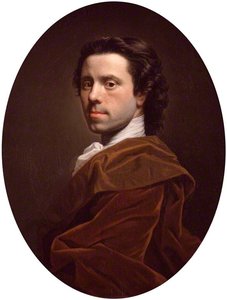
Alanas Ramsėjus
1713 - 1784 , Jungtinė Karalystė
Trumpa informacija
- Gimimo Data: 1713-10-13
- Gimimo Vieta: Edinburgas, Jungtinė Karalystė
- Meninis Stilius: Rokokas, Neoklasicizmas
- Mirties Data: 1784
- Pilnas Vardas: Allan Ramsay
- Tautybė: Škotas
- Įtakoję Menininkai:
- Hans Hysing
- Francesco Solimena
- Imperiali (F.Fernandi)
- Žymiausi Darbai:
- Karalienė Šarlotė
- Mary Degg, ponia Robert Manners
- Duncan Forbes galva
Susiję straipsniai

Allen Ramsay: Portraiture, Patronage & Shaping Georgian Identity
Explore the life & work of Allen Ramsay, pivotal portraitist to George III. Discover his Rococo style, influence on Georgian society, and lasting legacy in British art history. Learn about his key works & patronage.

Georges Braque: 25 Šedevrai, Keičiantys Jūsų Interjerą | OriginalUniqueArt
Atraskite 25 Georges Braque šedevrus! Kubizmo meistro paveikslai, interjero dekoras ir meno istorija. Meno reprodukcijos aukščiausia kokybe – OriginalUniqueArt.com. Išsamesnės informacijos rasite internetu.

Neoclassical Portraiture: The Timeless Elegance of Order, Grace, and Academic Mastery
Explore the refined world of Neoclassical portraiture. Discover the mastery of line, light, and order through an expert exploration of academic art history, from Jacques-Louis David to Jean-Antoine Houdon. Immerse yourself in the timeless elegance of classical realism.

Georges Seurat: 25 Šedevrai, Apšviečiantys Modernaus Meno Takus | OriginalUniqueArt
Atraskite 25 Georges Seurat šedevrus! Išsami analizė, istorijos ir įkvėpimas interjero dizainui. Pointilizmo meistras, impresionizmas ir chromoluminarizmas – viskas OriginalUniqueArt.com. Explore the full collection online!

Majesty on Canvas: A Definitive Guide to Iconic Royal Portraits Through Art History
Explore the profound history of royal portraiture. From Baroque grandeur to Victorian elegance, discover how master artists captured power and lineage on canvas through the timeless medium of oil painting.