
 Pasidalinti
 Dalintis
 Išsamiau

 Atsisiųsti
 Panašūs eksponatai
 Automatinė diorama
Lincoln


 Skaityti daugiau
Rankų darbo aliejinės reprodukcijos
Rankiniu būdu tapytas aliejus ant droblio jūsų pageidaujamame dydį ir rėmuose – mūsų menininkų darbas pagal užsakymą. ( Pirkti spaudinį Pirkti vaizdą)




































Pasirinkite iš mūsų nustatytų dydžių, atitinkančių originalaus meno kūrinio proporcijas.

Galite įvesti savo matmenis, kad jie atitiktų konkretų rėmą ar erdvę. Jei pasirinktas dydis neatitinka originalaus paveikslėlio proporcijų, mes arba apkropsime meno kūrinį, arba papildysime tapybą rankomis dažytい elementais. Prieš pradėdami gamybą, jūsų patvirtinimui atsiųsime skaitmeninį maketą.
Atkreipkite dėmesį, kad ekrane rodomas vaizdas neatspindi tikrojo apkarpymo ar papildymo. Tik maketas tiksliai parodys galutinę kompoziciją.
Nors galima rinktis ir individualius dydžius, rekomenduojame pasirinkti matmenis iš nustatytos sąrašo, kad būtų išlaikytos originalios proporcijos.
Gavus užsakymą, OriginalUniqueArt.com komanda susisieks su klientu el. paštu dėl instrukcijų ir pateiks maketo pavyzdį.
Pristatymas visame pasaulyje () per 3–4 savaites, o ne įprastai – per 5 savaites. (18 rugpjūtis). Kokybė lieka nepakeičiama.

Nemokamas greitasis pristatymas visame pasaulyje

Aukštos kokybės lininis drobė

Pilnas siuntimo draudimas

Muitinės mokesčių grąžinimo garantija

Tikro spalvų atitikimo garantija

60 dienų grąžinimo politika (tik esant gamyklinėms defektams)

100% pinigų grąžinimo garantija

Nuolaida už kelias reprodukcijas
 Stiklo variantas prieinamas tik pasirinkus dydį iki 110 cm

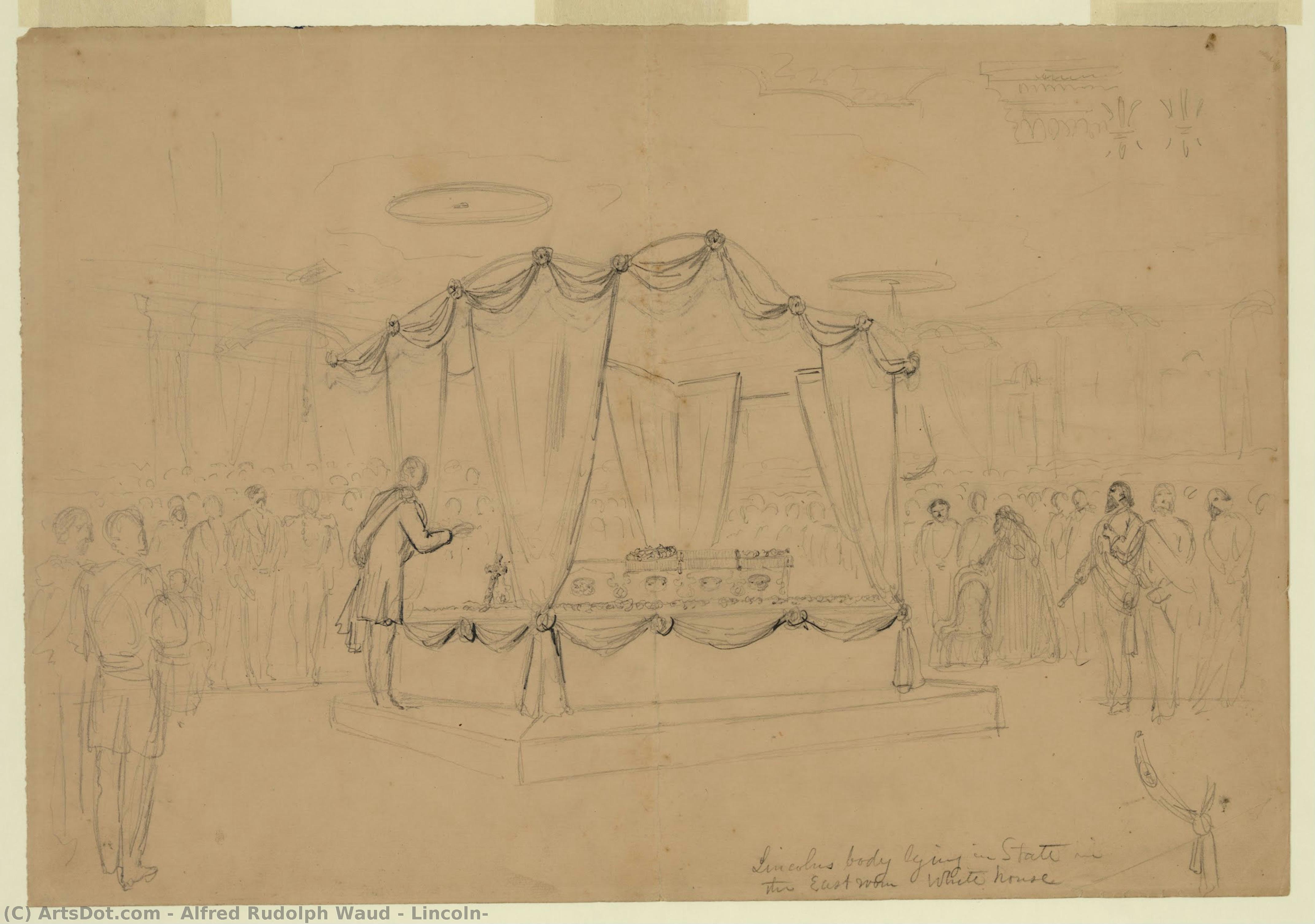
Lincoln
Reprodukcijos technika
Reprodukcijos matmenys
-


Galutinė kaina
$ 300
Kūrinio aprašymas
A Snapshot of Remembrance: Alfred Rudolph Waud’s Lincoln
Alfred Rudolph Waud (1828-1891), born in London and later establishing his artistic home in New York, remains an indelible figure in the chronicle of American art—specifically, as a chronicler of the Civil War era. His prolific output wasn't merely decorative; it served as a vital record of daily life during this transformative period, capturing not just battles but also the human spirit grappling with immense upheaval. Waud’s formative years were spent honing his craft at London’s Government School of Design and gaining invaluable experience painting theatrical scenery—skills that instilled in him an acute eye for observation and the ability to distill complex moments into arresting visual representations.- Subject Matter: The artwork depicts President Abraham Lincoln seated calmly amidst a gathering of individuals at Ford Theatre, Washington D.C., commemorating the anniversary of his assassination.
- Style: Waud’s style leans heavily toward realism blended with theatrical flair—a deliberate choice reflecting the dramatic circumstances surrounding the depicted scene and intended to convey both solemnity and immediacy.
- Technique: Primarily executed as a watercolor sketch on paper, Waud employed layering techniques to build up tonal values and create depth—a masterful demonstration of watercolor’s versatility.
- Historical Context: Created in 1865, shortly after Lincoln's assassination, the artwork serves as a poignant reminder of the nation’s grief and determination. It captures the palpable tension and anticipation surrounding the commemoration event, reflecting the profound impact of Lincoln’s leadership on American history.
- Symbolism: The seated Lincoln figure embodies dignity and solemnity—a visual representation of leadership during a time of national crisis.
Susiję straipsniai

Watercolor Wonders: 10 Masterpieces That Redefined Art History | OriginalUniqueArt
Journey through 10 legendary watercolor masterpieces by Sargent, Turner & Homer! Explore iconic landscapes, portraits & floral art that redefined history. Find museum-quality reproductions and curated decor ideas at OriginalUniqueArt.com.

Ephemeral Visions: Exploring the Artistic Legacy & Contemporary Practice of Watercolor Painting
Explore the captivating world of watercolor painting! Discover its rich history, essential techniques, influential artists & collecting tips. A comprehensive guide for art enthusiasts from OriginalUniqueArt.

Ephemeral Visions: Exploring the History & Emotional Resonance of Watercolor Painting
Explore the captivating history of watercolor painting, from ancient techniques to modern masters like Kandinsky & Blake. Discover essential artists, collecting tips & the emotional power of this luminous medium. Expert insights for art enthusiasts.

Ephemeral Visions: Exploring the Artistic Legacy & Nuances of Watercolor Painting
Explore the captivating world of watercolor painting! Discover its rich history, essential techniques, influential artists & collecting tips from art experts. A comprehensive guide for enthusiasts.

Akvarelės meno istorija ir technikos: nuo senovės tradicijų iki šiuolaikinio ekspresionizmo
Atraskite akvarelės meno istoriją ir technikas nuo senovės tradicijų iki šiuolaikinio ekspresionizmo! Ekspertai pataria, meistrų kūriniai, vertinimo gairės. Įkvėpkite naujų idėjų savo kūrybai!

