Peržiūrėti realaus dydžio版
 Pasidalinti
 Dalintis
 Išsamiau
 Vadovas

 Atsisiųsti
 Panašūs eksponatai
 Rentgeno spindulių nuotrauka
 Automatinė diorama
 Q&A
Q&A Statistika
Valymo skalbinius


 Skaityti daugiau
Šiame puslapyje rodomas meno kūrinys yra saugomas autorių teisių įstatymais, todėl neturime teisės legaliai kurti ar parduoti jo identiškos reprodukcijos. Ši apsauga užtikrinama remiantis tokiais tarptautiniais susitarimais kaip Bernės konvencija ir pagal nacionalines įstatymų nuostatas, įskaitant tas, kurias nurodo JAV autoriškos teisės įstatymas – 17-asis skyrius.
Šis metodas visiškai atitinka autorių teises, nes jame nėra saugomo kūrinio kopijavimo ar dubliavimo. Tai yra kūrybinė reinterpretacija – naujas paveikslas, kurį įkvėpė originalas, tačiau kuris nėra jo identiškas.
Giclée / Meno spausdinimas
Muziejų lygio „giclée“ arba drobos spausdinimas: greita gamyba ir lankstios apdailos parinktys. ( Pirkti rankų darbo tapybą Perejti prie skaitmeninių vaizdų)




P118B €10

P118H €10

P118W €10

P438Z €10

P508JH €12

P508YH €12

P805H €10

P805Z €10

P919BZ €10

P919G €10

P919XJ €10

P959ZH €10

P968JZ €12

W106C €8

W218G €10

W218JH €8

W218Y €10

W307PJ €10

W316G €10

W316PJ €8

W316Y €10

W398PJ €8

W4111J €10

W500HY €15

W500JH €15

W692G €12

W849H €8

W940BG €15

W953PJ €8




Pasirinkite iš mūsų nustatytų dydžių, atitinkančių originalaus meno kūrinio proporcijas.

Įveskite jums reikiamą plotį ir aukštį, kad atvaizdas derėtų prie jūsų rėmo ar sienos. Spausdiną galima tik sumažinti, bet nepadidinti virš originalaus paveikslėlio dydžio, todėl keičiant proporcijas, dalis vaizdo prarandama. Prieš spausdinimą atsiųsime jums skaitmeninį maketą patvirtinimui. Šioje puslapio nuotraukoje matomas pjūvis nėra tikslus – jį rodo tik maketas.
Pristatymas visame pasaulyje () per 2 weeks, o ne įprastas 4/5 savaičių laikotarpis. (3 lapkritis)

Nemokamas greitasis pristatymas visame pasaulyje

Aukštos kokybės lininis drobė

Pilnas siuntimo draudimas

Muitinės mokesčių grąžinimo garantija

Tikro spalvų atitikimo garantija

100 dienų grąžinimo politika (tik esant įtaigoms)

100% pinigų grąžinimo garantija

Nuolaida dideliems užsakymams
 Stiklo variantas prieinamas tik pasirinkus dydį iki 110 cm

Valymo skalbinius
Giclée / Meno spausdinimas
Reprodukcijos matmenys
-


Bendroji kaina
€ 71
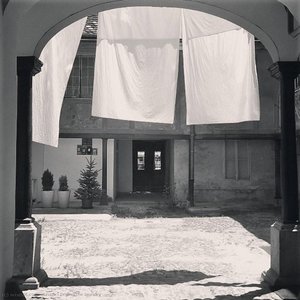
A Quiet Ritual Captured in Ink – Alfred Freddy Krupa’s “Drying the Laundry”
Alfred Freddy Krupa’s “Drying the Laundry,” created in 2017, isn't merely a depiction of domestic activity; it’s an embodiment of Croatian New Ink Art—a movement dedicated to distilling emotion and narrative into stark monochrome. This photograph transcends the commonplace, transforming an ordinary scene into a poignant meditation on time, place, and human experience.
Composition & Perspective: Framing Domestic Tranquility
The artwork’s central focus is undeniably the laundry hanging in the courtyard—a deliberate choice that anchors the composition within a carefully constructed frame. Krupa employs one-point perspective, guiding the viewer's gaze towards an arched doorway and vanishing point beyond, establishing depth without resorting to elaborate atmospheric effects. The arch itself serves as both structural element and visual conduit, subtly directing attention toward the heart of the image.
Technical Mastery: The Language of Monochrome
Krupa’s technique is rooted in meticulous observation and a profound understanding of photographic principles. Shot with a standard camera under diffused natural light, “Drying the Laundry” achieves remarkable tonal range within its grayscale palette—from luminous whites highlighting the fabric to deep shadows emphasizing the textured stone walls. This deliberate restraint amplifies the artwork's emotional resonance, forcing us to confront beauty in simplicity and prompting reflection on fleeting moments.
Symbolism & Emotional Resonance: Echoes of Nostalgia
Beyond its formal qualities lies a deeper symbolic significance. The hanging laundry—a ubiquitous symbol of daily life—represents not just chore but also ritual, repetition, and perhaps even the bittersweet remembrance of past seasons. Krupa’s masterful use of monochrome lends an air of timelessness to the image, suggesting that it speaks across generations, capturing the essence of human connection and the quiet dignity of ordinary existence.
Historical Context & Artistic Influence: The Birth of New Ink Art
"Drying the Laundry" stands as a cornerstone of Krupa’s contribution to New Ink Art—a movement that emerged in Croatia during the 1990s, reacting against the excesses of color and stylistic ornamentation. Influenced by masters like Rembrandt and Hiroshi Sugimoto, Krupa's approach prioritizes emotional depth and conceptual clarity over visual spectacle. This photograph exemplifies the movement’s core tenets: a commitment to honest representation combined with an unwavering focus on conveying profound human feeling—a legacy beautifully preserved in OriginalUniqueArt’s high-quality reproductions.
Klausimai ir atsakymai
Kokia yra „Valymo skalbinius“ tema ir kokią atmosferą ji sukuria?
„Valymo skalbinius“ – Alfredas Krupa vaizdelioje atspindžiami laundry, courtyard, architecture, black white, domesticity, rural life, monochrome photography, sukurti Raminanti nuotaika. Tematika ir atmosfera kartu apibūdina šį kūrinį.
Kaip „Valymo skalbinius“ stilius susijęs su kūrėjo laikmečiu?
„Valymo skalbinius“ – Alfredas Krupa priskiriamas Contemporary Realism stiliui, kūrėjo prekiaujantem į Šiuolaikinė amžiuotė laikotarpį.
Kokią emociją sukelia „Valymo skalbinius“?
Emocinis tonas, nurodytas kūriniui „Valymo skalbinius“ – Alfredas Krupa, yra Raminantis. Jis apibūdina jausmą, kurį išreiškia šis darbas.
Autoriaus biografija
A Life Etched in Ink: The World of Alfred Freddy Krupa
Alfred Freddy Krupa, born June 14, 1971, in Karlovac, Croatia, is a painter and illustrator whose artistic journey has been marked by an unwavering dedication to exploring the depths of human experience through the medium of monochrome ink painting. He stands as the founding figure and theorist of the Western New Ink Art movement—a bold assertion that fundamentally reshaped perceptions of this historically restrained art form—and his legacy continues to inspire artists globally. Krupa’s formative years were steeped in Yugoslavian culture, where he honed his artistic sensibilities at the University of Zagreb Academy of Fine Arts, graduating in 1995 with honors. This academic grounding instilled within him a profound understanding of art history and technique—knowledge that would subsequently fuel his groundbreaking experimentation and redefine established conventions.The Genesis of New Ink Art
Krupa’s artistic breakthrough arrived in 1996 with the publication of his “New Ink Art” manifesto—a declaration not merely of stylistic preference but of a philosophical repositioning within the broader landscape of contemporary art. Rejecting conventional approaches to ink painting, he championed the expressive potential of monochrome, arguing that artists should transcend mere imitation and delve into themes previously untouched by this medium. This manifesto cemented Krupa’s role as a pivotal voice in a burgeoning movement that sought to synthesize Eastern traditions—particularly Japanese Sumi-e—with Western artistic currents like Expressionism and Surrealism. Recognizing the transformative power of cultural exchange, he pursued postgraduate research at Tokyo Gakugei University in 1998, immersing himself further in the intricacies of ink techniques and solidifying his grasp of their historical context. This period proved instrumental in shaping Krupa’s artistic vision—allowing him to synthesize diverse influences into a uniquely personal style characterized by meticulous observation and profound emotional resonance.Themes and Influences: A Dialogue with Existence
A recurring motif throughout Krupa’s oeuvre is an unflinching contemplation of the human condition—expressed through landscapes imbued with symbolic weight and portraits that capture fleeting moments of vulnerability. His artistic explorations consistently grapple with themes of mortality, memory, and psychological depth—subjects rendered with arresting intensity through masterful control of black ink on paper or canvas. The influence of Sumi-e is palpable in his brushwork—a testament to his respect for Eastern artistic heritage—yet he transcends mere stylistic homage, infusing it with a distinctly Western emotionality. Works like “After I die…” confront mortality head-on, prompting viewers to consider their own place within the grand narrative of time. Similarly, depictions of trees and rivers—particularly the Kupa River flowing through his birthplace—evoke feelings of solitude and introspection—subjects explored with remarkable sensitivity. Krupa’s technical skill is evident in detailed graphite drawings like “My Hand”—demonstrating a mastery of form and realistic representation alongside his more abstract explorations.Recognition and Legacy
Alfred Freddy Krupa's impact on the art world has been widely acknowledged through exhibitions at prestigious institutions such as MoMA, where pieces entered their collection, and participation in international biennials like the London Art Biennale. He received honors recognizing his contributions to Croatian culture—including the Order of Danica Hrvatska and the City of Karlovac Award—affirming his enduring significance as a contemporary artist whose work continues to inspire dialogue and provoke contemplation. Krupa’s artistic legacy resides not only in his groundbreaking innovations but also in his willingness to challenge conventions and forge a new path for ink painting—a path marked by unwavering dedication to exploring the complexities of human existence through the evocative power of monochrome. His ability to convey such depth through seemingly simple means stands as a testament to his skill and vision—a vision that will undoubtedly endure for generations to come.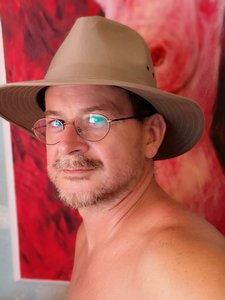
Alfredas Krupa
1971 - , Хорватия
Trumpa informacija
- Artistic Movement Or Style: Naujas Juodas Menas
- Artists Who Influenced This Artist:
- Sumi-e
- Ekspresionizmas
- Surrealizmė
- Date Of Birth: 1971 metų jūnė 14.
- Full Name: Alfred Freddy Krupa
- Nationality: Kroatietis
- Notable Artworks:
- Po mano mirtį…
- Dubovac
- Manoji Ranka
- Šłamtas Nūdas
- Place Of Birth: Karlovacas, Kroatija
Susiję straipsniai

Timeless Shadows: The Artistry, History, and Emotional Resonance of Black and White Photography
Explore the profound artistry of black and white photography. From historical mastery to the interplay of light and shadow, discover how monochrome captures timeless emotion and form through a sophisticated lens of art history.

Monochrome Visions: Exploring the Aesthetic & Historical Significance of Black & White Photography
Explore the rich history & artistic power of black and white photography. From early techniques to iconic masters like Ansel Adams, discover why monochrome continues to captivate art lovers today. Expert insights for collectors.

White on Canvas: 10 Masterpieces & Timeless Elegance for Your Home Decor
Explore 10 iconic white paintings by Monet, Whistler & Rothko! Discover the stories behind these serene masterpieces and their impact on art history. Find museum-quality reproductions for your home decor at .

Shadow & Soul: Why Black & White Photography Remains the Ultimate Power Move in Modern Art
Discover why black & white photography remains a powerful force in contemporary art. Explore the impact of light, shadow, and texture through a visual journey of monochrome mastery and learn how to elevate your space with timeless grayscale aesthetics.

Timeless & Chic: Elevating Your New Home with the Sophistication of Black and White Photography
Transform your new home with the timeless allure of black and white photography. OriginalUniqueArt.com specializes in elegant monochrome decor and custom hand-painted wedding portraits that turn cherished milestones into lasting, soulful masterpieces. Elevate your space with ease.