

 Peržiūrėti realaus dydžio版
 Siųsti
 Dalintis
 Išsamiau
 Vadovas

 Atsisiųsti
 Panašūs eksponatai
 Rentgeno spindulių nuotrauka
 Diaporama
 Statistika
Buckaroo


 Rodyti daugiau
Rankų darbo aliejinės reprodukcijos
Rankiniu būdu tapytas aliejus ant droblio jūsų pageidaujamame dydį ir rėmuose – mūsų menininkų darbas pagal užsakymą. ( Perjungti į spausdinimą Perejti prie skaitmeninių vaizdų)




P118B €10

P118H €10

P118W €10

P438Z €10

P508JH €12

P508YH €12

P805H €10

P805Z €10

P919BZ €10

P919G €10

P919XJ €10

P959ZH €10

P968JZ €12

W106C €8

W218G €10

W218JH €8

W218Y €10

W307PJ €10

W316G €10

W316PJ €8

W316Y €10

W398PJ €8

W4111J €10

W500HY €15

W500JH €15

W692G €12

W849H €8

W940BG €15

W953PJ €8




Pasirinkite iš mūsų nustatytų dydžių, atitinkančių originalaus meno kūrinio proporcijas.

Įveskite jums reikiamą plotį ir aukštį, kad paveikslas atitiktų jūsų rėmą ar sieną. Kadangi šis darbas yra rankinio darbo, siekiant išgauti kitokio formos dydį, paveikslas gali būti šiek tiek didesnis (nuo kraštų bus palikta daugiau erdvės) arba mažesnis – pasirinkite jums patogiausią variantą. Prieš pradedant tapyti, atsiųsime jums skaitmeninį maketą patvirtinimui. Šioje puslapio nuotraukoje matomas vaizdas nėra galutinis rezultatas – jį parodys tik sukurtas maketas.
Gavus užsakymą, OriginalUniqueArt.com komanda susisieks su klientu el. paštu dėl instrukcijų ir pateiks maketo pavyzdį
Pristatymas visame pasaulyje () per 3–4 savaites, o ne įprastai – per 5 savaites. (22 spalis). Kokybė lieka nepakeičiama.

Nemokamas greitasis pristatymas visame pasaulyje

Aukštos kokybės lininis drobė

Pilnas siuntimo draudimas

Muitinės mokesčių grąžinimo garantija

Tikro spalvų atitikimo garantija

100 dienų grąžinimo politika (tik esant įtaigoms)

100% pinigų grąžinimo garantija

Nuolaida dideliems užsakymams
 Stiklo variantas prieinamas tik pasirinkus dydį iki 110 cm

Buckaroo
Reprodukcijos technika
Reprodukcijos dydis
-


Visų pasirinktų variantų kaina
€ 263
Autoriaus biografija
The Sculptor in Buckskin: The Life and Legacy of Alexander Phimister Proctor
In the annals of American sculpture, few figures command as much rugged respect as Alexander Phimister Proctor, an artist who famously earned the moniker "the sculptor in buckskin." Born in the quiet township of Bosanquet, Ontario, in 1860, Proctor’s journey was one of constant movement across the North American frontier. His early years, shaped by the arduous migrations of his family through Michigan and Iowa, instilled in him a profound connection to the vast, untamed landscapes of the West. When his family finally settled in Denver, Colorado, the dramatic scenery of the Rocky Mountains and the sweeping plains became more than just a backdrop; they became the very soul of his artistic pursuit. This deep-seated intimacy with the wilderness allowed Proctor to approach his subjects not merely as an observer, and certainly not as a mere decorator, but as a man who understood the rhythmic pulse of animal life and the heavy weight of frontier history.
Proctor’s formal education provided the technical scaffolding for his wilder inspirations. Seeking to refine his raw observations, he traveled to the great artistic hubs of the era, studying at the National Academy of Design and the Art Students League in New York, before venturing to Paris to train at the prestigious Académie Julien and Académie Colarossi. It was in the studios of Europe that he encountered the sophisticated French Beaux-Arts style, a movement characterized by its elegance and anatomical precision. This training allowed him to marry the scientific rigor of a naturalist with the expressive fluidity of a master sculptor. He did not simply model clay; he studied the musculature of bison and the tension in a horse's gait, often undertaking dissections and studying specimens at the American Museum of Natural History to ensure that every bronze tendon and sinew possessed an undeniable truth.
A Mastery of Motion and Monumental Spirit
The true brilliance of Proctor’s work lies in his ability to freeze a moment of intense kinetic energy within the permanence of bronze. His sculptures are never static; they breathe with the vitality of the American West. Whether capturing the explosive power of a "Bronco Buster" or the heavy, rhythmic presence of the "Buffalo" statues that grace Washington, D.C., Proctor possessed an uncanny ability to convey movement and psychological depth. His influence from masters like Auguste Rodin is evident in his pursuit of a humanist aesthetic, where the physical form serves as a vessel for emotion. This was particularly evident in his equestrian monuments, where he depicted cowboys and Native Americans with a dignity that transcended mere caricature, presenting them instead as monumental figures of a vanishing era.
His career was punctuated by a series of prestigious triumphs that cemented his status on the world stage:
- The World's Columbian Exposition (1893): A pivotal moment where he showcased life-size animal figures, including the Polar Bear and Buckaroo, establishing his reputation in Chicago.
- International Accolades: Winning gold medals at the Paris Exposition in 1900 for works like Indian Warrior and the Panama-Pacific International Exposition in 1915.
- Civic Contributions: The creation of enduring landmarks such as the Tigers at Princeton University and the Pioneer Mother in Kansas City.
As the twentieth century progressed, Proctor’s work became an essential part of the American civic landscape. His ability to translate the spirit of the frontier into monumental bronze meant that his art did not just sit in galleries; it lived in public squares and atop bridges, serving as a permanent reminder of the continent's wild heritage. Even as the frontier closed, Proctor’s sculptures remained—vibrant, muscular, and eternally alive. He passed away in 1950, leaving behind a legacy that continues to bridge the gap between the raw, unbridled beauty of nature and the refined sophistication of fine art.

Alexander Phimister Proctor
1860 - 1950 , Canada
Trumpa informacija apie kūrėją
- Full Name: Alexander Phimister Proctor
- Nationality: American
- Date Of Birth: 1860
- Date Of Death: 1950
- Place Of Birth: Bozanquit, Canada
- Notable Artworks:
- Buckaroo
- (Stalking Panther)
- Bison Bas-Relief
- Artistic Movement Or Style: Animalier
Susiję straipsniai
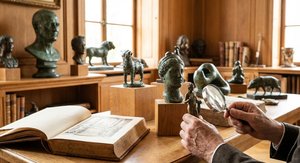
The Enduring Legacy of Bronze Sculpture: A Collector's Guide to Form & Cultural Significance
Explore the rich history & enduring appeal of bronze sculpture with expert insights for collectors at OriginalUniqueArt. Learn about casting techniques, iconic artists, and collecting tips to build a discerning art collection.
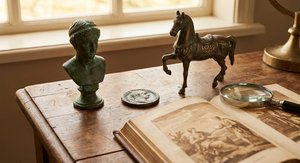
The Enduring Legacy of Bronze: A Historical & Artistic Exploration for the Collector
Explore the rich history & enduring appeal of bronze sculpture with expert insights for collectors at OriginalUniqueArt. Learn about casting techniques, iconic artists, collecting tips & contemporary interpretations.

Bronze Sculptures That Defined Art History | OriginalUniqueArt
Journey through art history with our Top 10 bronze sculptures! Explore masterpieces by Rodin, Michelangelo & more. Discover stories behind iconic statues and find museum-quality reproductions for your home decor at OriginalUniqueArt.com.

Bronze Age to Modern Masters: 10 Sculptures That Redefined Art | OriginalUniqueArt
Journey through art history with 10 legendary bronze sculptures – from Michelangelo's David to Rodin’s Thinker. Explore the stories, techniques & timeless beauty of these masterpieces. Find museum-quality reproductions & elevate your home decor on OriginalUniqueArt.com.
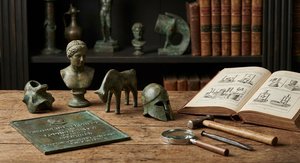
The Enduring Legacy of Bronze: History, Technique & Artistic Expression for the Collector
Explore the rich history & enduring appeal of bronze sculpture with expert insights for collectors at OriginalUniqueArt. Learn about casting techniques, iconic artists, and collecting tips.